
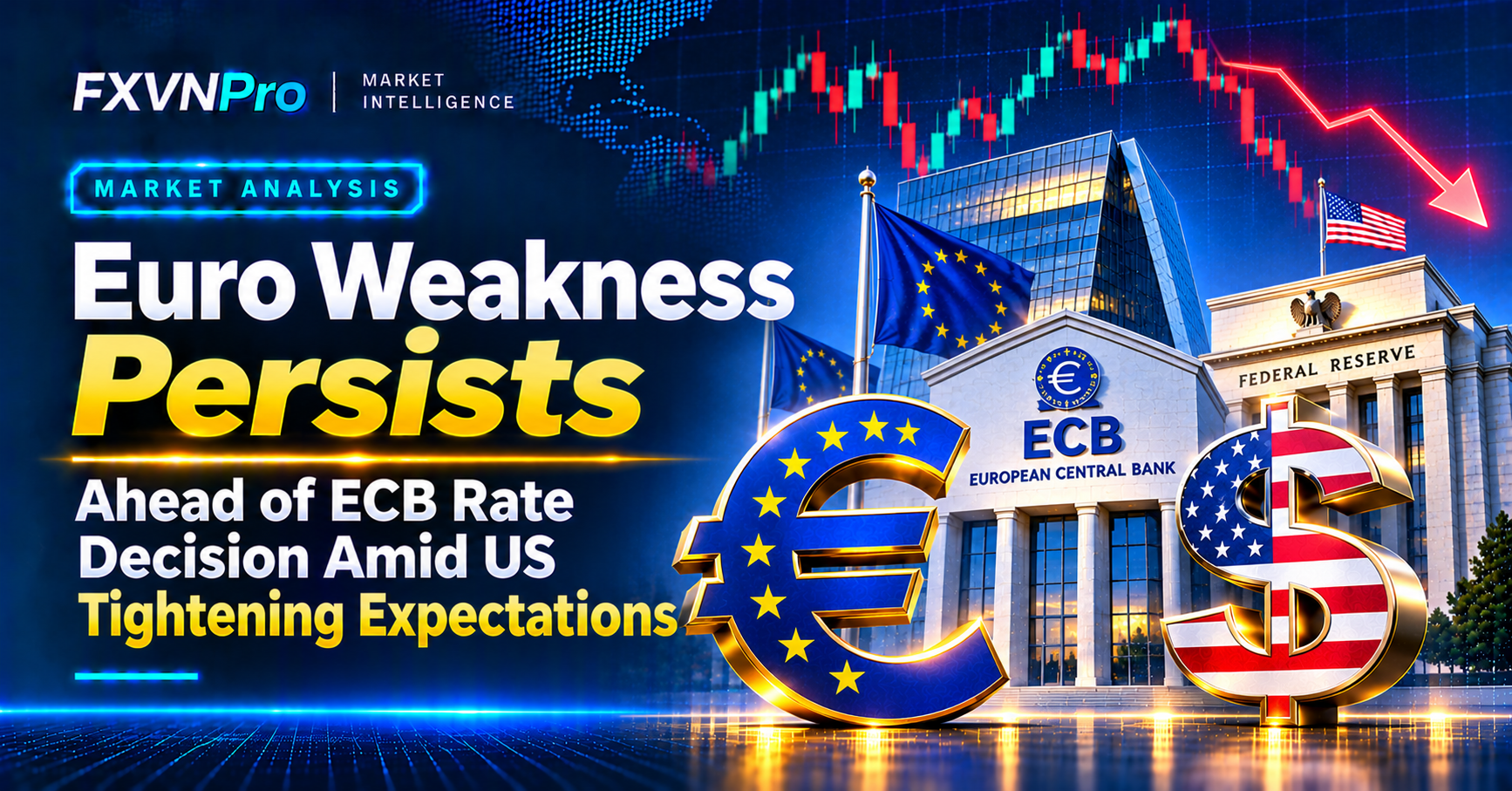
Euro Weakness Persists Ahead of ECB Rate Decision Amid US Tightening Expectations
As of November 2026, the euro has reached its lowest level since spring 2025 amid expectations of ECB rate hikes in December, while US Federal Reserve
Rebate Savings Calculator
Estimate cashback using verified USD/lot or percentage-of-spread rates, and compare trading costs.
Illustrative estimate only. Percentage-of-spread rebates apply to the spread component, not commission. Assumes every entered lot is eligible. Excludes swaps, slippage, conversion costs and other charges unless included in the verified cost figure. Negative net costs are possible mathematically and do not represent guaranteed profit. Actual rebate is subject to broker attribution, eligibility and reconciliation.
Open Rebate Wallet →Euro at Its Weakest Since Spring 2025 Despite ECB Rate Hike Expectations
According to a November 17, 2026 report from FXStreet, the euro (EUR) has declined to its lowest level since spring 2025, with the EUR/USD pair falling below the 1.1000 mark for the first time since May 2025. The pair reached a fresh 19-month low near 1.0985 amid sustained selling pressure. This decline has accelerated in recent weeks despite widespread market anticipation of a European Central Bank (ECB) interest rate increase in December.
The ECB is expected to raise its deposit rate by 25 basis points at its December 17 meeting, according to a Reuters survey conducted between November 10 and 12, which found unanimous economist expectations for this hike. The ECB Watch tool indicated a high probability of such a move. Typically, an interest rate increase by the ECB would provide support to the euro by enhancing its yield appeal.
US Dollar Strength and Diverging Monetary Policy Expectations
Despite the ECB’s anticipated tightening, the US dollar (USD) remains favored by investors. The Federal Reserve is also expected to raise rates by 25 basis points at its December 8-9 meeting, with markets assigning a high probability to this outcome according to the CME FedWatch tool. However, the key difference lies in expectations for subsequent policy moves. Market participants increasingly believe the Fed may pursue a more aggressive and prolonged tightening cycle compared to the ECB.
This divergence is supported by recent US inflation data and hawkish Fed commentary, which have reinforced expectations of additional rate hikes in the near term. ING analysts note that the market views the potential for a sustained tightening cycle as more credible in the US than in the Eurozone. This sentiment is reflected in interest rate markets, where the two-year EUR/USD swap rate differential has widened, and the inflation-adjusted differential has reached levels not seen since late 2022.
Economic indicators within the Eurozone provide a mixed picture. Germany’s ZEW Economic Sentiment Index improved in November compared to October, surpassing expectations, while the Current Situation Index also showed improvement. The broader Eurozone ZEW Economic Sentiment Index rose, beating consensus forecasts. Despite these positive signals, the euro continues to face downward pressure due to the relative monetary policy outlook.
FXVNPro Market Perspective
The euro’s weakness amid ECB tightening expectations illustrates the importance of relative monetary policy trajectories. Even when a central bank is expected to raise rates, the currency may weaken if another major economy is perceived to be tightening more aggressively or for a longer duration. The widening swap rate differentials and inflation-adjusted spreads signal that investors price in a more favorable interest rate environment in the US compared to the Eurozone.
Such dynamics can influence capital flows, with investors seeking higher yields in US assets, thereby supporting the dollar and weighing on the euro. Additionally, psychological levels like the 1.1000 mark for EUR/USD can act as focal points for market sentiment and technical trading. Economic sentiment improvements in the Eurozone may provide some support, but they appear insufficient to offset the impact of divergent monetary policy expectations.
Trading Scenarios
- If the ECB proceeds with the expected 25 basis point rate hike in December and signals a cautious or limited tightening path thereafter, then the euro may remain under pressure against the dollar, especially if the Fed continues to signal further hikes in the near term. This scenario could maintain or deepen the current EUR/USD lows near 1.0985.
- If the ECB adopts a more hawkish stance than currently anticipated, indicating a longer or more aggressive tightening cycle, then the euro could stabilize or recover some ground against the dollar, potentially testing resistance levels above the 1.1000 psychological barrier.
What Traders Should Watch
- ECB communications and December 17 meeting outcomes, including any forward guidance on the pace of future rate hikes.
- US Federal Reserve decisions and policy signals at the December 8-9 meeting, particularly regarding the likelihood of additional hikes in the near term.
- Economic data releases from both the Eurozone and the US that could influence inflation and growth expectations.
- Interest rate market indicators such as swap rate differentials and inflation-adjusted spreads, which reflect market sentiment on relative monetary policy.
Trade With A Regulated Broker





Related posts:
 Euro Sinks Further Amid US Dollar Strength and Diverging Interest Rate Expectations
 Australian Dollar Trades Near Monthly High Above 0.7000 Amid Hawkish RBA Signals and USD Dynamics
 Bitcoin Price Outlook: BTC Eyes Break Above Key Resistance Amid Institutional ETF Inflows
 SpaceX Earnings Highlight AI Supercycle Momentum and Compute Expansion
 Bitcoin’s Quantum Computing Threat Accelerates: Implications for Cryptocurrencies and Market Dynamics
 Cardano Price Forecast: Whale Selling Pressure Deepens ADA Correction
 WTI Rally Runs Ahead of Positioning: Insights from the October 2026 CFTC Report
 XAU/USD Outlook: Gold Gains as Fed Policy Week Begins Amid Inflation Concerns
 Central Banks Brace for Hawkish Moves Amid Energy-Driven Inflation, But Dovish Surprises Remain Possible
 BoJ Expected to Hold Rates Friday as Yen Retraces Half Its Recent Gains
 Ripple Secures OCC Approval for National Trust Bank, Impacting RLUSD Infrastructure
 MTrading $100 No Deposit Welcome Bonus (Malaysia Only): Terms, Limits & How It Really Works
 Altcoins XRP, Cardano, and Solana Face Continued Downside Pressure Amid Key Technical Tests
 Singapore Dollar Range-Bound Against US Dollar Amid Limited Momentum – UOB Analysis
 Bitcoin Faces AI-Linked Selloff Risk Amid Anthropic IPO and Inflation Concerns
 Zcash Price Forecast: Bullish Momentum Builds on ETF Inflows and Retail Interest
 Pi Network Price Outlook: PI Stalls Amid Core Team’s Investment Expansion to Axis Robotics
 Bitcoin Volatility Drops to 2023 Lows Amid Fed Rate Pause and Market Support Levels
 Crypto Market Pullback on Hawkish Fed Tone and Inflation Data – Bitcoin, Ethereum, XRP Under Pressure
 Gold (XAU/USD) Rebounds Near $3,900 Amid Inflation Concerns and Interest Rate Outlook
 Zcash Price Forecast: ZEC Rebounds Amid Support for Ending Community Grants and Upcoming Network Upgrade
 Dogecoin Price Outlook: Diverging Whale Activity and Technical Resistance Levels Signal Caution
 Understanding Inflation in November 2026: The Impact of Fuel Costs and Producer-Consumer Price Divergence
 Strategy Resumes Bitcoin Purchases with $65.5M Acquisition Amid Market Pressure
 Can the New Zealand Dollar Hold 0.5600 Amid RBNZ Policy Uncertainty?
 Gold Price (XAU/USD) Edges Lower Amid Early US Midterm Trends Favoring Democrats
 Gold Price Outlook: Analyst Sees Potential Slide to $3,500 Ahead of US Jobs Data
 Canadian Dollar Decouples from Oil Amid US Political Shifts and Geopolitical Developments
 Australian Dollar Edges Lower Near 0.6865 Amid Robust US Jobs Data and RBA Rate Hike
 Australian Dollar Nears March Low Amid Divergent Monetary Policy Signals and US Dollar Strength
 US CPI Inflation Insights: What Headline Figures Miss About Price Trends
 USD/JPY Surpasses 159.00 Amid Fed Rate Hike Expectations and BoJ Policy Considerations
 USD/JPY Nears 160.00 Again Amid Renewed Intervention Concerns and Fed Rate Outlook
 Oil Prices Remain Elevated Amid High Costs and Geopolitical Risks – Rabobank Analysis
 EUR/GBP Price Forecast: Euro Dips Below 0.8350 Amid Risk-Off Mood and Geopolitical Tensions
 Bank of Canada December Rate Hike Risk Remains Amid Inflation Pressures – RBC Analysis
 Bitcoin, Ethereum, Ripple Price Trends and Technical Outlook Amid Bearish Momentum
 CFTC Report Highlights Gold Buying Returns Amid Extreme Yen Exposure