
Rebates for Swing Traders: How to Maximize Cost Efficiency in 2026
Rebates for Swing Traders: How to Maximize Cost Efficiency in 2026
Updated 2026. Swing traders may overlook rebates compared to scalpers or high-frequency traders. However, when used correctly, rebate programs can meaningfully reduce net costs over medium-term positions. This article explains rebate dynamics, ideal conditions, and optimization tips for swing traders.
If you are new to rebate structures, start here:
What Is Forex Rebate and How Does It Work?
Quick Overview
Swing trading involves holding positions typically from several days to a few weeks. While rebate value per lot is fixed, average position size and trade volume still matter — and rebates can accumulate into meaningful savings over time.
Unlike scalping, swing traders focus on capture of bigger price movements. Rebates are a cost reduction layer that supports overall profitability without changing trade entries.
Related rebate strategy: Rebates for Day Trading Strategies.
How Rebates Help Swing Traders
| Factor | Without Rebate | With Rebate | Key Impact |
|---|---|---|---|
| Average Lot per Trade | 1.25 | 1.25 | Rebate applies per traded lot |
| Typical Spread Cost | $8 | $8 | Spread stays same |
| Rebate per Lot | $0 | $3 | Reduction of net cost |
| Trades Per Month | 10 | 10 | Swing frequency |
| Net Spread Cost/Month | $80 | $50 | $30 savings |
The table above demonstrates that even moderate trade frequency can yield savings that accumulate over a quarter or year of swing activity.
Rebate Conditions Most Useful for Swing Traders
- Stable Spread Offers – Rebates have more value when spread cost is consistent.
- Low Commission Accounts – Higher rebate proportion of total cost.
- Medium Volume – Position size and frequency that capture rebates without overtrading.
- Withdraw-Friendly Brokers – Ensures easy access to rebate earnings.
When Rebates Add the Most Value
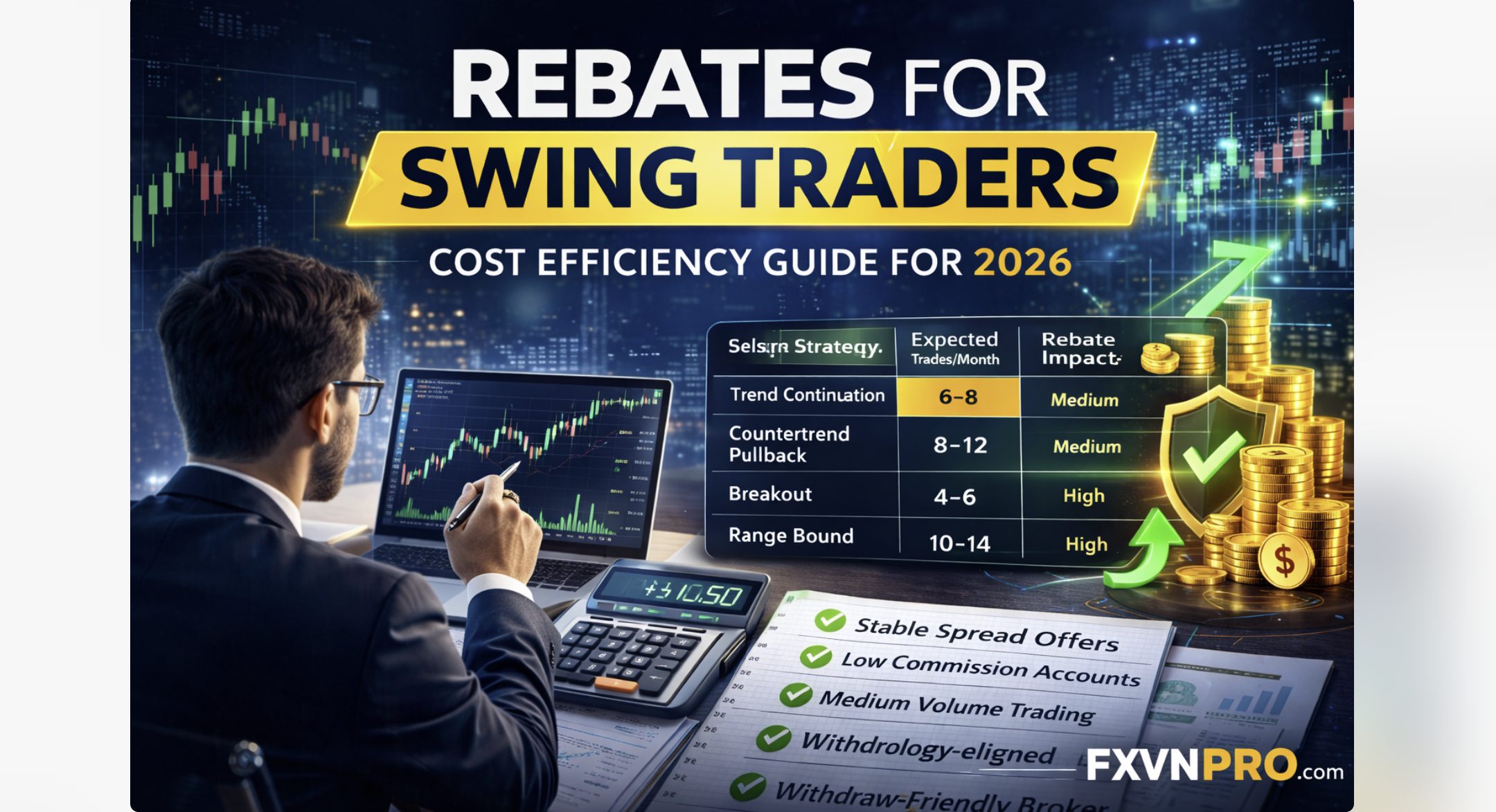
| Swing Strategy Type | Expected Trades/Month | Rebate Impact |
|---|---|---|
| Trend Continuation | 6–8 | Medium |
| Countertrend Pullbacks | 8–12 | High |
| Breakout Traders | 4–6 | Medium |
| Range Bound Trading | 10–14 | High |
Swing traders operating more frequent medium-term trades benefit more because rebates reduce cumulative cost drags.
If you trade high-frequency strategies instead, see
our scalping rebate comparison guide
Some traders ask whether a deposit bonus is better than rebates.
We explain the full difference in our guide:
Forex Rebates vs Trading Bonuses
Checklist: How to Capture Rebates as a Swing Trader
- Link your broker account correctly with a reputable rebate provider before your first deposit.
- Ensure rebate tracking applies to the type of account you trade (ECN, Raw Spread, etc.).
- Check withdrawal frequency and processing rules to align with rebate payouts.
- Reconcile your traded lots monthly to confirm rebate credits.
Common Misconceptions
- Rebates increase profits — actually they reduce cost drag and improve net returns.
- Rebates are only for scalpers — swing traders extract cumulative rebate value over time.
- Rebates worsen execution — rebate programs do not alter execution quality.
Frequently Asked Questions
Do swing traders benefit from rebates?
Yes — swing traders with moderate frequency can accumulate meaningful savings over time using rebate structures.
Is rebate tracking difficult for swing trading?
As long as your broker account is tracked correctly, rebate crediting is automatic based on lot volume.
Should I switch brokers for better rebates?
Only if your current broker’s cost structure or rebate offer is substantially weaker evaluatively than alternatives.
Trade With A Regulated Broker





Related posts:
 What Are Forex Rebates? Complete Guide to Forex Cashback (2026)
 How Forex Rebates Work (Step-by-Step Guide for Beginners)
 Forex Rebates vs Bonus – Which Is Better for Traders in 2026?
 Why Most Forex Bonuses Are Designed to Make You Lose (2026 Warning)
 Are Forex Rebates Safe? What Every Trader Must Know Before Using Cashback (2026)
 How to Maximize Forex Rebates in 2026: Smart Strategies to Cut Trading Costs & Boost Profits
 How Much Can You Earn from Forex Rebates in 2026? Real Trader Calculator Case Study
 How To Join a Forex Rebates Program (Step-by-Step Guide 2026)
 The Complete Guide to Forex Rebates (2026 Edition): How Cashback Reduces Trading Costs
 How High-Volume Traders Save $5,000+ Per Year (2026 Rebate Strategy Guide)
 Best High Volume Forex Rebates Strategies (2026 Professional Guide)
 Rebates for Day Trading Strategies: Do They Improve Net Profit in 2026?
 How to Switch Broker and Keep Rebates in 2026 (Step-by-Step Guide)
 Why Professional Traders Use Rebates (Cost Strategy Breakdown 2026)
 Forex Rebates vs Trading Bonuses (Full Comparison 2026)
 Real Forex Rebate Payout Proof (Case Study 2026) – Verified Exness & XM Earnings
 Rebate Strategy During High Volatility (2026 Risk-Adjusted Guide)