

BlackBull
FVP Score
6.4/10
BlackBull
- Minimum Deposit$1
- RegulationFSP
- PlatformsMT4, MT5,cTrader,TradingView
- SpreadFrom 0.0 pips
Start with your goal. You do not have to learn the FXVNPro architecture before using the tools.
Build an idea, use Telegram signals, trade from Chrome or follow a trader while technical setup stays in the background.
Technical connection details remain available inside each product when needed.
Compare BlackBull and HFM by rating, regulation, minimum deposit, platforms, spreads, and overall trading conditions.
Use the FXVNPro Broker Checker Chrome extension to quickly review broker trust signals, ratings, and safety information while browsing broker websites.

| Feature | BlackBull | HFM |
|---|---|---|
| Rating | 6.4 | 6.8 |
| Minimum Deposit | $1 | $5 |
| Regulation | FSP | FCA, DFSA, FSA |
| Platforms | MT4, MT5,cTrader,TradingView | MT4, MT5 |
| Spread | From 0.0 pips | From 0.1 pips |
Below is a detailed breakdown of fees, spreads, regulation, platforms, and real trading suitability to help you decide which broker fits your trading style better.
If you’ve ever checked your statements after a week of “clean” trading and wondered why the profit looked smaller than the backtest, you already know the uncomfortable truth: brokers aren’t just a place to TRADE trades. They’re part of your trading system. Spreads, execution quality, and even how deposits and withdrawals feel can quietly change your results over time.
In this BlackBull vs HFM comparison, I’m going to focus on the stuff that actually hits your P&L: fees comparison, spreads and trading costs, regulation and safety, and how platform choice plays out when the market gets fast. I’ll also talk about slippage and execution speed—because in real trading conditions, that’s often the difference between “I’m right” and “I’m stopped out.”
Who should care? Mostly anyone who trades actively enough that costs matter. That includes day traders, scalpers, and systematic traders running MT4/MT5 or cTrader. If you’re more of a slow, position-style trader, you’ll still want to check regulation and withdrawal friction—but your biggest variable is usually the spread, not the interface.
Quick summary: BlackBull has a very low minimum deposit and supports more platforms (MT4, MT5, cTrader, TradingView) with spreads from 0.0 pips. HFM is rated slightly higher here (6.8 vs 6.4), requires a higher minimum deposit ($5), and is regulated by FCA plus additional entities, with spreads from 0.1 pips.
Let’s start where traders usually skim, then regret later: spreads and trading costs. On paper, BlackBull looks aggressive—spreads “from 0.0 pips.” HFM lists spreads “from 0.1 pips.” Sounds like a small difference, right? But when you scale it across many trades, that tenth of a pip becomes real money.
Here’s the practical way I think about it: your effective cost per trade isn’t just the minimum spread shown on the site. In real trading conditions, spreads widen around news, during rollovers, or when liquidity thins. The broker’s execution model and how quickly it reflects market prices matters. Even if you don’t see “commission” numbers, costs still show up via spreads and potential slippage.
Scenario example: suppose you’re trading EUR/USD intraday with an average spread of 0.2 pips on one broker and 0.3 pips on the other. Over 300 trades in a month, that’s a 0.1-pip difference times your position sizing. For smaller accounts it might feel negligible—until you add to it: spread widening during volatile sessions and the occasional bad fill.
Hidden fees? The tricky part is that not all “fees” are advertised as line items. Some brokers charge via financing rates, swap/rollover costs, or trading conditions that indirectly affect your entries. You also want to watch for inactivity fees or withdrawal-related charges, depending on your payment method—those can be annoying, even if they’re not daily.
So which is cheaper in real scenarios? Based strictly on the spread claims, BlackBull has the edge for low-cost execution when conditions allow those tight readings. But if HFM’s execution is consistently tighter than its minimum suggests, the “from 0.1” could still compete well. The honest answer: for cost-focused traders, BlackBull is the more obvious candidate, while HFM is the one I’d test for consistency across your actual trading hours.
Regulation isn’t just a logo on a website. It impacts how seriously a broker is supervised, how client money is handled, and what recourse you realistically have if something goes wrong. In a worst-case scenario, you don’t want “it should be fine.” You want a framework.
BlackBull is listed under FSP regulation. HFM is regulated by FCA, DFSA, and FSA. On its face, that’s a stronger regulatory footprint from the perspective of many traders, especially those who value the credibility that comes with FCA oversight. Why does this matter? Because the more robust the regulator environment, the more likely the broker is held to tighter operational standards—things like reporting, compliance controls, and client protections.
Now, a quick reality check: different regulators operate under different rules and coverage scopes. So you can’t treat “regulated” as a single uniform badge. Verification matters. Before you fund, check that the entity you’re actually trading with is the one covered by those regulators, and confirm whether the client protections (like segregation of funds and any compensation schemes) apply to your account type and jurisdiction.
In real trading, safety shows up indirectly too. Better regulated brokers tend to invest more in infrastructure and compliance processes, which can reduce the risk of sudden execution changes or account restrictions. I’m not saying execution is automatically “better” because regulation is strong—but it’s a reasonable indicator of operational maturity.
If your trading plan depends on staying funded and consistent, regulation matters because it protects the ability to keep trading. And if you’ve ever had to chase an account issue while the market is moving… you’ll know why this topic isn’t optional.
Platforms are where traders feel friction first. Even if two brokers offer the same market access, the “day-to-day” experience can be completely different depending on charting, order handling, and how smoothly the platform runs when volatility hits.
BlackBull offers MT4, MT5, cTrader, and TradingView. That’s a broad toolkit. cTrader is often praised for its interface and trade handling, and TradingView integration can be a big deal if you plan to base entries on TradingView charts. MT4 and MT5 still matter for automation—especially if you use older EAs on MT4 or want MT5’s ecosystem for more advanced strategies.
HFM offers MT4 and MT5 only. That can be a non-issue if you’re firmly in the MT world already. But if you like cTrader’s workflow or you prefer TradingView charts, the lack of those options can feel limiting. And yes, sometimes traders underestimate this until they’re debugging an order placement issue mid-session.
Execution speed and slippage: both brokers advertise tight spreads, but spreads alone don’t guarantee clean fills. In fast markets, slippage happens—especially if your orders hit when liquidity is thin. Your platform choice can influence how quickly you can modify orders, how reliably the platform reflects real-time prices, and how stable it feels when your connection is busy.
Real-world example: if you run a scalping strategy that relies on rapid entry/exit and you frequently adjust stops, cTrader’s workflow (on BlackBull) may reduce the “manual delay” compared to a platform that feels heavier or less intuitive for rapid actions. Meanwhile, if you run MT-based automation, both brokers’ MT4/MT5 support keeps things familiar.
So which is better? For platform flexibility and potentially smoother workflows, BlackBull has the stronger spread of options. For traders who live inside MT4/MT5 and want everything standardized, HFM is simpler.
Most traders only look at deposits and withdrawals when something goes wrong. That’s exactly the wrong time to discover friction. Even with good spreads, a slow withdrawal process can mess with your risk management—because your ability to withdraw profits or top up before a high-volatility period matters.
BlackBull’s minimum deposit is $1. That’s a big deal for experimentation. I’ve seen traders blow up accounts simply because they were too undercapitalized to follow their own sizing rules, or they rushed because they didn’t want to commit funds. A $1 minimum encourages testing—though it can also tempt people into “toy trading.” Still, from a practical onboarding standpoint, low minimums reduce the barrier to getting your platform ready and verifying your execution.
HFM’s minimum deposit is $5. It’s still low, but it nudges you toward committing slightly more capital from the start. In real trading, that can be good: it encourages you to think in terms of a usable account size rather than treating the broker like a demo replacement.
What about speed and fees? Those details depend heavily on payment method and your country. You should also consider whether the broker uses instant processing for certain methods or if it relies on manual review. Some brokers process quickly but charge withdrawal fees depending on method. Others have low fees but longer processing windows.
Here’s how to test this like a serious trader: before you deposit big, do a small deposit and a small withdrawal once your account is active. Timing matters. You want to know how long it takes outside “business hours” and whether weekends affect it.
Between the two, BlackBull is more flexible for low-cost onboarding. HFM is still accessible, but with a slightly higher commitment. If you’re the kind of trader who periodically withdraws and rebalances, you’ll want to check withdrawal timelines and any method-specific charges for your location.
Beginner trading is less about “best charting” and more about not turning learning mistakes into account damage. When you’re new, you’re going to overtrade, mis-size, and misunderstand costs. So the broker that makes it easier to get started—without weird friction—is usually the better learning environment.
BlackBull’s $1 minimum deposit is a clear advantage for beginners. It lets you fund quickly, verify platform stability, and test order placement without feeling like you’re risking something meaningful on day one. Also, BlackBull includes more platform options: MT4, MT5, cTrader, and TradingView. For a beginner, having choices can help you find a workflow that actually sticks.
HFM’s minimum deposit is $5. That’s still not high, but it’s less forgiving if you’re doing “micro experiments.” On the other hand, HFM’s stronger regulatory footprint (FCA plus additional regulators) can be comforting for new traders who want the peace of mind that comes from higher scrutiny.
Spreads and trading costs matter for beginners too. If your strategy is simple—like repeated intraday entries—costs compound fast. BlackBull’s “from 0.0 pips” headline suggests there may be opportunities for very tight execution. But beginners should also understand that spreads aren’t always at their minimum. Learning about session timing (not trading during dead liquidity or news spikes) is part of becoming profitable.
In real teaching terms: I’d rather see a beginner spend a week learning order execution, stop placement, and platform behavior on a low minimum account than jump straight to a larger deposit and then panic when they don’t understand slippage or spread widening.
So which is easier to start with? For the pure onboarding experience and low barrier to entry, BlackBull edges it. For regulation-minded beginners who want stronger supervisory comfort, HFM is attractive.
If you trade actively—especially if you scalp or run day strategies—your broker choice becomes a performance variable. You’re not just paying spreads; you’re dealing with order execution under stress: fast price moves, quick reversals, and the constant risk of slippage turning a small edge into a loss.
BlackBull’s platform set is a big plus for active traders. MT4/MT5 cover automation and compatibility, while cTrader can be favored by traders who care about fast, clean order workflow. TradingView access can also matter if you’re using alerts and semi-automated execution. Spread claims “from 0.0 pips” are attractive for scalpers, because scalping lives and dies on cents.
HFM’s spreads “from 0.1 pips” are only slightly wider on paper. But active traders should focus on what happens in the middle of your trading session, not the marketing minimum. Execution speed and consistency matter more than the “best case.” If slippage is frequent or order handling feels delayed, your strategy’s edge gets diluted.
Real-world scenario: imagine you’re running a high-frequency mean reversion strategy on EUR/USD during the London open. You place and adjust multiple orders, and you rely on tight spreads plus low slippage to keep your win rate meaningful. If one broker regularly widens spreads during the exact timeframe you trade, you’ll feel it immediately—your average trade cost rises, and the system stops behaving like it did in backtests.
For active traders, both brokers support MT4 and MT5, so algorithm deployment is comparable. The difference is whether you value additional platform options like cTrader and TradingView. BlackBull gives you more ways to TRADE and monitor trades, which can improve workflow speed for discretionary traders too.
My leaning? For scalpers and traders who chase ultra-tight execution and want more platform flexibility, BlackBull fits the profile better. For traders prioritizing a stronger regulatory environment while still trading actively on MT4/MT5, HFM is the safer “comfort pick”—but you should still test costs during your exact sessions.
These aren’t just “preferences.” They affect money and stress levels. If your strategy is sensitive to costs, you feel spreads and slippage quickly. If your strategy is sensitive to reliability and withdrawals, regulation and operational friction matter more than you think.
Here’s the decision I’d make based on the data and how traders actually experience brokers.
BlackBull is the clearer pick. The spreads headline (from 0.0 pips) combined with platform flexibility (MT4/MT5 plus cTrader and TradingView) gives you more tools to manage execution and workflow. For strategies where every pip counts, BlackBull’s setup is more aligned with that style.
HFM is the better match. With FCA plus other regulatory oversight listed, it’s easier to justify choosing HFM if safety, compliance environment, and peace of mind are priorities. The spreads are still competitive (from 0.1 pips), and MT4/MT5 support is enough for most active strategies.
BlackBull edges it mainly because the $1 minimum deposit makes it easier to test and verify execution before committing real size. Just be disciplined: beginners still need to account for real trading conditions, not just the minimum spread shown on the promo.
My bottom line for “which broker is better” in BlackBull vs HFM: choose BlackBull if your edge depends on trading costs and platform flexibility. Choose HFM if regulation and a more conservative supervisory setup matter more to you than the slightly tighter spread headline.
And one last practical note—before you commit to either, run a short trial week. Trade the same Connects, during the same sessions, with the same sizing logic. That’s the only fees comparison that truly matters to your P&L.
One real XAUUSD trade: created before the outcome, sent to Telegram, TRADEd in MT5 and returned as a verified result.
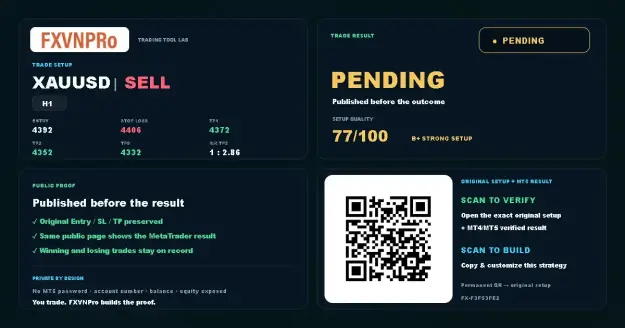 1 · SETUP
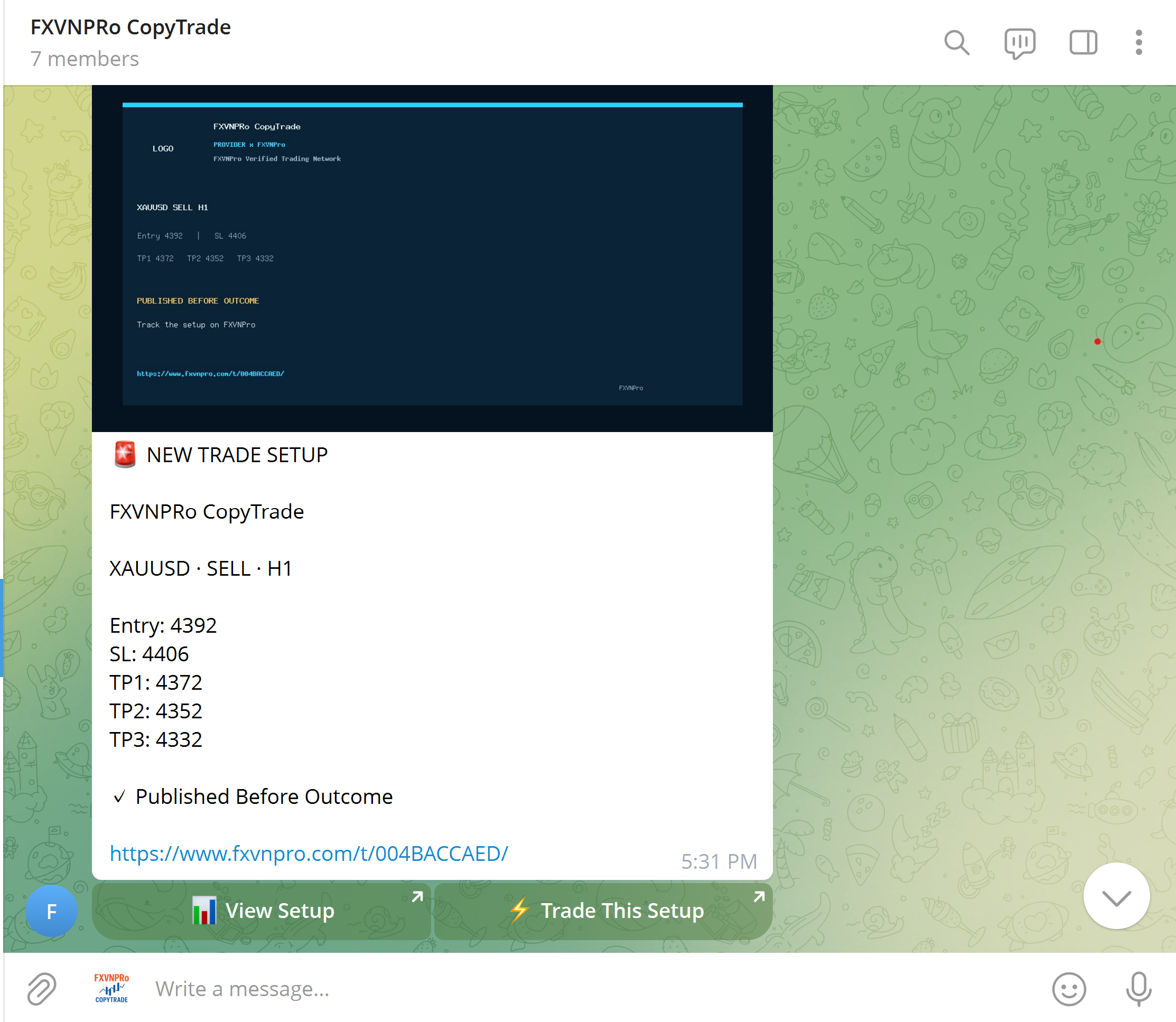 2 · TELEGRAM
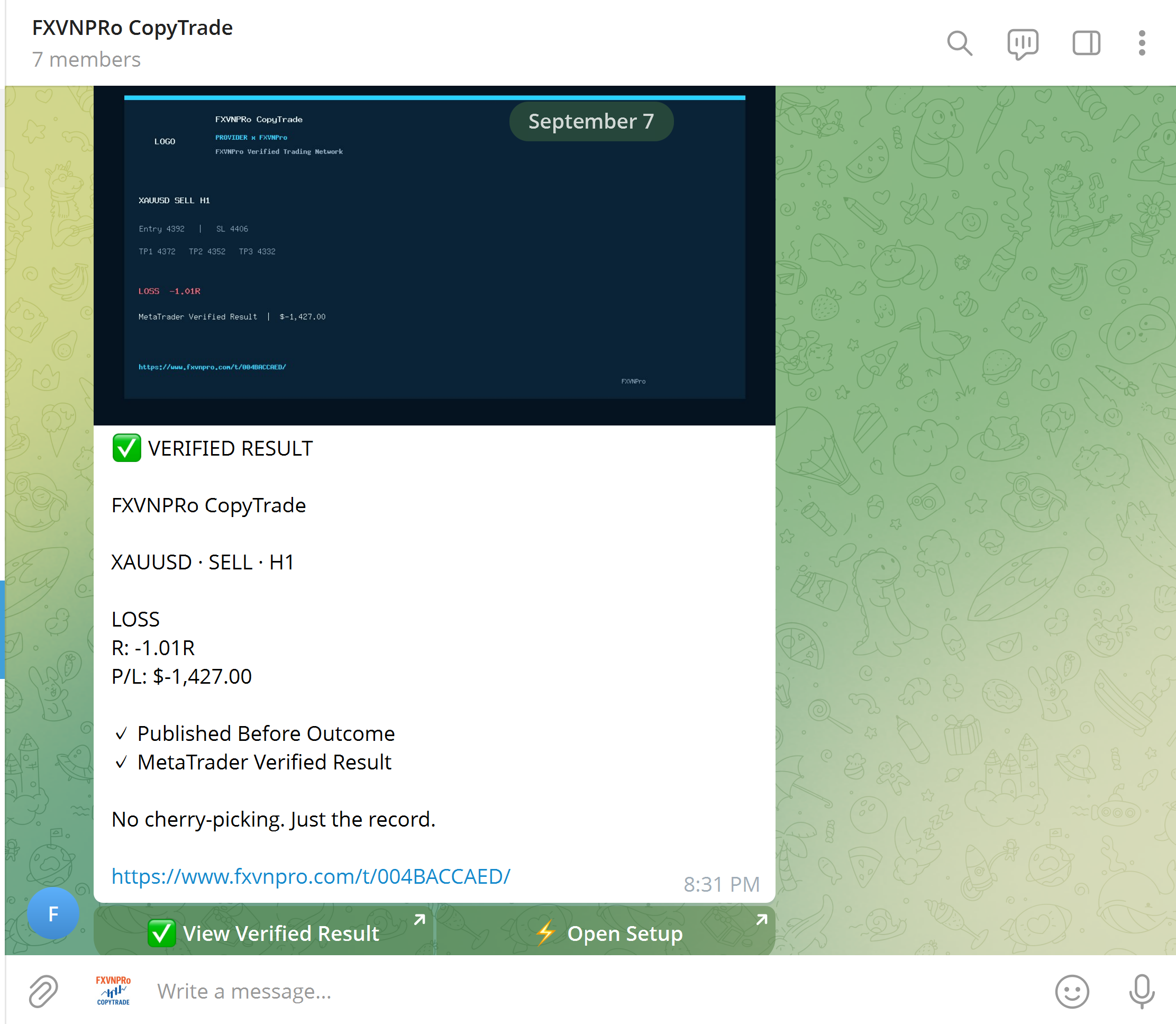 3 · VERIFIED
FXVNPro connects trade plans, Telegram trading communities and verified CopyTrade activity in one practical MT4/MT5 ecosystem.
Turn Entry, Stop Loss and Targets into a trade plan. Publish it before the outcome, then track and verify the result.
Turn Telegram signals into actionable MT4/MT5 setups. Signal Admins create the strategy while Members stay in control of risk.
Discover TRADERs, inspect verified trading history and performance, then decide who you want to follow across MT4 & MT5.
Build your strategy, distribute it to a community, or follow trading activity across MT4 & MT5.
Create Entry, Stop Loss and Targets before the outcome, then build a verified trading record.
Turn Telegram signals into an actionable workflow while followers keep control of their own risk.
Connect Chrome to MT4 or MT5 and open, modify or close trades from your browser.
Explore Masters and copy trading activity to your own MT4 or MT5 terminal with independent risk rules.