Plan a Trade
Build a trade plan and use practical trading tools before you act.
Trade IdeasRisk ToolsCalculators
BUILD A TRADE IDEA →
Start with your goal. You do not have to learn the FXVNPro architecture before using the tools.
Build an idea, use Telegram signals, trade from Chrome or follow a trader while technical setup stays in the background.
Technical connection details remain available inside each product when needed.
Plan trades, connect MT4 & MT5, review verified execution, explore traders and research brokers — without learning the whole platform first.
Build a trade plan and use practical trading tools before you act.
Use Browser Trading or turn supported Telegram signals into a structured trading workflow.
Explore CopyTrade TRADERs, review their records and choose your own risk settings.
Everything is still here — organized by what it helps you do.
Compare BlackBull and FP Markets by rating, regulation, minimum deposit, platforms, spreads, and overall trading conditions.
Use the FXVNPro Broker Checker Chrome extension to quickly review broker trust signals, ratings, and safety information while browsing broker websites.


| Feature | BlackBull | FP Markets |
|---|---|---|
| Rating | 6.4 | 6.7 |
| Minimum Deposit | $1 | $100 AUD |
| Regulation | FSP | ASIC, CySEC |
| Platforms | MT4, MT5,cTrader,TradingView | MT4, MT5, cTrader |
| Spread | From 0.0 pips | From 0.0 pips |
Below is a detailed breakdown of fees, spreads, regulation, platforms, and real trading suitability to help you decide which broker fits your trading style better.
If you’ve ever had a trade go your way… and then watched the profit evaporate in the spread or through awkward execution, you already know why “broker comparison” isn’t just trivia. It’s the boring stuff—fees, spreads, execution quality, funding friction—that quietly decides whether you can survive long enough to get good.
This is a practical comparison of BlackBull vs FP Markets for traders who care about which broker is better in real trading conditions, not on paper. I’m focusing on the stuff that shows up in your statement: fees comparison, spreads and trading costs, regulation and safety, platform experience, and how deposits/withdrawals actually feel when you’re moving money while the market is moving too.
Quick summary: BlackBull has a very low minimum deposit (good for testing and smaller accounts) and offers MT4/MT5 plus cTrader and TradingView. FP Markets has ASIC and CySEC regulation, a higher minimum deposit (AUD $100), and also supports MT4/MT5 and cTrader. Both advertise spreads from 0.0 pips, but the “from” part is where real-world trading cost lives—especially during news and volatile sessions.
So who should care? If you’re trading frequently, scalping, or managing risk tightly, these details matter more than the platform logos. Let’s get into it.
When traders say “spreads and trading costs,” they often mean “how tight is it during calm hours?” That’s only part of the story. The real question is: what happens to your edge when spreads widen, liquidity thins, or execution gets slower? Because over dozens or hundreds of trades, even small cost differences compound fast.
Both brokers advertise spreads “from 0.0 pips.” On a live account, spreads rarely sit at their theoretical minimum all day. In real sessions—London open, US open, and especially around high-impact news—you’ll see variability. This matters because your stop-loss distance is fixed, but your average fill quality and effective spread can drift.
Here’s a practical way to think about it. Imagine you run a strategy that targets 5–10 pips repeatedly (day trading) or 1–3 pips (scalping). If your effective spread averages 0.8 pips on one broker and 1.2 pips on the other, you’re not just paying “0.4 pips.” You’re paying it per round turn (entry + exit), and the hit shows up immediately in your win rate and expectancy.
Now, the tricky part: “spread” is not always the whole cost. Some brokers rely on spreads alone, others use commission + tighter spreads. You didn’t provide commission data for either broker, so I can’t claim a definitive commission-versus-spread winner. What I can say is this: if both offer “from 0.0,” compare your average trading cost using a demo-to-live transition and track your effective spread during the same sessions.
Hidden fees can also matter: overnight financing (swap), inactivity fees, and markups can change your results more than spread does—especially for swing traders holding positions. For active traders, the cost profile during rollover is usually less relevant, but for anyone holding beyond a day, it becomes a bigger deal.
In real scenarios: if you trade during US NFP, CPI, or central bank announcements, the broker that handles execution stability better often ends up “cheaper” even if the headline spread looks similar—because you’re less likely to get penalized by slippage.
Regulation is one of those topics people skim because it feels like legal language. But for traders, it’s about operational risk: how the broker is expected to manage client funds, oversight, and complaint handling if something goes wrong.
BlackBull is shown here as regulated by FSP. The acronym is presented without country context in your dataset, so I can’t responsibly tell you the exact regulatory strength without verifying the jurisdiction directly on the broker’s site. That matters—because different frameworks offer different levels of protection, different reporting standards, and different approaches to segregation of funds.
FP Markets is listed with ASIC and CySEC regulation. In practice, this is a meaningful difference for many traders because it usually implies stricter supervision and clearer compliance expectations. For example, ASIC-regulated entities are often held to high standards around financial services conduct and client fund handling (again, details depend on the specific entity and account type). CySEC adds another layer for EU-facing clients.
Here’s what I look for when I’m deciding whether “safety” is real: which legal entity you’re actually trading with, whether your account is held in segregated accounts, and what the dispute process looks like. Regulation isn’t protection against market risk, but it can reduce the chance of broker-side failure modes.
Verification also matters. Don’t rely on marketing summaries. Confirm the license on the regulator’s public register and match it to the entity name you’ll sign up with. It’s tedious, but it’s the difference between assuming and knowing.
Bottom line: if you put a higher value on regulatory oversight and want that extra comfort, FP Markets has the edge in this comparison based on the regulators listed.
Platforms matter, but not in the way most affiliate reviews describe them. The question is: can you TRADE your plan quickly and consistently, without the interface getting in your way? Also—how does the platform feel when spreads widen or when you’re trying to manage risk in fast markets?
BlackBull offers MT4, MT5, cTrader, and TradingView. That’s a strong multi-platform lineup. MT4/MT5 is still the default for many automated systems and indicators, and having both versions can help if you’ve built or borrowed code over the years. cTrader is often favored by traders who want a cleaner order management flow and generally like its charting and depth-of-market experience (depending on account type). TradingView integration is useful if you trade off TradingView charts and want a smoother workflow into execution.
FP Markets offers MT4, MT5, and cTrader. No TradingView listed in your dataset, which could matter if that’s central to your charting process. But many traders are perfectly happy living inside MT4/MT5 or cTrader, especially if they already have watchlists, alerts, and their own indicator stack.
Execution speed and slippage aren’t solely platform-dependent, but the platform can influence how quickly you can react. In real trading conditions—like a breakout strategy during London open—seconds matter. If you’re manually entering and adjusting stops, a platform that’s stable under stress helps. If you’re using automation, MT4/MT5 compatibility often becomes the deciding factor.
Also consider order types. Some strategies require specific execution behaviors (limit/stop combos, trailing logic, partial closes). Both brokers support MT4/MT5 and cTrader, so you’re likely covered—but the “feel” and order management UX can differ.
For trading experience: BlackBull’s extra TradingView option can be a real workflow advantage. FP Markets remains strong if you’re MT-first or cTrader-first.
Let’s talk about a part of trading people avoid until it becomes urgent: funding. It’s easy to focus on spreads when you’re in profit. But when you’re trying to add margin after volatility spikes, or you want to withdraw during a busy week, delays and friction become a cost of their own.
From your data, BlackBull has a $1 minimum deposit. That’s not just convenient—it changes how you can test the broker. You can open an account, place small trades, evaluate execution and cost behavior, and only then scale up. For traders who like to verify before committing real capital, this matters.
FP Markets shows a minimum deposit of $100 AUD. That’s a higher barrier for micro-traders and for anyone who wants to trial conditions with a smaller bankroll first. Not “bad,” just different. It can also affect risk planning: if your first deposit is larger, you may be tempted to size up too quickly instead of proving your strategy with controlled risk.
You didn’t provide withdrawal processing times, fees, or supported payment methods. So I can’t truthfully claim “faster withdrawals” or “no fees.” What I can say is this: minimum deposit and funding flexibility affect how often you can move money. And if you’re running a disciplined approach—like withdrawing profits monthly or topping up only when needed—those practical frictions matter.
In real trading, volatility can force action. If a broker requires extra steps, delays withdrawals, or uses restrictive verification flows, traders feel it. The best way to judge is to test with a small deposit/withdrawal before you rely on it.
Based on what we know: BlackBull looks easier to start with from a funding standpoint. FP Markets is more “commitment required,” which can be fine for established traders.
Beginners don’t need more indicators. They need a broker that doesn’t punish learning mistakes. That means predictable execution, clear platform usability, and the ability to start small without feeling like you’re gambling your account.
BlackBull stands out for beginners mainly due to the $1 minimum deposit. In the real world, that changes the psychology. You can practice placing orders, test order types, learn how stops behave, and understand spread costs with minimal financial stress. When people start with a tiny amount, they’re more likely to go through the “trial-and-error” phase properly instead of rushing to live-size too early.
FP Markets with a $100 AUD minimum deposit is still accessible, but it raises the stakes. If a beginner deposits more than they’re comfortable with, they may hesitate to TRADE trades. Or worse: they may trade larger than they should to “justify” the initial deposit.
Regulation also affects beginner confidence. FP Markets showing ASIC and CySEC can reassure new traders who are still learning what to verify. With BlackBull, the regulation is listed as FSP, but you’d want to confirm the jurisdiction and entity details before you assume the same level of oversight.
Another hidden factor: the platform learning curve. MT4/MT5 can feel cluttered at first. cTrader tends to feel more modern to many new traders. TradingView integration on BlackBull may help beginners because it’s familiar and chart-first.
If you’re new and want the lowest-risk way to learn how your strategy behaves with real spreads: BlackBull is the easier starting point in this comparison.
Active traders live in the details: spreads at the exact moment of entry, execution stability during momentum bursts, and how often slippage ruins a clean setup. You don’t need a perfect broker—you need a broker that behaves consistently enough that your edge survives contact with reality.
Both brokers advertise spreads “from 0.0 pips,” and both offer MT4/MT5 and cTrader (BlackBull also adds TradingView). For day trading and scalping, the platform matters because you’ll be managing orders rapidly: multiple entries, quick stop adjustments, and often partial closes.
In real trading conditions, I pay attention to how costs behave across different sessions. London open can be smooth, but US open and news events can be chaotic. If you’re scalping, a broker that widens spreads less aggressively and reduces the probability of nasty slippage is usually the one that ends up “cheaper” even if the headline spread looks the same.
Let’s make it concrete. Suppose you run a scalping system that depends on hitting a 1–2 pip target. If your average effective spread is 1.0 pip on one platform and 1.6 on the other during fast markets, your strategy might flip from positive expectancy to grindy or losing. That’s not theoretical—it’s the difference between being able to scale and being forced to slow down.
Execution speed and order handling are also huge when you’re placing several orders quickly. cTrader’s order workflow often appeals to active traders because it’s visually clear and can feel faster for order management. MT4/MT5 is robust for automation, which matters if you run EAs.
Which one fits active traders better here? FP Markets has the regulatory comfort edge, while BlackBull has the slightly broader toolset (TradingView) and very low minimum deposit for testing. For most active traders, the “which broker is better” answer depends on live cost measurement—but based on safety and oversight listed, FP Markets looks better positioned.
When you’re deciding, don’t treat these as “good vs bad.” They’re trade-offs. If your priority is low-cost testing and workflow flexibility, BlackBull’s entry point is attractive. If your priority is regulatory comfort and established oversight, FP Markets is the cleaner choice in this specific comparison.
This is the part I’ll be decisive about, because “it depends” is usually what people say when they don’t want to commit.
BlackBull is the better starting choice here. The $1 minimum deposit is genuinely useful because it lets you learn execution mechanics and track spreads and slippage behavior without risking a large bankroll upfront. Add TradingView support and the platform variety, and it’s easier to build a routine around what you already know.
FP Markets edges out on safety posture based on the regulators listed (ASIC and CySEC). For traders who care about execution speed and trading experience, that oversight comfort isn’t everything—but it matters when you’re putting more trades through the system and scaling risk. Also, the higher minimum deposit can be a subtle benefit: it nudges you toward a more stable account size instead of constantly re-funding tiny amounts.
No matter which you choose, don’t skip the practical step: compare spreads and trading costs on your own instruments during the sessions you actually trade. “From 0.0 pips” is a starting point, not a guarantee. Track your effective spread and any slippage you experience during live conditions—then decide.
So, BlackBull vs FP Markets? If you’re testing and learning, BlackBull is the easier entry. If you want stronger regulatory comfort while trading actively, FP Markets is the better pick for most serious traders.
One real XAUUSD trade: created before the outcome, sent to Telegram, TRADEd in MT5 and returned as a verified result.
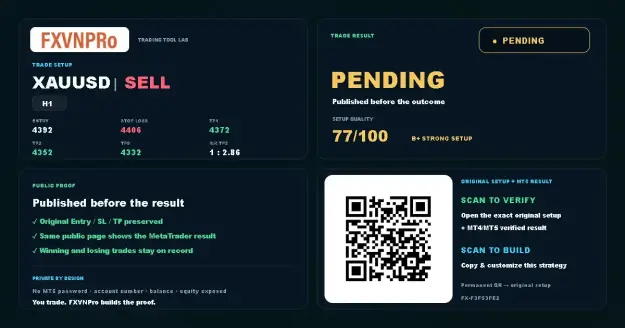 1 · SETUP
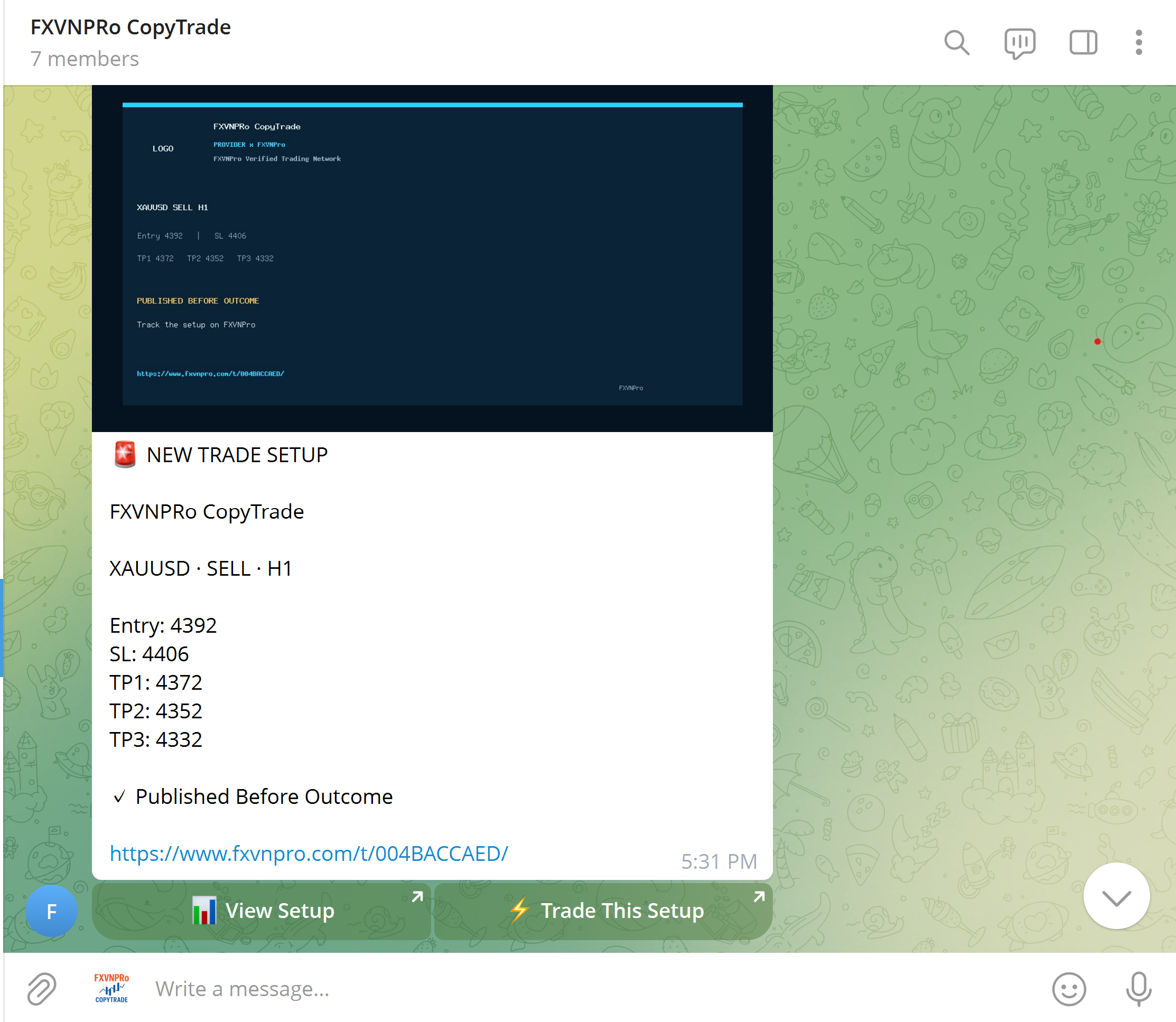 2 · TELEGRAM
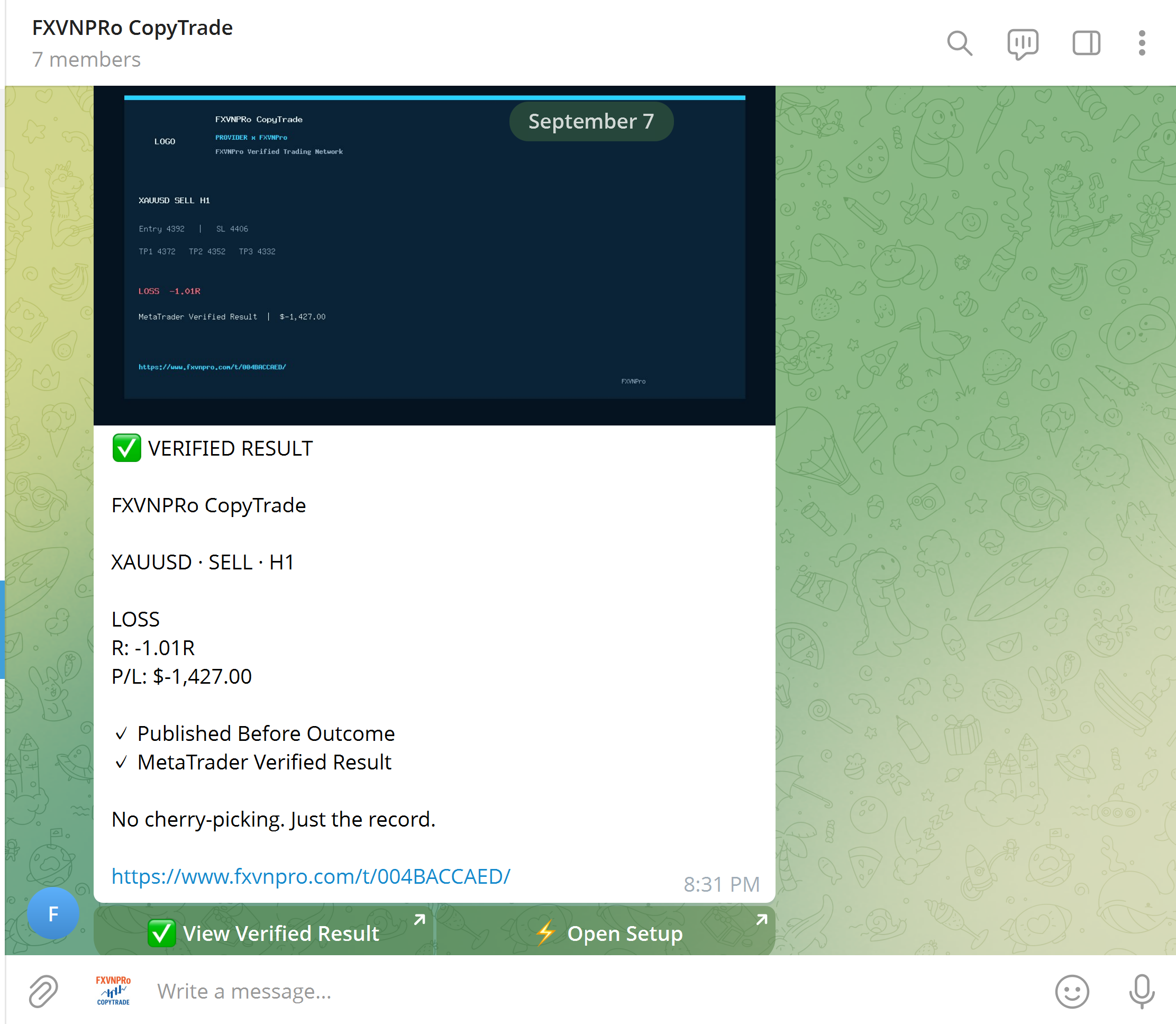 3 · VERIFIED
FXVNPro connects trade plans, Telegram trading communities and verified CopyTrade activity in one practical MT4/MT5 ecosystem.
Turn Entry, Stop Loss and Targets into a trade plan. Publish it before the outcome, then track and verify the result.
Turn Telegram signals into actionable MT4/MT5 setups. Signal Admins create the strategy while Members stay in control of risk.
Discover TRADERs, inspect verified trading history and performance, then decide who you want to follow across MT4 & MT5.
Build your strategy, distribute it to a community, or follow trading activity across MT4 & MT5.
Create Entry, Stop Loss and Targets before the outcome, then build a verified trading record.
Turn Telegram signals into an actionable workflow while followers keep control of their own risk.
Connect Chrome to MT4 or MT5 and open, modify or close trades from your browser.
Explore Masters and copy trading activity to your own MT4 or MT5 terminal with independent risk rules.