Plan a Trade
Build a trade plan and use practical trading tools before you act.
Trade IdeasRisk ToolsCalculators
BUILD A TRADE IDEA →
Start with your goal. You do not have to learn the FXVNPro architecture before using the tools.
Build an idea, use Telegram signals, trade from Chrome or follow a trader while technical setup stays in the background.
Technical connection details remain available inside each product when needed.
Plan trades, connect MT4 & MT5, review verified execution, explore traders and research brokers — without learning the whole platform first.
Build a trade plan and use practical trading tools before you act.
Use Browser Trading or turn supported Telegram signals into a structured trading workflow.
Explore CopyTrade TRADERs, review their records and choose your own risk settings.
Everything is still here — organized by what it helps you do.
Compare BlackBull and Vantage Markets by rating, regulation, minimum deposit, platforms, spreads, and overall trading conditions.
Use the FXVNPro Broker Checker Chrome extension to quickly review broker trust signals, ratings, and safety information while browsing broker websites.


| Feature | BlackBull | Vantage Markets |
|---|---|---|
| Rating | 6.4 | 6.5 |
| Minimum Deposit | $1 | $50 |
| Regulation | FSP | ASIC, FSCA, VFSC |
| Platforms | MT4, MT5,cTrader,TradingView | MT4, MT5,cTrader,TradingView |
| Spread | From 0.0 pips | From 1.0 pips |
Below is a detailed breakdown of fees, spreads, regulation, platforms, and real trading suitability to help you decide which broker fits your trading style better.
If you’ve ever had a trade that looked perfect on paper—then the fill came in a few ticks worse than expected—you already know why broker choice matters. With forex, you’re not just paying spreads. You’re paying for execution quality, platform stability, and the way a broker handles fast markets. And over hundreds of trades, those costs stop being “small.” They become your edge (or your leak).
This comparison is for traders who actually trade—scalpers watching spreads intraday, day traders managing risk around releases, and swing traders who care about consistency when volatility spikes. If you’re choosing between BlackBull and Vantage Markets and you’re thinking, “Which broker is better for my style?” you’re in the right place.
Here’s the practical headline: BlackBull comes with a very low minimum deposit and advertises spreads from 0.0 pips, while Vantage Markets asks more to start ($50) but operates under multiple major regulators (ASIC, FSCA, VFSC). Both offer MT4, MT5, cTrader, and TradingView, so the question becomes more about fees comparison, execution reality, and which setup fits your trading routine.
Let’s get into the parts that tend to surprise people after they’ve funded their account. Because when you’re wrong about costs or safety, you don’t just lose money—you lose time, too.
Let’s talk money the way it hits your account: spreads and trading costs. On paper, BlackBull lists “Spread: From 0.0 pips,” while Vantage Markets lists “From 1.0 pips.” That sounds simple—lower spread wins, right? In calm markets, sure. But in real trading conditions, you need to ask what happens when volatility rises and liquidity thins out.
With BlackBull advertising from 0.0 pips, you’re potentially paying less on entries, especially on liquid Connects (EUR/USD, GBP/USD) during peak sessions. For a scalper, that matters because you might be doing 30–200 trades a week. A fraction of a pip becomes real money fast. But also remember: “from” is not the same as “always.” Spreads can widen around news, during rollover, or when spreads are managed differently by Signal Admins.
Vantage starting at 1.0 pips may feel higher, but the total cost is what matters. The fees comparison isn’t just spread; it’s spread plus any commissions (if applicable in your account type), plus the quality of execution. If one broker consistently fills better—less slippage, fewer re-quotes—then a slightly wider displayed spread can still be cheaper in practice.
Example scenario: you trade GBP/USD around a high-impact news release. You place a limit order, then switch to market as price accelerates. If Broker A tends to slip more, your “0.0 pip” promise doesn’t mean much. If Broker B holds execution tighter, the 1.0 pip starting spread might actually be the cheaper path. That’s why traders who obsess over costs also obsess over execution speed and slippage.
Bottom line for fees: BlackBull looks like the lower-spread option at face value, but Vantage may still win for some traders if execution quality and trading costs (including any commission model) are favorable on your account type. The only honest way to know is to test with the exact Connects and session times you trade.
Regulation is where traders either feel confident or feel exposed. BlackBull is listed with regulation FSP. Vantage Markets is listed under ASIC, FSCA, and VFSC. On its face, Vantage clearly has more regulatory coverage across different jurisdictions. Why does that matter? Because regulation shapes how brokers handle segregation, reporting, complaint processes, and oversight intensity.
Let’s be careful here: not every regulator is “equal” in practice, and traders shouldn’t treat any license as a magical shield against losses. Forex trading risk is still yours. But regulatory supervision affects the environment you’re trading in—how the broker behaves when things get messy, like during extreme volatility, outages, or operational stress.
When you’re verifying safety, don’t just look at the headline. Ask: is the entity you’re dealing with the one under that license? Do account agreements match the regulated status? Can you find clear disclosures about risk, leverage, and how funds are handled? This matters because even a well-designed platform won’t save you if the operational side is shaky.
Real-world trading scenario: you’re up 2–3% on the month and you request a withdrawal after a busy week. You don’t want surprises—delays, extra steps, or unclear processing. Stronger regulatory environments typically correlate with more structured processes, but you still need to read the broker’s withdrawal policy and test it early with small amounts.
So which broker feels safer? Based on the regulators listed, Vantage Markets generally has the more reassuring footprint for international traders. BlackBull can still be workable, especially if you’re comfortable with the listed FSP framework, but if you want multiple layers of oversight, Vantage has the clearer advantage.
Both brokers cover the platform bases: MT4, MT5, cTrader, and TradingView. That’s a big deal because platform familiarity affects your decision-making under pressure. If you trade with an EA, MT4/MT5 compatibility matters. If you rely on advanced charting and order types, TradingView feeds and cTrader’s interface can make life easier.
Where it gets interesting is the “how it feels” part—execution speed, order handling, and stability. In live markets, you don’t just click once and wait. You manage. You modify orders. You react to spreads widening. You watch whether the platform freezes during high-volume bursts (it happens).
Scenario: you’re running a simple intraday strategy on MT5, placing limit orders around support/resistance. Suddenly price breaks, spreads widen, and your order might not fill. With cTrader users, the order management workflow can feel more transparent. With MT4/MT5, it’s often the ecosystem—EAs, scripts, and indicator compatibility—that makes traders stick.
Now add TradingView. Many traders build trade plans on TradingView, then TRADE on MT4/MT5 or cTrader. The quality of the bridge—how quickly signals map, how clean the integration is—can affect whether your entries are timely. If you’ve ever missed a trade because of a delayed signal, you understand why platform experience isn’t “nice to have.” It’s operational edge.
So for which broker is the platform experience better? Given both support the same main platforms, the difference usually comes down to execution quality and how the broker handles order flow during fast markets. That’s not something you can fully confirm from features alone, but you can usually infer it from your test fills and your experience with slippage.
Minimum deposit is where the psychological barrier starts. BlackBull lists a minimum deposit of $1. Vantage Markets lists $50. If you’re testing the waters, the difference is huge. With BlackBull, you can do a “small proof” of execution—open a demo, then fund lightly to check real spreads and withdrawals without risking meaningful capital. For a trader who likes to validate costs first, that matters.
With Vantage, $50 is still not a massive amount, but it’s higher friction. If your plan is to trial multiple brokers by funding small amounts, Vantage is less convenient. On the other hand, a higher minimum can sometimes reflect a more structured onboarding and account setup.
Withdrawals are where stress reveals itself. Real-world experience: you trade during a volatile week, then try to withdraw. The questions you should ask are simple—how long does processing take, are there fees, and are there additional verification steps? Even well-regulated brokers can have delays depending on region and payment method.
Here’s the trader mindset that prevents headaches: withdraw small after your first week of live trading. Not because you’re expecting problems, but because you want data. If the process is smooth, you can scale confidently. If it’s slow or frustrating, you adjust your risk and expectations.
So which broker is easier on deposits and withdrawals? BlackBull is easier to start with due to the low minimum deposit, which encourages early testing. Vantage is still accessible, but it’s more “commitment required” before you can validate execution and withdrawal flow with meaningful real money.
For beginners, the broker shouldn’t just be “feature-rich.” It should reduce decision friction and protect learning from avoidable mistakes. That means: simple account funding, transparent platform behavior, and trading costs you can reasonably learn from.
BlackBull’s $1 minimum deposit is a big beginner advantage. It lets you trade small while you figure out how spreads behave, how order types work, and what happens to your account during normal market conditions. In early stages, many new traders overtrade. A tiny starting balance helps keep that damage limited while you build discipline.
Vantage’s $50 minimum deposit is still workable for new traders, but it creates a psychological hurdle. You might be more hesitant to test settings, try different order types, or run a few small experiments. And beginners often need that experimentation.
Now add the regulation angle. Beginners often feel safer with well-known regulators. Vantage’s ASIC/FSCA/VFSC listing can make that comfort easier to justify. BlackBull’s FSP regulation may still be legitimate and fine for many traders, but if you’re new, you’ll likely weigh the number of regulators more heavily.
Real example: a new trader starts with EUR/USD, then tries their first news trade. If spreads widen sharply and their fills are unpredictable, they might blame their strategy instead of the market conditions or broker execution. A beginner-friendly setup is one where you can see what’s happening and test it with minimal risk.
Which broker is better for beginners? I’d lean toward BlackBull for the practical “learn without stress” factor due to the very low minimum deposit. If your priority is regulatory comfort first, Vantage has the edge on that front.
Active traders live and die by execution quality—spreads and slippage aren’t theoretical. They’re embedded in every day’s routine. This is where “from X pips” becomes less important than how tight spreads stay during the moments you trade.
BlackBull advertises spreads from 0.0 pips. If those conditions are commonly achievable on your chosen Connects during your trading sessions, it’s a strong fit for scalpers and day traders. Lower spread reduces the hurdle rate for your strategy. If you run a mean-reversion system that needs a small edge per trade, a lower spread environment can be the difference between grinding profit and slowly bleeding.
Vantage starts at 1.0 pips. That can still work for high-volume traders if execution speed is consistently good and slippage is low. In practice, some traders prefer a slightly wider spread if it comes with smoother fills and fewer “weird” execution behaviors during fast price swings.
Scenario: you trade the London open and you’re placing multiple orders in quick succession. You need the platform to handle order placement without delays, and you need fills that aren’t mysteriously worse than expected. If one broker shows more slippage during momentum bursts, your average trade cost rises, and your risk model becomes inaccurate.
Both brokers support cTrader and MT4/MT5, so tooling isn’t a differentiator in the basics. The differentiator is operational: how execution behaves under load, how quickly orders are processed, and whether spreads widen aggressively.
So which is better for active traders? On raw spread positioning, BlackBull looks more attractive. On execution confidence driven by regulatory footprint and maturity, Vantage can be appealing. If you’re scalping, you should test both with the exact instruments you trade during your exact session times before committing serious volume.
Notice what’s missing: no generic claims. This is the stuff that hits your account—startup friction, regulatory confidence, and spreads and trading costs in actual market conditions.
If you force me to choose based on the data you provided and the way traders typically experience brokers in real life, the decision is fairly straightforward by trader type.
Choose BlackBull if: you want to start small, validate execution with real money, and trade strategies that benefit from lower spreads. The $1 minimum deposit is genuinely useful for testing. If your style is scalping or day trading where every pip matters, BlackBull’s “from 0.0 pips” positioning gives it an edge—assuming real fills match the promise during your session times.
Choose Vantage Markets if: you prioritize regulation and safety narrative across multiple jurisdictions and you’re comfortable starting with $50. For many discretionary traders and systematic traders alike, Vantage’s regulatory footprint plus a full platform suite makes it a solid operational choice. If your execution experience shows low slippage, the slightly higher advertised spreads (from 1.0 pips) may not matter as much as you think.
For the “which broker is better” question: BlackBull is the better fit for cost-sensitive traders who want low-friction live testing. Vantage Markets is the better fit for traders who want stronger multi-regulator coverage and a more straightforward sense of oversight.
Either way, don’t skip the final step: run a short, instrument-specific test. Compare spreads and trading costs during the sessions you actually trade, and pay attention to slippage and execution speed—not just the minimum spread headline.
One real XAUUSD trade: created before the outcome, sent to Telegram, TRADEd in MT5 and returned as a verified result.
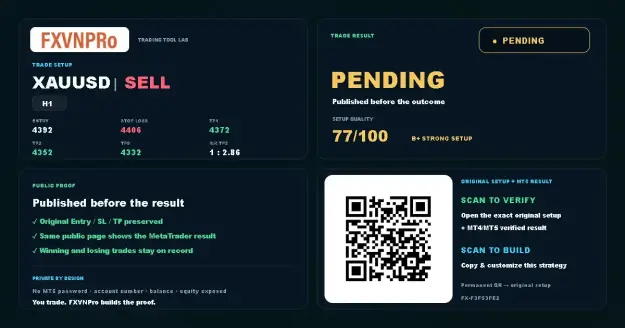 1 · SETUP
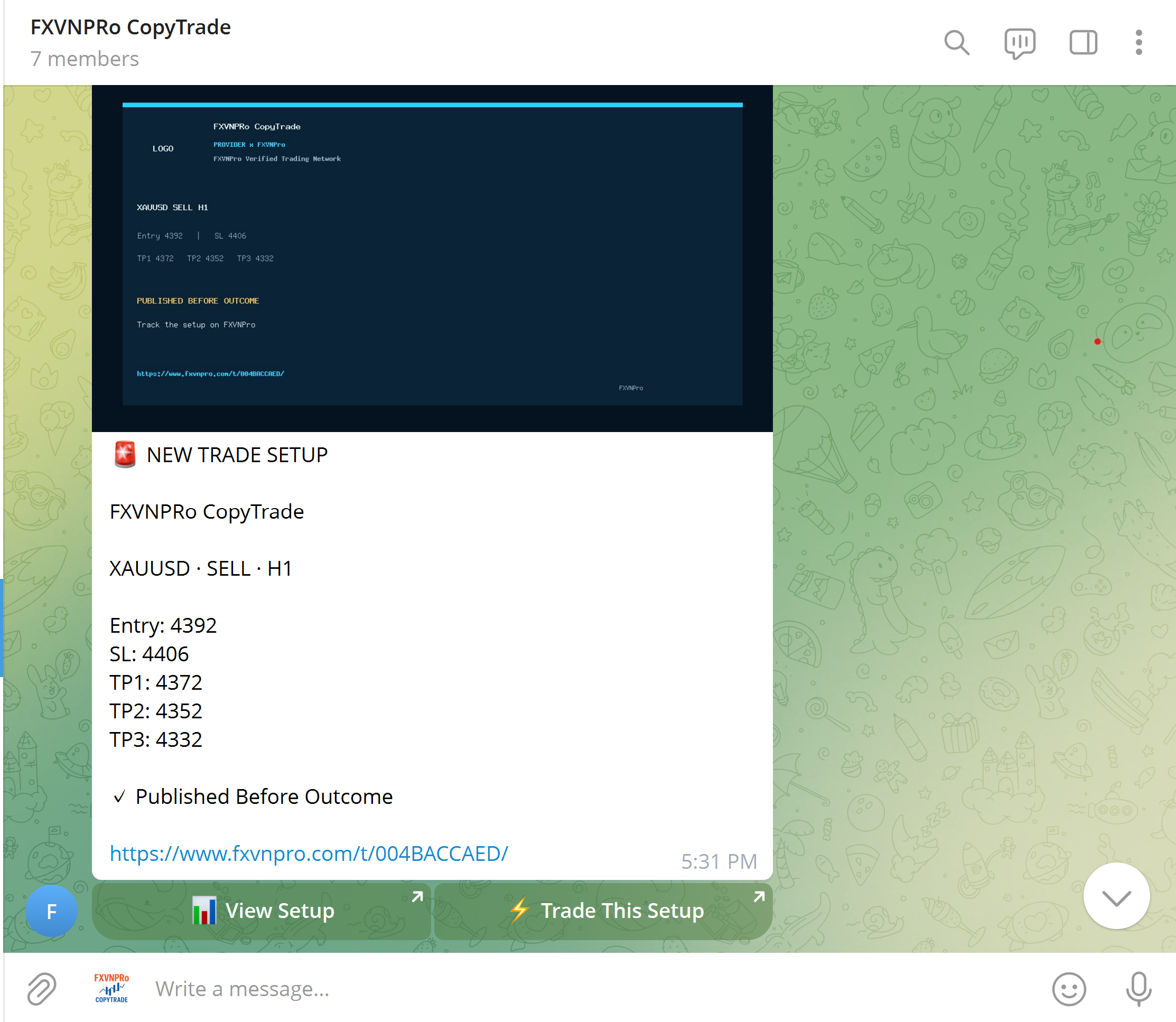 2 · TELEGRAM
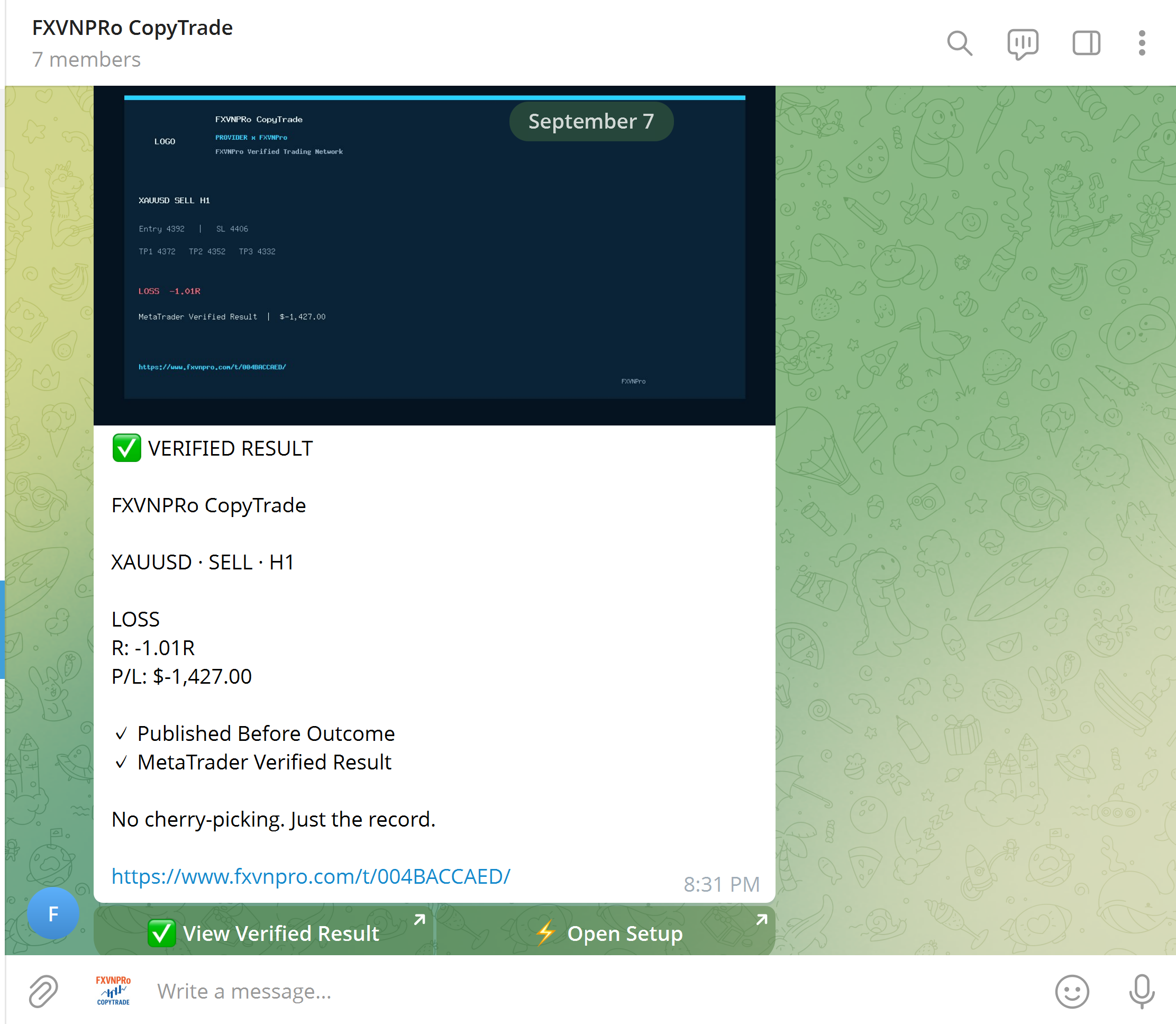 3 · VERIFIED
FXVNPro connects trade plans, Telegram trading communities and verified CopyTrade activity in one practical MT4/MT5 ecosystem.
Turn Entry, Stop Loss and Targets into a trade plan. Publish it before the outcome, then track and verify the result.
Turn Telegram signals into actionable MT4/MT5 setups. Signal Admins create the strategy while Members stay in control of risk.
Discover TRADERs, inspect verified trading history and performance, then decide who you want to follow across MT4 & MT5.
Build your strategy, distribute it to a community, or follow trading activity across MT4 & MT5.
Create Entry, Stop Loss and Targets before the outcome, then build a verified trading record.
Turn Telegram signals into an actionable workflow while followers keep control of their own risk.
Connect Chrome to MT4 or MT5 and open, modify or close trades from your browser.
Explore Masters and copy trading activity to your own MT4 or MT5 terminal with independent risk rules.