Plan a Trade
Build a trade plan and use practical trading tools before you act.
Trade IdeasRisk ToolsCalculators
BUILD A TRADE IDEA →
Start with your goal. You do not have to learn the FXVNPro architecture before using the tools.
Build an idea, use Telegram signals, trade from Chrome or follow a trader while technical setup stays in the background.
Technical connection details remain available inside each product when needed.
Plan trades, connect MT4 & MT5, review verified execution, explore traders and research brokers — without learning the whole platform first.
Build a trade plan and use practical trading tools before you act.
Use Browser Trading or turn supported Telegram signals into a structured trading workflow.
Explore CopyTrade TRADERs, review their records and choose your own risk settings.
Everything is still here — organized by what it helps you do.
Compare Titan FX and Vantage Markets by rating, regulation, minimum deposit, platforms, spreads, and overall trading conditions.
Use the FXVNPro Broker Checker Chrome extension to quickly review broker trust signals, ratings, and safety information while browsing broker websites.


| Feature | Titan FX | Vantage Markets |
|---|---|---|
| Rating | 6.3 | 6.5 |
| Minimum Deposit | $50 | $50 |
| Regulation | VFSC, FSA, FSC | ASIC, FSCA, VFSC |
| Platforms | MT4, MT5 | MT4, MT5,cTrader,TradingView |
| Spread | From 0.1 pips | From 1.0 pips |
Below is a detailed breakdown of fees, spreads, regulation, platforms, and real trading suitability to help you decide which broker fits your trading style better.
If you’ve ever wondered why two traders can run the “same” strategy and still end up with totally different results, here’s one uncomfortable truth: broker conditions matter more than most people admit. Not in a theoretical way, but in the boring, day-to-day way—spreads at the wrong moment, execution that’s a fraction slower, withdrawal friction that forces you to pause. Those things add up.
This comparison, Titan FX vs Vantage Markets, is for traders who actually place trades often enough to feel costs and execution. If you’re brand new and only planning a couple of demo trades, the differences won’t matter much yet. But if you’re already trading live—especially around news, during liquid sessions, or with a scalping rhythm—then spreads and execution speed become part of your edge.
Here’s the quick snapshot. Titan FX lists spreads from 0.1 pips and offers MT4 and MT5, with a minimum deposit of $50. Vantage Markets starts from 1.0 pips, offers MT4, MT5, cTrader, and TradingView, and also has a $50 minimum. On regulation, both have multiple regulators, but the specific mix changes the “feel” of safety and oversight.
So which broker is better? The answer depends on what you trade and how often. Keep reading and you’ll see where each broker tends to help—and where it can quietly cost you.
Let’s talk trading costs in the way that actually matters: how they hit your P&L, not how they look on a brochure. Titan FX advertises spreads from 0.1 pips. Vantage Markets advertises spreads from 1.0 pips. On paper, that’s a huge gap. In real trading conditions, it can be even more noticeable—because spreads aren’t flat. They widen around volatility, and they behave differently by session.
For example, imagine a typical EUR/USD trade of 1 standard lot. A 0.9 pip difference in spread can represent a meaningful slice of your expected profit, especially if your strategy targets 8–15 pips. If you take 20 trades in a week, that spread gap isn’t “small.” It becomes a weekly headwind.
Now, hidden fees. With brokers, the “gotcha” is usually not a monthly platform fee—it’s how costs show up as either commissions or execution artifacts (slippage, re-quotes, or wider effective spreads during fast markets). In your data here, we only have spread ranges. We don’t have explicit commission figures. That means the safest conclusion is: Titan FX’s lower spread headline suggests lower baseline costs, but you should still verify whether there’s a commission model behind the scenes on specific account types.
In real trading, the question becomes: do you pay less in spread, or do you pay more via execution friction? If you trade at London open or during a high-impact news window, those “extra” costs show up fast. Lower spread is a start, but execution quality decides the final bill.
Regulation isn’t just a stamp on the website; it changes how seriously a broker is expected to manage risk, segregation, and customer treatment. Titan FX is listed with VFSC, FSA, and FSC. Vantage Markets is listed with ASIC, FSCA, and VFSC. Even without diving into every legal nuance, the practical takeaway is that the regulator mix can affect credibility, consistency, and how disputes are handled.
Here’s how traders should think about this. If a broker is overseen by multiple jurisdictions, you typically get more layers of compliance pressure. That doesn’t magically eliminate risk—no regulator can prevent every failure—but it tends to reduce the chances of “creative” account behavior, especially around withdrawals and customer communication.
Verification matters because it’s not just “who regulates them,” it’s whether the broker’s entity you’re trading with is the one actually holding your funds. In real life, traders sometimes assume they’re dealing with one brand, but their account is tied to a different legal entity. That’s where “safety” becomes a paperwork issue.
So who feels safer, Titan FX or Vantage Markets? Based on the data you gave, Vantage Markets has ASIC in the mix, which many traders associate with stricter expectations in day-to-day compliance culture. Titan FX’s regulators are also present, but your risk tolerance should be shaped by how comfortable you are with the specific regulatory environment tied to your account.
If you’re trading live with meaningful sizing, this section isn’t optional reading. It’s risk management.
Platforms sound like a “comfort” topic, but they quietly influence execution and decision-making. Titan FX offers MT4 and MT5. Vantage Markets offers MT4, MT5, cTrader, and TradingView. That extra spread of options matters if you’ve built a workflow around a specific terminal.
MT4/MT5 are still the default for many retail traders because of EA ecosystem, familiarity, and charting options. MT5 can be an upgrade for those who use additional order types and want a more modern structure. If you’re running a strategy that relies on MT4 indicators or older EAs, Titan FX’s MT4/MT5 support is what you’d expect.
Where Vantage Markets becomes more interesting is cTrader and TradingView. cTrader often feels smoother for order handling and trade visualization, and it’s popular with traders who care about execution transparency. TradingView is a different story: it’s about charting and signal workflow. If you’re the type who plans entries from charts and then TRADEs quickly, having TradingView in the ecosystem can reduce friction.
But execution speed is the part you should pay attention to. Even if two brokers offer the same platform, they don’t always deliver the same fill behavior during fast markets. In real trading conditions—especially when spreads are changing minute-by-minute—what matters is how orders are routed, how quickly the platform confirms fills, and whether slippage shows up.
Ask yourself: are you trading manually with alerts, or are you automating? If you automate heavily, MT4/MT5 support is enough. If you want a more modern chart-to-execution workflow, Vantage Markets has the broader toolkit.
Both brokers list a minimum deposit of $50, which is friendly for traders who don’t want to commit much capital at the start. The deposit size is only part of the story though. The real friction is what happens after you decide to add funds or pull profit—processing times, required verification, and whether withdrawals feel smooth during busy periods.
In real trading, withdrawals become urgent at the worst time. You’ll notice this when you finally hit a solid week and want to reduce risk. If the broker’s verification process is slow or if funding methods are limited, you can end up waiting longer than you expected. That waiting period can change your risk decisions—because you may be forced to keep funds tied up rather than redeploy elsewhere.
Since your data doesn’t include specific withdrawal options or processing times, I can’t claim “faster withdrawals” for either broker. What you can do (and what I recommend) is to check three things before committing: supported deposit/withdrawal methods in your country, how long it typically takes them to complete verification, and whether there are inactivity or withdrawal fees.
Also consider how your account type affects funding friction. Some brokers require additional steps if you switch account tiers, and some require renewed proof of identity before large withdrawals. If you’re actively trading, that can become annoying.
Bottom line: $50 minimum is convenient, but don’t confuse convenience in deposits with convenience in withdrawals. In trading, timing matters.
Beginners usually focus on spreads and platform names. That’s understandable, but it’s not the full picture. What makes a broker beginner-friendly is whether the learning curve is smooth and whether costs don’t punish you before you’ve built consistency.
Titan FX’s advertised spreads from 0.1 pips can make early trading feel “less expensive.” For a new trader testing a simple strategy—maybe a basic support/resistance approach or a moving average crossover—lower spreads can reduce the break-even hurdle. That matters because beginners often take smaller, frequent trades while they learn execution and position sizing.
However, beginners also need clarity. MT4/MT5 are familiar, but they can still overwhelm if you’re setting leverage, order types, and risk limits without a plan. The platform is only part of it; the real beginner challenge is understanding what “live” trading conditions look like compared to demo conditions. Spreads widen at the wrong time. That’s where accounts either feel forgiving or punishing.
Vantage Markets offers more platform variety: MT4, MT5, cTrader, and TradingView. That can be a blessing for beginners who like to learn through visuals. TradingView integration can help you build a habit of charting first, then executing with a more structured workflow.
So which broker is easier to start with? If you’re the type who wants a polished charting workflow and multiple platform choices, Vantage Markets tends to be smoother. If your priority is minimizing trading costs right away and you’re comfortable with MT4/MT5, Titan FX’s lower spread headline is a strong advantage.
Active traders don’t just care about spreads in the abstract. They care about how those spreads behave when you’re trading fast—when your strategy depends on tight entries, quick exits, and consistent fills. This is where Titan FX vs Vantage Markets becomes less about “which platform is better” and more about “what kind of trading environment are you entering.”
Titan FX advertises spreads from 0.1 pips. If you’re scalping or day trading with short holding periods, that lower baseline can be the difference between a strategy that barely survives costs and one that’s viable. But remember: spreads aren’t constant. During volatility, every broker widens. The real test is whether the widening is manageable or whether execution turns sloppy.
Vantage Markets starts from 1.0 pips in its spread data. That’s a noticeable difference for high frequency strategies. If your average target is small—say 5–10 pips—then a larger spread can force you to either reduce trade frequency, increase targets, or accept lower net performance.
Now, platforms matter more for active traders than people think. Vantage Markets giving you cTrader and TradingView can help with order monitoring and trade management. cTrader in particular tends to appeal to traders who want detailed execution visualization and efficient order handling. If execution speed, slippage, and order routing are strong, that can partly offset higher spreads.
For example, a day trader trading the same Connect repeatedly through a session will feel cost drift. If their effective spread is consistently higher, they’ll start “fighting the market” rather than trading it.
If you’re scalping or placing lots of intraday trades, Titan FX has the better cost headline. If you’re active but rely heavily on chart workflow and want cTrader/TradingView in your setup, Vantage Markets may fit better—just understand your spreads and trading costs will likely be higher from the start.
That’s the honest trade-off. Titan FX leans toward lower spreads and classic platform use. Vantage Markets leans toward platform flexibility and a regulator mix that many traders find comforting. Neither is perfect, but one will feel better depending on your style.
Let’s make the decision clear. If your strategy depends on tight spreads—scalping, fast intraday mean reversion, or any system where 0.5–1.0 pips can flip profitability—then Titan FX is the stronger candidate from a fees and spreads perspective. The “from 0.1 pips” headline is exactly the kind of advantage active traders look for, and it aligns with the reality that costs can quietly kill edge.
Where Titan FX may not be the best pick is if you want cTrader or a TradingView-first workflow as part of your trading routine. If your execution style is built around modern charting and you care about the specific usability of cTrader, Vantage Markets is more likely to match your day-to-day. It also has ASIC in its regulator mix, which tends to reassure traders who prioritize oversight culture.
So which broker is better overall? For most cost-sensitive traders: Titan FX. For traders who value platform variety and want a broader workflow toolkit (and who can tolerate higher spreads): Vantage Markets.
If you’re still deciding, do one practical thing before you commit real money: open demo accounts with both, run your normal strategy for a week, and compare your effective spread and execution behavior during your typical trading hours. After that, the “fees comparison” stops being theoretical, and your choice becomes obvious.
One real XAUUSD trade: created before the outcome, sent to Telegram, TRADEd in MT5 and returned as a verified result.
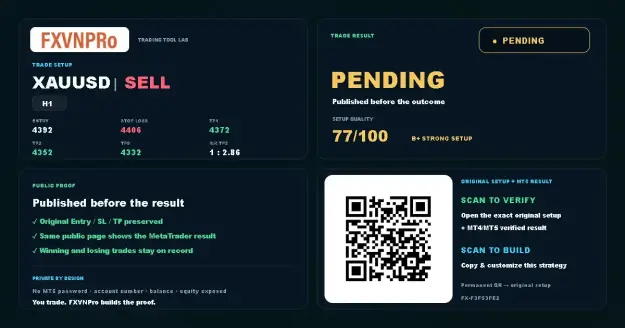 1 · SETUP
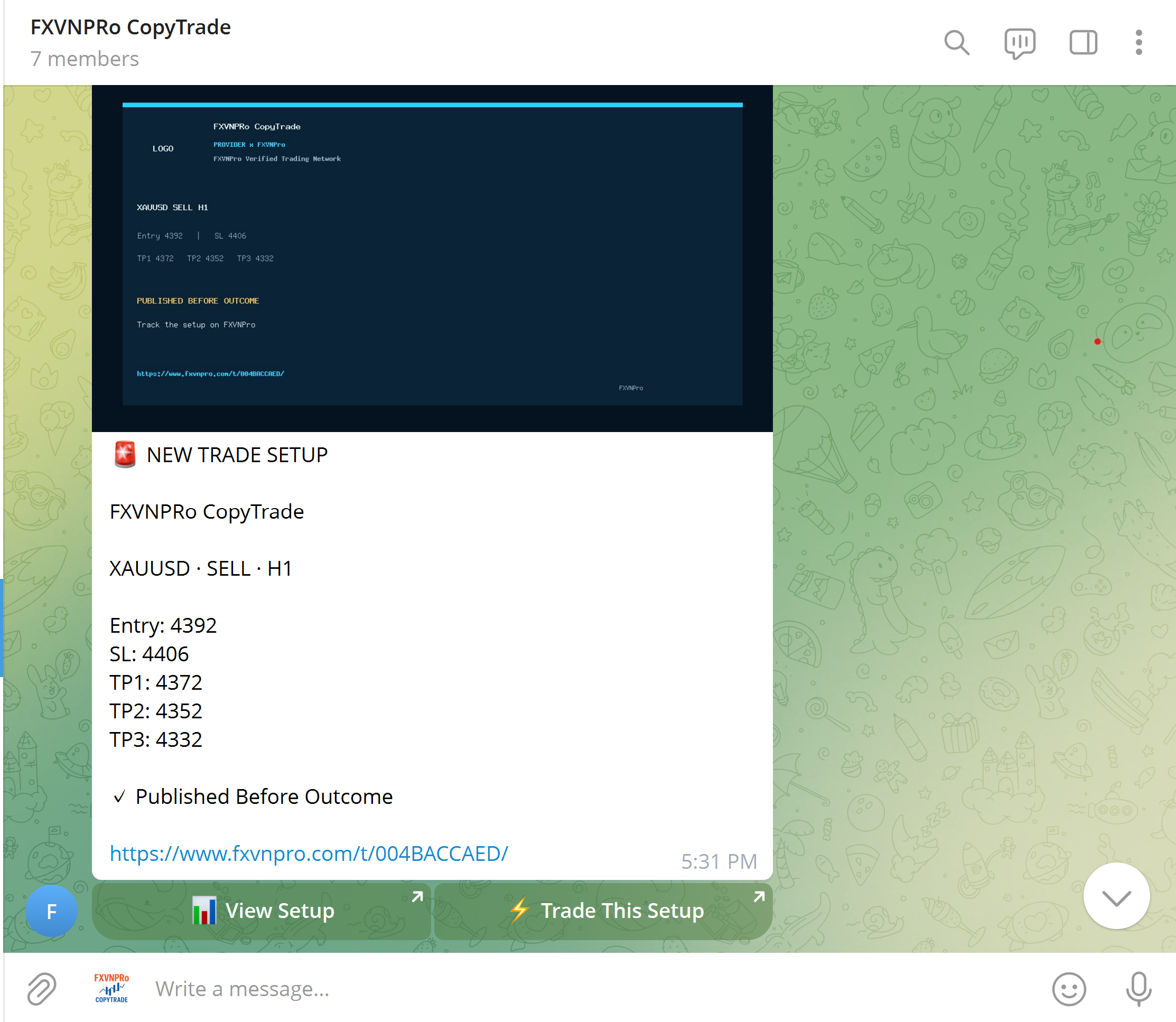 2 · TELEGRAM
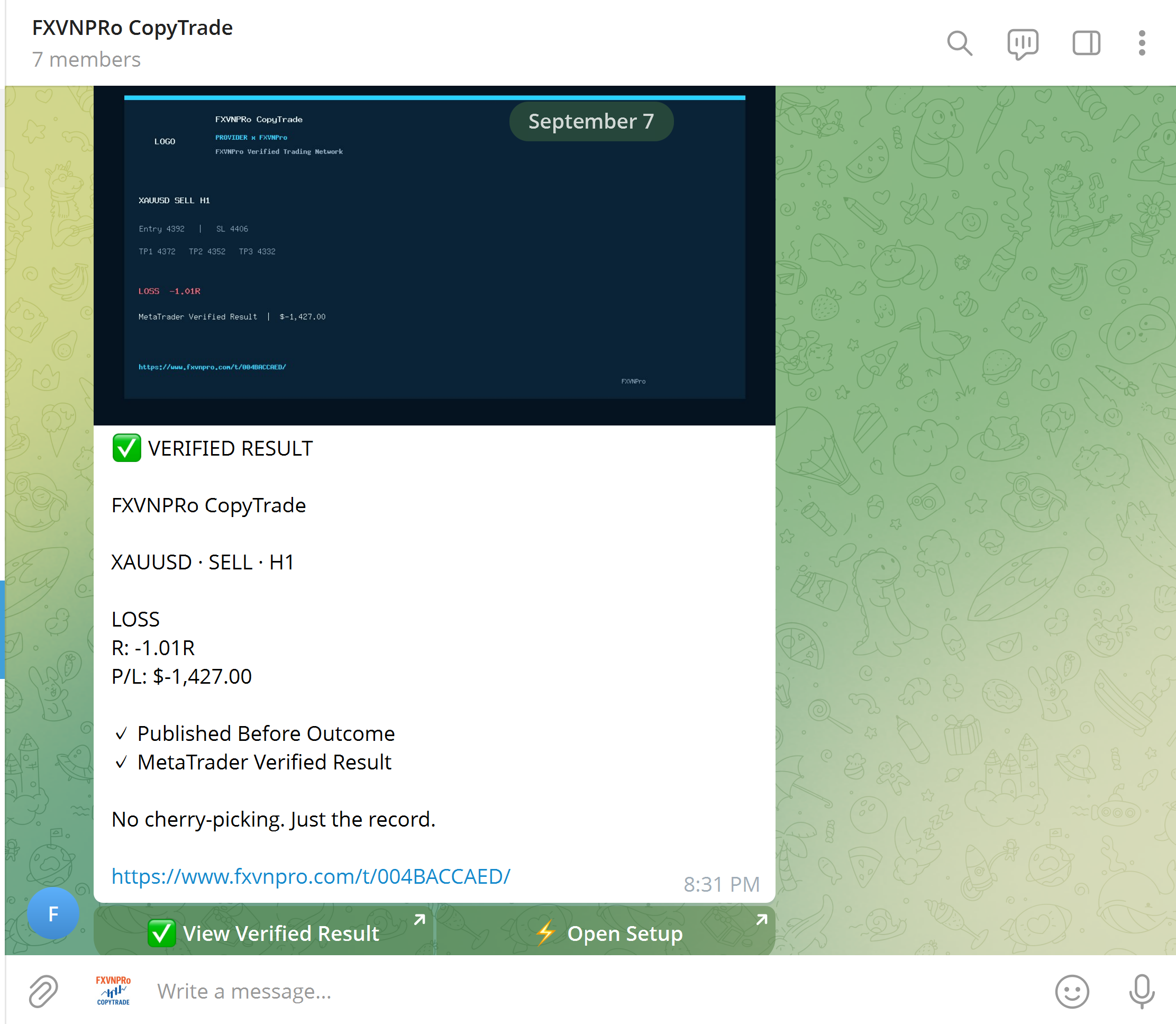 3 · VERIFIED
FXVNPro connects trade plans, Telegram trading communities and verified CopyTrade activity in one practical MT4/MT5 ecosystem.
Turn Entry, Stop Loss and Targets into a trade plan. Publish it before the outcome, then track and verify the result.
Turn Telegram signals into actionable MT4/MT5 setups. Signal Admins create the strategy while Members stay in control of risk.
Discover TRADERs, inspect verified trading history and performance, then decide who you want to follow across MT4 & MT5.
Build your strategy, distribute it to a community, or follow trading activity across MT4 & MT5.
Create Entry, Stop Loss and Targets before the outcome, then build a verified trading record.
Turn Telegram signals into an actionable workflow while followers keep control of their own risk.
Connect Chrome to MT4 or MT5 and open, modify or close trades from your browser.
Explore Masters and copy trading activity to your own MT4 or MT5 terminal with independent risk rules.