Plan a Trade
Build a structured setup and use practical trading tools before you act.
Trade IdeasRisk ToolsCalculators
BUILD A TRADE IDEA →
Plan trades, connect MT4 & MT5, review verified execution, explore traders and research brokers — without learning the whole platform first.
Build a structured setup and use practical trading tools before you act.
Use Browser Trading or turn supported Telegram signals into a structured trading workflow.
Explore CopyTrade Masters, review their records and choose your own risk settings.
Compare BlackBull and Titan FX by rating, regulation, minimum deposit, platforms, spreads, and overall trading conditions.
Use the FXVNPro Broker Checker Chrome extension to quickly review broker trust signals, ratings, and safety information while browsing broker websites.


| Feature | BlackBull | Titan FX |
|---|---|---|
| Rating | 6.4 | 6.3 |
| Minimum Deposit | $1 | $50 |
| Regulation | FSP | VFSC, FSA, FSC |
| Platforms | MT4, MT5,cTrader,TradingView | MT4, MT5 |
| Spread | From 0.0 pips | From 0.1 pips |
Below is a detailed breakdown of fees, spreads, regulation, platforms, and real trading suitability to help you decide which broker fits your trading style better.
Here’s the uncomfortable truth most new traders learn the hard way: broker choice isn’t a “set and forget” decision. It quietly taxes your performance every single week through spreads, execution quality, platform friction, and the way withdrawals actually feel when you’re stressed. And yes—those costs matter even if you’re “only” trading a few times a day.
In this BlackBull vs Titan FX comparison, I’m going to focus on what changes the outcome. Not marketing slogans. Real-world trading conditions: news spikes, high-speed scalps, and those moments when price moves faster than your order ticket can think.
Quick snapshot: BlackBull is built for traders who want more platform options (MT4, MT5, cTrader, TradingView) and a very low minimum deposit ($1). Titan FX has a higher minimum deposit ($50) and slightly higher headline spreads (from 0.1 pips), but it operates under multiple regulators (VFSC, FSA, FSC). Both are MetaTrader-friendly, but they don’t feel identical once you start placing orders repeatedly.
So who should care? If you’re scalping, you care about spreads, execution speed, and slippage. If you’re a swing trader, you care about whether the broker’s costs stay predictable when markets get choppy. And if you’re a beginner, you care about friction—deposit, platform learning curve, and whether withdrawals behave like a headache or a non-event.
Let’s talk numbers, because “from X pips” is where reality often diverges. BlackBull advertises spreads from 0.0 pips. Titan FX advertises spreads from 0.1 pips. On paper, that looks small—almost nothing. In practice, it can be the difference between a profitable scalping week and a “why am I losing even when I’m right?” month.
Here’s the cost math that traders tend to forget: if you’re targeting, say, 1–2 pip average moves (common for scalpers on liquid pairs), a 0.1–0.2 pip difference becomes meaningful across dozens of trades. Even for day traders, spreads widen during volatility. So “from” is just the best-case scenario; what matters is how often you see those tight prints.
Now, we also need to consider commission structures—because some brokers advertise low spreads while embedding costs elsewhere. In the data you provided, we only have spread ranges, not a commission schedule. That means the fair way to compare is: treat the spread as the headline cost, then assume the broker with tighter spreads at the moments you trade most will likely be cheaper. If one broker also adds commissions, it could flip the result—but we can’t assume that without confirmation.
In real trading conditions, I’ve seen brokers with “0.0 pip” marketing still produce wider effective spreads when liquidity thins. The key question is frequency: do you get consistently tight spreads during your sessions? If you trade London/NY overlap, you’ll likely notice the difference more than someone trading only end-of-day.
For a practical fees comparison: BlackBull has the edge on headline spread tightness, but Titan FX may still compete if its execution is cleaner and slippage is lower. That’s the part you verify via demo for your specific pairs and time windows.
Regulation isn’t a badge you wear—it’s a framework that can affect dispute handling, oversight, and how seriously the broker is monitored. With BlackBull, the provided regulation is “FSP.” With Titan FX, it lists VFSC, FSA, and FSC. On first glance, Titan FX looks more covered. But here’s the nuance: “more regulators” doesn’t automatically equal “safer,” and “a regulator present” doesn’t mean “problem-proof.” What it does mean is different layers of accountability.
In real trading, the safety issue usually shows up at the worst possible time: withdrawal delays, account reviews, or sudden changes to execution conditions. That’s where regulated brokers (depending on their jurisdiction and actual compliance procedures) tend to be more predictable. Still, traders should verify what these regulators actually correspond to—sometimes entities operate under different legal setups than the brand you see on the website.
For example, if you live in a region with specific consumer protections, the local regulator relevance matters. If a broker’s oversight is under a jurisdiction with limited enforcement, “regulated” might not carry the same weight as it would elsewhere.
Also, check whether you’re trading with the regulated entity or a separate offshore entity. This matters because investor protections can differ. Many traders skip verification because it feels tedious. Yet when you’re managing risk, why accept uncertainty when you can confirm the legal structure early?
Bottom line: Titan FX has a stronger-looking regulatory footprint from the data given. BlackBull may still be perfectly workable for many traders, but if you’re prioritizing regulatory visibility as part of your safety checklist, Titan FX has the advantage.
Platforms aren’t just “where you click buy/sell.” They’re how quickly you can react, how reliably your orders are managed, and how comfortable your analysis pipeline becomes. BlackBull supports MT4, MT5, cTrader, and TradingView. Titan FX supports MT4 and MT5 only.
This matters because different platforms suit different trading habits. If you’re used to MetaTrader workflows—indicators, EAs, hedging setups—both brokers will feel familiar. But if you care about interface design, order ticket clarity, or advanced charting and execution features, cTrader can be a big deal. I’ve met traders who can execute better (and stress less) simply because the platform makes order management intuitive.
TradingView integration is another practical advantage. Even if you don’t execute from TradingView, it often improves how you plan trades: watchlists, alerts, and chart annotations. Then you execute in MT4/MT5/cTrader depending on what’s fastest for your style.
Execution speed and usability are linked, even if people pretend they’re separate. A platform with a smoother order workflow reduces the chance you mis-click during fast moves. And during volatile sessions—think rate announcements or index futures rollovers—seconds matter. Not because brokers are “instant,” but because human error rises when the UI fights you.
Titan FX, with MT4/MT5 only, is simpler. That can be a benefit if you already have an EA stack and don’t want to learn new platform logic. But if you’re evaluating which broker reduces friction in the long run, BlackBull’s multi-platform setup gives it flexibility.
So which broker is better for platform choice? If you want options and a potentially smoother planning-to-execution workflow, BlackBull is the more complete toolset.
Deposit and withdrawal experience is one of those topics traders only talk about after something goes wrong. Still, it affects your psychology. If you frequently test strategies, you’ll want fast deposits. If you scale up, you’ll care about predictable withdrawals.
BlackBull’s minimum deposit is $1. That’s not just a “small number.” It changes what experimentation looks like. You can run more demos, do smaller live trials, and validate execution on your exact pairs without risking meaningful capital. For traders building confidence, low friction encourages better learning rather than forced risk.
Titan FX’s minimum deposit is $50, which is more “serious account only.” That can be fine for active traders, but for beginners it raises the bar. They might hesitate, delay funding, or use it inefficiently—like depositing once and then refusing to test anything further because they don’t want to “waste” money.
Now, we don’t have the specific withdrawal times or fee schedules in the data you provided, so I can’t claim one broker is faster. What I can say is that lower minimum deposits often correlate with lower entry friction, which generally makes withdrawal testing easier too. Many traders don’t withdraw on day one; they wait until they’re sure. If you can start small, you can validate the process earlier.
In practical terms, I recommend that you test withdrawal behavior in a controlled way: after your first profit or after a small time window, attempt a small withdrawal. The goal is to confirm paperwork, processing speed, and whether any verification steps appear unexpectedly.
Based on the minimum deposit alone, BlackBull has the advantage for traders who want to learn and test in live conditions without over-committing at the start.
Let’s be blunt: most beginners don’t lose money because they “picked the wrong indicator.” They lose because they can’t get comfortable with execution, order placement, and the emotional side of drawdowns. So beginner suitability isn’t about having more charts—it’s about reducing friction and risk while you figure things out.
BlackBull looks easier to start with because of the $1 minimum deposit. That encourages live experimentation. You can place micro-sized trades, observe spread behavior on your chosen pairs, and learn how stops and take profits behave in live pricing. In other words, you can build muscle memory without making your first mistake expensive.
Titan FX’s $50 minimum deposit may feel like a hurdle. Not everyone can afford to deposit $50 just to test whether the broker’s execution matches their expectations. And if your first setup goes wrong, it’s easier to keep learning when the sunk cost is low.
Platform learning curve matters too. Both brokers offer MT4 and MT5, which is a plus for beginners because there’s a huge amount of community education for those platforms. But BlackBull’s additional platforms (cTrader and TradingView) can be a double-edged sword: more options can be great, but it can also overwhelm someone who just wants to place trades quickly.
So who’s better for beginners? If you’re purely optimizing for low-risk learning and quick onboarding, BlackBull is the better starting point. If you already know you want MT4/MT5 only and you’re comfortable funding at $50, Titan FX can still be fine—especially if you value its broader regulatory footprint.
Ask yourself this: do you want to learn with $1 risk, or do you want to learn with $50 risk? That answer often decides it.
Active traders live and die by trading costs and execution consistency. This is where spreads and slippage stop being “details” and become daily P&L. BlackBull advertises spreads from 0.0 pips; Titan FX from 0.1 pips. On paper, BlackBull has the sharper headline advantage for tight trading.
But active traders also care about what happens when markets speed up. During news events, spreads widen, and orders can experience slippage. The real question is: which broker gives you more stable fills across your typical trading sessions? A difference of 0.1 pips can be meaningful, but inconsistent execution can be worse than slightly higher average spread.
For scalpers, the platform’s order workflow matters just as much as the numbers. If you’re placing multiple orders quickly, reducing friction in the order ticket and minimizing platform lag becomes crucial. BlackBull’s multi-platform offering can help here. For example, some scalpers prefer cTrader’s execution feel, while others stick to MT5 due to EA automation and execution control.
Titan FX being MT4/MT5 only can be a strength for traders who already have EAs and a repeatable system. Fewer platform variables means more consistency in your process. However, if your strategy benefits from TradingView alerts and a different charting workflow, BlackBull’s ecosystem gives you a smoother setup.
Also, minimum deposit affects scaling. If you’re running higher volume, you typically won’t stay near the minimum anyway. But the ability to start small can still matter for testing your active strategy live and measuring real spreads/slippage.
In an active trader scenario—say you’re trading EURUSD and GBPUSD during the London open—BlackBull’s tighter headline spreads give it an edge. Still, the decision should be confirmed by demo-to-live testing focused on your exact pairs and the times you trade most.
BlackBull Pros: Very low minimum deposit ($1) for live testing; multiple platforms (MT4, MT5, cTrader, TradingView); tighter headline spreads (from 0.0 pips).
BlackBull Cons: Regulation listed as “FSP” in the provided data, which may not look as multi-layered as Titan FX depending on entity details; with “from 0.0 pips,” you still need to verify average spreads during your session.
Titan FX Pros: Regulatory footprint looks broader (VFSC, FSA, FSC); multiple MetaTrader options (MT4/MT5); minimum deposit is higher, which can suit traders who already commit capital and want a more traditional setup.
Titan FX Cons: Higher minimum deposit ($50) makes experimentation harder for beginners; spreads are slightly wider on headline (from 0.1 pips); fewer platform choices (no cTrader/TradingView in the provided list).
If you’re wondering “which broker is better,” the answer depends on where you feel pain. Beginners feel pain in deposits and learning friction. Scalpers feel pain in spreads and execution stability. Choose based on your dominant risk.
If I have to be decisive, here’s the clearest recommendation based on the data you provided and how real trading costs show up.
Choose BlackBull if: you want lower-cost trading conditions on headline spreads, you care about platform flexibility (especially if you like TradingView or cTrader), and you want the ability to start live with minimal capital. For many traders, BlackBull vs Titan FX becomes an easy call for early-stage learning and for active strategies that benefit from tighter spreads—assuming your real execution matches the “from 0.0 pips” claim.
Choose Titan FX if: regulatory visibility and multi-regulator oversight are a bigger priority for you, and you’re comfortable funding at $50. If you’re a MetaTrader-first trader with MT4/MT5 EAs and a repeatable workflow, Titan FX can fit nicely. The slightly wider headline spreads mean you’ll want to confirm that slippage and effective spreads don’t erase the difference.
For the “which broker is better” decision, I would not stop at reading. Do one demo test and one small live test for your main pairs during your peak trading hours. Track effective spread (not just the minimum), note slippage during fast markets, and check how clean the platform execution feels when you place orders quickly.
My lean? For most traders who value flexibility and lower entry friction, BlackBull has the stronger practical edge. For traders who want a more robust regulatory footprint and are fine with a higher minimum deposit, Titan FX makes the better case.
One real XAUUSD trade: created before the outcome, sent to Telegram, executed in MT5 and returned as a verified result.
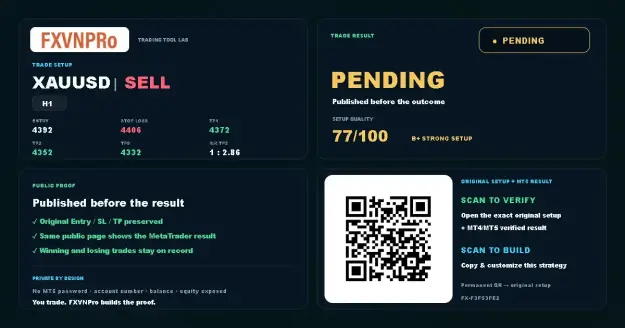 1 · SETUP
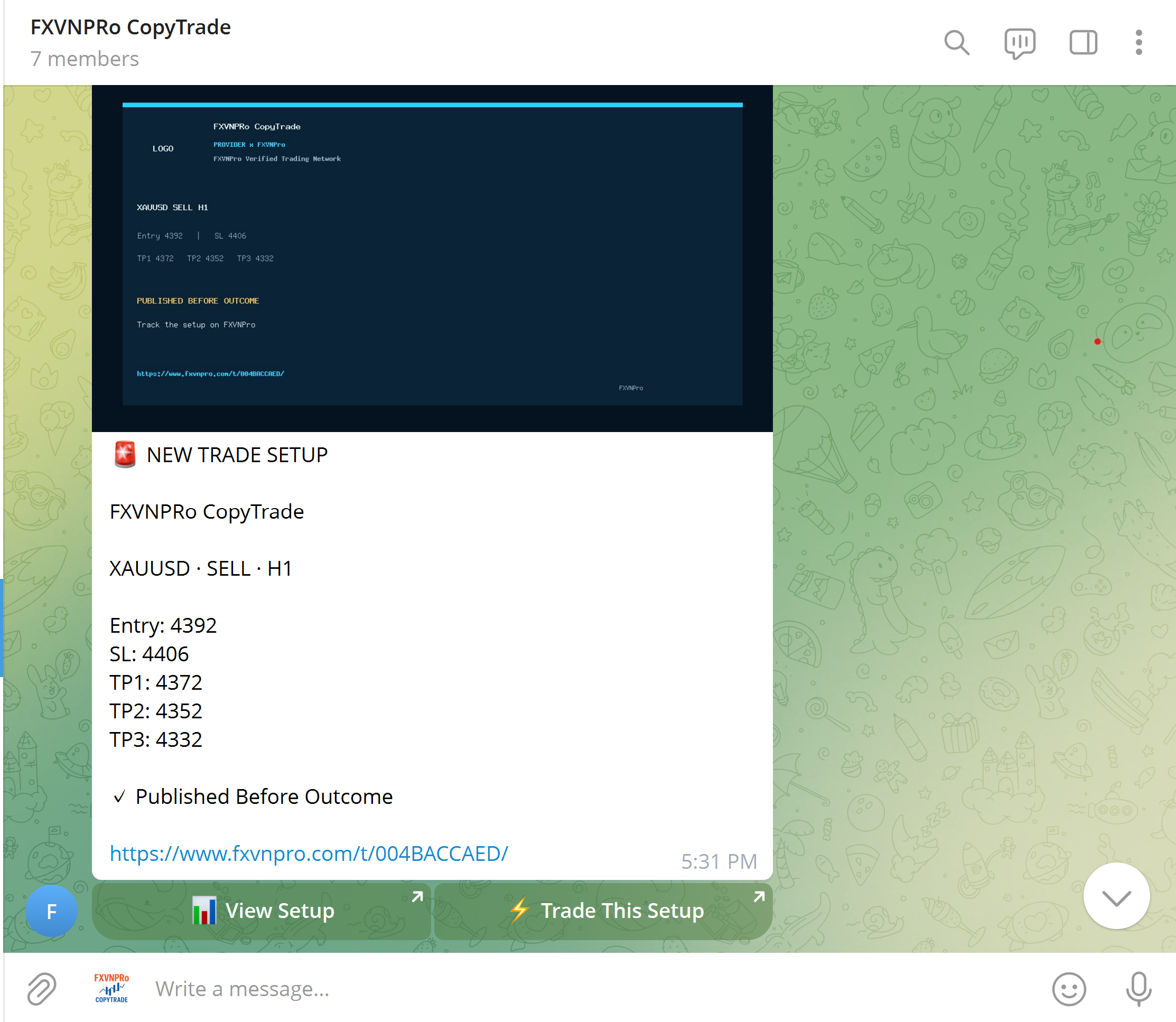 2 · TELEGRAM
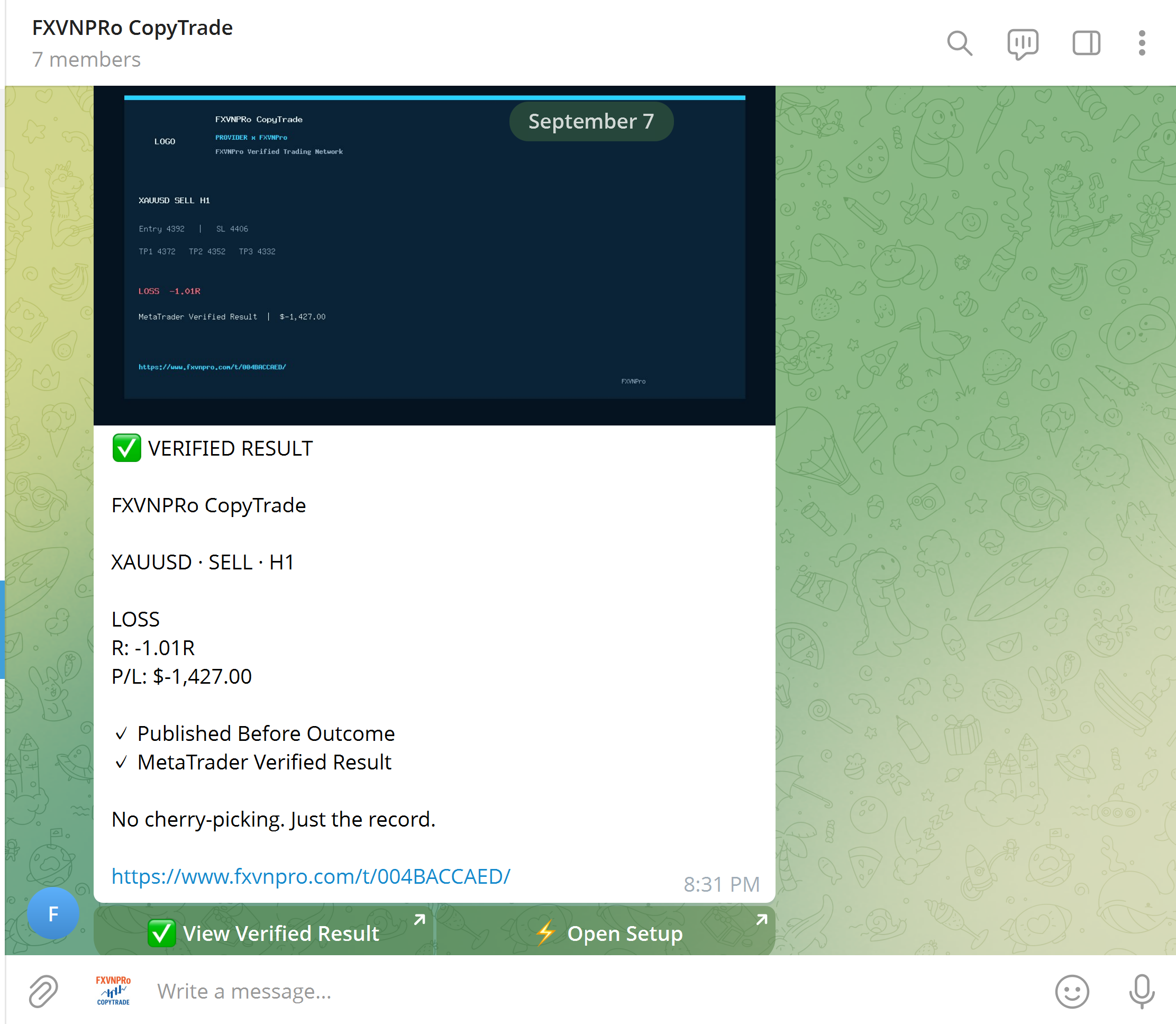 3 · VERIFIED
Build your strategy, distribute it to a community, or follow trading activity across MT4 & MT5.
Create Entry, Stop Loss and Targets before the outcome, then build a verified trading record.
Turn Telegram signals into an actionable workflow while followers keep control of their own risk.
Connect Chrome to MT4 or MT5 and open, modify or close trades from your browser.
Explore Masters and copy trading activity to your own MT4 or MT5 terminal with independent risk rules.