Plan a Trade
Build a trade plan and use practical trading tools before you act.
Trade IdeasRisk ToolsCalculators
BUILD A TRADE IDEA →
Start with your goal. You do not have to learn the FXVNPro architecture before using the tools.
Build an idea, use Telegram signals, trade from Chrome or follow a trader while technical setup stays in the background.
Technical connection details remain available inside each product when needed.
Plan trades, connect MT4 & MT5, review verified execution, explore traders and research brokers — without learning the whole platform first.
Build a trade plan and use practical trading tools before you act.
Use Browser Trading or turn supported Telegram signals into a structured trading workflow.
Explore CopyTrade TRADERs, review their records and choose your own risk settings.
Everything is still here — organized by what it helps you do.
Compare Just Markets and Titan FX by rating, regulation, minimum deposit, platforms, spreads, and overall trading conditions.
Use the FXVNPro Broker Checker Chrome extension to quickly review broker trust signals, ratings, and safety information while browsing broker websites.


| Feature | Just Markets | Titan FX |
|---|---|---|
| Rating | 6.5 | 6.3 |
| Minimum Deposit | $10 | $50 |
| Regulation | CySEC, FSA, FSCA, FSC | VFSC, FSA, FSC |
| Platforms | MT4, MT5 | MT4, MT5 |
| Spread | From 0.1 pips | From 0.1 pips |
Below is a detailed breakdown of fees, spreads, regulation, platforms, and real trading suitability to help you decide which broker fits your trading style better.
If you’ve ever looked at your MT4/MT5 history and thought, “How did I lose on a setup that looked right?”, you’re not alone. A lot of traders blame themselves for entries and discipline, but there’s another culprit that’s harder to spot: trading costs and execution quality. When your average trade is only moving a little bit in your favor, spreads, commissions (if any), and the way orders get filled can quietly decide whether you grow your account or bleed slowly.
This is exactly why a “Just Markets vs Titan FX” comparison matters. Both brokers offer MT4 and MT5 and both advertise spreads from 0.1 pips. On paper, they look close. In live trading, though, closeness is not the same as identical—especially when you’re dealing with different minimum deposits, different regulatory coverage, and different real-world constraints that show up during fast markets.
This review is aimed at traders who actually place trades (not just test indicators). You might be a newcomer trying to avoid costly mistakes, or you might already trade actively and care about scalping conditions, slippage, and consistency. Either way, the differences between Just Markets and Titan FX will matter when you calculate fees comparison, measure spreads and trading costs, and weigh regulation and safety.
Quick takeaway: Just Markets has the lower minimum deposit and slightly higher overall rating, while Titan FX asks for more capital upfront. If you’re choosing based on trading experience and practical friction, you’ll want to read the sections below carefully.
Let’s talk about the part everyone focuses on—spreads and trading costs—because this is where “from 0.1 pips” can either be meaningful or just marketing language. Both Just Markets and Titan FX state spreads from 0.1 pips, and both use MT4/MT5. That’s the headline. The trader’s question is: how often do you actually see those numbers when you’re trading?
In real trading conditions, spreads don’t behave like a showroom demo. During London open and New York overlap, spreads often tighten. But if you trade during rollover, around major news releases, or in less liquid hours, spreads widen. That widening is cost, whether or not it’s advertised.
Here’s the practical impact: imagine you run a strategy targeting 10 pips net. If your typical effective spread is 0.8 pips on one broker and 1.2 pips on the other, that’s a 0.4 pip difference per round trip. Over 200 trades, that’s 80 pips of cost you didn’t account for. It’s not just theoretical—those pips add up to real money.
Now, about hidden fees: the biggest “gotcha” for many traders isn’t usually a mysterious commission line; it’s swap/overnight charges, financing costs, and any inactivity or withdrawal-related friction. The data you provided lists spreads, but not commissions or overnight policies, so you should verify each broker’s contract specs (especially swap rates) before going live. In practice, overnight strategies can be more sensitive to financing than intraday scalpers.
So which is cheaper in real scenarios? Based purely on the provided info, both advertise the same minimum spread and platform set. The more likely differentiator is your trading style: scalpers care about effective spreads and execution stability, while position traders care about swaps. If your plan is frequent trading, the “from 0.1 pips” claim should be treated as a best-case reference point—then you measure your actual average spread in your first couple of weeks.
Regulation isn’t a checkbox; it’s about what happens when things go wrong. Traders often ask “Is this broker regulated?” but the better question is “What protection is realistically available, and how credible is the oversight?”
Just Markets lists regulation by CySEC, FSA, FSCA, and FSC. Titan FX lists VFSC, FSA, and FSC. Notice the overlap: both have FSA and FSC in the mix, but Just Markets also includes CySEC and FSCA in the provided data. That difference matters because CySEC is generally perceived as a more stringent, mainstream European regulator, and FSCA is a recognized authority in South Africa. In real trading terms, stronger oversight can mean tighter controls around client money handling, risk management expectations, and complaint processes.
Now, what about VFSC and FSC? These can be legitimate regulators, but the practical level of investor protection and enforcement varies by jurisdiction. I’m not saying one is “bad,” but I am saying you should treat offshore or less widely known regimes as different risk categories. If you’re trading larger size or planning to leave funds untouched for long periods, regulation quality becomes more than a label on a website.
Verification is another piece traders ignore. Before you deposit, confirm the broker’s licensing details on the regulator’s public register (not just a banner on the homepage). Then check whether your account type is covered under the relevant license. This matters because some brokers operate multiple entities under different terms.
Bottom line: with the provided list, Just Markets appears to have broader regulatory coverage including CySEC and FSCA. That tilts the safety conversation toward Just Markets for traders who prioritize regulatory strength and dispute confidence.
Both Just Markets and Titan FX offer MT4 and MT5. That’s good news if you already have an EA, indicator suite, or a workflow you like. The uncomfortable truth is that platform choice alone won’t make you profitable. Execution quality, order handling, and stability during spikes matter more than whether you can switch between MT4 and MT5.
In day-to-day use, I look at three things beyond the menu options: chart responsiveness, how cleanly orders are TRADEd during fast moves, and whether the broker’s environment supports your trading style reliably. For example, if you run a news-driven scalping bot, you’re sensitive to requotes, delayed fills, and inconsistent spreads. MT4/MT5 can handle the technical part, but broker infrastructure decides how the “last mile” behaves.
Also consider usability. Some brokers have cleaner server performance and fewer oddities in execution reports. Others can feel fine in quiet conditions and then get noticeably worse when volatility rises. You won’t know which until you test it, and that’s where demo accounts become useful—but don’t stop at five minutes of demo trading. Run your strategy through different sessions: Asia, London, and the overlap.
Execution speed is one of those topics that’s often discussed with vague claims online. I prefer to judge it indirectly: watch your fill timestamps and compare expected entry versus actual entry during volatile periods. If you’re seeing consistent slippage against your direction, that’s not “market noise”—it’s a cost.
So which broker is better for trading experience? With both using MT4/MT5, the edge likely comes down to real execution consistency and customer support during platform issues. Based on the information you provided, Just Markets has a slightly higher overall rating, which can be a hint that traders experience fewer day-to-day frustrations. But you should still test on your exact strategy and account size.
Minimum deposit is often treated like a “suitability” metric, but it also affects your practical ability to test and scale. Just Markets has a $10 minimum deposit. Titan FX has a $50 minimum deposit. That difference sounds small until you’re doing real experimentation—multiple demos, different EAs, changing lot sizes, and learning how spreads behave across sessions.
In real trading, deposits and withdrawals matter for more than convenience. If you can’t deposit quickly, or if withdrawal processing is slow, your ability to manage risk is impacted. What if your strategy is temporarily working but you want to reduce exposure by moving funds out? A broker with slower or more annoying withdrawal steps forces you to stay “stuck,” which is not ideal.
Fees can also appear in the fine print. Some brokers charge withdrawal fees, use specific processing partners, or require extra steps like document verification that delay the first payout. Even if the broker is regulated and reputable, process timing can differ based on region and compliance requirements.
Here’s the trader’s scenario: you finish a profitable week, you want to withdraw part of your balance, and you also want to restart your testing with a smaller risk profile. If the withdrawal takes longer than expected, you might end up delaying your risk reduction. That’s how “operational friction” becomes trading risk.
Based on the data alone, Just Markets is the more flexible option for smaller accounts because $10 is easier to use for phased testing. Titan FX’s $50 minimum deposit isn’t a dealbreaker, but it increases the initial capital you need before you can even begin properly. If you’re trying to build confidence step-by-step, Just Markets is simply less demanding.
For beginners, the “which broker is better” question shouldn’t be answered by platform availability alone. It should be answered by how forgiving the broker is when you make mistakes. Beginners will mis-size positions, hold trades longer than planned, and sometimes enter right before volatility spikes. A broker that makes the cost structure easy to understand—and doesn’t force a big minimum deposit—usually feels smoother.
Just Markets has a $10 minimum deposit. That matters because it lowers the barrier to learning: you can practice position sizing, understand how spreads affect your break-even point, and observe how your account behaves across sessions without risking a large chunk of money. Titan FX’s $50 minimum deposit means you’re committing more capital upfront. Not everyone can afford that while they’re still building trading discipline.
Beginner traders also tend to rely on demo-to-live transitions. If your live account behaves wildly differently than demo (for example, spreads widen unexpectedly or execution becomes less consistent), it can shake confidence fast. That’s why “spreads and trading costs” must be evaluated in your own trading, not just by the advertised minimum spread.
Customer support is another practical issue. When you’re new, you’re more likely to need help with account funding, platform login, or understanding order types. Strong regulation coverage can correlate with better operational standards, but it’s not automatic. You’ll still want to verify responsiveness by checking how the broker handles simple pre-deposit questions.
Given the provided data, Just Markets is the more beginner-friendly choice mainly because of the lower minimum deposit and slightly higher overall rating. If you’re learning and you want room to grow your trading routine without feeling forced to “bet bigger” from day one, Just Markets has the advantage.
Active traders don’t just care about “from 0.1 pips.” They care about effective spreads, slippage behavior, and how consistently the broker TRADEs under pressure. Even a small difference in execution can erase a strategy edge that’s already thin.
Let’s get concrete. Suppose you day trade EUR/USD with 10–20 pip targets and you place 30–60 trades per week. If your broker’s average effective spread is slightly worse on one platform, you’ll feel it immediately in your daily P&L. Over time, those costs can also distort your performance metrics—your win rate might look fine, but your net profit could still shrink because every trade starts slightly underwater.
Scalpers are even more sensitive. In fast markets, scalping strategies can be killed by inconsistent fills. You might see “no problem” on a calm chart, then during a volatility burst you get requotes or widened spreads that last long enough to ruin the setup. That’s why execution speed and slippage matter more than advertised minimums.
Both brokers offer MT4 and MT5, which supports EAs and high-frequency workflows. The difference is likely in how the broker’s servers handle order flow. In practice, I’d evaluate: how often spreads widen during your usual trading windows, whether stop-loss placement behaves as expected, and how your historical execution reports look during volatile events.
Now consider minimum deposit: Titan FX requires $50. For active traders, this may matter less because you often deposit more anyway, but it can still affect how quickly you can run tests at different lot sizes. If you’re serious about scaling, the minimum deposit is less important than trading costs and execution quality. Still, based on the provided info, Just Markets has the slight rating edge and the lower minimum deposit, which can make it easier to start building a consistent active trading routine.
If you’re choosing purely for active execution, don’t just look at “spreads from 0.1 pips.” Instead, run a cost audit: calculate your average spread from your account history for both brokers over at least a couple of weeks, then decide.
Pros: Lower minimum deposit ($10) makes it easier to test and scale gradually.
Pros: Advertised spreads from 0.1 pips, with MT4/MT5 support.
Pros: Slightly higher overall rating (6.5) in the data you provided.
Pros: Broader regulatory list in the provided data (includes CySEC and FSCA), which generally improves trust confidence for many traders.
Cons: Like any broker, the “from 0.1 pips” number may not reflect your average spread during news or low liquidity.
Cons: As with any regulated environment, verify your exact account entity and terms before depositing.
Pros: Advertised spreads from 0.1 pips and also offers MT4/MT5, so platform workflows are familiar.
Pros: Regulatory list includes FSA and FSC (plus VFSC per the provided data), so it’s not operating in a vacuum.
Cons: Higher minimum deposit ($50) creates more friction for beginners and small account testing.
Cons: Slightly lower overall rating (6.3) in the data you provided, which can hint at more mixed trader experiences.
Cons: You still need to validate effective spreads, slippage, and overnight financing for your specific strategy.
Here’s the decision I’d make based on the data you provided, plus how these differences play out in real trading.
Just Markets vs Titan FX comes down to access, trust profile, and day-to-day trading friction. If you’re asking which broker is better overall for most traders, my pick is Just Markets. It has a slightly higher rating (6.5 vs 6.3), a lower minimum deposit ($10 vs $50), and broader regulatory coverage in the provided list (including CySEC and FSCA). That combination is especially useful if you’re building trading experience and want to test without tying up too much capital early.
However, if you’re already an active trader with a bigger starter deposit and you’re focused on MT4/MT5 TRADE under real market conditions, the “better broker” label becomes harder to assign without your own cost audit. Both advertise spreads from 0.1 pips, so you should compare actual spreads and trading costs from account history (and check swap/overnight terms if you hold positions). If Titan FX proves cheaper on your measured average spread and your execution is consistently clean, it can still be a strong choice for day traders.
So, the clearest recommendations are:
Choose Just Markets if you’re a beginner, smaller-funded trader, or you prioritize regulatory trust and lower startup friction.
Choose Titan FX only after you verify the real fees comparison for your strategy—especially average effective spreads and overnight costs—since the minimum deposit is higher and the rating is slightly lower in the provided data.
Whatever you pick, don’t skip the boring part: run a mini live test, track your spreads and slippage, and calculate what your net results would look like after costs. That’s the fastest way to turn “advertised spreads” into a real trading decision.
One real XAUUSD trade: created before the outcome, sent to Telegram, TRADEd in MT5 and returned as a verified result.
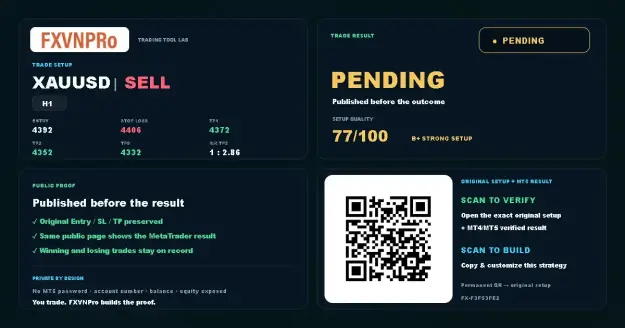 1 · SETUP
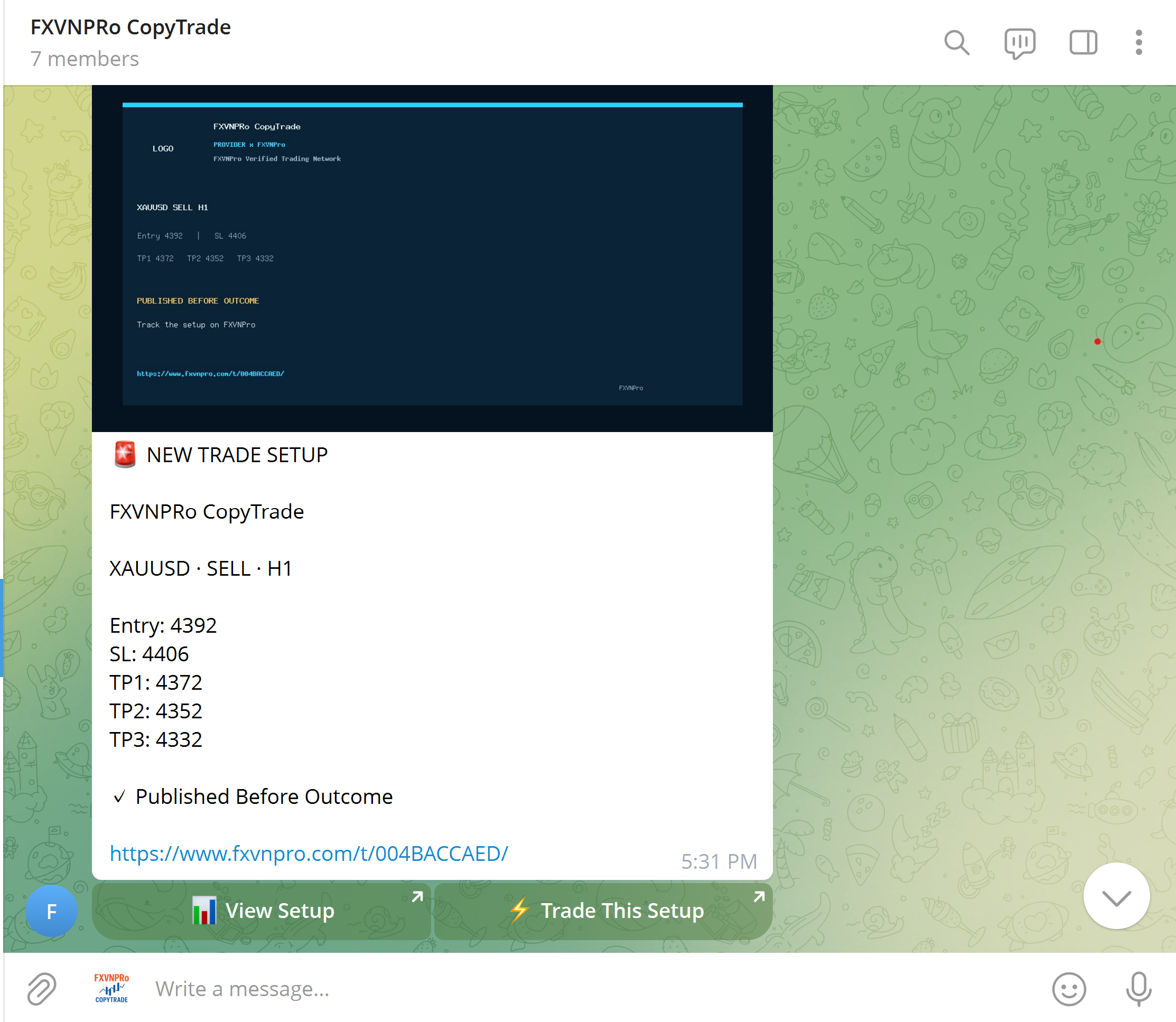 2 · TELEGRAM
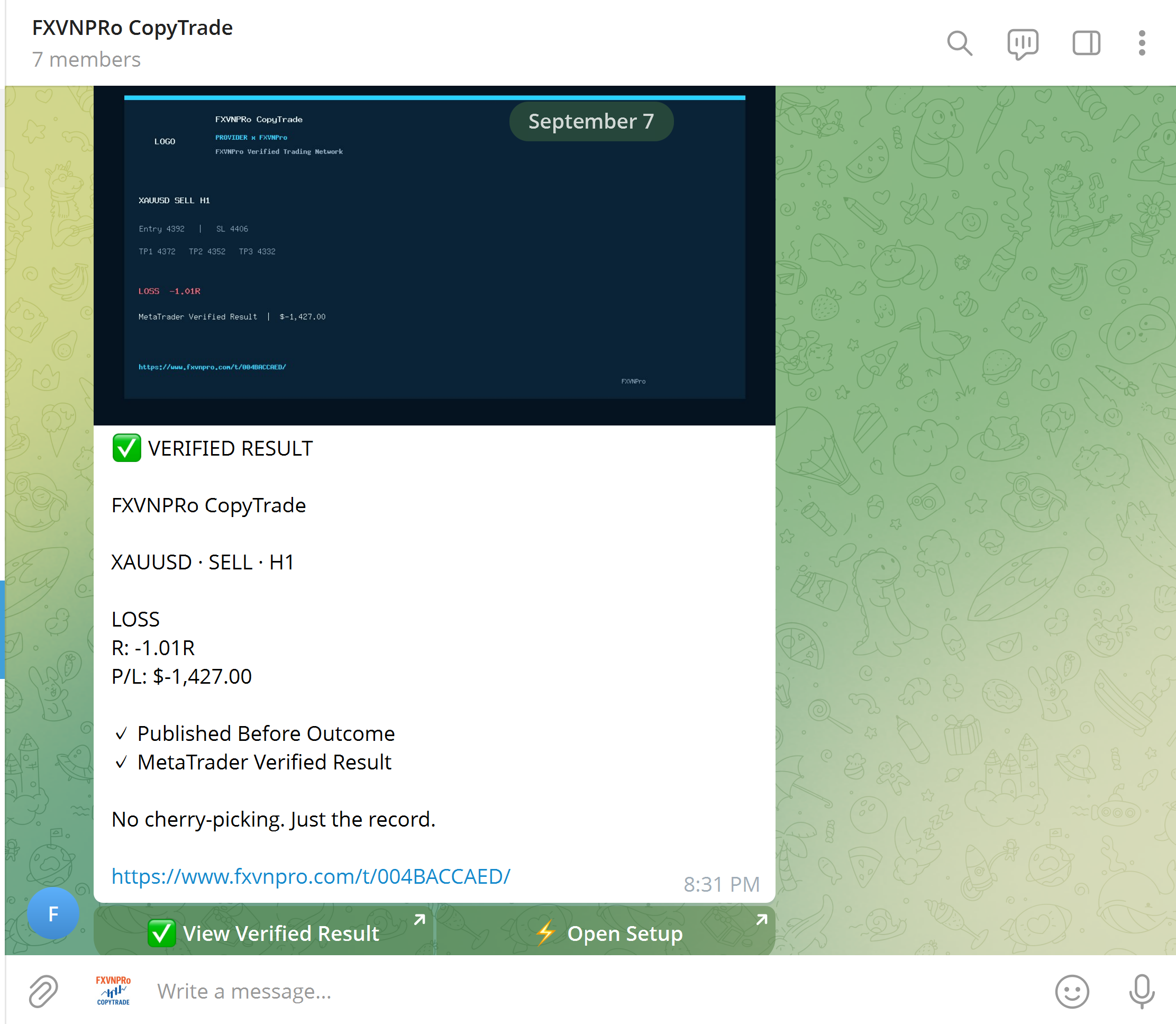 3 · VERIFIED
FXVNPro connects trade plans, Telegram trading communities and verified CopyTrade activity in one practical MT4/MT5 ecosystem.
Turn Entry, Stop Loss and Targets into a trade plan. Publish it before the outcome, then track and verify the result.
Turn Telegram signals into actionable MT4/MT5 setups. Signal Admins create the strategy while Members stay in control of risk.
Discover TRADERs, inspect verified trading history and performance, then decide who you want to follow across MT4 & MT5.
Build your strategy, distribute it to a community, or follow trading activity across MT4 & MT5.
Create Entry, Stop Loss and Targets before the outcome, then build a verified trading record.
Turn Telegram signals into an actionable workflow while followers keep control of their own risk.
Connect Chrome to MT4 or MT5 and open, modify or close trades from your browser.
Explore Masters and copy trading activity to your own MT4 or MT5 terminal with independent risk rules.