Plan a Trade
Build a trade plan and use practical trading tools before you act.
Trade IdeasRisk ToolsCalculators
BUILD A TRADE IDEA →
Start with your goal. You do not have to learn the FXVNPro architecture before using the tools.
Build an idea, use Telegram signals, trade from Chrome or follow a trader while technical setup stays in the background.
Technical connection details remain available inside each product when needed.
Plan trades, connect MT4 & MT5, review verified execution, explore traders and research brokers — without learning the whole platform first.
Build a trade plan and use practical trading tools before you act.
Use Browser Trading or turn supported Telegram signals into a structured trading workflow.
Explore CopyTrade TRADERs, review their records and choose your own risk settings.
Everything is still here — organized by what it helps you do.
Compare Just Markets and Tickmill by rating, regulation, minimum deposit, platforms, spreads, and overall trading conditions.
Use the FXVNPro Broker Checker Chrome extension to quickly review broker trust signals, ratings, and safety information while browsing broker websites.


| Feature | Just Markets | Tickmill |
|---|---|---|
| Rating | 6.5 | 7.2 |
| Minimum Deposit | $10 | $50 |
| Regulation | CySEC, FSA, FSCA, FSC | FCA, FSCA, CySEC |
| Platforms | MT4, MT5 | MT4, MT5 |
| Spread | From 0.1 pips | From 0.0 pips |
Below is a detailed breakdown of fees, spreads, regulation, platforms, and real trading suitability to help you decide which broker fits your trading style better.
If you’ve ever watched your P/L swing just because the spread widened at the wrong moment, you already know this isn’t a theoretical game. In live FX trading, costs and execution quality are the difference between a strategy that “should work” and one that actually survives. That’s why this Just Markets vs Tickmill comparison matters—because the day-to-day friction (spreads, commissions or lack of them, slippage during news, and even withdrawal behavior) adds up fast.
So, which broker is better? It depends on how you trade. If you’re sensitive to trading costs—scalping, tight-stop day trading, or high-frequency approaches—you’ll care about spreads and execution speed. If you’re newer, you’ll care more about minimum deposit, platform usability, and how painless funding and withdrawals feel. And if you’re managing risk carefully, regulation and account safety will matter more than any marketing claim.
Here’s the quick gist before we go deep: Just Markets offers a lower minimum deposit and can show spreads from 0.1 pips, while Tickmill starts higher at $50 but advertises spreads from 0.0 pips. Both provide MT4 and MT5, both operate under multiple regulators, and both can fit serious traders—just in slightly different ways.
Ready to put your strategy under a microscope? Let’s break down the fees comparison, execution realities, and what you’ll actually feel on the trade ticket.
Let’s talk spreads and trading costs like a trader, not a brochure. You’ll see “from X pips” advertised by almost every broker, but what matters is how those numbers behave in the hours you actually trade—London open, US session, and especially around high-impact news.
Just Markets lists spreads from 0.1 pips. Tickmill lists spreads from 0.0 pips. On paper, that’s a win for Tickmill. But in real trading conditions, “0.0” doesn’t mean you’ll get zero spread on every entry. Liquidity changes, order flow changes, and spreads widen when volatility spikes. So you’re really comparing how often you get near the advertised levels and how costly the “not-so-good” moments are.
Here’s the practical way to estimate impact per trade: consider your typical trade frequency and average stop size. If you’re placing 50 trades a week, even a 0.1 pip difference in effective spread can compound—especially with tight stops. For example, if your average position size is large enough, a few extra pips of cost per day can turn a marginal system into a losing one.
Now the “hidden fees” angle: some brokers run ultra-tight spreads but charge commission per lot. In your provided data, we only have spreads and minimum deposit—not commission schedules. That means you should verify Tickmill’s and Just Markets’ commission structure (if any) for your account type. In a true fees comparison, “spread-only” vs “spread + commission” often flips which broker is cheaper.
Bottom line: Tickmill’s advertised spreads and Just Markets’ lower minimum deposit are both meaningful, but the cheapest broker for you is the one with the lowest total cost per round trip after you confirm commission and typical spread behavior in your session window.
Regulation is one of those topics traders skim until something goes wrong. Then it becomes the only topic you wish you’d understood earlier. With Just Markets, the regulation list includes CySEC, FSA, FSCA, and FSC. Tickmill is regulated by FCA, FSCA, and CySEC. That’s a strong starting point for both, because multiple regulators generally mean more oversight, reporting standards, and account protections depending on jurisdiction.
But here’s the nuance many people miss: “regulated” isn’t the same as “equally safe for every client.” What protections apply to you depends on where you’re based, which entity you’re actually trading through, and whether you’re covered by investor compensation schemes tied to that regulator. So when you’re evaluating which broker is better for safety, you should confirm the exact legal entity you will be assigned to at onboarding.
For example, if you’re an EU-based trader, CySEC oversight may be particularly relevant. If you’re under a framework tied to FCA, you may care more about the stricter expectations associated with that regulator. If you’re in a region under FSCA or another authority, you’ll want to see how complaints handling and account segregation are applied.
Also pay attention to operational risk: execution during stress, withdrawal processing, and how the broker communicates during outages. Regulators can’t prevent slippage in a fast market, but they can influence operational discipline.
This matters because in real trading, the biggest risk isn’t just market movement—it’s a broker that can’t TRADE consistently when volatility hits. Both brokers list reputable regulators. Your job is to verify which entity you’re trading with and what client protections actually apply to your account.
Both Just Markets and Tickmill offer MT4 and MT5. That’s a big deal for experienced traders because it means you can keep your indicators, EAs, and workflow. If you’ve built an MT4 robot or you rely on MT5 for depth-of-market style features (depending on setup), you’re not starting from scratch.
But platforms aren’t just about buttons. Trading experience comes down to how the terminal handles order placement, how reliably it reflects execution, and how smooth it feels during active management. In real trading conditions, I care about things like: does the broker’s feed feel “snappy” when I click the chart? Does the terminal show accurate bid/ask at the moment I place the order? And when there’s news volatility, do we see widening spreads and delayed fills, or does execution stay stable?
MT4 tends to be the go-to for many retail traders because of its simplicity and EA ecosystem. MT5 can be better for some advanced features and broader programming support, though some indicators and EAs are still MT4-first in the wild. Since both brokers support both platforms, your platform preference shouldn’t be the deciding factor.
Where differences can show up is around execution speed and slippage. Even if two brokers both offer MT5, one can still fill orders more favorably during fast markets. That’s why traders who scalp or run tight intraday strategies often test both brokers with a small account before scaling up.
So, if your strategy depends on precise entries—breakouts, mean reversion with tight stops, or EA automation—don’t just compare features. Compare how the platform TRADEs on your symbols during your trading windows.
Minimum deposit is the first signal of how accessible a broker feels. Just Markets starts at $10, while Tickmill starts at $50. For a beginner, that difference can be the whole story—because if you can’t fund easily, you delay learning, and delayed learning is expensive when you’re trying to build consistency.
But deposits are only half the picture. Withdrawal speed and process smoothness can affect your stress levels more than your spreadsheet. In the real world, traders run into situations: “I’m up, let me test withdrawals,” or “I need to move funds before a bigger position.” If the process is slow or requires repeated verification, it can disrupt your trading plan.
Even without your specific withdrawal data (timeframes, fees, methods), the best practical approach is to check three things before depositing meaningful capital: supported payment methods, any withdrawal fees or minimum withdrawal amounts, and typical processing times. Also look at whether the broker requires the same method for withdrawals as deposits, because that can create delays if you start with one method and later want to withdraw to another.
This matters because risk management isn’t only about stops and sizing. It’s also about liquidity. If you’re trading actively, you don’t want your capital stuck in back-and-forth verification.
In practice, Just Markets’ lower minimum deposit may help you get started and test execution with less upfront commitment. Tickmill’s higher minimum deposit may be fine for most active traders, but you should still verify withdrawal friction so you’re not surprised later.
If you’re new, the question “which broker is better” often isn’t about the tightest spreads. It’s about whether you can start, learn, and not get discouraged by avoidable friction.
Just Markets has a $10 minimum deposit. That’s unusually friendly for beginners because it lowers the barrier to practice—especially if you’re demoing less than you should and want real market conditions with smaller risk. Tickmill’s $50 minimum deposit is still manageable, but it nudges you toward learning with a slightly larger commitment.
Now think about what beginners struggle with: they don’t just need an easy platform—they need predictable behavior. MT4/MT5 are familiar and widely supported, which helps if you follow tutorials or use common indicators. Both brokers support MT4 and MT5, so you’re not locked into a proprietary platform that’s harder to troubleshoot.
Where beginners can get burned is in trading costs. When you place small positions, spreads might not look “huge” at first. Then you start closing trades quickly, and suddenly the spread and execution quality determine whether your system breaks even. Tickmill advertising spreads from 0.0 pips may sound great, but beginners should verify effective spreads on their actual accounts and symbols.
Regulation also matters more for beginners because they’re less likely to understand account entities and compensation structures. Both brokers list reputable regulators, which is reassuring, but you still should confirm the exact entity you’re onboarded to.
If you want the easiest on-ramp to start learning, Just Markets has the edge on minimum deposit. If you’re ready to deploy a little more capital and you care about potentially tighter spreads from the start, Tickmill can be appealing—just verify your total costs.
Active trading is where “advertised spreads” turn into real money. If you’re scalping, trading the open, or running a high frequency of entries, you’re effectively paying the market tax repeatedly. That means spreads and execution stability matter more than almost anything else.
Tickmill’s spreads from 0.0 pips are the headline for traders who care about cost efficiency. In real trading conditions, what you want to see is not just the best-case spread, but how quickly execution keeps up when volatility rises. Scalpers live and die by micro-moments—one bad fill or a widened spread during a spike can flip a winning session into a flat or losing one.
Just Markets lists spreads from 0.1 pips. That’s not “bad,” and for many day traders it may be perfectly workable—especially if the effective spread stays near that level during your typical session. But in tight-stop strategies, 0.1 pips can matter more than people think, especially across hundreds of round trips.
Also consider slippage. Even with tight spreads, high-volume traders care about how often orders slip past the expected price, particularly around news releases. Since your data doesn’t provide execution metrics, the experienced move is to run a short test: a small live account or a controlled period, tracking average spread and fill quality.
Tools matter too. MT4/MT5 support is table stakes for active traders, but you’ll want stable terminal performance and consistent server response. If your EA or manual strategy depends on fast order placement, test it.
If your strategy is cost-sensitive and you trade frequently, Tickmill is the more obvious candidate based on the spread claim. If you trade actively but your stops are a bit wider and you want lower capital commitment, Just Markets can still fit—just don’t assume the “from” number is what you’ll average.
Just Markets pros: Lower minimum deposit ($10) makes testing and scaling-up easier; MT4/MT5 support for flexible strategy use; spreads from 0.1 pips can work well for many day traders; multiple regulators listed.
Just Markets cons: The lowest advertised spread is not as aggressive as Tickmill’s “from 0.0” claim; if you scalp tightly and trade very frequently, cost efficiency may not be as strong unless the effective spread stays close to the minimum.
Tickmill pros: Potentially tighter spreads (from 0.0 pips) suits high-frequency and tighter-stop strategies; MT4/MT5 support; multiple reputable regulators listed including FCA and CySEC; higher average cost efficiency is the main attraction for active traders.
Tickmill cons: Higher minimum deposit ($50) may slow down ultra-low-risk learning; as always, you need to confirm total fees (spread vs any commission) because “spread-only thinking” can mislead; withdrawal friction and verification steps can still affect real trading even with strong spreads.
Here’s the key takeaway: the “better” broker is the one that matches your trade frequency, stop size, and risk tolerance—not the one with the coolest headline.
If you’re deciding between Just Markets vs Tickmill and you want a clear call, here it is. For most beginners and traders who want to start with minimal capital, Just Markets is the better starting point. The $10 minimum deposit reduces the barrier to learning, and MT4/MT5 are familiar enough to avoid platform friction. Just remember: verify your effective spreads on the symbols you actually trade, because “from 0.1 pips” doesn’t guarantee that will be your average.
If you’re an active trader—day trading with frequent entries, running tight stops, or scalping—Tickmill is the stronger fit based on the spreads and trading cost angle. Tickmill’s “from 0.0 pips” is exactly the kind of headline that matters when you’re stacking trades. But do the responsible thing: confirm whether there’s commission involved for your account type, and test for slippage during the sessions and news events you trade.
So which broker is better overall? If I had to pick by trading style: Just Markets for accessibility and low-friction learning, and Tickmill for cost efficiency under active trading conditions. Neither choice is “perfect,” but one will align better with how your strategy actually makes or loses money.
Before you commit, run a small live test for a week. Track your effective spread and round-trip costs. That single step will tell you more than any rating number or promotional spread chart ever will.
One real XAUUSD trade: created before the outcome, sent to Telegram, TRADEd in MT5 and returned as a verified result.
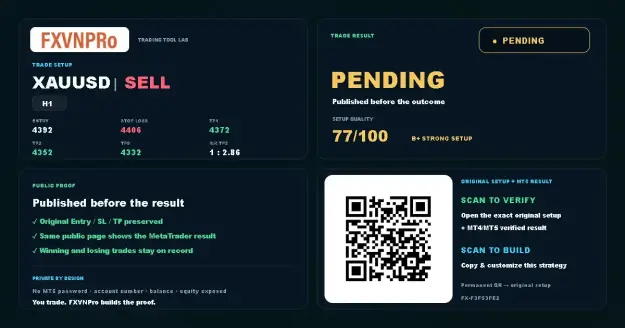 1 · SETUP
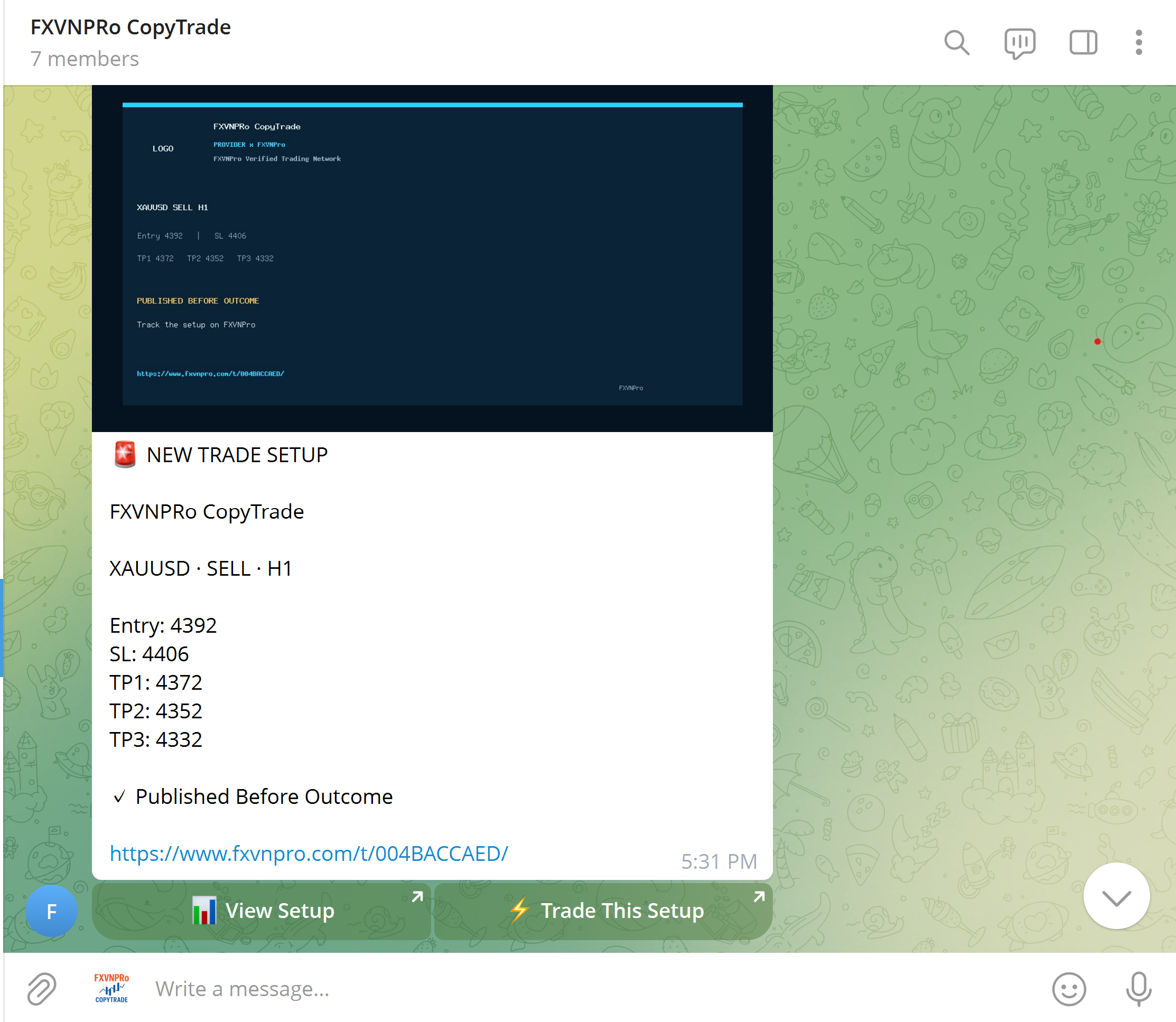 2 · TELEGRAM
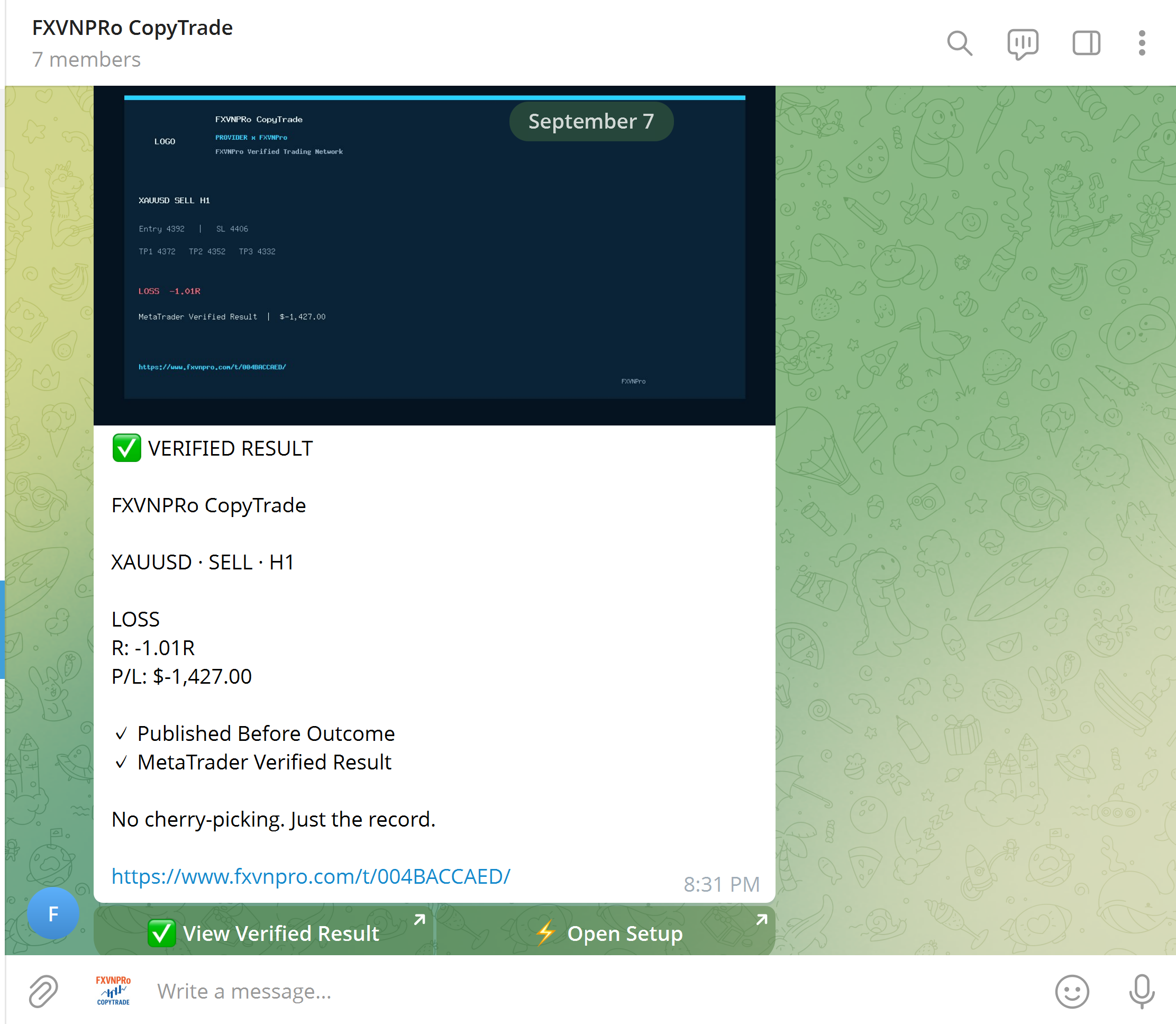 3 · VERIFIED
FXVNPro connects trade plans, Telegram trading communities and verified CopyTrade activity in one practical MT4/MT5 ecosystem.
Turn Entry, Stop Loss and Targets into a trade plan. Publish it before the outcome, then track and verify the result.
Turn Telegram signals into actionable MT4/MT5 setups. Signal Admins create the strategy while Members stay in control of risk.
Discover TRADERs, inspect verified trading history and performance, then decide who you want to follow across MT4 & MT5.
Build your strategy, distribute it to a community, or follow trading activity across MT4 & MT5.
Create Entry, Stop Loss and Targets before the outcome, then build a verified trading record.
Turn Telegram signals into an actionable workflow while followers keep control of their own risk.
Connect Chrome to MT4 or MT5 and open, modify or close trades from your browser.
Explore Masters and copy trading activity to your own MT4 or MT5 terminal with independent risk rules.