

Tickmill
FVP Score
7.2/10
Tickmill
- Minimum Deposit$50
- RegulationFCA, FSCA, CySEC
- PlatformsMT4, MT5
- SpreadFrom 0.0 pips
Start with your goal. You do not have to learn the FXVNPro architecture before using the tools.
Build an idea, use Telegram signals, trade from Chrome or follow a trader while technical setup stays in the background.
Technical connection details remain available inside each product when needed.
Compare Tickmill and Vantage Markets by rating, regulation, minimum deposit, platforms, spreads, and overall trading conditions.
Use the FXVNPro Broker Checker Chrome extension to quickly review broker trust signals, ratings, and safety information while browsing broker websites.

| Feature | Tickmill | Vantage Markets |
|---|---|---|
| Rating | 7.2 | 6.5 |
| Minimum Deposit | $50 | $50 |
| Regulation | FCA, FSCA, CySEC | ASIC, FSCA, VFSC |
| Platforms | MT4, MT5 | MT4, MT5,cTrader,TradingView |
| Spread | From 0.0 pips | From 1.0 pips |
Below is a detailed breakdown of fees, spreads, regulation, platforms, and real trading suitability to help you decide which broker fits your trading style better.
If you’ve ever blown a good setup because the spread widened at the wrong moment, you already know the uncomfortable truth: broker choice isn’t a branding exercise. It’s a money and execution problem. Tickmill vs Vantage Markets is one of those comparisons that matters most when you’re trading frequently, scalping, or running tight risk parameters where a few extra points can turn profit into frustration.
This guide is for active retail traders who actually measure outcomes: average cost per trade, slippage tolerance, and whether execution feels consistent during London/NY overlap. If you’re a long-term position trader, some of this will still matter—but the urgency drops a level. If you scalp or day trade, it becomes central.
Here’s the quick difference in plain English. Tickmill leans toward “lower-cost, streamlined trading” with spreads from 0.0 pips and MT4/MT5. Vantage Markets offers more platform variety (MT4, MT5, cTrader, plus TradingView) but typically starts with spreads from around 1.0 pips. Both operate under multiple regulators, and both have a minimum deposit of $50, so the real decision comes down to trading costs, execution feel, and platform fit.
Keep reading—fees comparison and spreads and trading costs are where most traders accidentally overpay, especially when they trade size, not theory.
Let’s talk money the way a trader actually experiences it: the spread at entry/exit, how stable it is during volatile news, and whether commissions change the equation. Tickmill lists spreads from 0.0 pips, while Vantage Markets states spreads from 1.0 pips. On paper, that already tells you who’s positioned for tight-cost strategies.
This matters because in real trading conditions, “from” spreads are not the average. You’ll see the best numbers when liquidity is strong—often during major session overlap. But when things heat up (CPI, NFP, rate decisions), the spread often widens regardless of broker. The question is: how quickly, how far, and how often? Even a 0.5–1.0 pip difference adds up when you’re doing 50–200 trades a month.
Here’s a realistic scenario. Suppose you day trade EUR/USD with an average stop of 15 pips and a target of 20 pips. If your typical cost is 1.0 pip higher due to spread (and it’s consistent), that effectively steals ~5% of your expected profit on each winning trade. Now scale that to a month. That’s not “small noise”—that’s your edge.
Hidden fees are another angle. Some brokers advertise low spreads but rely on commissions, inactivity fees, or other account charges. In your own due diligence, check whether the “0.0 pip” claim is tied to a commission structure on certain account types. The safer way to compare fees comparison is to look at total cost in points: spread + any commission. If you don’t, you might be paying more than you think.
Bottom line for spreads and trading costs: Tickmill has the clearer headline for raw spread competitiveness. Vantage Markets may still be cost-effective depending on account structure, but you’ll want to verify your all-in cost for the specific instruments and account type you plan to trade.
Regulation is one of those topics traders either skim or obsess over. The right approach is somewhere in the middle: understand what each regulator implies for investor protection, account oversight, and operational standards.
Tickmill is regulated by FCA, FSCA, and CySEC. Vantage Markets is regulated by ASIC, FSCA, and VFSC. Why does that matter in real life? Because regulators typically impose rules around segregation of client funds, reporting requirements, risk controls, and complaint handling. A broker regulated in major jurisdictions is less likely to treat your account like an afterthought when markets get messy.
Now the uncomfortable part: regulation doesn’t eliminate execution risk or slippage. It mainly reduces the chance of extreme operational behavior—like disappearing, misusing funds, or ignoring mandatory procedures. Execution quality is still influenced by liquidity routing, technology, and how the broker manages market conditions.
Verification is key. Traders should confirm the exact entity they’re trading with (especially if a broker has multiple legal structures). Ask yourself: are you actually covered under the regulator you care about, or just in marketing copy? It sounds small, but it matters if you ever need dispute resolution.
In terms of which broker is “safer,” both are in the regulated category with credible oversight. However, if you’re based in a region where FCA or ASIC oversight carries practical weight for complaint processes and account handling, that can tilt perception. The smarter move is to align your trust level with the regulator that governs your specific account entity—not just the list on the homepage.
Platforms affect your trading experience more than most people admit. You can have the tightest spreads in the world, but if the platform feels clunky or data is delayed, your execution quality suffers. Tickmill offers MT4 and MT5. Vantage Markets includes MT4, MT5, cTrader, and TradingView.
MT4/MT5 will feel familiar to most forex traders. They’re stable, widely supported by custom indicators and EAs, and they make it easy to build a routine. If you’re an algorithmic trader, MT4/MT5 ecosystem matters because copying or adapting code is part of the workflow. Both brokers being on MT4 and MT5 means you’re not giving up that foundation.
Where Vantage Markets pulls ahead for some traders is cTrader and TradingView integration. cTrader tends to appeal to people who like a cleaner interface and typically prefer its order management experience. TradingView is a big deal for discretionary traders because charting and trade planning happen there. You’re not always forced to “think” inside a terminal.
Execution speed and usability are often linked. In real trading conditions, platform responsiveness can affect how quickly you adjust orders during fast moves. Does the order ticket open instantly? Are price updates smooth? Is partial fill behavior clear? Those details don’t show up in screenshots.
Ask yourself: what do you actually use day to day? If your trading is MT-based with EAs and indicators, Tickmill’s simpler offering may feel comfortable. If you trade from TradingView charts or want cTrader-specific tooling, Vantage Markets may better match your trading experience. The “which broker is better” answer changes depending on your platform habits.
Both brokers show a minimum deposit of $50. That’s a practical starting point for retail traders. But minimum deposit isn’t the whole story. When you trade actively, deposit and withdrawal friction becomes part of your risk management. You don’t want your account tied up longer than necessary, especially if you’re resizing after a drawdown or adding funds before a high-volatility week.
In real-world use, the experience typically depends on payment method, processing times, and whether you face extra verification steps. Common friction points include document upload for KYC, mismatched names on funding sources, and delays when withdrawal requests exceed certain thresholds.
So what should you look for beyond the minimum? First, check withdrawal processing time ranges and whether there’s a maximum daily/weekly limit. Second, confirm whether withdrawals incur fees or if costs are handled by the payment Signal Admin. Third, see if the broker requires you to withdraw to the original payment method only (many do).
Here’s a scenario. You deposit $100, trade for two weeks, and decide you need to move $60 back to your card. If withdrawals are slow or require repeated KYC, you’ll feel it. Trading doesn’t pause because paperwork is pending. A smoother cycle lets you manage risk and keep your capital where you need it.
Since both start at $50, the “deposit accessibility” gap is likely small. The real difference is operational efficiency—how quickly they process withdrawals after verification, and how often traders report friction. For an accurate take, read recent user experiences and compare timelines, not just marketing claims.
Beginners usually don’t lose money because they “can’t read charts.” They lose money because costs and execution quirks punish early mistakes. That’s why beginner suitability should be judged by trading conditions that help you keep learning—tight enough spreads to reduce random noise, and a platform that doesn’t fight you.
Tickmill’s spreads from 0.0 pips are attractive for learning, especially if you practice with small targets and frequent entries. In education accounts or small-size trading, spreads can be the difference between a strategy that looks good in backtests and one that collapses live due to transaction costs.
Vantage Markets offers more platform choice. If a beginner already uses TradingView for analysis, having it available can reduce the “tool switching” problem. Fewer steps usually means fewer mistakes—like entering a trade from the wrong chart, using the wrong symbol, or misreading order details. That matters early.
Regulation also plays into confidence. Knowing the broker is overseen by FCA/ASIC-style authorities can reduce stress when a beginner hits their first volatile news day. Stress isn’t just emotional; it affects decision quality.
Still, beginners should avoid the trap of chasing the lowest spread. The better question is: does the broker provide transparent execution and clear order handling? Do you understand your account’s all-in cost? In real learning, confusion is expensive.
If you want the most straightforward “low spread” narrative for building habits around cost control, Tickmill is often the cleaner fit. If you want a beginner-friendly chart-first workflow with TradingView and cTrader, Vantage Markets can be easier to onboard into—assuming you verify the trading costs on your chosen account type.
For active traders, “tight spreads” is only the headline. The real issues are execution consistency, slippage tolerance, and how costs behave during the sessions you actually trade. Tickmill advertises spreads from 0.0 pips. Vantage Markets starts from 1.0 pips. On cost alone, that’s a meaningful gap for high-frequency strategies.
Let’s run a practical example. If you’re scalping GBP/USD with quick entries and exits, your edge depends on minimizing average spread and avoiding ugly spikes at market open or around news. If one broker’s typical all-in cost is lower by even 0.5–1.0 pip, your take-profit frequency improves—or your required win rate drops. That’s the difference between a strategy that survives live conditions and one that dies under real costs.
Execution speed and slippage are where active traders feel pain. During fast price movement, order fills might be delayed or partially filled. The platform and broker’s market access setup can influence how “smooth” your execution is. cTrader users often care a lot about order management clarity; MT users often care about EA compatibility and charting speed.
So which broker is better for active traders? If you’re strictly MT4/MT5-focused and trade strategies that benefit from raw spread competitiveness, Tickmill’s positioning is stronger. If you’re using multiple platform workflows—especially TradingView for setup and cTrader for order execution—Vantage Markets can fit your process better, even if the spread headline is slightly higher.
Either way, don’t skip testing. Use a small account to measure your actual average cost per trade across the instruments and times you trade. Active trading turns “small differences” into survival differences.
If your priority is spreads and trading costs for frequent trading, Tickmill vs Vantage Markets leans toward Tickmill. The headline “from 0.0 pips” is the kind of advantage that actually shows up when you’re trading often and managing tight stops. For MT4/MT5 traders who want a cost-focused setup and don’t need extra platforms, Tickmill is the clearer pick.
On the other hand, if your process is chart-first and you value workflow variety—TradingView for planning and cTrader for execution—then Vantage Markets can be the better practical choice even with spreads starting from around 1.0 pips. For many day traders, that difference won’t be fatal. For scalpers, it might be the deciding factor, but it depends on your all-in cost and execution behavior.
So which broker is better? Choose the one that matches how you trade:
Either way, don’t rely solely on “from” spreads. Test your instruments during your trading hours, measure average cost per trade, and only then decide. That’s the kind of decision that pays off, not just the one that sounds good.
One real XAUUSD trade: created before the outcome, sent to Telegram, TRADEd in MT5 and returned as a verified result.
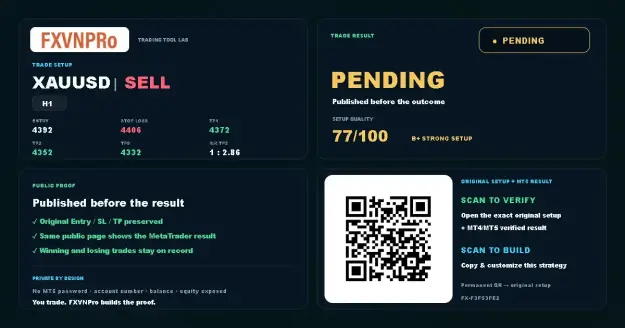 1 · SETUP
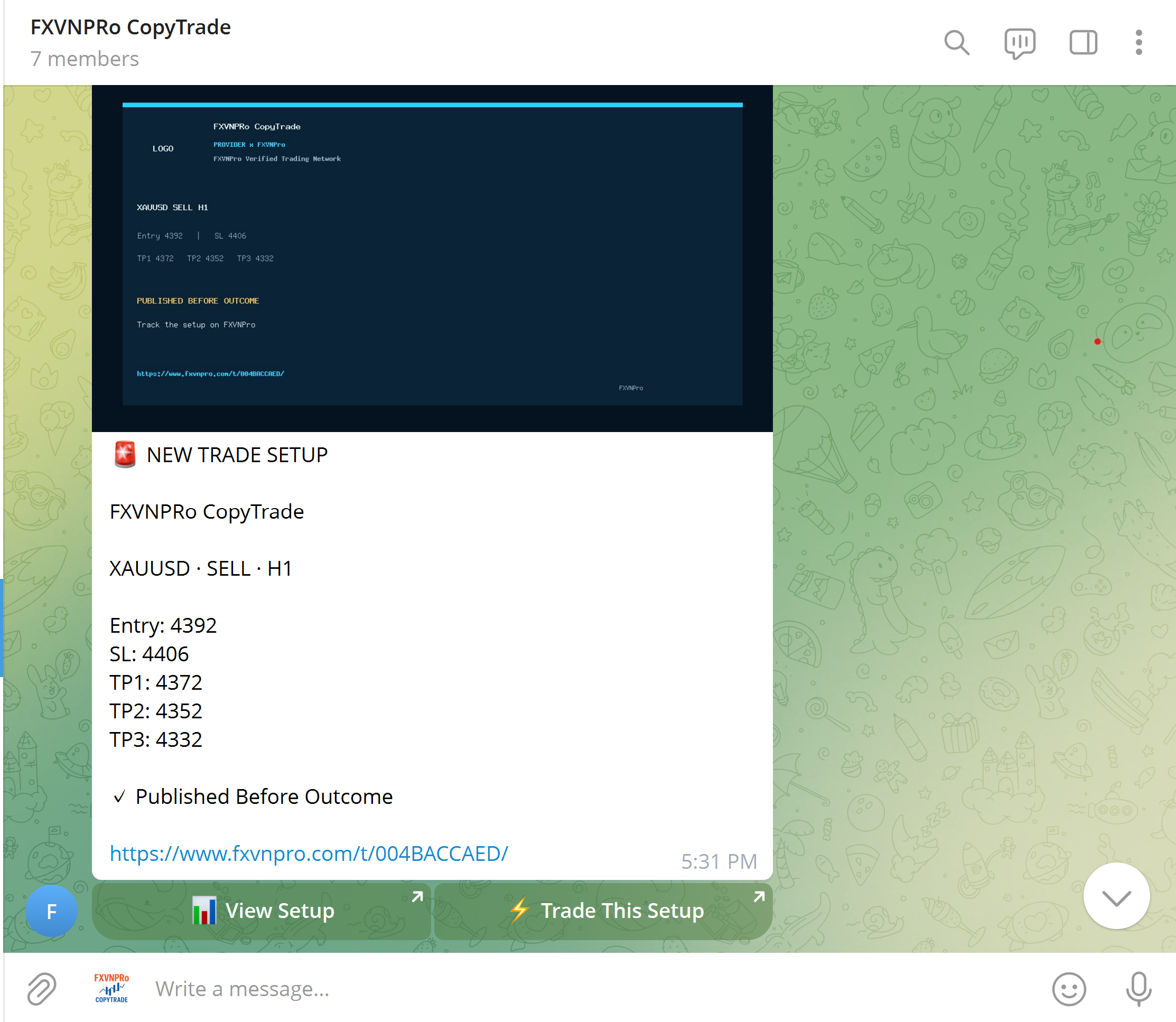 2 · TELEGRAM
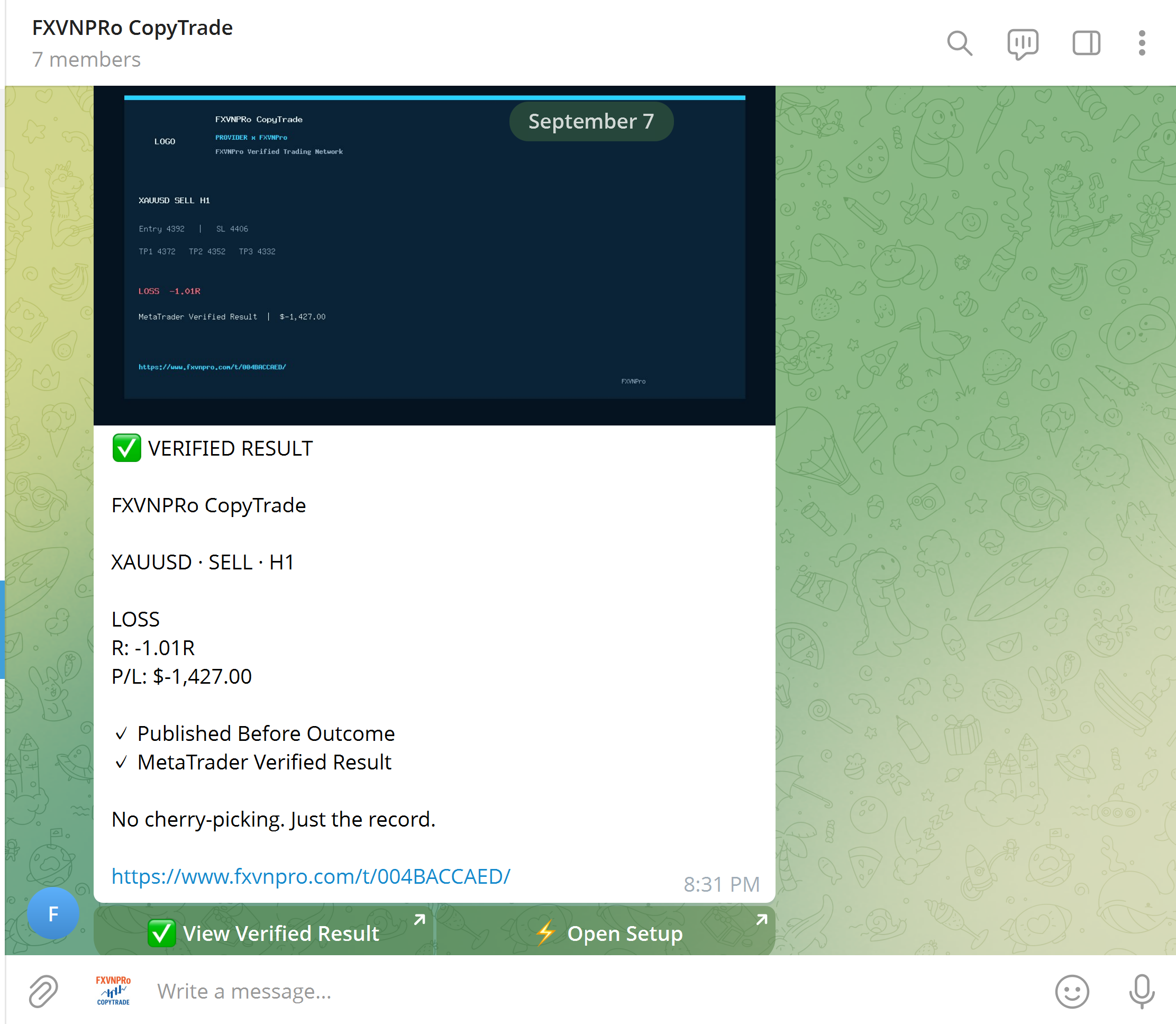 3 · VERIFIED
FXVNPro connects trade plans, Telegram trading communities and verified CopyTrade activity in one practical MT4/MT5 ecosystem.
Turn Entry, Stop Loss and Targets into a trade plan. Publish it before the outcome, then track and verify the result.
Turn Telegram signals into actionable MT4/MT5 setups. Signal Admins create the strategy while Members stay in control of risk.
Discover TRADERs, inspect verified trading history and performance, then decide who you want to follow across MT4 & MT5.
Build your strategy, distribute it to a community, or follow trading activity across MT4 & MT5.
Create Entry, Stop Loss and Targets before the outcome, then build a verified trading record.
Turn Telegram signals into an actionable workflow while followers keep control of their own risk.
Connect Chrome to MT4 or MT5 and open, modify or close trades from your browser.
Explore Masters and copy trading activity to your own MT4 or MT5 terminal with independent risk rules.