

BlackBull
FVP Score
6.4/10
BlackBull
- Minimum Deposit$1
- RegulationFSP
- PlatformsMT4, MT5,cTrader,TradingView
- SpreadFrom 0.0 pips
Start with your goal. You do not have to learn the FXVNPro architecture before using the tools.
Build an idea, use Telegram signals, trade from Chrome or follow a trader while technical setup stays in the background.
Technical connection details remain available inside each product when needed.
Compare BlackBull and Tickmill by rating, regulation, minimum deposit, platforms, spreads, and overall trading conditions.
Use the FXVNPro Broker Checker Chrome extension to quickly review broker trust signals, ratings, and safety information while browsing broker websites.

| Feature | BlackBull | Tickmill |
|---|---|---|
| Rating | 6.4 | 7.2 |
| Minimum Deposit | $1 | $50 |
| Regulation | FSP | FCA, FSCA, CySEC |
| Platforms | MT4, MT5,cTrader,TradingView | MT4, MT5 |
| Spread | From 0.0 pips | From 0.0 pips |
Below is a detailed breakdown of fees, spreads, regulation, platforms, and real trading suitability to help you decide which broker fits your trading style better.
If you’ve ever watched a trade go your way… and then the spread widened right when you hit “close,” you already know why broker choice isn’t just a checkbox. In FX, the small stuff becomes big money fast—especially if you scalp, trade news, or run tight stops. That’s the whole point of this comparison: BlackBull vs Tickmill isn’t about marketing. It’s about how fees, spreads, execution quality, and regulation show up in your P&L when markets get messy.
So who should care? Honestly, if you’re trading more than “a couple of trades a week,” you’re exposed to enough friction that cost structure matters. If you’re newer, the details matter because a confusing deposit flow or platform friction can slow your learning curve. If you’re experienced, you’ll notice the differences in execution and platform workflow almost immediately.
Here’s the quick summary before we get into the weeds. BlackBull comes with a very low minimum deposit ($1) and offers MT4, MT5, cTrader, and TradingView, with spreads “from 0.0 pips.” Tickmill’s minimum deposit is higher ($50), but it’s regulated by FCA, FSCA, and CySEC—strong multi-regulator coverage. It also runs MT4 and MT5 with spreads from 0.0 pips.
Keep reading—because in fees comparison, regulation, and trading costs, the “better” broker depends on what kind of trader you are.
Let’s talk spreads and trading costs in the way you feel them, not the way brochures describe them. Both brokers advertise spreads from 0.0 pips. Sounds great, right? In real trading conditions, the spread you get depends on liquidity, time of day, and volatility—especially around rollover and news. That means the “from” matters, but your average cost matters more.
With BlackBull, the minimum deposit is $1, which tempts many traders to “test with small size.” That’s fine, but cost matters even on small size because you’ll still pay the spread (and any commissions if they apply). If you’re running a strategy that relies on tight edges—like mean reversion or short-term momentum—your profitability can swing on whether spreads hold steady during your active hours.
Tickmill’s minimum deposit is $50 and it operates under multiple EU/UK/Africa-style regulators (FCA, FSCA, CySEC). That doesn’t automatically make it cheaper, but regulated brokers often compete on transparency and competitive pricing. For many traders, Tickmill becomes a practical “fees comparison” winner because you’ll likely have clearer expectations around trading costs and execution behavior—especially if you compare like-for-like accounts.
Here’s the scenario traders run constantly: you trade EUR/USD at London open. In both cases, you might see near-zero spreads when liquidity is high. But if you place the same trade during a fast-moving news window, the spread can widen. If one broker holds spreads tighter on your broker feed, you reduce slippage-and-spread combined pain. That matters because you’re not just paying the spread—you’re also affecting your entry price and stop distance.
Bottom line for fees comparison: don’t judge by “from 0.0 pips” alone. You need to compare typical spreads for your Connects and your trading hours. But based on the overall setup, Tickmill tends to be the more “accountable-cost” choice, while BlackBull shines for low-cost experimentation due to the $1 minimum deposit.
Regulation is one of those topics people gloss over—until something goes wrong. In forex, “safety” isn’t only about whether the broker is legitimate. It’s also about how the broker is supervised, what protections exist, and how likely it is that your account is handled consistently during stress.
BlackBull is listed under FSP regulation. That’s meaningful, but it’s not the same as having the layered oversight many traders prefer from major regulators. In real trading conditions—think drawdowns, sudden market gaps, and increased withdrawal requests—confidence in the regulatory environment can affect how you manage risk. It’s not paranoia. It’s practical risk management.
Tickmill’s regulation is FCA, FSCA, and CySEC. Multiple regulators usually means stricter governance expectations: reporting, operational standards, and supervision that tends to be more robust. For traders who keep meaningful capital allocated, this matters because you’re relying on the broker’s infrastructure to function properly when execution demands rise.
Verification is another underrated factor. Even a regulated broker will require account verification before certain actions (like withdrawals). The difference is how smooth those steps feel. If you’re trading actively, you don’t want a “paperwork surprise” after you’ve built a profitable month.
So which broker is better on regulation and safety? If you’re optimizing for oversight and trust level, Tickmill has the stronger multi-regulator footprint. BlackBull can still be viable—especially for trial accounts—but if you’re deciding where to park serious funds long-term, Tickmill’s regulatory coverage is the more reassuring foundation.
Platforms aren’t just where you place trades. They’re where your process either stays fast or starts bleeding time. BlackBull offers MT4, MT5, cTrader, and TradingView. That is a big deal if you care about charting workflow, indicator comfort, or execution preferences. MT4/MT5 are familiar to most traders, but cTrader can feel cleaner for order handling, and TradingView integration is great for analysis-first traders.
Tickmill offers MT4 and MT5. That’s the core ecosystem for algo traders and manual traders who already live in those environments. The main question becomes: does your strategy rely on features that are easier in one platform versus another? For example, if you script or automate using tools and you’re comfortable with MT5’s ecosystem, both brokers are fine. But if your execution style prefers cTrader’s interface or you like TradingView charts for signal building, BlackBull has an advantage.
Execution speed and slippage aren’t only about raw latency; they’re about how orders are routed, how quickly the platform reflects fills, and how stable the experience is when volatility rises. In real trading conditions, the platform that feels more responsive under load can reduce the “micro errors” that happen when you’re trying to manage a trade fast.
Let’s say you’re day trading GBPUSD with a tight stop and you need to adjust quickly after a candle close. If you’re constantly fighting platform lag, you’ll eventually stop doing the strategy—or you’ll pay for it in worse entries. This is why platform choice matters.
For trading experience across different styles, BlackBull wins on platform variety. For a more standard, universally supported setup, Tickmill’s MT4/MT5 offering is still strong—just more limited if you specifically want cTrader or TradingView.
Here’s a truth many traders learn the hard way: deposit and withdrawal friction can cost you more than the spread. When you’re actively trading, you want predictable funding. When you’re taking profits, you want withdrawals to be smooth and timely.
BlackBull’s minimum deposit is $1, which is a real advantage for trial traders. If you’re testing a new strategy or learning how a broker behaves during London/NY sessions, you can start small without risking much. In a “real-world” sense, this lowers the psychological barrier to actually practicing order placement, stop management, and platform habits.
Tickmill requires $50 minimum. That’s not huge, but it’s enough that many beginners will hesitate—especially if they’re trying to build confidence before committing real money. On the flip side, larger minimum deposits often correlate with more established account handling processes, and regulated brokers typically have more structured onboarding and compliance steps.
The key isn’t just speed. It’s fees. Some brokers charge withdrawal fees or use certain payment rails that can be costly or slow. You also want to consider whether withdrawals are processed instantly or after review, particularly if you’re a new client. Verification can affect timing—so if you plan to withdraw after your first profitable week, you’ll want to confirm how quickly documentation requirements are handled.
In practical terms: if your plan is “start tiny, learn fast,” BlackBull is easier. If your plan is “deposit a proper funded amount and trade consistently,” Tickmill’s setup is more aligned with that workflow.
Either way, before you commit, check the withdrawal process on the exact payment method you intend to use. That’s where the hidden friction usually hides.
Beginners don’t need the most complex features. They need clarity, stability, and a low-risk path to learning. This is where BlackBull vs Tickmill becomes less about advanced tools and more about how forgiving the broker is while you’re still figuring out your strategy.
BlackBull’s minimum deposit of $1 is the standout for beginners. It’s not just “cheap.” It’s psychologically easier to experiment with lot sizing, stop-loss placement, and platform navigation without feeling like every mistake is expensive. When you’re learning, you’ll make errors—wrong order type, too-tight stops, misunderstanding pip value, or entering during spread spikes. A low minimum deposit reduces the damage.
Tickmill’s minimum deposit is $50, which can be a hurdle for new traders. If you’re planning to practice with very small risk, that extra funding requirement slows your learning pace. That said, Tickmill’s stronger regulation footprint (FCA/FSCA/CySEC) can be reassuring for beginners who want to feel safer while they get comfortable.
Execution speed and platform usability also matter for new traders. If you constantly see delays, re-quotes, or confusing order behavior, you lose confidence. Both brokers support MT4/MT5, which are beginner-friendly in the sense that tutorials and community knowledge are everywhere.
So which broker is better for beginners? If you’re truly starting from scratch and want the lowest friction to begin trading practice, BlackBull is more beginner-suitable because the $1 minimum deposit lets you learn without huge capital exposure. If you’re a beginner who already has $50 to commit and prioritizes regulation, Tickmill becomes the more confidence-forward option.
Active traders live and die by execution quality and trading costs. You’re not just placing trades—you’re placing many, often with tight stops and frequent order modifications. That means spreads and “slippage vs spread” effects become a daily performance factor.
Both brokers advertise spreads from 0.0 pips. But active traders care about what happens when liquidity thins or volatility spikes. For scalpers, the difference is brutal: a spread that’s typically tight but widens during your trading window can erase edge. And slippage during fast markets can turn a “green” backtest into a “red” live account.
BlackBull’s platform range gives active traders options. If you scalp and prefer cTrader’s order workflow, that’s a real advantage. TradingView access can also help if you’re doing technical execution around specific levels and want faster chart navigation. The lower minimum deposit doesn’t directly make it better for scalpers, but it can help you test execution behavior on your exact sessions with smaller initial risk.
Tickmill’s multi-regulated status matters more for high-volume traders because you’re committing more capital and staying in the market more consistently. The bigger you scale, the more you want operational confidence. Also, many active traders prefer brokers that are known for predictable execution and transparent cost structures—Tickmill typically fits that expectation better.
Scenario: you day trade indices or majors around high-impact news. You need consistent fills and minimal trading-cost surprises. If one broker tends to widen spreads sharply or causes more slippage during those times, you’ll feel it in your monthly stats.
For active traders choosing “which broker is better,” Tickmill is often the safer bet for execution predictability and regulatory oversight. BlackBull is a strong alternative if you prefer cTrader workflow and want flexibility to experiment with execution on smaller initial capital.
Let’s make this decision practical. The question “which broker is better” depends on what you optimize for: low-risk experimentation, platform variety, or regulatory confidence and cost predictability.
If you’re a beginner, or you’re a trader who wants to test execution without committing real capital immediately, BlackBull is the better starting point. The $1 minimum deposit is genuinely helpful, and the broader platform lineup (including cTrader and TradingView) gives you more ways to build your workflow. In a real learning phase, that matters because you’re more likely to stick with the process instead of quitting after one “expensive lesson.”
If you’re an active trader planning to scale size, or you care deeply about regulation and oversight while trading frequently, Tickmill is the clearer choice. Its multi-regulator setup (FCA/FSCA/CySEC) gives stronger trust level, and its pricing and execution expectations are typically easier to align with for higher-volume trading. For serious trading costs, the combination of regulated environment and competitive spread structure usually wins out.
My recommendation, if you want a simple rule: choose BlackBull for learning and platform flexibility; choose Tickmill for regulated confidence and active trading readiness. And no matter what you pick—track your actual spreads and outcomes during your real trading hours. That’s the only “fees comparison” that truly matters.
One real XAUUSD trade: created before the outcome, sent to Telegram, TRADEd in MT5 and returned as a verified result.
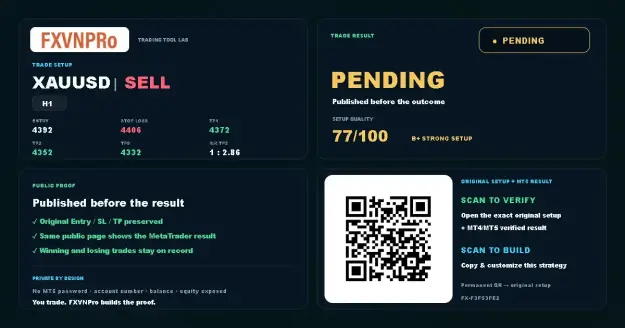 1 · SETUP
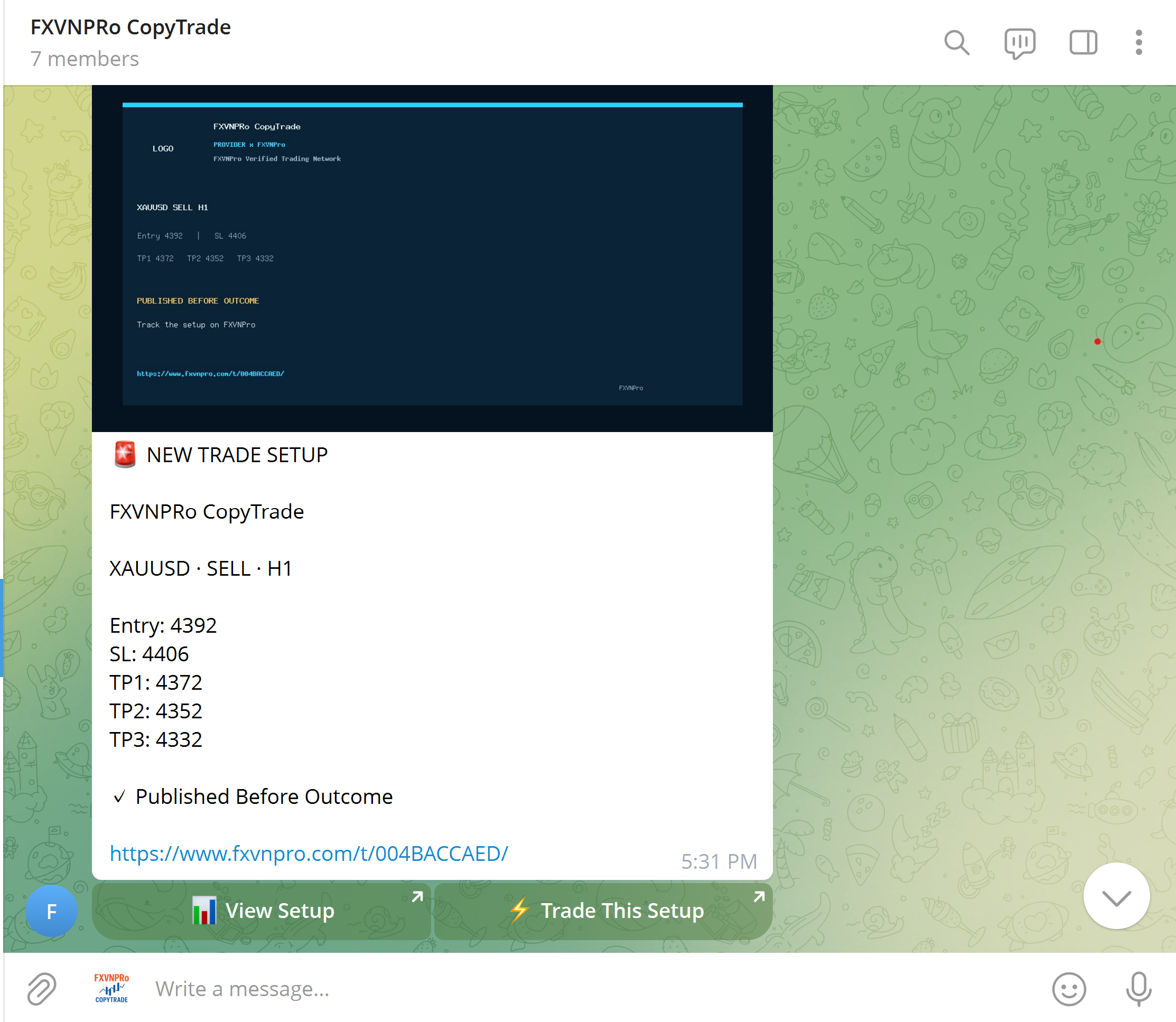 2 · TELEGRAM
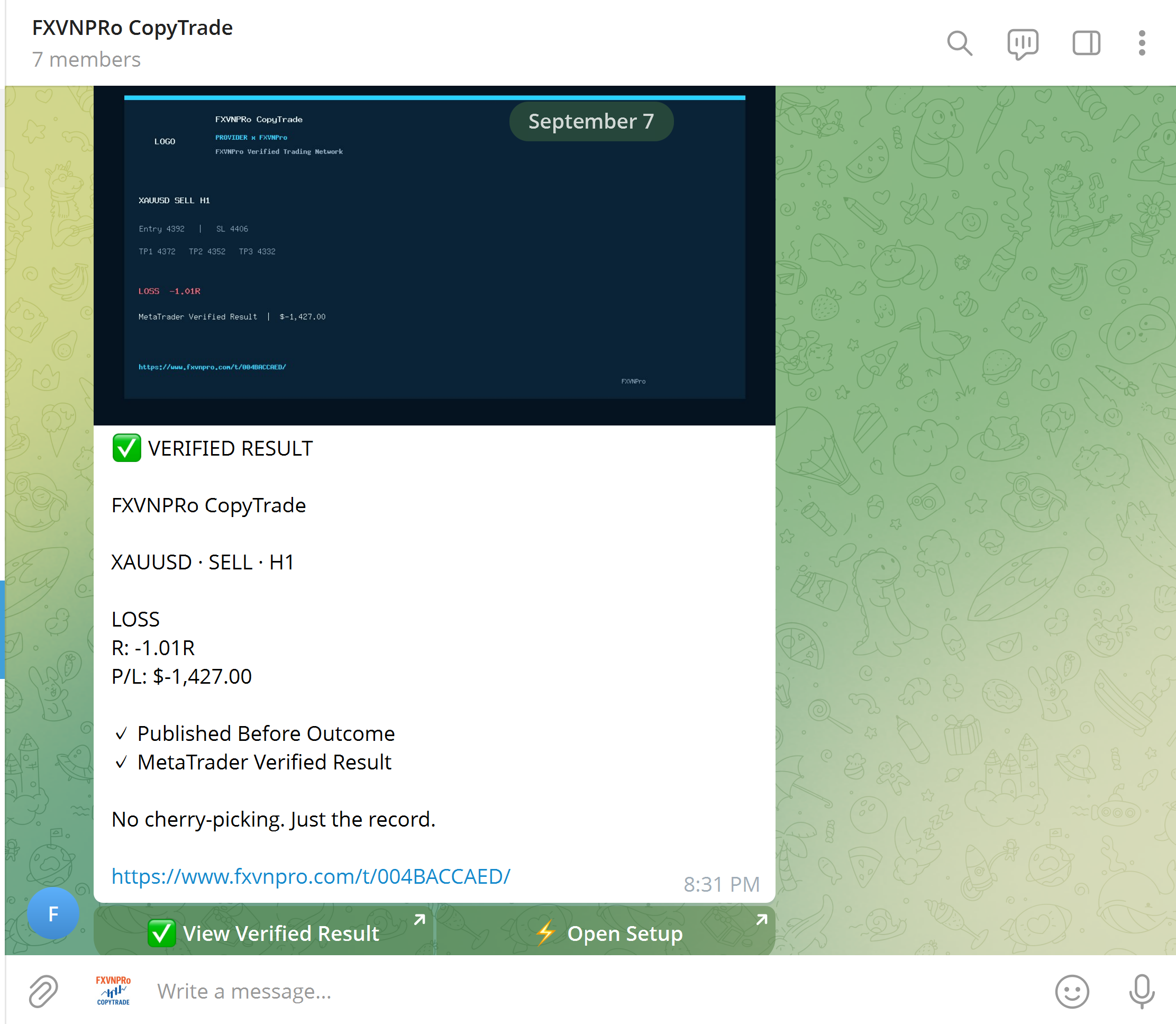 3 · VERIFIED
FXVNPro connects trade plans, Telegram trading communities and verified CopyTrade activity in one practical MT4/MT5 ecosystem.
Turn Entry, Stop Loss and Targets into a trade plan. Publish it before the outcome, then track and verify the result.
Turn Telegram signals into actionable MT4/MT5 setups. Signal Admins create the strategy while Members stay in control of risk.
Discover TRADERs, inspect verified trading history and performance, then decide who you want to follow across MT4 & MT5.
Build your strategy, distribute it to a community, or follow trading activity across MT4 & MT5.
Create Entry, Stop Loss and Targets before the outcome, then build a verified trading record.
Turn Telegram signals into an actionable workflow while followers keep control of their own risk.
Connect Chrome to MT4 or MT5 and open, modify or close trades from your browser.
Explore Masters and copy trading activity to your own MT4 or MT5 terminal with independent risk rules.