Plan a Trade
Build a trade plan and use practical trading tools before you act.
Trade IdeasRisk ToolsCalculators
BUILD A TRADE IDEA →
Start with your goal. You do not have to learn the FXVNPro architecture before using the tools.
Build an idea, use Telegram signals, trade from Chrome or follow a trader while technical setup stays in the background.
Technical connection details remain available inside each product when needed.
Plan trades, connect MT4 & MT5, review verified execution, explore traders and research brokers — without learning the whole platform first.
Build a trade plan and use practical trading tools before you act.
Use Browser Trading or turn supported Telegram signals into a structured trading workflow.
Explore CopyTrade TRADERs, review their records and choose your own risk settings.
Everything is still here — organized by what it helps you do.
Compare BlackBull and OCTA by rating, regulation, minimum deposit, platforms, spreads, and overall trading conditions.
Use the FXVNPro Broker Checker Chrome extension to quickly review broker trust signals, ratings, and safety information while browsing broker websites.


| Feature | BlackBull | OCTA |
|---|---|---|
| Rating | 6.4 | 6.6 |
| Minimum Deposit | $1 | $25 |
| Regulation | FSP | FSC, FSCA, CySEC, MISA |
| Platforms | MT4, MT5,cTrader,TradingView | MT4, MT5 |
| Spread | From 0.0 pips | From 0.1 pips |
Below is a detailed breakdown of fees, spreads, regulation, platforms, and real trading suitability to help you decide which broker fits your trading style better.
If you’ve ever blown up a good week because a broker widened spreads right when volatility hit, you already know the annoying truth: forex broker differences aren’t academic. They show up in your P&L, your execution quality, and even how quickly you can manage risk when price is moving fast.
This is exactly why this BlackBull vs OCTA comparison matters. Both brokers offer serious trading tools, and both sit in the MT4/MT5 ecosystem. But the details—minimum deposit, regulation footprint, spreads and trading costs, and what you actually get platform-wise—can change how your strategy performs in real market conditions.
In short: BlackBull stands out for very low friction to start (minimum deposit $1) and access to more platforms (MT4, MT5, cTrader, TradingView). OCTA starts a bit higher ($25) and lists multiple regulators (FSC, FSCA, CySEC, MISA) while showing spreads from 0.1 pips. So which broker is better? It depends on what you trade and how sensitive you are to fees and execution under stress.
Let’s get practical. I’ll break down spreads and fees comparison the way traders feel them—per trade, per lot, and during the moments that actually decide outcomes.
Let’s talk numbers, but also the stuff that’s easy to miss. You’re comparing BlackBull (spreads from 0.0 pips) with OCTA (spreads from 0.1 pips). On paper, “from 0.0” sounds like the winner—until you ask what that really means in live conditions. Spreads are never static. They widen around news, during rollover, and when liquidity thins. Execution quality and how the broker handles that widening matter just as much as the advertised minimum.
Here’s a real trading scenario: imagine you’re running a short-term EUR/USD strategy and you place trades right around a high-impact US release. Your plan might assume a typical spread of, say, 0.2–0.6 pips. But if spreads spike and your fills slip slightly, your effective entry price moves. That shifts your risk-reward. Suddenly the setup that “should” be a 1.5R trade becomes 1.1R, and that adds up over dozens of trades.
Now consider cost structure. Both brokers list spreads, but many brokers also vary pricing via commissions, swap policies, or account types. Your “fees comparison” isn’t complete without checking whether the lowest spread account requires extra commission. If you’re scalping or day trading, a small difference per round trip is brutal over time.
So which is cheaper in real scenarios? If BlackBull truly offers tighter spreads consistently on your instruments and account type, it can be cheaper for high turnover strategies. If OCTA’s execution stays cleaner during volatile periods, the slightly higher “from 0.1” can still end up being the lower total cost. The honest answer is: you should test both on your exact Connects and time-of-day—not just the headline spread.
This matters because the market doesn’t care what you expected; it charges you the actual trading costs when you press “buy” or “sell.”
Regulation isn’t a vibe check. It’s about oversight, complaint handling, and how seriously the broker is required to operate. BlackBull is listed with regulation: FSP. OCTA lists FSC, FSCA, CySEC, and MISA. That looks stronger on paper because it suggests broader jurisdiction coverage and multiple regulator relationships.
But here’s the nuance I’d urge you not to skip: “regulated by” doesn’t automatically mean “safe for every trader in every situation.” Safety depends on which entity your account is under, where you’re resident, and what protections apply in your region. In practice, traders sometimes open an account expecting protections from one jurisdiction, only to discover their account is managed under a different legal entity.
Let’s make it real. Suppose you’re running monthly withdrawals and you want predictable processing. Regulatory oversight influences how brokers handle segregation of client funds, risk management, and operational discipline. If a broker is stable across multiple regulators, it often reflects more mature compliance processes. That doesn’t eliminate risk, but it reduces the odds of “surprise behavior” when conditions are tough.
Another important angle: execution and handling of disputes. If something goes wrong—misquoted pricing, platform outages, or withdrawal delays—regulatory frameworks determine the seriousness of the escalation path.
So which broker is safer? Based on the regulator list alone, OCTA appears to have a stronger regulatory footprint. Still, don’t stop at the website. Verify the exact regulated entity tied to your account type and region. That’s the part most people gloss over, and it’s the part that actually matters when you need support.
BlackBull vs OCTA isn’t just about “which platform do they offer.” It’s about the trading experience you’ll live with every day—how smooth order tickets feel, how stable the platform is during fast moves, and whether your tools match your style.
BlackBull gives you MT4, MT5, cTrader, and TradingView. That’s a meaningful spread of options. If you like building workflows around charting, TradingView integration can be a big deal. If you care about depth-of-market style trading and interface ergonomics, cTrader often feels cleaner for many execution-focused traders. MT4 and MT5 cover the classic needs: EAs, indicators, and a familiar environment for automated strategies.
OCTA offers MT4 and MT5 only. That’s not bad—MT4/MT5 still dominate retail FX. But it means if you’re specifically attracted to cTrader’s execution interface or TradingView charting experience, OCTA won’t satisfy that preference.
Now let’s talk execution speed and slippage. In real trading conditions, the platform is only half the story; the server-side execution model matters just as much. Still, platform stability under load matters. If you’ve ever watched a platform freeze during a fast candle, you know it’s not just annoying—it can cause missed entries or delayed exits.
For example, if you’re day trading GBPJPY around London open, you want order placement to feel immediate and consistent. The best way to judge is to paper trade and then run a small live test on the exact same Connects, at the exact same hours. Don’t assume the platform name guarantees anything.
If your trading experience includes multi-platform workflows, BlackBull has the edge. If you’re comfortable living in MT4/MT5 and want simplicity, OCTA fits that role.
Here’s where many traders accidentally harm themselves: they choose a broker based on the “best spread,” then get stuck with deposit friction that prevents consistent risk management. BlackBull’s minimum deposit is $1. OCTA’s is $25. That difference looks small until you’re actually trying to start, test, and scale.
With BlackBull, a $1 minimum deposit makes it easier to trial the platform, test execution, and run small experiments without committing much capital. If you’re experimenting with a new strategy or tweaking an EA, that flexibility can be valuable. It also makes it easier to keep practice accounts separate from your real trading capital—especially if you’re strict about process.
OCTA’s $25 minimum is still reasonable for most traders, but it’s a different mindset. You’ll need a bit more upfront capital to run the same kind of “test then scale” routine. If you’re disciplined, you can still do it. But if you’re the type who wants to validate execution with minimal risk, the higher starting threshold matters.
What about withdrawals? Both brokers will advertise processing times, but real-world experience depends on the payment method and verification. In practice, withdrawal delays often come from compliance checks, not from “broker speed.” Still, friction is real: document requests, account verification, and funding method mismatches can slow you down.
So what should you expect? If your priority is experimenting with minimal commitment, BlackBull’s lower minimum deposit is a practical advantage. If your priority is starting with a slightly more “serious” account size and you’re already comfortable depositing more, OCTA doesn’t look restrictive.
Either way, before you trade big, do one thing: deposit, verify, and withdraw a small amount. It’s boring—but boring is good when money is involved.
For beginners, the question isn’t “which platform is more powerful.” It’s which broker helps you learn without constantly fighting the broker. That includes costs, platform clarity, and how quickly you can TRADE and manage trades.
BlackBull’s $1 minimum deposit is a big deal for newcomers. It allows you to start small, understand order placement, and learn how spreads behave on your chosen Connects without putting meaningful money at risk. Also, the platform variety—MT4, MT5, cTrader, TradingView—can help beginners choose the environment they’re most comfortable with. If you’re coming from charting-first habits, TradingView-style workflows can reduce the learning curve.
OCTA’s $25 minimum deposit is higher, but not extreme. The bigger beginner question is how consistent execution feels and what your trading costs look like in early stages. Beginners often trade too large too early, then blame “the market” when the actual issue is spread + slippage eating their margin.
Another factor: regulation and trust. OCTA lists several regulators, which can make some beginners feel more confident about safety. BlackBull’s FSP listing is still relevant, but the multi-regulator footprint may resonate more with people who want extra reassurance.
In real training, beginners benefit from running tiny position sizes and focusing on process: journaling entries, tracking spreads, and observing how orders fill during different sessions. If you’re serious about learning, both brokers can work. But if you want the easiest on-ramp to start practicing with minimal financial stress, BlackBull is the more beginner-friendly choice.
Ask yourself: do you want to learn with $1 risk, or with $25 risk? That difference changes how willing you are to take the first steps correctly.
Active traders—scalpers, day traders, and high-volume traders—don’t just care about “tight spreads.” They care about whether spreads stay tight when they matter, whether execution is stable, and whether slippage behaves predictably. That’s where the BlackBull vs OCTA decision gets sharp.
BlackBull advertises spreads from 0.0 pips and offers multiple platform options. If you’re scalping, the ability to use a platform you trust for rapid order management is not a small thing. cTrader users, for example, often like the interface and execution workflow. Meanwhile, MT4/MT5 still cover EA trading and automated execution for those who run high frequency strategies.
OCTA shows spreads from 0.1 pips and limits platform choice to MT4 and MT5. For many active traders, that’s fine. MT4/MT5 are proven, and execution can be excellent. But you have to test how “from 0.1” translates into average realized spreads on your Connects during your trading sessions.
Here’s a practical example. Suppose you day trade USD/JPY during New York overlap and you’re aiming for 5–15 pip moves with tight stops. If spreads widen during certain hours, your stop-outs increase. If execution has occasional delays, your entries slip beyond the level that invalidates your setup. That’s the kind of problem you don’t notice on a slow demo day—you notice it after a week of live trading and your stats look “mysteriously worse.”
For active traders, regulation also affects operational confidence. OCTA’s broader regulatory list may provide more comfort if you’re trading frequently and managing withdrawals.
So which broker fits active traders better? If BlackBull’s lowest-spread pricing is truly competitive on your account type and your fills are consistent, it can be the cheaper option for high turnover. If OCTA’s execution is more consistent (especially around volatile windows) and you prefer a multi-regulated setup, it may win for day trading stability.
Either way, don’t guess—run a short live trial, log average spreads and slippage, then decide.
BlackBull pros: Very low minimum deposit ($1) for testing; multiple platforms (MT4, MT5, cTrader, TradingView) for different execution styles; spreads advertised from 0.0 pips, which can help for tighter-cost strategies if realized spreads hold up.
BlackBull cons: Regulation listed as FSP (not as broad as OCTA’s multi-regulator footprint); like any broker, “from 0.0” depends on account type and live conditions—don’t assume it’s your average spread.
OCTA pros: Multiple regulators listed (FSC, FSCA, CySEC, MISA) which can add comfort for many traders; spreads from 0.1 pips; MT4/MT5 support covers most EAs and active trading workflows.
OCTA cons: Higher minimum deposit ($25) may slow down ultra-low-risk testing; platform choice is narrower (no cTrader or TradingView workflow).
One more thing I’ll say as a trader: the “best” broker is the one that fits your execution habits and cost tolerance. Not the one with the loudest headline.
Let’s be decisive. This is BlackBull vs OCTA, but the winning logic depends on your trading style and how you handle risk.
BlackBull is the better pick for: traders who want the lowest barrier to start, like beginners running small practice trades, and strategy testers who want to validate execution without tying up capital. If you value platform flexibility (MT4, MT5, cTrader, TradingView) and you can confirm that realized spreads are competitive on your instruments, BlackBull can be a strong choice for cost-sensitive trading.
OCTA is the better pick for: traders who prioritize regulatory footprint and want a more “multi-jurisdiction” feel, plus those who are comfortable living in MT4/MT5 and don’t need extra platforms. If OCTA’s execution stays consistent during your active trading windows, that slightly higher spread headline (from 0.1) may not matter in practice—and could still end up cheaper after you factor in slippage and stability.
So which broker is better overall? If you’re deciding purely on accessibility and platform variety, BlackBull edges it. If you’re deciding on regulation breadth and MT4/MT5-only simplicity, OCTA has the advantage.
My recommendation? Don’t pick based on ratings alone (BlackBull 6.4 vs OCTA 6.6). Pick based on what you’ll actually trade. Run a short live test with the exact Connects you care about, compare realized spreads and slippage, and only then lock in. That’s how serious traders avoid the “surprise costs” trap.
One real XAUUSD trade: created before the outcome, sent to Telegram, TRADEd in MT5 and returned as a verified result.
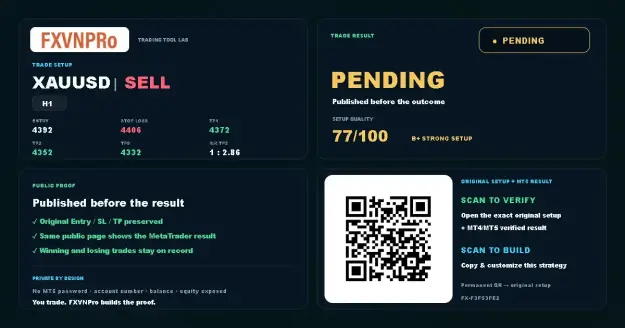 1 · SETUP
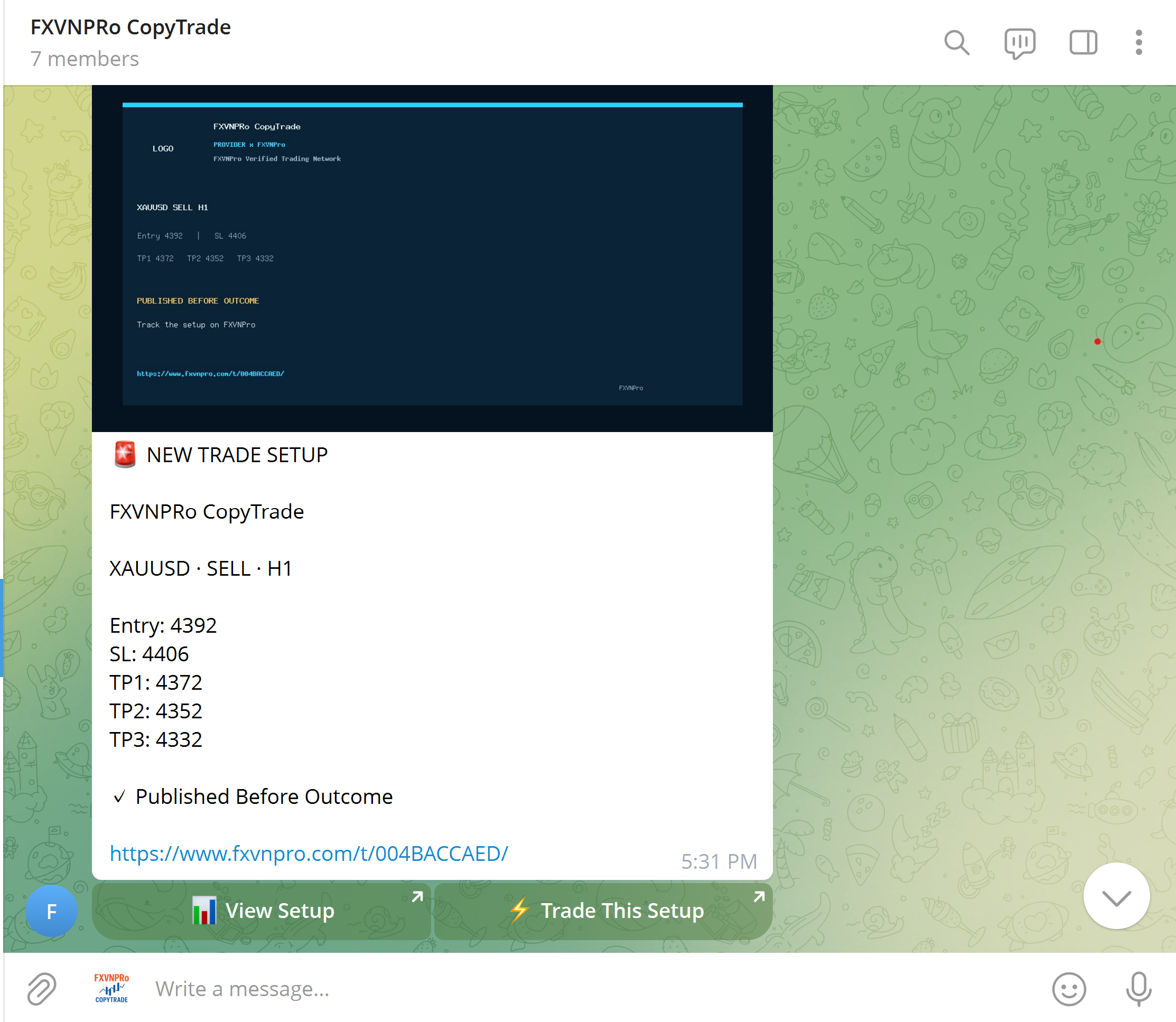 2 · TELEGRAM
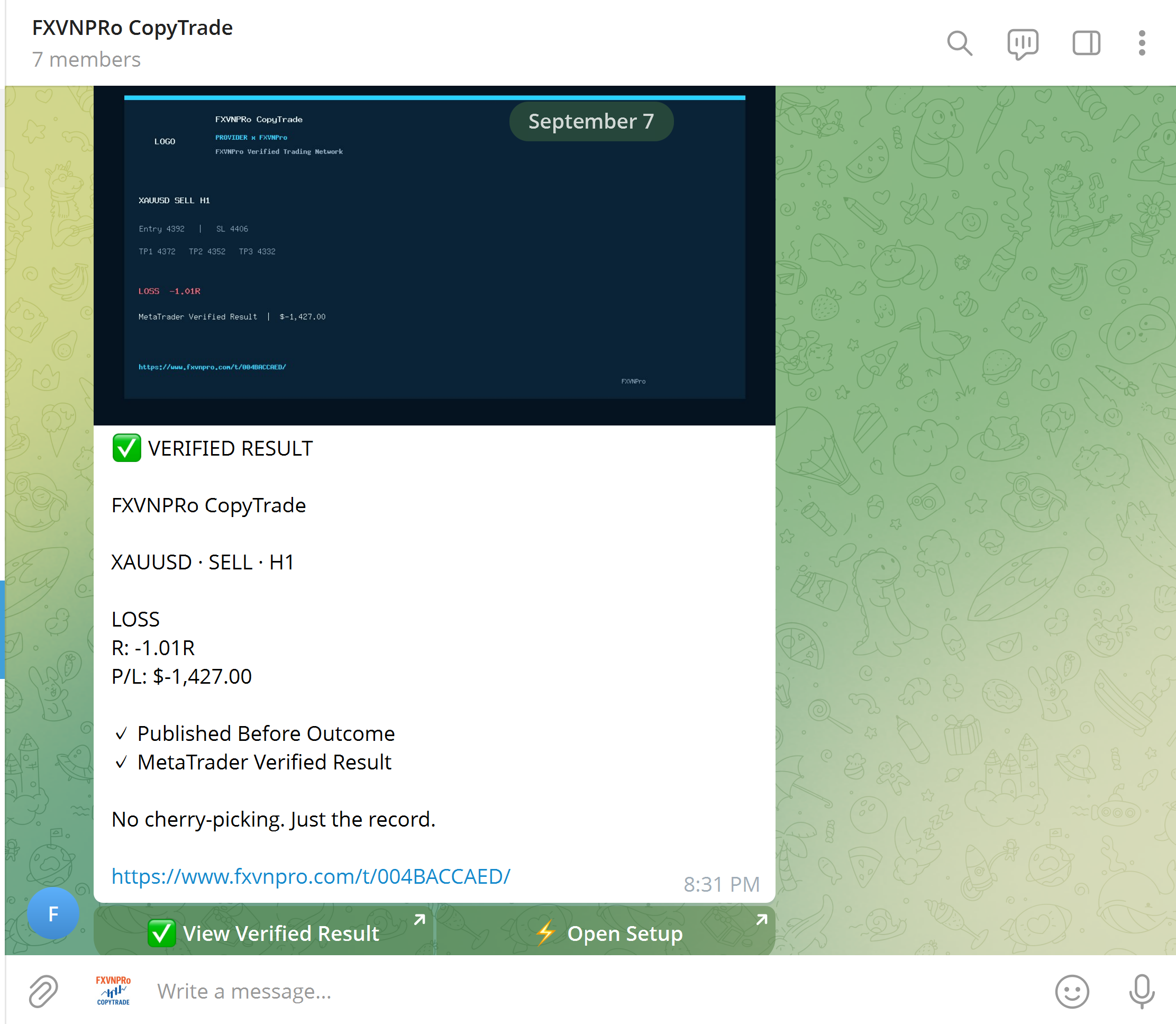 3 · VERIFIED
FXVNPro connects trade plans, Telegram trading communities and verified CopyTrade activity in one practical MT4/MT5 ecosystem.
Turn Entry, Stop Loss and Targets into a trade plan. Publish it before the outcome, then track and verify the result.
Turn Telegram signals into actionable MT4/MT5 setups. Signal Admins create the strategy while Members stay in control of risk.
Discover TRADERs, inspect verified trading history and performance, then decide who you want to follow across MT4 & MT5.
Build your strategy, distribute it to a community, or follow trading activity across MT4 & MT5.
Create Entry, Stop Loss and Targets before the outcome, then build a verified trading record.
Turn Telegram signals into an actionable workflow while followers keep control of their own risk.
Connect Chrome to MT4 or MT5 and open, modify or close trades from your browser.
Explore Masters and copy trading activity to your own MT4 or MT5 terminal with independent risk rules.