

FP Markets
FVP Score
6.7/10
FP Markets
- Minimum Deposit$100 AUD
- RegulationASIC, CySEC
- PlatformsMT4, MT5, cTrader
- SpreadFrom 0.0 pips
Start with your goal. You do not have to learn the FXVNPro architecture before using the tools.
Build an idea, use Telegram signals, trade from Chrome or follow a trader while technical setup stays in the background.
Technical connection details remain available inside each product when needed.
Compare FP Markets and OCTA by rating, regulation, minimum deposit, platforms, spreads, and overall trading conditions.
Use the FXVNPro Broker Checker Chrome extension to quickly review broker trust signals, ratings, and safety information while browsing broker websites.

| Feature | FP Markets | OCTA |
|---|---|---|
| Rating | 6.7 | 6.6 |
| Minimum Deposit | $100 AUD | $25 |
| Regulation | ASIC, CySEC | FSC, FSCA, CySEC, MISA |
| Platforms | MT4, MT5, cTrader | MT4, MT5 |
| Spread | From 0.0 pips | From 0.1 pips |
Below is a detailed breakdown of fees, spreads, regulation, platforms, and real trading suitability to help you decide which broker fits your trading style better.
If you’ve ever stared at your trading journal wondering why one strategy works in backtests but feels inconsistent live, you already know the culprit: execution and trading costs. It’s not the indicator. It’s the plumbing. And in the real world, the gap between “from 0.0 pips” and “from 0.1 pips,” or between a $25 and a $100 minimum deposit, can decide whether you keep trading—or quietly step away.
This comparison is for traders who actually place trades (not just open charts). If you scalp, day trade, or run automated systems, you care about fees, spreads and slippage. If you’re newer, you care about friction—depositing, funding, and getting consistent execution while you’re still building discipline. Either way, FP Markets vs OCTA is the kind of decision that’s easy to gloss over until you’re the one paying the cost.
Here’s the quick take before we get into the detail: FP Markets typically appeals to traders wanting broader platform choice (MT4, MT5, and cTrader) and a “from 0.0 pips” headline spread. OCTA, with a lower minimum deposit and multi-regulator presence, can be more approachable for smaller accounts and certain execution preferences, but it doesn’t advertise the same platform breadth.
Now let’s talk money—because “which broker is better” usually comes down to spreads and trading costs, not slogans.
Let’s get practical. When traders compare brokers, they often fixate on the headline spread: FP Markets says “from 0.0 pips,” while OCTA says “from 0.1 pips.” That sounds minor, right? For a scalper taking dozens of entries, it’s not minor. A difference of 0.1 pip on EUR/USD, repeated over and over, becomes real dollars fast—especially when you add in commissions (if applicable) and the way brokers price during volatile moments.
Here’s the thing: spreads aren’t static. In real trading conditions—news releases, London open, or thin liquidity—spreads widen. So the “from” number only tells you the best-case starting point. What matters is how often you actually see tight spreads and whether the broker’s pricing model stays competitive when volatility spikes.
In my experience, cost efficiency comes from the combo of (1) average spread during your trading window, (2) whether there’s a separate commission structure that changes the effective round-turn cost, and (3) execution quality—because slippage can erase “cheap spread” advantages.
So which is cheaper in real scenarios? If you trade during calmer market hours and you can reliably access those tighter conditions, FP Markets may have the edge due to the “from 0.0 pips” marketing and its broader platform options (which often aligns with different liquidity/access setups). If you’re a smaller-account trader who prioritizes simplicity and consistent day-to-day costs, OCTA can still be competitive—just don’t assume the best-case spread is what you’ll always get.
One rhetorical question to keep you honest: are you comparing raw spreads, or are you comparing your effective cost per trade after slippage and any commissions?
Regulation matters, but not in the “check the box” way. What matters is regulatory oversight quality, consistency of enforcement, and how comfortable you feel that your broker will behave predictably when things get stressful—like withdrawal requests, dispute handling, or sudden market changes.
FP Markets is regulated by ASIC and CySEC. ASIC is generally known for stricter consumer protection expectations and robust market conduct oversight, while CySEC adds another layer of European oversight. In practice, this combination tends to appeal to traders who want credible compliance standards without relying on a single jurisdiction.
OCTA lists regulation across FSC, FSCA, CySEC, and MISA. That’s a broader set of regulators on paper. But here’s the nuance: different regulators come with different rules, capital expectations, and investor protections. So it’s not just “more regulators = safer.” It’s “which protections are actually meaningful for your account type and region?”
Verification also matters. Even when a broker is regulated, you still need to understand what you’re covered for—client money handling, segregation rules, and dispute pathways. A broker can be well-regulated and still create friction if your verification isn’t smooth.
If you’re serious about long-term trading, you should care about safety because operational issues can force bad decisions: you might pause trading while waiting for documents, or limit withdrawals when the process feels slow.
So the real question isn’t “are they regulated?” It’s: do the regulations in the jurisdictions that apply to you translate into protections you can actually use?
Platforms shape your trading experience more than people admit. If you’re using MT4 or MT5, you’ll probably feel at home with both brokers. But platform choice affects how you manage risk, monitor spreads, and run automation reliably.
FP Markets supports MT4, MT5, and cTrader. That’s a meaningful difference. cTrader often appeals to traders who care about order management flexibility and a slightly different workflow for charting and execution. If you’ve ever switched between terminals and noticed how quickly you can react to price action—or how cleanly your orders behave—you know why this matters.
OCTA supports MT4 and MT5 only. For many traders, that’s enough. If your strategy is built around standard MT tooling and you already have EAs or indicators that you trust on MT4/MT5, you may not miss cTrader at all.
Execution speed and usability are tied to platform integration, but also to how each broker routes orders during fast markets. In real trading conditions, those milliseconds matter most for scalpers and traders who place stops close to the spread.
For example, imagine you’re trading GBP/USD around a news catalyst. You want: quick order placement, minimal requotes, and predictable stop execution. The “best” platform is the one you can use under stress without second-guessing. If you’re the type who tests multiple execution modes and you like a terminal that supports your style, FP Markets has the broader toolkit.
Bottom line: platform availability is not a cosmetic detail. It can directly affect your workflow and, indirectly, your trading performance.
Let’s talk about what happens before your first real trade. Minimum deposit and the funding process can affect your psychology and your pace. FP Markets lists a minimum deposit of $100 AUD. OCTA lists $25. That’s not just a number—it’s how quickly you can go from “researching” to “trading.”
In real-world terms, a lower minimum deposit reduces the barrier to testing a strategy on live spreads. You can trial a tactic, refine risk sizing, and learn how execution feels without tying up a bigger chunk of capital immediately.
Withdrawal speed and withdrawal fees aren’t provided in your data, so I won’t invent details. But I can still tell you what to watch: supported payment methods, how fast withdrawals are processed after approval, and whether there are conditions that delay payouts (like verification requirements or minimum withdrawal thresholds).
From a trader’s perspective, friction is expensive. If withdrawals are slow or require repeated document submissions, it can make you hold positions longer than you want, or hesitate to manage risk properly. You end up trading with your emotions instead of your plan.
Also consider operational consistency. A broker that’s fine for deposits but messy for withdrawals can still cost you—especially if you’re scaling account size based on performance.
So if you’re comparing FP Markets vs OCTA for the “best fit,” don’t treat deposits and withdrawals as an afterthought. They affect how safely you can move money in and out while you’re building confidence.
Beginners don’t fail because they can’t read charts. They fail because they can’t manage execution uncertainty while learning risk. That’s why broker suitability for new traders is about more than platform features.
OCTA’s $25 minimum deposit is a big practical advantage for beginners. It lets you start smaller, learn position sizing, and understand typical spread behavior without risking a larger base amount. When you’re learning, you’ll probably take more trial trades than you’d like. A lower minimum deposit reduces the pressure.
FP Markets requires $100 AUD to start, which can be fine if you’re disciplined and you know you’ll commit a meaningful amount. But if you’re brand-new, that initial deposit can feel like a “decision tax.” It’s not that $100 is impossible—it’s that beginners often rush, and rushing plus tight capital can lead to oversized risk.
Now, regulation helps beginners too, because it signals operational stability. FP Markets has ASIC and CySEC; OCTA lists FSC, FSCA, CySEC, and MISA. Either way, you still need to verify account identity properly and understand the broker’s account rules.
In real training, beginners benefit from clear execution behavior—fewer surprises, fewer platform quirks, and easy access to learning tools. Without claiming which broker is definitively simpler, I’ll say this: if your goal is to start small and focus on process, OCTA’s lower minimum deposit is the more beginner-friendly entry point.
But if you already know you’ll want cTrader later, FP Markets becomes attractive because you’re not boxed into a single terminal ecosystem.
This section is where “from 0.0” vs “from 0.1” stops being marketing fluff. Active traders—especially scalpers—live and die by spreads, execution consistency, and slippage. Even small inefficiencies compound over hundreds of trades.
FP Markets advertises spreads “from 0.0 pips” and supports MT4, MT5, and cTrader. That combination can matter if you’re routing orders across different platforms or you have a preference for a terminal that handles order execution and monitoring the way you like. If you scalp, you want to see tight spreads frequently, and you want your order placement to feel reliable when price moves quickly.
OCTA advertises spreads “from 0.1 pips” and supports MT4 and MT5. That’s still viable for day traders and high-volume execution, but you’d want to test whether the average effective spread stays competitive during your busiest trading sessions. If your strategy targets small edge trades, average cost is more important than the best-case number.
Here’s a realistic scenario: you trade EUR/USD during the London overlap and take quick entries when volatility is high. Your edge might be only a few pips or less per trade before costs. If slippage shows up during fast moves, a “cheap spread broker” stops being cheap.
So which broker fits active traders better? If you value platform flexibility and you consistently benefit from tight spreads, FP Markets is more compelling on paper due to the “from 0.0 pips” positioning plus cTrader support. OCTA can still work for active traders, but you should treat it as a cost-and-execution testing job: watch average spread, slippage frequency, and how the broker handles your order types.
Active traders shouldn’t gamble on assumptions. Test in live conditions with a controlled size, then scale.
FP Markets Pros: Wider platform choice (MT4, MT5, cTrader), competitive headline spread “from 0.0 pips,” strong regulatory footprint via ASIC and CySEC.
FP Markets Cons: Higher minimum deposit ($100 AUD) may slow experimentation for smaller accounts; cost advantage depends on actual average spreads and execution quality during your session.
OCTA Pros: Lower minimum deposit ($25) makes live testing easier, multi-jurisdiction regulation listed (FSC/FSCA/CySEC/MISA), MT4/MT5 are straightforward for most traders.
OCTA Cons: Slightly higher headline spread “from 0.1 pips,” fewer platform options (no cTrader in your provided details), and you’ll want to confirm real-world spreads and slippage for your strategy.
When you’re choosing which broker is better, focus on the tradeoffs that match your behavior. If you trade infrequently, minimum deposit matters more. If you trade frequently, spreads and execution matter more.
If you forced me to pick based on the data you provided and how real trading typically plays out, the decision is pretty clear—but it depends on who you are.
FP Markets looks better for traders who can actually GROW small cost differences (scalpers, day traders, automated strategy users who want multiple terminals). The “from 0.0 pips” headline spread and the availability of cTrader alongside MT4/MT5 gives you more ways to run your workflow. In a fees comparison, that can translate into a slight but meaningful advantage—assuming average spreads and execution are consistently solid during your trading hours.
OCTA is the more beginner-friendly option in terms of capital commitment. A $25 minimum deposit lowers the barrier to live testing, learning execution, and building discipline without overexposing your account early. For newer traders, the “how fast can I start trading?” question matters more than squeezing out the last fraction of a pip.
So, which broker is better overall? For active, execution-sensitive trading: FP Markets has the stronger edge. For beginners and smaller-account traders looking to get started with less friction: OCTA is the cleaner choice.
Whatever you pick, do one thing before scaling: compare spreads and trading costs using your actual Connects, your actual time windows, and your actual order sizes. That’s where “FP Markets vs OCTA” stops being a headline and starts being your P&L.
One real XAUUSD trade: created before the outcome, sent to Telegram, TRADEd in MT5 and returned as a verified result.
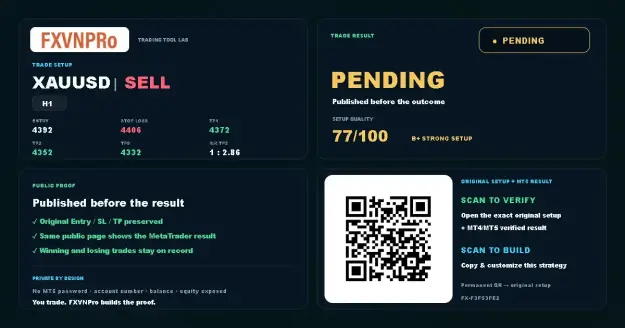 1 · SETUP
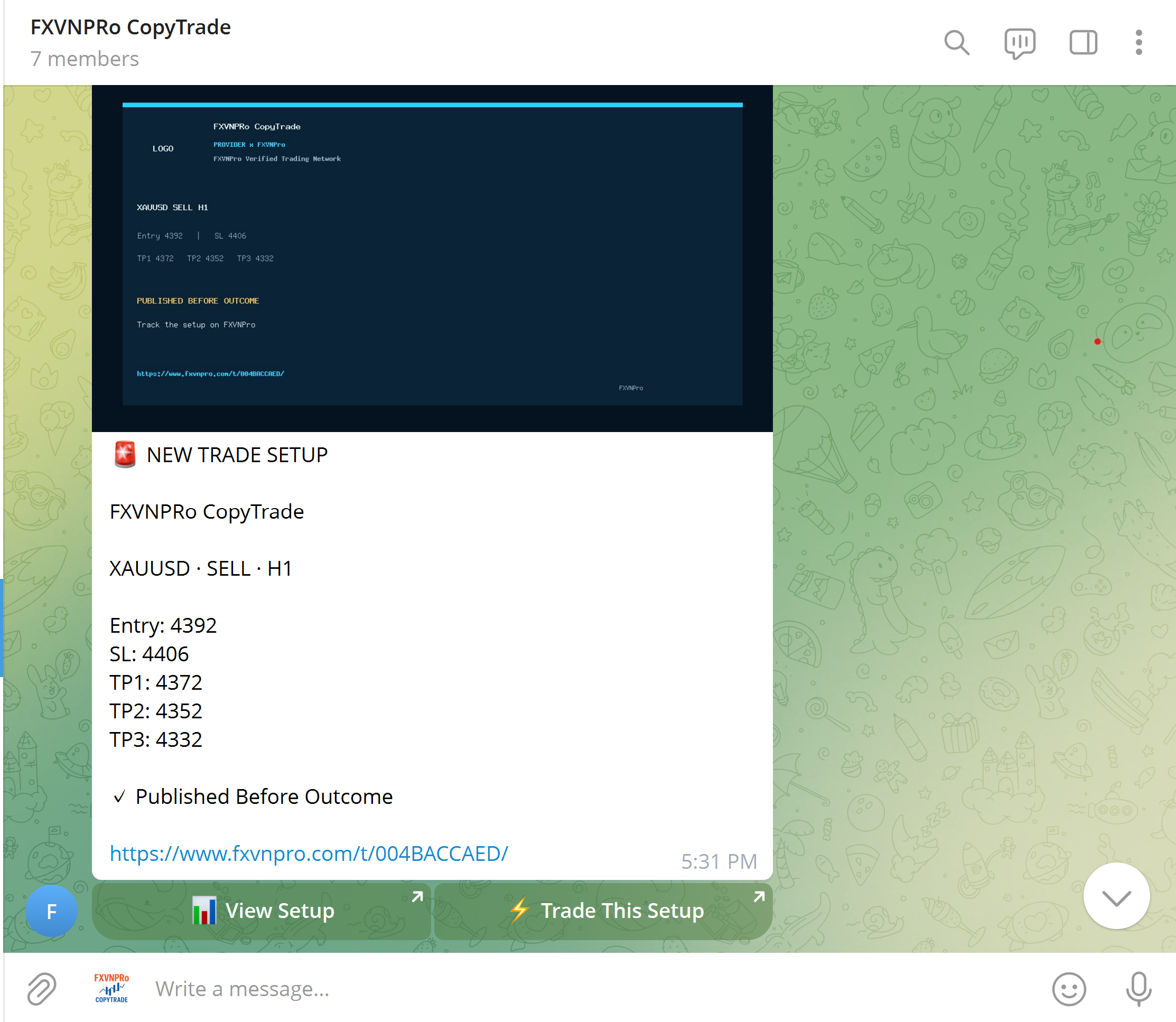 2 · TELEGRAM
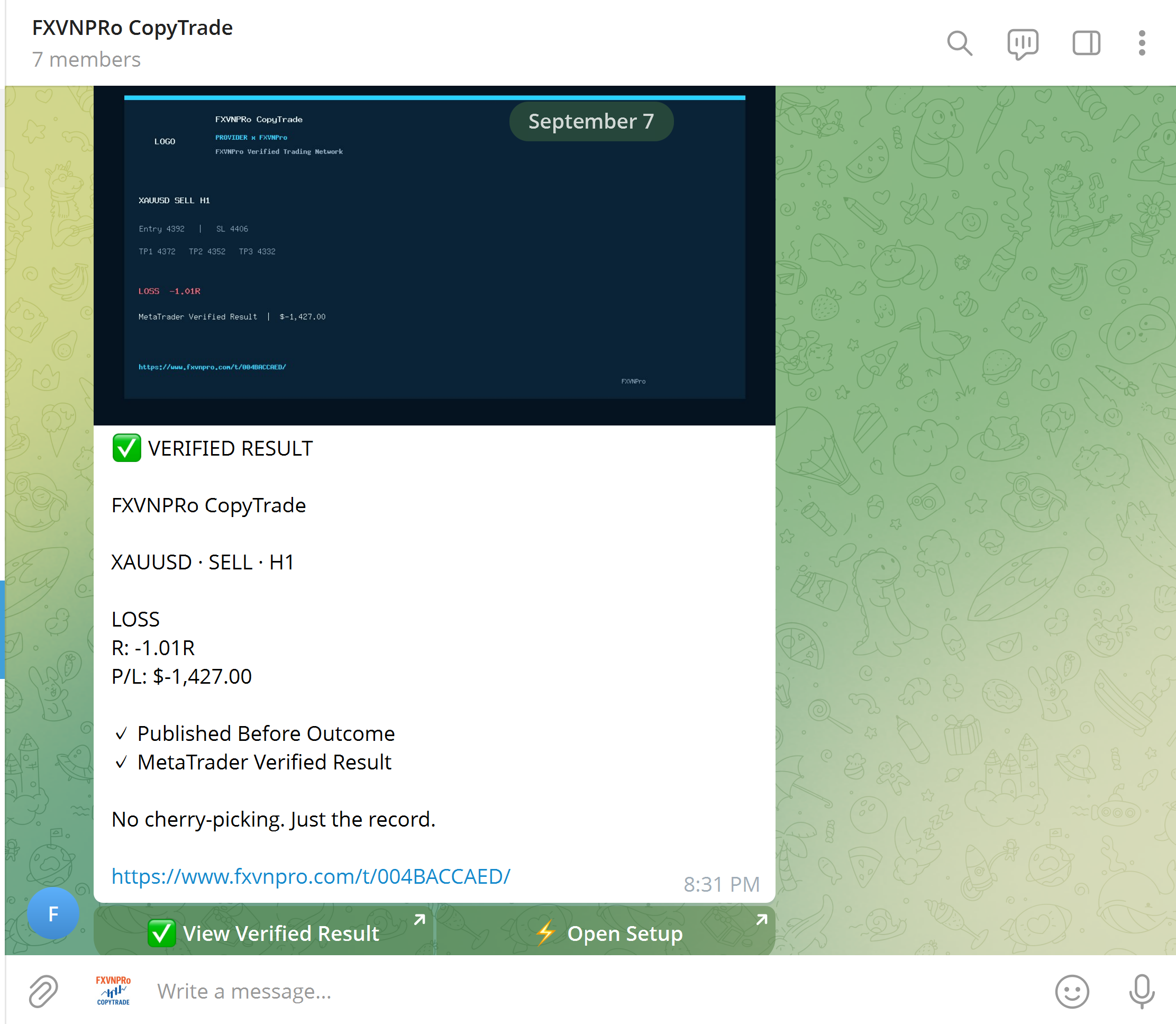 3 · VERIFIED
FXVNPro connects trade plans, Telegram trading communities and verified CopyTrade activity in one practical MT4/MT5 ecosystem.
Turn Entry, Stop Loss and Targets into a trade plan. Publish it before the outcome, then track and verify the result.
Turn Telegram signals into actionable MT4/MT5 setups. Signal Admins create the strategy while Members stay in control of risk.
Discover TRADERs, inspect verified trading history and performance, then decide who you want to follow across MT4 & MT5.
Build your strategy, distribute it to a community, or follow trading activity across MT4 & MT5.
Create Entry, Stop Loss and Targets before the outcome, then build a verified trading record.
Turn Telegram signals into an actionable workflow while followers keep control of their own risk.
Connect Chrome to MT4 or MT5 and open, modify or close trades from your browser.
Explore Masters and copy trading activity to your own MT4 or MT5 terminal with independent risk rules.