Plan a Trade
Build a structured setup and use practical trading tools before you act.
Trade IdeasRisk ToolsCalculators
BUILD A TRADE IDEA →
Plan trades, connect MT4 & MT5, review verified execution, explore traders and research brokers — without learning the whole platform first.
Build a structured setup and use practical trading tools before you act.
Use Browser Trading or turn supported Telegram signals into a structured trading workflow.
Explore CopyTrade Masters, review their records and choose your own risk settings.
Compare FP Markets and PU PRIME by rating, regulation, minimum deposit, platforms, spreads, and overall trading conditions.
Use the FXVNPro Broker Checker Chrome extension to quickly review broker trust signals, ratings, and safety information while browsing broker websites.


| Feature | FP Markets | PU PRIME |
|---|---|---|
| Rating | 6.7 | 6.8 |
| Minimum Deposit | $100 AUD | $20 |
| Regulation | ASIC, CySEC | ASIC, FSA |
| Platforms | MT4, MT5, cTrader | MT4, MT5 |
| Spread | From 0.0 pips | From 0.1 pips |
Below is a detailed breakdown of fees, spreads, regulation, platforms, and real trading suitability to help you decide which broker fits your trading style better.
If you’ve ever blown up (or almost did) because “the spread was a bit wider today,” you already understand the real point of broker comparisons. Most reviews talk about platforms and regulation like they’re the whole story. They’re not. The story is what happens to your P&L when you place size during live market conditions—when volatility spikes, spreads widen, and execution quality stops being theoretical.
In this FP Markets vs PU PRIME comparison, I’ll focus on the stuff that actually changes outcomes: spreads and trading costs, platform/execution experience, and the practical friction of deposits and withdrawals. We’ll also look at regulation and what it means in real life, not just on paper.
Quick summary? FP Markets (ASIC, CySEC) typically shines for traders who care about multi-platform flexibility (MT4, MT5, cTrader) and a “from 0.0 pips” spread narrative. PU PRIME (ASIC, FSA) stands out if you’re starting with less capital—minimum deposit is lower—and you want MT4/MT5 only, without extra platform complexity. But “which broker is better” depends on your trading style and how you actually trade (scalping vs swing, high frequency vs occasional orders).
Who should care? Day traders, scalpers, and anyone running an EA. Also beginners who think costs don’t matter until they see how quickly commissions and spreads add up over hundreds of trades. Let’s get into the fees comparison properly.
When traders say “my broker has tight spreads,” they usually mean the headline number. But in real trading conditions, the cost is the spread at the moment you enter, plus any commission/fees structure if applicable, plus slippage during fast markets. Since we’re comparing “from” spread figures, the key question becomes: how often do you actually see those lows, and what happens when liquidity thins?
FP Markets advertises spreads from 0.0 pips. PU PRIME advertises from 0.1 pips. On paper, that looks tiny. In practice, it can matter a lot. Consider a simple example: you trade EUR/USD with a 1.0 lot position. A 0.1 pip difference is not huge per trade, but over 200 trades a month, it becomes real money. And if you’re scalping, you’re placing more trades—so the “small” differences compound.
Now add volatility. During news releases (CPI, NFP, rate decisions), spreads often widen regardless of broker. What differs is how execution handles the widening—do you get filled close to your requested price, or do you watch your entry slip? Traders don’t feel “average spreads.” They feel the one bad fill that turns a planned trade into a stop-out.
Hidden fees can also creep in via swap/rollover rates, funding charges, inactivity rules, or platform/data costs. I can’t claim specific hidden fees without the brokers’ current fee schedules for your account type, but you should verify three things: (1) whether commission applies alongside low spread claims, (2) what spreads look like during off-peak hours, and (3) how swaps are calculated for the pairs you trade most.
Bottom line on fees comparison: if you trade frequently and your strategy is sensitive to entry price, FP Markets’ “from 0.0 pips” positioning can be a meaningful advantage. If your trading is lighter and you’re mostly concerned with access/low capital, PU PRIME’s from 0.1 pip may still be perfectly workable—assuming execution quality stays consistent.
Regulation matters because it affects how seriously a broker is monitored and what rules they must follow around client money segregation, leverage limits, risk controls, and complaints handling. It’s not just a logo on a website. It’s the difference between “they’ll probably be fine” and “there are consequences if they aren’t.”
FP Markets is regulated by ASIC and CySEC. That matters for traders in regions covered by these regulators because it typically brings stricter compliance expectations, more formal reporting, and oversight designed to reduce broker misconduct. CySEC regulation is also relevant if you’re operating under EU/EEA frameworks, since many clients rely on those standards for additional consumer protections.
PU PRIME is regulated by ASIC and FSA. This is still a serious regulatory footprint, but the practical question is: which regulator’s framework applies to your account and location, and what protections are actually available to you if something goes wrong? Different regulators can vary in how they structure client money rules and dispute resolution processes.
Verification is crucial. Before depositing, check whether your account is held/managed under the entity associated with the regulator you care about. Traders often miss this and later discover their account falls under a different legal entity than the one they assumed.
In real risk terms, regulation doesn’t eliminate all risk—market risk is still yours, and execution risk still depends on the broker’s infrastructure. But regulation is one of the few levers you can choose. If you’re the type of trader who can’t afford operational surprises, FP Markets’ ASIC + CySEC pairing is a strong signal. PU PRIME’s ASIC + FSA is also meaningful, but you should verify entity coverage and dispute pathways before you commit meaningful size.
Platforms are where “broker quality” becomes tangible. You can have tight spreads and still trade badly if your platform lags, your orders re-quote, or your fills look messy. This is where the platforms and toolset differences between FP Markets and PU PRIME can affect your daily workflow.
FP Markets supports MT4, MT5, and cTrader. That third option isn’t a gimmick. cTrader often feels smoother for certain order types and charting styles, and some traders prefer its workflow for tighter control. If you run multiple strategies, having both MT4 and MT5 plus cTrader can reduce friction. Also, if an EA doesn’t behave the same way across platforms, giving yourself an alternative platform matters.
PU PRIME supports MT4 and MT5. In practice, for many traders that’s enough. MT4 is still the “comfort zone” for older EAs and simpler execution. MT5 is useful if you prefer modern features, more order types, or a different indicator ecosystem. But if you’re the kind of trader who wants a specific platform for scalping or backtesting consistency, losing cTrader as an option can be a real limitation.
Execution speed and usability are hard to measure from marketing copy. Still, you can infer some things: platform stability, order handling during fast markets, and how often you see slippage. In real trading conditions, the best platform is the one that gets out of your way. When you’re pressing entries during a breakout, you don’t want delays that turn a good setup into a “why did it fill there?” moment.
So which broker is better for platforms? If you value flexibility and want to choose your execution environment, FP Markets has the edge. If you’re already committed to MT4/MT5 and don’t need extra platform variety, PU PRIME won’t feel restrictive.
Trading isn’t just placing orders. It’s funding your account, moving money when you need it, and not getting stuck in verification queues. Minimum deposit and withdrawal process can indirectly affect your risk management too—because if you can’t withdraw smoothly, you may keep more capital “locked” than you intended.
FP Markets lists a minimum deposit of $100 AUD. That’s not huge, but it’s still a step up if you’re testing the waters or you’re starting small with a micro account. If you’re building a strategy and you want to iterate quickly, a higher minimum deposit can slow your learning curve.
PU PRIME’s minimum deposit is $20. That’s a very different entry point. In real life, that can change what you do in your first month. Instead of feeling forced to deposit a larger amount “just because,” you can start with a smaller risk budget and scale once you know the spreads and execution match your expectations.
For deposits and withdrawals, the real differentiators are usually: how fast funds arrive, whether there are deposit/withdrawal fees, and how smooth the verification process is (especially identity checks and address verification). Some brokers move quickly for first deposits but slow down on withdrawals until documents are verified. Others do the opposite.
I recommend you check two things before choosing: (1) withdrawal timelines for your payment method (bank transfer vs card vs e-wallet), and (2) whether the broker requires the same method you used for deposit. These details matter when you’re trying to manage monthly risk or you need funds back urgently.
If you’re starting out or want lower friction to begin testing, PU PRIME’s low minimum deposit is a practical advantage. If you’re already comfortable funding at a higher level, FP Markets won’t block you—though it does demand a bit more upfront commitment.
Beginners don’t lose money only because they lack strategy. They lose money because they get execution surprises, misunderstand costs, and overtrade. So beginner suitability isn’t about “cool indicators.” It’s about predictable trading conditions and low-cost learning.
Minimum deposit is a big deal here. PU PRIME’s $20 minimum deposit helps new traders start with less pressure. That matters because beginners often need multiple attempts—different lot sizes, different session timings, and sometimes different pairs. You don’t want your first experience to feel like a high-stakes bet.
FP Markets’ $100 AUD minimum deposit is still accessible, but it can make the first month feel heavier. If the spreads aren’t as tight as you expected (or if you trade more frequently than planned), a higher starting deposit increases the emotional and financial impact of early mistakes.
Spreads and trading costs also matter for beginners. Many new traders think “I’ll just do a few trades.” Then they check the charts constantly, place revenge trades, and rack up costs. If your broker consistently gives you tighter spreads, your learning stays focused on your strategy rather than your broker’s cost structure.
Platform choice is another beginner factor. MT4/MT5 are familiar and widely supported, with tons of tutorials. FP Markets adds cTrader, but that can also overwhelm a brand-new trader who just wants simplicity. PU PRIME being MT4/MT5-only can actually be less confusing.
So which broker is better for beginners? If your priority is low commitment to get started and you want to learn with smaller risk, PU PRIME is the easier on-ramp. If you want a slightly more “serious” multi-platform setup and you’re comfortable starting at a higher minimum deposit, FP Markets is still a solid option.
Active traders live and die by microstructure: spread consistency, execution speed, and how the platform handles order placement under pressure. This is where “from 0.0 pips” versus “from 0.1 pips” stops being academic.
Let’s talk scalping first. Scalpers typically target small moves repeatedly. In those setups, a 0.1 pip difference can shave off a meaningful portion of your expected profit per trade. Also, scalping is when you’re most exposed to slippage. If the broker’s execution is slower or less stable during high-speed moments, your backtested edge can evaporate.
FP Markets has MT4, MT5, and cTrader. For active traders, that means you can test which platform yields cleaner fills for your specific strategy. Some EAs behave differently across MT4 and MT5 due to how market data is processed. Having cTrader as a fallback can be useful when you hit platform quirks.
PU PRIME offers MT4 and MT5 only. That’s still fine for many active traders, especially if your EA is MT4-native or you’ve already standardized your workflow. But you have fewer escape routes if you discover a platform-specific issue in live trading.
Day traders care about session spreads. During London and New York overlap, costs usually compress. Outside those hours, spreads widen. Active traders should look at how the broker handles those off-peak periods—because that’s when you might be forced to reduce frequency or change your plan.
In real terms, FP Markets appears better positioned for cost-sensitive active trading based on its spread claim and extra platform choice. PU PRIME can still work for active traders—especially those starting with smaller capital—but you should verify execution quality and spread behavior in the exact pairs you trade, during the sessions you trade.
Here’s the clean decision, based on how traders actually experience these brokers.
Choose FP Markets if: you’re cost-sensitive and trade actively, you value platform flexibility (MT4, MT5, and cTrader), and you want a broker positioned around very tight spreads (from 0.0 pips). For scalpers and serious day traders, the extra platform option alone can save you time if one platform gives you better order handling or cleaner fills for your strategy.
Choose PU PRIME if: you’re starting small, you want a low minimum deposit ($20), and you’re comfortable sticking with MT4/MT5. It’s often the more practical pick for newer traders who want to learn without locking in more capital than necessary—and for intermediate traders who already have a workflow and don’t need additional platform choice.
So which broker is better overall for “FP Markets vs PU PRIME”? If your trading is frequent and you obsess over spreads and execution speed, FP Markets has the stronger fit. If your priority is getting started with minimal friction and keeping your early risk budget controlled, PU PRIME is the better on-ramp.
One last thought—don’t decide only on the advertised spread. In real trading conditions, the better broker is the one that gives you consistent fills during the sessions you trade. If you want, tell me your main pairs, your typical holding time (scalp/day/swing), and your account size. I can help you translate these fees comparison points into a more concrete monthly cost estimate.
One real XAUUSD trade: created before the outcome, sent to Telegram, executed in MT5 and returned as a verified result.
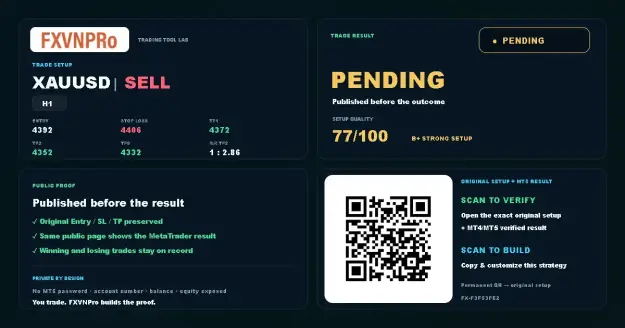 1 · SETUP
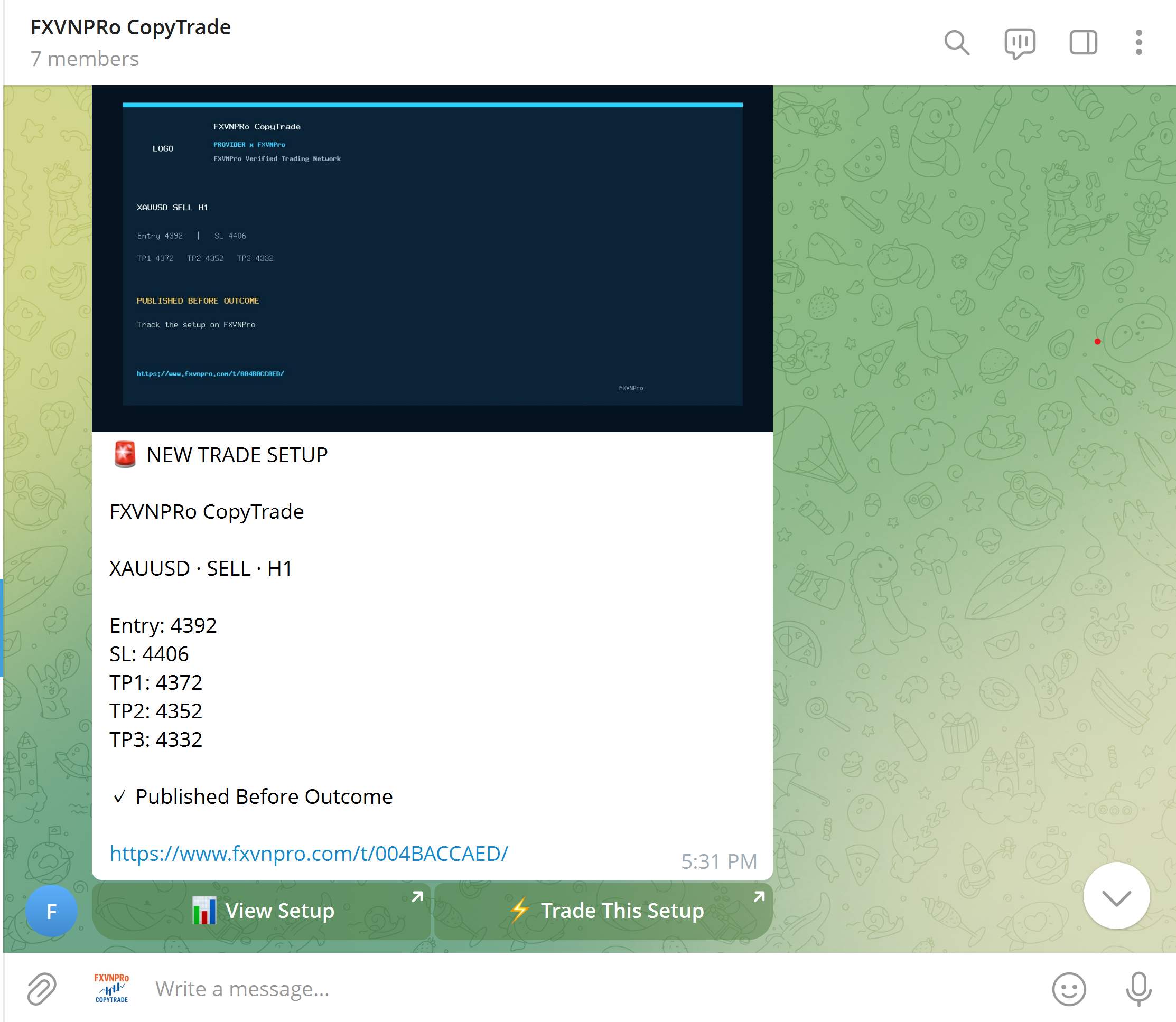 2 · TELEGRAM
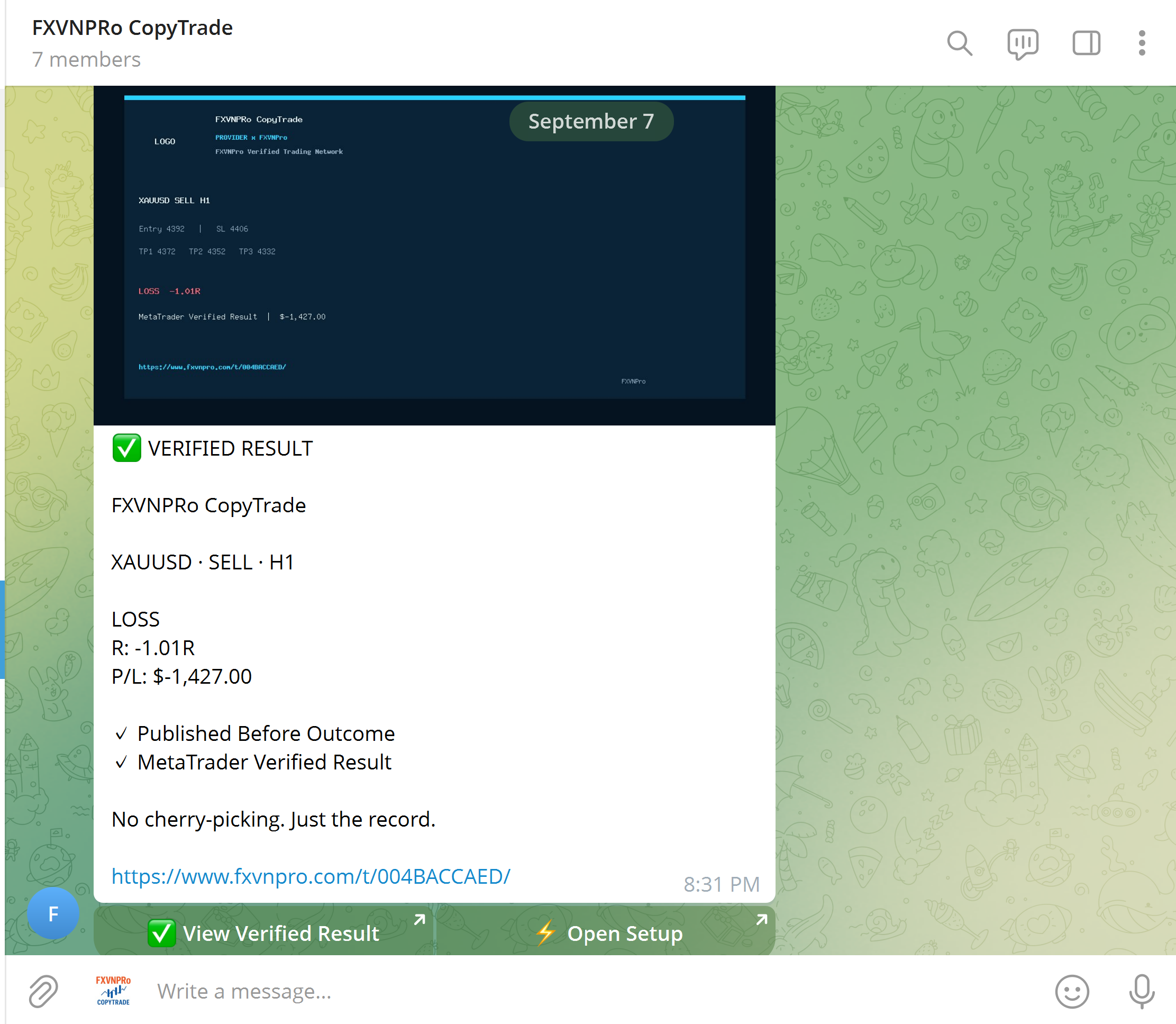 3 · VERIFIED
Build your strategy, distribute it to a community, or follow trading activity across MT4 & MT5.
Create Entry, Stop Loss and Targets before the outcome, then build a verified trading record.
Turn Telegram signals into an actionable workflow while followers keep control of their own risk.
Connect Chrome to MT4 or MT5 and open, modify or close trades from your browser.
Explore Masters and copy trading activity to your own MT4 or MT5 terminal with independent risk rules.
 GUIDE