

PU PRIME
FVP Score
6.8/10
PU PRIME
- Minimum Deposit$20
- RegulationASIC, FSA
- PlatformsMT4, MT5
- SpreadFrom 0.1 pips
Start with your goal. You do not have to learn the FXVNPro architecture before using the tools.
Build an idea, use Telegram signals, trade from Chrome or follow a trader while technical setup stays in the background.
Technical connection details remain available inside each product when needed.
Compare PU PRIME and XM by rating, regulation, minimum deposit, platforms, spreads, and overall trading conditions.
Use the FXVNPro Broker Checker Chrome extension to quickly review broker trust signals, ratings, and safety information while browsing broker websites.

| Feature | PU PRIME | XM |
|---|---|---|
| Rating | 6.8 | 7.1 |
| Minimum Deposit | $20 | $5 |
| Regulation | ASIC, FSA | CySEC, ASIC, IFSC |
| Platforms | MT4, MT5 | MT4, MT5 |
| Spread | From 0.1 pips | From 0.6 pips |
Below is a detailed breakdown of fees, spreads, regulation, platforms, and real trading suitability to help you decide which broker fits your trading style better.
If you’ve ever watched a trade go “almost right” and then noticed the price moved just enough to punish you, you already know how painful forex costs can be. People talk about strategy, risk management, and psychology—fair. But in real trading, fees and execution conditions quietly shape your results long before you ever hit a meaningful win rate.
This is why the question “PU PRIME vs XM, which broker is better?” matters more than it sounds. On paper, PU PRIME starts spreads from 0.1 pips with a minimum deposit of $20, while XM starts from 0.6 pips with a minimum deposit of $5. Regulation also differs: PU PRIME lists ASIC and FSA, while XM lists CySEC, ASIC, and IFSC. Both offer MT4 and MT5, so platform choice isn’t the differentiator—trading cost and trading experience are.
Who should care? Anyone trading frequently, anyone using tight stops, and especially traders who scalp or day trade where you’re paying the spread many times a week. If you’re a long-term swing trader with wider stops, spreads matter less—but execution quality and any extra friction still matters.
In this review, I’ll break down the fees comparison, spreads and trading costs, and how regulation and safety actually affect your risk. Then I’ll give you a clear “for which trader” recommendation, not a wishy-washy compromise. Because honestly—why leave money on the table?
Let’s get practical. When you compare spreads and trading costs, you’re really comparing your average effective cost per trade. PU PRIME advertises spreads “from 0.1 pips.” XM advertises “from 0.6 pips.” That sounds straightforward, but the nuance is this: “from” means you might see those numbers only in certain liquidity windows. Still, even if you never get the absolute minimum, the typical spread range often trends toward those starting points.
This matters because the spread is immediate. You pay it the moment you enter. If you’re scalping or day trading, you’re paying it over and over. For example, imagine you trade EUR/USD 40 times in a week with an average spread difference of 0.3–0.5 pips between brokers. Even with a modest position size, that adds up fast. The strategy might be solid, but your net edge gets smaller.
Now, hidden fees. Neither broker’s basic data you provided mentions commissions, swap/overnight fees, or inactivity fees. And I’m not going to invent numbers. But here’s what you should check in real life: whether they use commission + tighter spreads (common on some accounts) or “all-in spread” pricing. If PU PRIME is genuinely low-spread without an added commission, it can be cheaper for frequent traders. If XM charges commission on top of wider spreads (or if PU PRIME adds commission later), the comparison changes.
In real trading conditions—news spikes, rollover, and illiquid hours—spreads can widen. In those moments, execution speed and slippage become the “real fee.” If one broker consistently offers better fills, the spread comparison alone won’t tell the whole story. But as a baseline, PU PRIME has the cost advantage on spreads, and that’s a big deal for active traders.
Regulation isn’t just a compliance badge. It affects how brokers handle client money, leverage limits, reporting, and complaint pathways. When you’re asking “PU PRIME vs XM, which broker is better,” safety should be part of the “which one costs me less” conversation—because a cheap broker you can’t trust is expensive in the worst way.
PU PRIME lists ASIC and FSA. XM lists CySEC, ASIC, and IFSC. Here’s how to interpret that in practical terms: ASIC and CySEC are generally viewed as more stringent regulators in the retail space. CySEC in particular is known for enforcing rules around conduct and leverage, while ASIC is famously strict around financial services oversight. IFSC is often considered less “center stage” than CySEC/ASIC, but it can still provide a framework—especially for international clients.
Verification importance is real. Always check whether your specific entity (the exact legal entity name) is the one regulated under your country’s eligibility. Brokers sometimes operate under multiple entities. The regulator listed on a marketing page doesn’t automatically guarantee the same protections for every account type or region.
Also, look at how they treat segregation of funds and what happens in case of insolvency. Even if both brokers are legitimate, the investor protection mechanisms can differ. This is why traders should read the risk disclosures and the “client money” sections, not just the logo.
In real trading, you usually don’t “feel” regulation. But if you ever face a dispute, withdrawal delay, or unusual account restriction, regulation is what determines how much leverage (and recourse) you have. If safety is a priority for you, XM’s broader and more widely recognized regulatory footprint (CySEC + ASIC) tends to feel more reassuring.
Both PU PRIME and XM offer MT4 and MT5. That matters because it removes a major variable. You can run EAs, use indicators, and trade manually without being forced into a proprietary platform. For experienced traders, that’s not a small point—it’s the difference between moving your systems easily versus rebuilding workflows.
Where the experience can differ is execution speed, order handling, and how reliably the platform reflects real market prices. MT4/MT5 are client-side platforms; the broker’s server-side execution quality still determines fills, latency, and slippage. So while the interface might look familiar, the “feel” can be different.
In real conditions, I care about things like: do limit orders fill reliably during fast markets, how quickly price updates after news, and whether trailing stops behave consistently. If you trade with tight stops, any mismatch between displayed price and executable price can turn a good setup into a stop-out.
Tools and usability also matter. Even if both brokers support the same platform, some brokers provide better education content, VPS options, more helpful reporting, or clearer account dashboards. Those things don’t show up in a brochure, but they impact how quickly you troubleshoot when something goes wrong.
Execution speed and slippage are the big questions for scalpers and day traders. If you frequently trade around London open or during economic releases, the platform alone won’t tell you whether your stop gets respected or “hunted” due to delayed fills. In practice, you’ll only know by testing on your account and reviewing trade history patterns.
Bottom line: since both brokers support MT4/MT5, the platform isn’t the differentiator. Your differentiator is execution quality under your trading style, and PU PRIME’s lower advertised spreads make it potentially better for traders who care about tight cost control.
Let’s talk about deposits and withdrawals because this is where traders often feel the difference between “cheap spreads” and “can I actually access my money smoothly?” You gave minimum deposits ($20 for PU PRIME and $5 for XM), which already hints at accessibility. If you’re starting small, XM is easier psychologically—you can fund an account without feeling like you’re committing too much cash.
Minimum deposit is one thing; withdrawal friction is another. Different payment methods can affect processing time and costs. Some brokers charge withdrawal fees depending on the method; others rebate it. Some use instant transfers for card payments but take longer for bank wires. None of that is in your provided data, so you should verify it on the broker’s own withdrawal policy pages.
In real trading, timing matters. Suppose you’re running a funded-account style plan and you need to withdraw profits weekly or biweekly. If withdrawals take longer than expected, you’ll adjust your risk or you’ll pause trading while waiting. That changes your performance and can force you to break your own rules.
Now the common scenario: you deposit, you trade for a couple weeks, and then you decide to withdraw. This is when you discover whether the broker is smooth, whether verification is straightforward, and whether there are extra steps that slow things down. If your verification process is heavy, it can delay withdrawals even if your trading is going well.
XM’s lower minimum deposit can be a practical advantage for newer traders testing the waters. PU PRIME’s minimum deposit is still not high at $20, but it’s slightly more “serious trader” than “casual starter.”
If withdrawal experience is a key concern for you, I’d prioritize reading up on user experiences and checking the exact withdrawal options available in your country. Because one broker can have better spreads and still frustrate you with withdrawal friction.
When beginners ask “which broker is better,” they’re often thinking about one thing: how quickly can I start trading without headaches. For that, spreads matter—but so does account setup, platform clarity, and how forgiving the broker feels when you’re learning.
XM has a $5 minimum deposit. That’s a real advantage for new traders who want to test mechanics: placing orders, understanding spreads, seeing how stop-loss behaves, and learning how MT4/MT5 charts translate into trade execution. A low minimum deposit reduces the emotional pressure. You’re more likely to experiment with position sizing and risk than if you had to commit $20 upfront.
PU PRIME’s $20 minimum is still within reach, but beginners sometimes get stuck at the “should I deposit?” stage. That matters because learning is iterative. You’ll likely make mistakes early. With a smaller initial deposit, you can treat your early trading as practice rather than a high-stakes bet.
Regulation also influences beginner comfort. XM’s listed CySEC and ASIC coverage generally gives many retail traders more confidence. It doesn’t guarantee your experience will be perfect, but it typically aligns with clearer investor protection expectations.
Now, the beginner trap: chasing ultra-tight spreads without understanding how spreads widen during news or volatility. PU PRIME’s advertised “from 0.1 pips” could look amazing in calm conditions. But if beginners trade during major data releases, the spread might jump, and the practical cost can be higher than expected.
My recommendation for beginners? If you want the easier entry in terms of capital required and comfort level, XM is the more beginner-friendly choice. You can learn the platform and basic execution without feeling like you’re risking too much too soon.
Active traders don’t just want “good spreads.” They want predictable fills, minimal slippage, and execution that holds up when markets move fast. This is where PU PRIME vs XM becomes less about opinions and more about cost per trade and execution consistency.
PU PRIME advertises spreads from 0.1 pips. Even if you rarely see the absolute minimum, the lower starting spread suggests the broker may provide tighter average trading costs—especially during liquid sessions. For day traders running multiple round trips per session, that can be the difference between a strategy that survives and one that bleeds.
XM starts from 0.6 pips, which can still be workable for swing trading and some day trading, but it’s a tougher environment if you scalp or trade tight ranges. When your average target is small—say 5 to 15 pips—every extra 0.2 to 0.6 pips paid in spread meaningfully affects your win/loss math.
In real trading scenarios, think about London open. You’re taking quick setups, moving stops, and re-entering when your confirmation triggers. During those windows, spreads can vary by liquidity and order size. If one broker’s spreads widen less and fills are steadier, you feel it immediately. Your stop-outs decrease. Your average trade cost shrinks. The P&L line becomes less jagged.
Then there’s slippage. Even if XM has wider starting spreads, it could still outperform PU PRIME in specific fast-market conditions if execution is cleaner. But without testing, you can’t assume that. What you can assume from the data is that PU PRIME’s spread positioning is more aligned with active trading.
If you’re an active trader who measures edge in fractions, I’d lean toward PU PRIME for the cost structure—provided you validate execution and slippage on your instruments during your trading hours.
PU PRIME
Pros: Lower advertised spreads (from 0.1 pips) which can reduce cost per trade for active strategies.
Pros: MT4/MT5 support for automated trading and familiar workflows.
Cons: Minimum deposit is $20, which is slightly higher for absolute beginners.
Cons: Regulation listing includes ASIC and FSA—still serious, but you should confirm the exact legal entity coverage for your region.
XM
Pros: Lower minimum deposit ($5), easier entry for new traders testing the platform.
Pros: Listed regulation includes CySEC and ASIC (plus IFSC), which many traders find reassuring.
Pros: MT4/MT5 support keeps platform friction low.
Cons: Higher advertised spreads (from 0.6 pips) may pressure tight-stop or high-frequency strategies.
Cons: If you scalp or day trade heavily, the spread difference can compound into a noticeable monthly cost.
Here’s the clear decision based on the data you provided and the way costs and safety usually play out in real trading.
If you’re comparing PU PRIME vs XM for fees comparison and spreads and trading costs: PU PRIME is the better match for most active traders. The lower “from 0.1 pips” spread is simply better aligned with scalping, day trading, and strategies where you can’t afford to pay extra spread on every entry. That said, don’t skip your own validation. Test your typical Connects, your typical trading hours, and watch slippage during volatile events.
If you’re asking which broker is better for beginners: XM is the stronger starting point. The $5 minimum deposit is a genuine practical advantage, and the regulation footprint that includes CySEC and ASIC generally feels more reassuring for newer traders who want fewer unknowns while learning.
My bottom line recommendation:
Choose PU PRIME if you trade frequently, your stops are relatively tight, and you care about minimizing spread drag. It’s built for cost-sensitive execution.
Choose XM if you’re starting out, want a lower funding threshold, and prefer a regulatory setup that’s widely recognized in retail trading.
One last question for you: are you trading to prove your strategy—or are you trading to see how much the market can take from your account every day? Pick the broker that matches your answer.
One real XAUUSD trade: created before the outcome, sent to Telegram, TRADEd in MT5 and returned as a verified result.
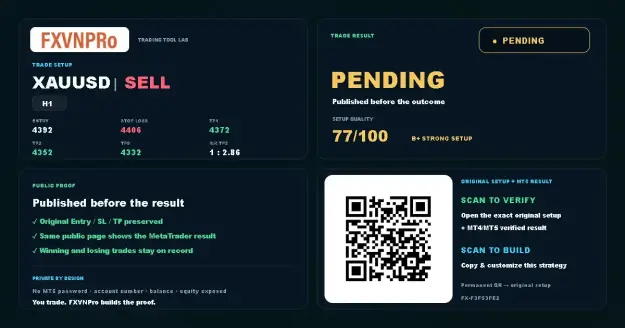 1 · SETUP
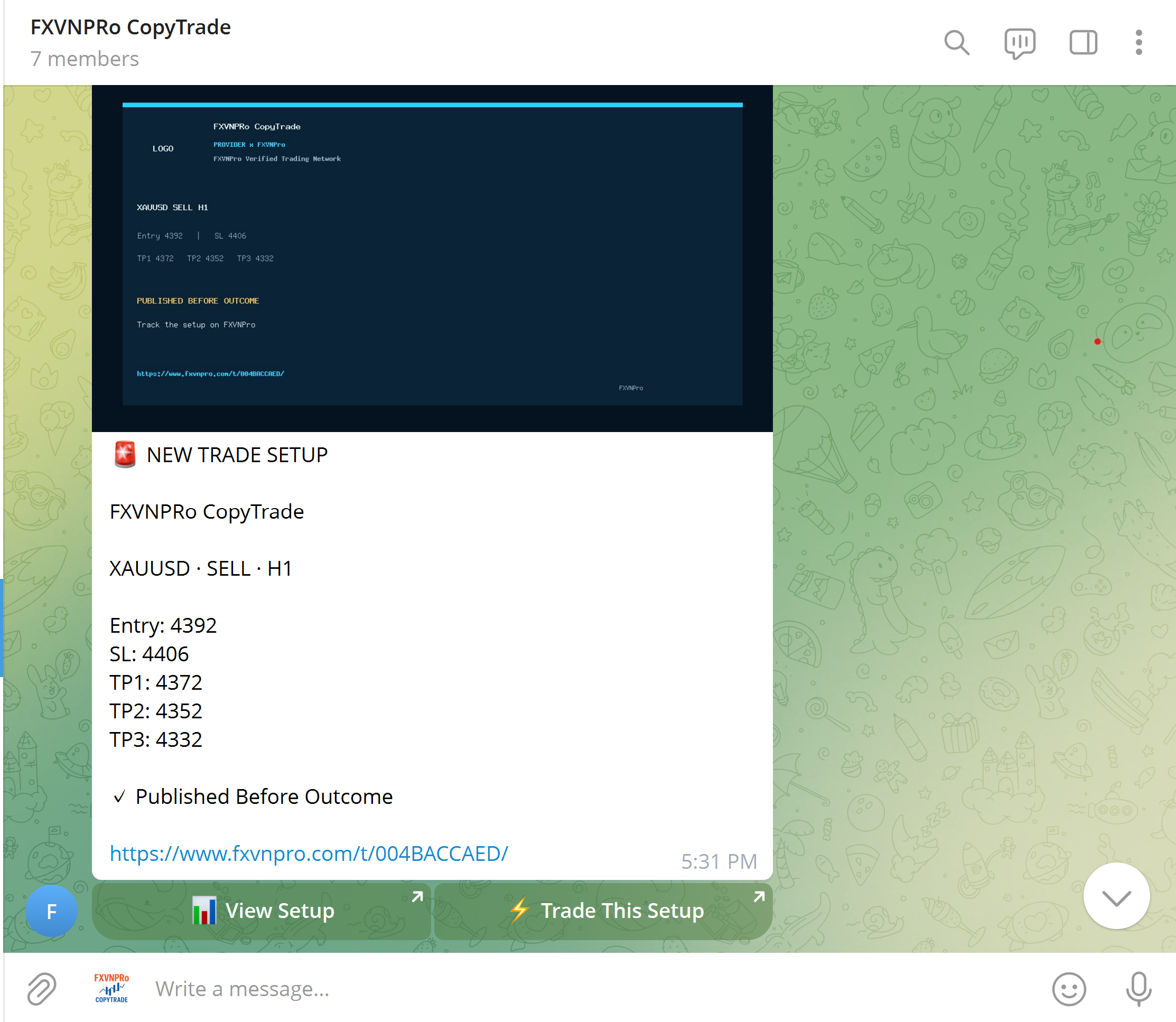 2 · TELEGRAM
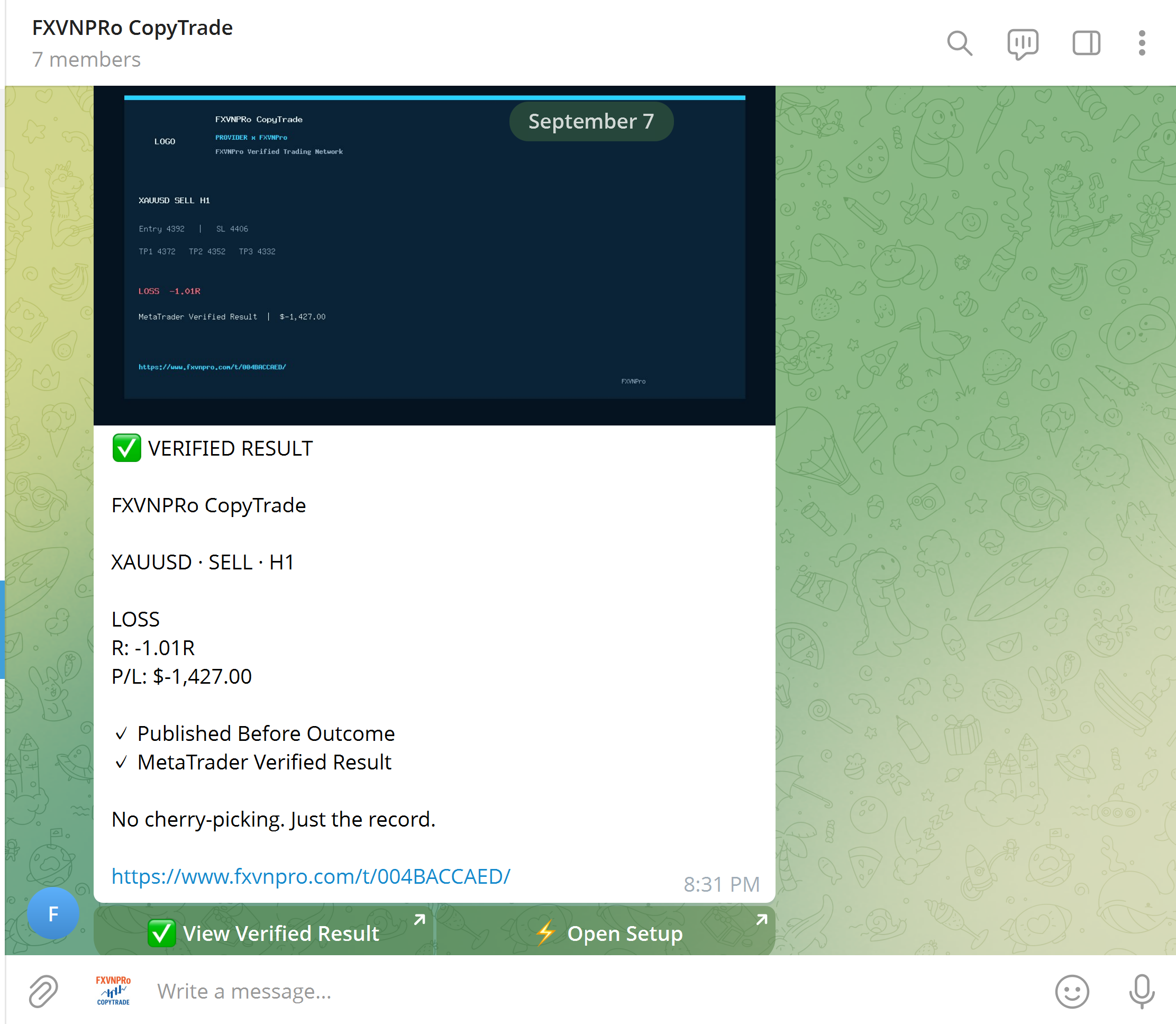 3 · VERIFIED
FXVNPro connects trade plans, Telegram trading communities and verified CopyTrade activity in one practical MT4/MT5 ecosystem.
Turn Entry, Stop Loss and Targets into a trade plan. Publish it before the outcome, then track and verify the result.
Turn Telegram signals into actionable MT4/MT5 setups. Signal Admins create the strategy while Members stay in control of risk.
Discover TRADERs, inspect verified trading history and performance, then decide who you want to follow across MT4 & MT5.
Build your strategy, distribute it to a community, or follow trading activity across MT4 & MT5.
Create Entry, Stop Loss and Targets before the outcome, then build a verified trading record.
Turn Telegram signals into an actionable workflow while followers keep control of their own risk.
Connect Chrome to MT4 or MT5 and open, modify or close trades from your browser.
Explore Masters and copy trading activity to your own MT4 or MT5 terminal with independent risk rules.