

Vantage Markets
FVP Score
6.5/10
Vantage Markets
- Minimum Deposit$50
- RegulationASIC, FSCA, VFSC
- PlatformsMT4, MT5,cTrader,TradingView
- SpreadFrom 1.0 pips
Start with your goal. You do not have to learn the FXVNPro architecture before using the tools.
Build an idea, use Telegram signals, trade from Chrome or follow a trader while technical setup stays in the background.
Technical connection details remain available inside each product when needed.
Compare Vantage Markets and XM by rating, regulation, minimum deposit, platforms, spreads, and overall trading conditions.
Use the FXVNPro Broker Checker Chrome extension to quickly review broker trust signals, ratings, and safety information while browsing broker websites.

| Feature | Vantage Markets | XM |
|---|---|---|
| Rating | 6.5 | 7.1 |
| Minimum Deposit | $50 | $5 |
| Regulation | ASIC, FSCA, VFSC | CySEC, ASIC, IFSC |
| Platforms | MT4, MT5,cTrader,TradingView | MT4, MT5 |
| Spread | From 1.0 pips | From 0.6 pips |
Below is a detailed breakdown of fees, spreads, regulation, platforms, and real trading suitability to help you decide which broker fits your trading style better.
If you’ve ever stared at a live chart, clicked buy or sell, and then watched price “move” before your order fills, you already know this isn’t a theoretical game. In forex, broker choice shows up in the only place that matters: your trading costs and your execution quality. That’s why a practical comparison like “Vantage Markets vs XM” is more than marketing—it’s about how fast you get in, what you pay per trade, and how much friction you deal with when money is moving.
This review is aimed at traders who are actively choosing a broker, not just collecting account details. If you scalp, day trade, or run a systematic strategy with tight risk controls, spreads and slippage can quietly eat your edge. If you’re newer, deposit and withdrawal friction can be the difference between staying consistent and getting stuck.
Quick summary: Vantage Markets typically starts at a slightly higher spread level (from 1.0 pips), but it offers a wider platform toolkit (MT4, MT5, cTrader, TradingView). XM starts lower on spreads (from 0.6 pips) and has a very low minimum deposit ($5), which makes it easier to begin with smaller sizing.
So which broker is better? The answer depends on what kind of trader you are. Let’s break down fees comparison, regulation and safety, platforms, and—most importantly—what those differences mean when you’re actually trading.
Let’s talk trading costs the way you experience them: in the spread, in the timing, and in the “hidden” stuff you only notice after enough trades. Both brokers advertise spreads “from” certain levels, which is common, but the real question is how often you actually see those numbers during normal market conditions.
Vantage Markets: spreads from 1.0 pips. XM: spreads from 0.6 pips. On paper, XM looks cheaper. But spreads aren’t the only fee mechanic—some brokers offset lower spreads with commissions, while others keep it simple. In the data provided here, we only have spread “from” values, so the fairest comparison is to focus on the spread component and the likely impact per trade.
In real trading conditions, spreads widen during news releases, rollover, and low-liquidity hours. If you trade around those times, the “from” number matters less than how quickly the spread expands and how consistently your orders TRADE. For example, if you run a mean-reversion strategy on EUR/USD with small targets, a 0.4 pip advantage (XM’s 0.6 vs Vantage’s 1.0) can matter—especially over dozens of trades a day.
However, there’s another angle: execution quality. If one broker gives you better fills and less slippage, the effective cost might narrow even if the headline spread is a bit higher. That’s why many traders compare “average realized spread” rather than “minimum advertised spread.”
Bottom line for fees comparison: assuming similar order execution quality, XM’s lower starting spread usually makes it cheaper for frequent trading. But if your strategy is sensitive to execution speed and slippage, you’ll want to test both—because that’s where the real money moves.
When traders ask about regulation, they’re usually trying to answer one question: “How protected am I if something goes wrong?” Regulation can’t eliminate risk, but it can reduce the chance that a broker operates loosely with client funds or pricing practices.
Vantage Markets lists ASIC, FSCA, and VFSC. XM is regulated by CySEC, ASIC, and IFSC. What matters is not only that you see familiar names, but how those regulators typically behave in practice—such as capital requirements, segregation expectations, oversight of complaints, and rules around leverage and client protections.
Vantage’s multi-region footprint (ASIC + FSCA + VFSC) can feel reassuring if you’re in or near those jurisdictions, because local oversight tends to be more relevant to how accounts are administered. XM’s presence under CySEC (alongside ASIC and IFSC) is also a strong signal, especially for traders who value European regulatory standards and complaints handling frameworks.
Here’s a practical way to think about it: regulation affects your risk profile when you’re not trading—when markets go sideways, withdrawals get delayed, or a dispute happens. In real trading conditions, those scenarios are rare… until they aren’t.
Verification also matters. Even the best-regulated broker can create delays if your documentation isn’t ready. If you’re planning to deposit more later, you’ll want to complete verification early to avoid withdrawal friction when you actually need the money.
So which is safer? Both have legitimate regulatory coverage. If you’re choosing based purely on “confidence,” I’d treat them as broadly comparable, but your jurisdiction and account setup details will decide how smoothly the protections translate into real-world experience.
Platforms are not just “where you place orders.” They’re your execution interface, your charting environment, your automation setup, and—if you’re serious—your backtesting and monitoring pipeline. This is where Vantage Markets vs XM starts to feel different for different traders.
Vantage Markets offers MT4, MT5, cTrader, and TradingView. XM offers MT4 and MT5. If you use TradingView heavily for charting and signal generation, Vantage’s inclusion can reduce friction. cTrader is popular with traders who like its interface, order management feel, and charting workflow. Some traders also prefer how cTrader handles certain order types and execution tools. Does that automatically mean Vantage is better? Not necessarily. But if you already trade in that ecosystem, it can matter a lot.
XM’s strength is sticking to MT4/MT5, which many traders already know inside out. If you’re comfortable with MT4 indicators, EAs, and the general MetaTrader ecosystem, XM’s platform lineup won’t introduce new learning curves.
Execution speed and usability aren’t always advertised in a way you can measure from a brochure. In practice, traders notice things like: how quickly the platform responds after clicking, how stable the connection feels, and how cleanly the broker’s price feed matches the chart. Those “small” differences show up when you’re placing multiple orders or managing a fast-moving trade.
If your trading experience is more advanced—especially if you use multiple tools—Vantage’s platform variety gives you room to build a workflow that fits you. If you’re MT4/MT5-first and want simplicity, XM keeps things straightforward.
Spreads are visible. Withdrawal delays are not—you only feel them when you request money at the worst possible time, like right after a winning week (or when you’re stressed and need funds to manage risk). So deposits and withdrawals deserve real attention.
Minimum deposit is a big signal of how easy a broker is to start with. XM’s minimum deposit is $5. Vantage Markets is $50. That difference matters if you’re testing the broker, building confidence, and learning execution without committing too much capital too early.
In real-world experience, lower minimum deposits often correlate with less “gatekeeping” for new traders. You can fund, verify, and run a small test of your strategy. With Vantage, you’ll typically need to commit a bit more just to get rolling. Is that a deal-breaker? For some traders, no. For others—especially beginners—it can be the difference between trying a new broker and abandoning the idea.
As for speed and fees: the details weren’t provided in the data you shared, so I won’t invent numbers. But here’s the practical takeaway. When comparing brokers, look for transparency around withdrawal methods, processing times, and whether third-party fees apply. Also check whether the broker requires full verification before withdrawals.
For example, if you plan to fund via card and later switch to bank transfer, a broker that locks withdrawals until verification is complete can slow you down. That doesn’t mean the broker is bad—it means you should plan your workflow.
In short: XM wins on low-friction entry. Vantage asks a bit more upfront, but you may get a smoother long-term workflow if your trading style benefits from its broader platform options.
Beginners don’t just need a broker—they need an environment that reduces mistakes. That includes deposit size, platform clarity, account funding simplicity, and how quickly you can start trading without wrestling the process.
XM’s $5 minimum deposit is a strong psychological advantage. You can start smaller, learn order sizing, and avoid overcommitting before you understand spread behavior and execution. This matters because beginners often make two errors: trading too large too soon, and panicking when costs aren’t what they expected. A smaller minimum lets you make those mistakes with less damage.
Vantage Markets has a higher minimum deposit ($50). That doesn’t automatically mean it’s harder. But it can raise the stakes early. If your first week of trading is messy (and it often is), you may feel pressure to “recover” rather than learn. That pressure can push you toward impulsive decisions.
Now, what about platforms? Both brokers offer MT4 and MT5. Those are familiar to the retail trading community, with plenty of tutorials, indicators, and community support. That helps beginners. But Vantage’s added cTrader and TradingView access can be beneficial if you’re the kind of beginner who learns through charting and experimentation. Still, more tools can also mean more choices—sometimes that’s not what a beginner needs.
For beginners, the practical decision is usually: can I fund quickly, understand my costs, and TRADE trades without friction? XM is more forgiving on entry. Vantage is a better fit if you’re already thinking long-term and want more platform flexibility from day one.
Active traders—scalpers, day traders, and high-volume users—don’t care about “nice” features. They care about trading costs per unit time and how reliably the broker TRADEs when price is moving fast. This is where spreads and trading costs become the headline, and why the “from” spread numbers shouldn’t be ignored.
XM starts from 0.6 pips; Vantage starts from 1.0 pips. If you’re running frequent entries, that 0.4 pip differential can compound. For example, if your strategy targets modest moves and you take many trades, even small cost differences can swing your monthly outcome.
But let’s not pretend spreads are the only factor. Execution speed and slippage matter just as much. In real trading conditions, you’ll experience moments where the chart looks one thing and your fill is slightly different. That’s slippage, and it’s brutal for scalping because you’re trying to extract thin edges. If one broker generally produces tighter realized spreads and fewer adverse fills, it can outperform even with a higher advertised spread.
Platform tools also matter for active traders. Vantage’s inclusion of cTrader and TradingView can help if you rely on rapid charting, order management, or multi-tool workflows. XM’s MT4/MT5 focus keeps things lean, which some day traders prefer.
So which is better for active trading? If your strategy is highly sensitive to spread, XM has the advantage on headline numbers. If your edge depends on a particular platform workflow—like cTrader-based order management or TradingView-driven workflow—Vantage may fit better.
Either way, if you’re an active trader, don’t choose blindly. Run a demo or micro-live test for a week and measure realized spread and fill quality during your usual trading hours.
And here’s the part many reviews skip: the “best broker” is the one that supports your behavior. If you’re likely to start too big, a higher minimum can actually help. If you’re learning execution and don’t want to risk much, XM’s low minimum is a real advantage.
Ask yourself: do you need more tools to build a workflow, or do you need a low-stakes entry to learn cost and execution first?
If you forced me to give a clear recommendation by trader type, here’s the most honest split.
XM is better for beginners and cost-sensitive traders. The minimum deposit of $5 makes it easier to start small, test your strategy, and learn execution without overcommitting. On fees comparison, XM also shows a lower starting spread (from 0.6 pips), which tends to favor day traders and scalpers who take lots of trades and need every pip of efficiency.
Vantage Markets is better for traders who want platform flexibility. If your trading experience includes using TradingView for analysis, or you prefer cTrader’s workflow for order management, Vantage gives you more options under one broker relationship. Even though spreads start from 1.0 pips, the broader toolkit can improve your execution process and decision-making speed—things that matter when you’re managing risk intraday.
For the question “which broker is better,” my answer is: XM for lower entry and potentially cheaper trading costs, and Vantage Markets for a richer platform setup. Don’t ignore regulation—both are regulated, and both have legitimate oversight. But your day-to-day experience—spreads and realized execution, plus how easy it is to fund and trade—will decide what “better” means for you.
If you want the safest decision path, run a small live trial on your main Connects during your normal session. Measure realized spread and slippage. Then commit. That’s the trader’s way of choosing, not the marketer’s.
One real XAUUSD trade: created before the outcome, sent to Telegram, TRADEd in MT5 and returned as a verified result.
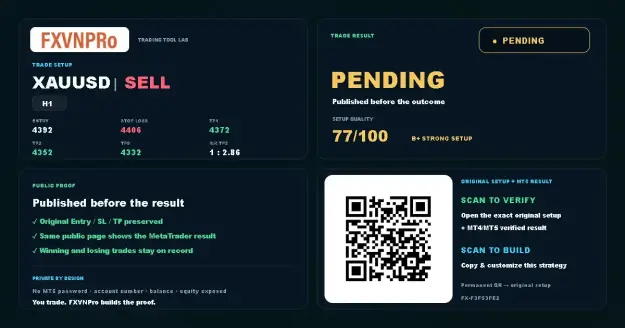 1 · SETUP
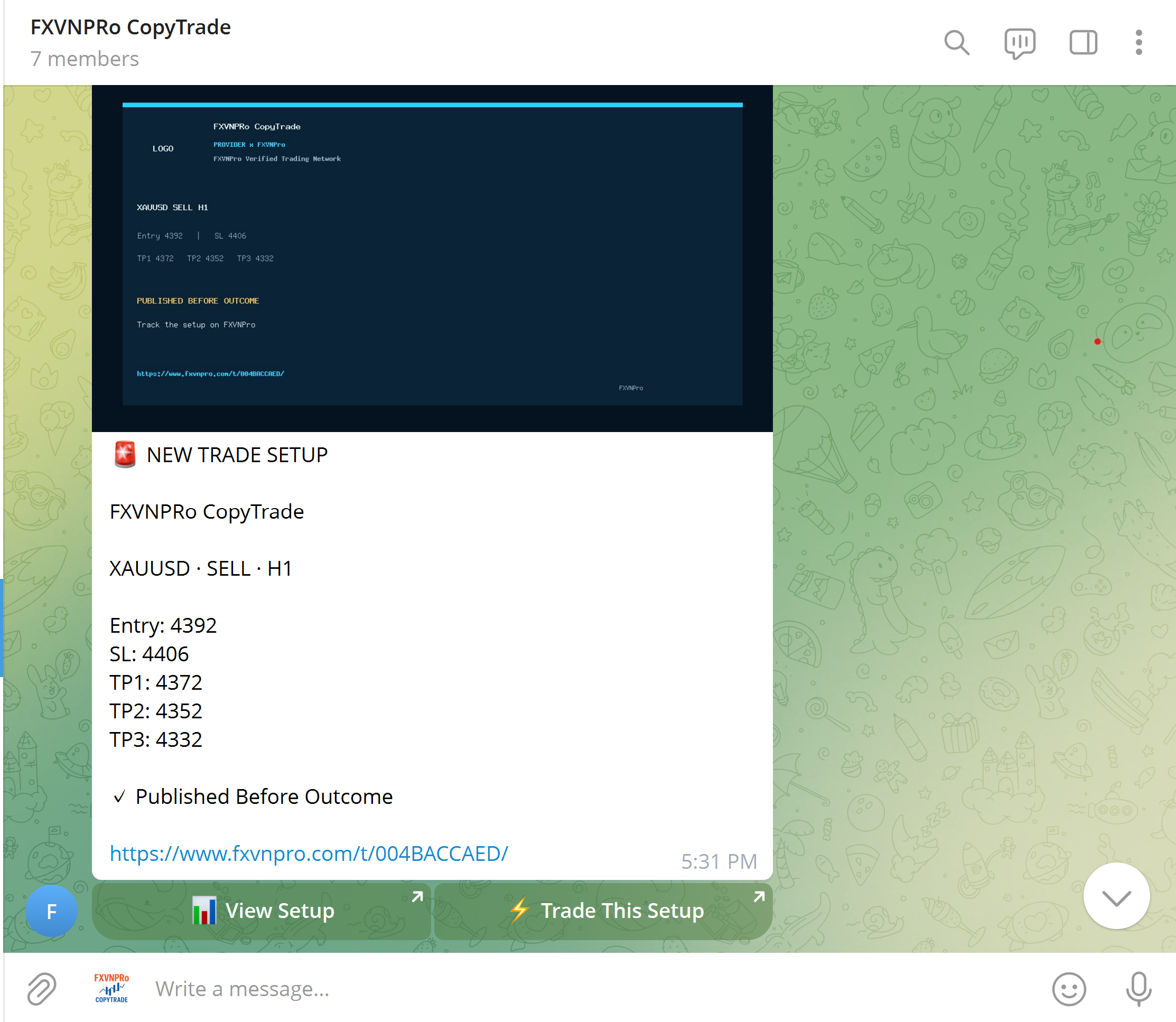 2 · TELEGRAM
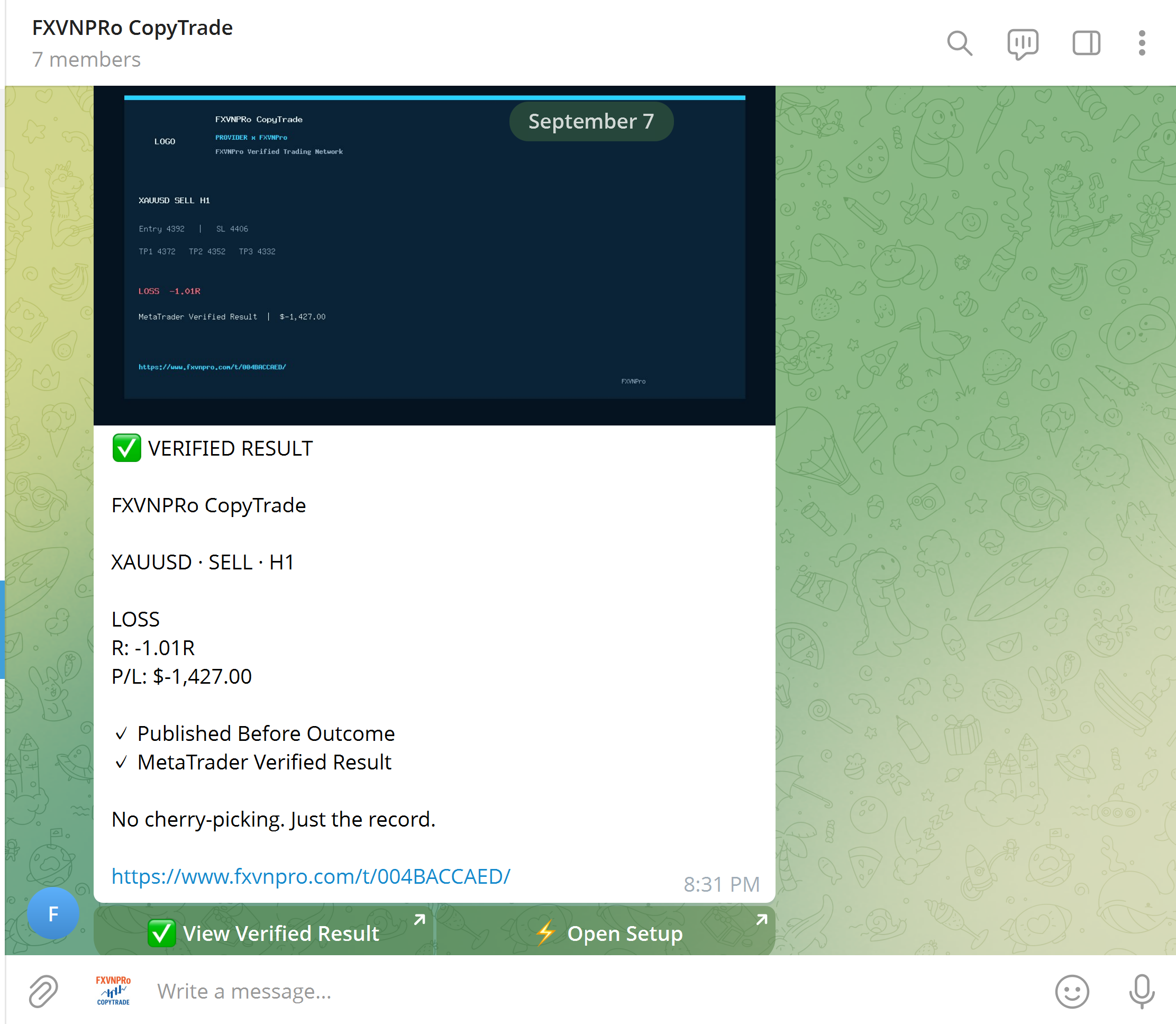 3 · VERIFIED
FXVNPro connects trade plans, Telegram trading communities and verified CopyTrade activity in one practical MT4/MT5 ecosystem.
Turn Entry, Stop Loss and Targets into a trade plan. Publish it before the outcome, then track and verify the result.
Turn Telegram signals into actionable MT4/MT5 setups. Signal Admins create the strategy while Members stay in control of risk.
Discover TRADERs, inspect verified trading history and performance, then decide who you want to follow across MT4 & MT5.
Build your strategy, distribute it to a community, or follow trading activity across MT4 & MT5.
Create Entry, Stop Loss and Targets before the outcome, then build a verified trading record.
Turn Telegram signals into an actionable workflow while followers keep control of their own risk.
Connect Chrome to MT4 or MT5 and open, modify or close trades from your browser.
Explore Masters and copy trading activity to your own MT4 or MT5 terminal with independent risk rules.