

Exness
FVP Score
7/10
Exness
- Minimum Deposit$10
- Regulation-
- PlatformsMT4, MT5
- SpreadFrom 0.0 pips
Start with your goal. You do not have to learn the FXVNPro architecture before using the tools.
Build an idea, use Telegram signals, trade from Chrome or follow a trader while technical setup stays in the background.
Technical connection details remain available inside each product when needed.
Compare Exness and Vantage Markets by rating, regulation, minimum deposit, platforms, spreads, and overall trading conditions.
Use the FXVNPro Broker Checker Chrome extension to quickly review broker trust signals, ratings, and safety information while browsing broker websites.

| Feature | Exness | Vantage Markets |
|---|---|---|
| Rating | 7 | 6.5 |
| Minimum Deposit | $10 | $50 |
| Regulation | - | ASIC, FSCA, VFSC |
| Platforms | MT4, MT5 | MT4, MT5,cTrader,TradingView |
| Spread | From 0.0 pips | From 1.0 pips |
Below is a detailed breakdown of fees, spreads, regulation, platforms, and real trading suitability to help you decide which broker fits your trading style better.
If you’ve ever stared at your trading journal after a week of “good setups” and realized you still bled money, you already know the uncomfortable truth: execution and trading costs quietly decide outcomes. Not the chart. Not the indicator. The spread, the filling quality, and how costs stack up when you’re trading often.
This article is a practical comparison of Exness vs Vantage Markets for traders who actually care about fees comparison, spreads and trading costs, and whether a broker’s environment matches how you trade. If you’re scalping, day trading, or just trying to avoid unnecessary friction while learning, the differences between these two brokers matter more than most people think.
Quick snapshot: Exness lists spreads “from 0.0 pips” and a low minimum deposit ($10), with MT4 and MT5. Vantage Markets starts higher on the minimum deposit ($50) but is regulated by ASIC, FSCA, and VFSC, and offers MT4, MT5, cTrader, plus TradingView—plus spreads “from 1.0 pips.”
So which broker is better depends on your priorities: raw low-spread pricing versus regulated multi-platform trading with a slightly higher starting spread. And the “which broker is better” question should be answered based on how your trading plan behaves under real conditions—news spikes, fast markets, and repeat entries when costs compound.
Let’s talk about the part that usually gets hand-waved: spreads and trading costs. Exness advertises spreads “from 0.0 pips.” Vantage Markets advertises “from 1.0 pips.” On paper, that sounds like Exness should be cheaper. But traders don’t live on paper. We live in live spreads, varying liquidity, and the ugly moments—London open, rollover, and high-impact news.
Here’s the practical way to think about it: your cost per trade isn’t just the spread. It’s spread + any commissions (if applicable) + slippage in fast markets + the “effective spread” you feel when price jumps and your order doesn’t fill where you expect.
Scenario: You run a 1-minute strategy and take 30 trades in a day. Even if Exness is only 0.5–1 pip “better” on average, that difference multiplies fast. But if Vantage’s execution is tighter during volatile periods (or the spread widens less aggressively), the cheaper-looking broker can end up costing more in reality.
Also watch for “hidden fees” in the form of non-obvious friction: wider spreads at certain times, swap/rollover costs if you hold positions, and withdrawal/deposit handling costs (even when the broker doesn’t label them as “fees”). Both brokers may present straightforward pricing, but your net cost depends on your actual trading window.
Which is cheaper in real scenarios? Often, low-spread brokers look best for high-frequency scalpers—assuming execution stays consistent. Vantage’s higher advertised minimum deposit and starting spread doesn’t automatically mean higher costs overall; it can mean more predictable trading conditions. Still, if your edge relies on tight intraday margins, Exness’s “from 0.0 pips” positioning is hard to ignore.
When people say “regulation matters,” they mean something very specific: your risk isn’t only market risk. It’s also broker risk—how the firm operates, segregates client funds, handles complaints, and whether there’s a regulator to enforce standards when things go sideways.
Vantage Markets lists regulation by ASIC, FSCA, and VFSC. That typically signals a higher baseline of oversight and compliance expectations. In real life, that matters when you’re trying to trust a platform with both your funds and your trading history—especially if you’re dealing with withdrawals, account verification, or disputes about execution quality.
Exness data provided here shows “Regulation: -”. That doesn’t automatically mean Exness is unsafe, but it does mean you should be extra cautious. If the broker’s regulatory status isn’t clearly stated in the information you’re using, your due diligence becomes your job. Are you comfortable with the uncertainty? How will you verify protections if you ever need them?
Verification importance: Before depositing, traders should confirm the account type is under the correct legal entity for their region, read the risk disclosures, and understand what protections apply. Regulators can’t stop market losses, but they can influence how broker conduct is monitored.
So which broker is safer? Based strictly on the information given, Vantage Markets has a clearer regulatory profile. For risk-aware traders—especially those who plan to hold positions or keep meaningful balances—that clarity tends to be worth the slightly higher starting spread.
Platforms aren’t just “where you place trades.” They’re how quickly you can react, how reliably the platform updates, and whether your workflow matches your trading style. In fast markets, seconds matter. In backtesting, consistency matters more.
Exness: MT4 and MT5. These are familiar, widely supported, and usually fast. If you trade with indicators and EAs you’ve already built or downloaded, MT4/MT5 can feel like home. But the platform ecosystem is mostly the same: charting, order types, and automation via MQL.
Vantage Markets: MT4, MT5, plus cTrader and TradingView. This is a real difference for many traders. cTrader often appeals to those who want a cleaner interface for order management and typically a strong reputation for execution transparency (though you still need to test in your market conditions). TradingView is a big deal too—if you chart primarily there, the friction of switching platforms can be annoying.
Execution speed and usability: In real trading, I’ve seen traders lose money not because their strategy was wrong, but because their platform delayed confirmations or made order management clunky. If you’re placing multiple orders around news, good order workflow matters.
Also consider trading experience. Newer traders may prefer simple navigation and fewer moving parts. Advanced traders may care about advanced order handling, depth-of-market features (depending on account type), and automation workflow.
If you care about platform variety and a smoother chart-first workflow, Vantage’s multi-platform offering gives it an edge. If you’re comfortable sticking to MT4/MT5 and want the lowest-spread positioning, Exness fits that niche.
Most people don’t think about deposits and withdrawals until they need them. That’s usually when it becomes stressful. A broker can have great charts and tight spreads, but if the withdrawal process is slow or confusing, your trading becomes emotionally unstable—which is dangerous for risk management.
Exness has a listed minimum deposit of $10. That’s attractive for testing strategies, building confidence, and learning the platform without committing too much capital early. In my experience, low minimums often encourage traders to size smaller at first—which is good for learning. But the real question is whether withdrawals are smooth once you decide you’re done testing.
Vantage Markets lists a $50 minimum deposit and a regulated structure (ASIC/FSCA/VFSC). Regulation doesn’t guarantee instant withdrawals, but it often correlates with more standardized processes and clearer documentation requirements. Still, traders should expect identity verification (KYC). The timing of that verification can affect your first withdrawal.
Real-world scenario: You deposit funds, run a couple of weeks of backtesting and live paper-to-small live trading, then you decide to withdraw profits. If the broker requires verification before withdrawal, you want that done early—not after you’ve earned.
Fees comparison: Even if brokers don’t charge for withdrawals directly, payment Signal Admin fees can exist. Withdrawal speed can vary by method. Deposit speed can also affect your ability to react to market opportunities—especially around major economic releases.
Based on the information given, Exness is easier to start with due to the lower minimum. Vantage may feel more “process-heavy” at the start because of compliance, but that can be a good thing for traders who value a regulated onboarding experience.
Beginners don’t just need a low spread. They need a broker that helps them avoid costly mistakes—like misreading costs, misunderstanding order types, or getting stuck during account setup. The goal is simple: fewer surprises, smoother learning.
Exness: With a $10 minimum deposit and MT4/MT5, it’s easy to begin with smaller risk. That matters because beginners often overestimate their ability to control position sizing at first. If you can start small, you can learn margin behavior without blowing the account.
But there’s a caution flag in the provided data: regulation is listed as “-”. New traders might not notice that. They shouldn’t ignore it. It doesn’t mean Exness is automatically worse, but it does mean beginners should verify the regulatory entity covering their region before committing serious funds.
Vantage Markets: The $50 minimum deposit is higher, which can feel like a hurdle. However, the clearer regulatory footprint (ASIC, FSCA, VFSC) can make beginners feel safer, especially when it comes to account access and withdrawals later. Plus, the presence of TradingView can be a huge teaching advantage—many beginners learn through charting and community strategies built around TradingView.
In real trading conditions: beginners often trade during volatile times without realizing spreads can widen, or slippage can happen around news. A broker that’s regulated and offers a familiar charting workflow can make it easier to stick with a plan.
Which broker is easier to start with? For pure entry cost and simplicity, Exness wins due to the $10 minimum. For a safer “learning environment” mindset and platform flexibility, Vantage is often the better long-term starting point—assuming you’re comfortable with the higher minimum.
Active trading is where broker differences stop being “nice to have” and start hitting your P&L directly. Scalpers care about execution speed, slippage, and spread consistency. Day traders care about how costs behave when volatility rises.
Exness: Spreads from 0.0 pips are attractive for high-frequency strategies. If your system targets small moves—like mean reversion on tight timeframes—every pip matters. The risk is that ultra-low advertised spreads don’t guarantee consistent real-time pricing across all market hours. You have to test spread stability and how fills behave when liquidity thins.
Vantage Markets: Starting spreads from 1.0 pips might look less competitive at first glance. But for active traders, the bigger question is: do you get worse fills in fast markets? Vantage’s multi-platform offering is also helpful operationally. If you scale into trades, manage many orders, or switch between discretionary and semi-automated execution, cTrader and TradingView can improve speed of decision-making.
Scenario: It’s 8:30am and the CPI release hits. Your strategy needs you to act quickly—either fade the move or jump on momentum with strict risk. If the broker’s price feed and order execution are sluggish or spreads widen dramatically, your “edge” gets turned into noise.
Also consider slippage. Even with a tight spread, slippage can destroy profitability if your stop placement is close. A regulated broker with transparent platform options doesn’t automatically prevent slippage—but it often correlates with more consistent execution behavior and better tools for monitoring.
For scalpers and high-volume traders: Exness is the more obvious candidate if your system is spread-sensitive and you’re confident in execution quality. If you prefer a regulated environment and value platform tooling for active order management, Vantage is the safer bet to test seriously.
Here’s the non-obvious part: pros and cons aren’t universal. They change depending on whether you trade 5 times a week or 100 times a day, and whether you hold positions through rollover or close everything intraday. That’s why “which broker is better” has to be answered with your trading rhythm in mind.
If I have to give a clear recommendation from the information provided, it’s this:
Choose Exness if: you’re focused on spreads and trading costs as your primary edge (especially scalping or quick intraday strategies), you want a low minimum deposit to start small, and you’re willing to do extra due diligence on regulation/protections for your region. Exness looks like the better fit for traders who can exploit low-spread conditions and keep slippage under control.
Choose Vantage Markets if: you value regulation and safety clarity, want a broader toolset (MT4/MT5 plus cTrader and TradingView), and care about execution quality during changing market conditions more than chasing the absolute lowest “from” spread number. Vantage is often the better long-term choice for traders who plan to scale, trade more actively, and don’t want to guess about compliance.
So, which broker is better overall? For many traders, the decision comes down to one question: do you prioritize cheaper entry pricing or a more structured, regulated environment with better workflow options? If your strategy is spread-sensitive, Exness earns the spotlight—but if you’re risk-focused and platform-flexible, Vantage Markets is the stronger starting point to test and potentially stick with.
Whatever you choose, don’t skip the trial. Put 1–2 weeks of your real trading routine on a demo or small live account, track your effective spread, and compare results in your journal. That’s the only “fees comparison” that truly matters.
One real XAUUSD trade: created before the outcome, sent to Telegram, TRADEd in MT5 and returned as a verified result.
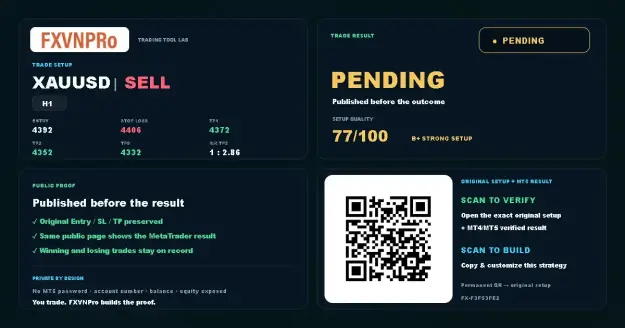 1 · SETUP
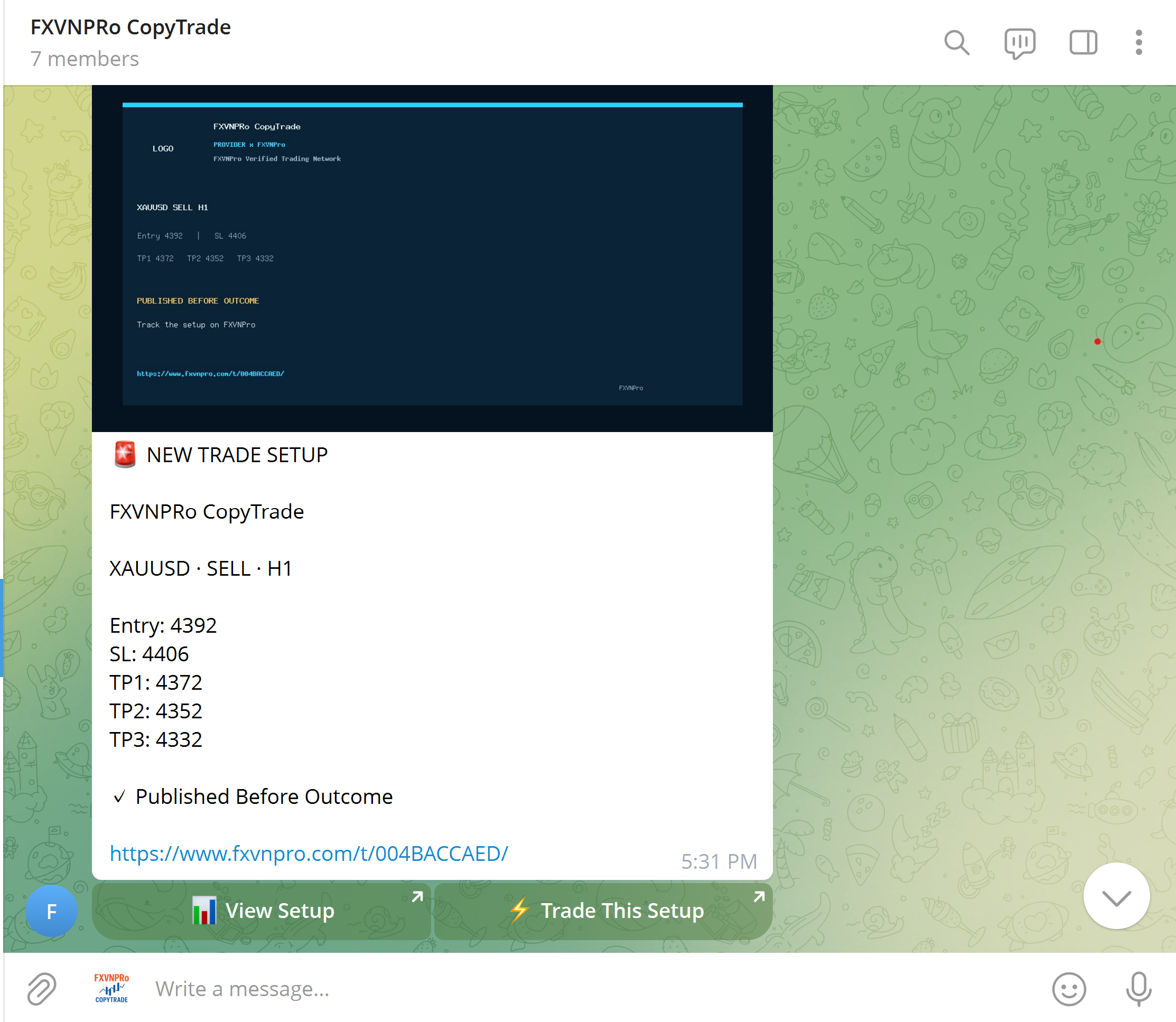 2 · TELEGRAM
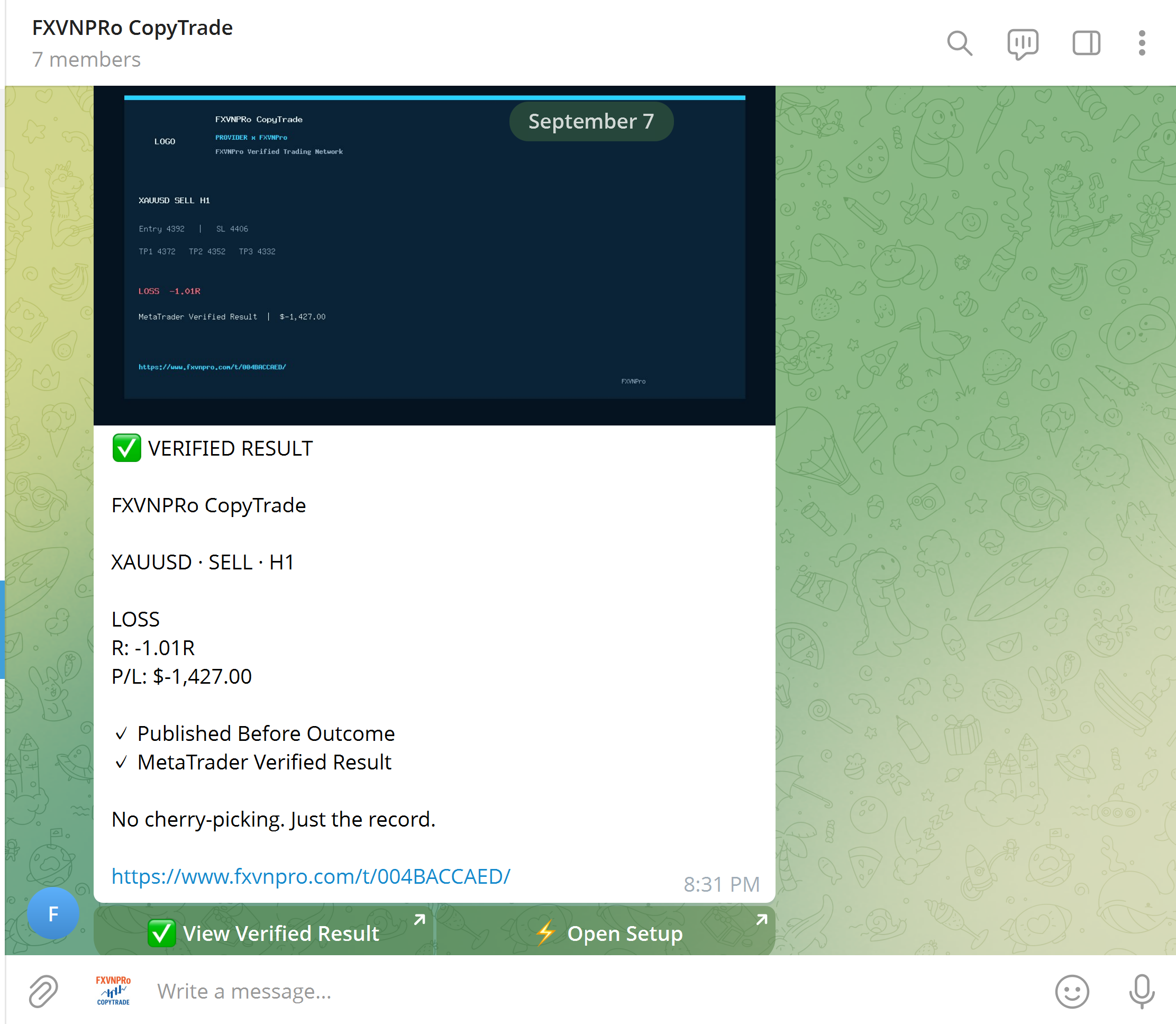 3 · VERIFIED
FXVNPro connects trade plans, Telegram trading communities and verified CopyTrade activity in one practical MT4/MT5 ecosystem.
Turn Entry, Stop Loss and Targets into a trade plan. Publish it before the outcome, then track and verify the result.
Turn Telegram signals into actionable MT4/MT5 setups. Signal Admins create the strategy while Members stay in control of risk.
Discover TRADERs, inspect verified trading history and performance, then decide who you want to follow across MT4 & MT5.
Build your strategy, distribute it to a community, or follow trading activity across MT4 & MT5.
Create Entry, Stop Loss and Targets before the outcome, then build a verified trading record.
Turn Telegram signals into an actionable workflow while followers keep control of their own risk.
Connect Chrome to MT4 or MT5 and open, modify or close trades from your browser.
Explore Masters and copy trading activity to your own MT4 or MT5 terminal with independent risk rules.