

Exness
FVP Score
7/10
Exness
- Minimum Deposit$10
- Regulation-
- PlatformsMT4, MT5
- SpreadFrom 0.0 pips
Start with your goal. You do not have to learn the FXVNPro architecture before using the tools.
Build an idea, use Telegram signals, trade from Chrome or follow a trader while technical setup stays in the background.
Technical connection details remain available inside each product when needed.
Compare Exness and FP Markets by rating, regulation, minimum deposit, platforms, spreads, and overall trading conditions.
Use the FXVNPro Broker Checker Chrome extension to quickly review broker trust signals, ratings, and safety information while browsing broker websites.

| Feature | Exness | FP Markets |
|---|---|---|
| Rating | 7 | 6.7 |
| Minimum Deposit | $10 | $100 AUD |
| Regulation | - | ASIC, CySEC |
| Platforms | MT4, MT5 | MT4, MT5, cTrader |
| Spread | From 0.0 pips | From 0.0 pips |
Below is a detailed breakdown of fees, spreads, regulation, platforms, and real trading suitability to help you decide which broker fits your trading style better.
If you’ve ever been in the middle of a clean setup—price breaks, your entry is ready, and then spreads widen just enough to turn profit into “almost”—you already know why this comparison matters. Exness vs FP Markets isn’t a marketing contest for most traders. It’s about trading costs, execution quality, and whether your broker setup actually supports your style when conditions get messy.
This matters most for people who trade frequently (or use tight stops). In real trading conditions, the difference between “from 0.0 pips” and what you actually pay during news, rollovers, or volatile sessions can be the difference between steady growth and random drawdowns. And yes, that’s before we even talk about regulation and withdrawal confidence.
Here’s the quick snapshot. Exness lists a very low minimum deposit ($10) and offers MT4/MT5 with spreads “from 0.0 pips,” but the provided regulation info is unclear in your data. FP Markets, on the other hand, shows a higher minimum deposit (100 AUD) and explicitly lists regulation (ASIC, CySEC). It also supports MT4, MT5, and cTrader, with spreads “from 0.0 pips.”
So which broker is better? If you’re cost-sensitive and want low barriers to start, Exness is tempting. If you value regulatory oversight and broader platform choice (especially cTrader), FP Markets tends to fit more traders—at least from a risk-management perspective.
When traders say “spreads and trading costs,” they often mean the headline number. But in live execution, the real cost is the spread behavior plus any commissions, swap/financing, and the occasional “why did it slip?” moment. Both brokers advertise spreads from 0.0 pips, which sounds great on paper. The problem is that “from 0.0” usually means the lowest possible environment, not the average cost on a typical day.
Let’s talk real-world impact. Suppose you run a day-trading strategy on EUR/USD with an average trade size where every pip matters. If your average spread is 0.6 pips with Broker A and 1.0 pips with Broker B (just as an example), and you take 40 round trips a month, that gap becomes painful fast. Even a “small” extra pip per round trip can erase expected edge—especially when you’re not winning every trade.
Now add the “hidden” costs people overlook: when spreads widen during news events, your stop-loss may be reached at a worse price than expected. That’s effectively slippage, even if the broker doesn’t call it that. Execution speed also influences whether price moves away while your order is working. In fast markets, the broker’s liquidity routing and execution model can matter as much as the raw spread.
One more layer: commissions vs spreads. Many brokers offer different account types (raw spread plus commission, or wider spread with no commission). Your provided data doesn’t include commission schedules, so I can’t claim a definitive “cheaper overall” across every scenario. But I can tell you what to check before you fund: average spread on your specific Connects, commission if applicable, and whether your account type matches your trading style.
In real trading, the cheaper broker is the one that keeps your average total cost predictable. Unpredictable costs don’t just reduce profits—they mess with your risk sizing.
For many traders, regulation is the difference between “I can sleep” and “I’m refreshing my email.” In Exness vs FP Markets, your Exness data shows “Regulation: -”, while FP Markets lists ASIC and CySEC. That’s not a minor detail. Regulation affects oversight, complaint handling, and what protections may exist if things go wrong.
ASIC (Australia) and CySEC (Cyprus) are both well-known regulators in retail forex. They generally enforce standards around client funds handling, risk disclosures, and broker conduct. It doesn’t mean losses never happen—markets still move—but it does mean the broker operates under a monitored framework. For newer traders, that structure reduces uncertainty when you’re still building confidence in your process.
With Exness, the provided regulation field being blank is a red flag for due diligence. Maybe the broker is regulated in some jurisdictions, but you shouldn’t assume it from missing data. Before you decide which broker is better, you should verify the exact entity you’ll be trading with (country-based entity matters). Ask yourself: if you have a withdrawal issue, who exactly is the regulator and what is the escalation path?
Verification is also important. Even when a broker is regulated, you want to confirm you’re using the correct account type under the correct legal entity. Traders sometimes open accounts on a platform that routes through a different entity or region than they expected. That’s how people end up with surprises.
Bottom line: in a safety-first comparison, FP Markets has the cleaner starting point based on the data you gave. If regulation transparency is missing, your risk isn’t only market risk—it’s process risk too.
You can have low spreads and still feel like you’re fighting the platform. That’s why platform choice matters in an Exness vs FP Markets comparison. Exness provides MT4 and MT5. FP Markets provides MT4, MT5, and cTrader. On paper, both cover the mainstream MetaTrader ecosystem, which is a big deal if you rely on EAs, indicators, or copy trading tools.
In real trading, MT4 remains popular for its stability and the sheer volume of community-built tools. MT5 adds more order types and depth, and many traders like it for broader charting and the newer language features for some development. If you’re running a strategy with a known EA workflow, both brokers will feel familiar because both offer MT4/MT5.
But cTrader is where FP Markets can gain an edge for certain traders. cTrader tends to be appreciated for its interface clarity and modern execution tools. For example, if you trade multiple order types (limit/stop combinations) or you care about visualizing order states quickly, cTrader can reduce mistakes. And reduced mistakes are basically “hidden profit.”
Execution speed and usability tie into this. If the platform is smooth but orders are slow, you lose in volatility. If execution is fast but the platform is confusing, you lose in consistency. The platform isn’t just where you click—it’s how you manage risk.
So which broker is better for trading experience? If you’re already deep in MetaTrader, Exness won’t feel like a downgrade. If you want optionality—especially if you’re evaluating how your execution feels in cTrader—FP Markets gives you more room to match your style.
Most traders don’t plan for withdrawals during a drawdown, but that’s exactly when you’ll want everything to be painless. Minimum deposit is part of the story, but the real story is speed, fees, and how smooth the process feels when you’re moving money more than once.
Exness in your data lists a $10 minimum deposit. That’s a big practical advantage for traders who want to start small, test execution on the Connects they actually trade, and measure spreads during normal market hours. If you’re experimenting with a new EA or a new session-based strategy, being able to begin with a lower initial balance reduces the emotional cost of “getting it wrong.”
FP Markets lists a minimum deposit of 100 AUD. That’s not high for many active traders, but it’s a noticeable barrier for beginners who only want to validate their setup with minimal capital. It can also affect how quickly you iterate. If you must wait to fund enough to test properly, your learning curve slows.
Withdrawals are where anxiety shows up. The key questions are: how fast are withdrawals processed, are there intermediary bank fees, and does the broker require certain verification steps before you can pull funds out? Even if a broker is reputable, friction can become costly when you need capital for risk control. For example, if you’re running prop-style constraints or managing a personal trading account, delays can force you to keep positions longer than planned.
Your data doesn’t provide withdrawal times or fee schedules, so I can’t claim which broker is faster from here. But the practical takeaway is clear: Exness’s lower minimum deposit makes it easier to test and recalibrate without waiting, while FP Markets’s higher minimum can mean fewer “trial-and-adjust” cycles early on.
In real trading, fewer friction points often means better decision-making.
Let’s be honest—beginners don’t fail because they can’t read charts. They fail because trading costs, execution quirks, and confusing account mechanics pile up while their confidence is still fragile. So when someone asks which broker is better for beginners, I look at the combination of entry barrier and operational clarity.
Exness has the advantage on minimum deposit: $10. That low threshold matters because beginners often need multiple attempts—different Connects, different sessions, different lot sizes—before they find a repeatable approach. When capital is small, you’re more likely to experiment responsibly instead of going “all in” to feel progress quickly.
But beginner safety isn’t only about how much you can deposit. It’s also about regulation transparency. Your Exness data shows regulation as “-”. A beginner should not treat that as fine. They should verify the exact regulated entity behind the account. Without that clarity, a new trader may be taking on extra uncertainty they can’t quantify yet.
FP Markets, by contrast, clearly lists ASIC and CySEC. For beginners, that kind of oversight is reassuring because it provides a clearer framework for conduct and complaint resolution. Also, FP Markets offers cTrader in addition to MT4/MT5, which can be a smoother on-ramp for some people who find MetaTrader overwhelming.
In practice, if you’re brand new and you want fewer unknowns, FP Markets is the safer recommendation. If you’re comfortable verifying the regulatory entity yourself and you want to start with a tiny account to learn execution and costs, Exness can work—but only if you do that due diligence first.
Active traders don’t just care about “from 0.0 pips.” They care about what happens to spreads and fills during the exact hours they trade. If you’re a scalper, a day trader, or a high-volume trader, you’re constantly exposed to micro-costs: spread changes, execution delays, and occasional slippage that doesn’t show up much on backtests.
Both brokers advertise spreads from 0.0 pips, which suggests competitive pricing at their best. But active traders should focus on averages and worst-case moments. Example: you run a strategy around London open and you trade several instruments where liquidity changes quickly. If one broker consistently widens spreads more aggressively during volatility, you’ll feel it immediately in monthly P&L.
Platform choice also matters at high frequency. MT4/MT5 are fine for many active traders, especially if you have EAs or custom indicators. However, cTrader can be a real advantage for execution workflow. For traders who like to manage multiple orders precisely, cTrader’s order management can reduce operational errors—those “fat-finger” moments are surprisingly common when volume increases.
There’s also the risk layer. Active traders tend to scale position sizes and take more frequent decisions. That means any safety uncertainty becomes bigger, not smaller. Based on your provided data, FP Markets has stronger regulation visibility (ASIC, CySEC). Exness may still be operationally solid, but the missing regulation detail makes it harder to justify as the primary choice for high-volume trading if you’re risk-conscious.
So which broker is better for active traders? If you prioritize regulated environment and platform flexibility (including cTrader), FP Markets usually fits better. If you’re already comfortable with Exness and you confirm its regulatory entity for your account, then Exness can be attractive for low-cost experimentation and potentially tight spreads.
If you force me to pick based on the information you provided, the decision is pretty clear for different trader types.
FP Markets is the better choice for most traders who care about safety and transparency. The regulation visibility (ASIC, CySEC) is a meaningful advantage, especially if you’re scaling up, trading frequently, or managing risk tightly. Add the platform flexibility—MT4/MT5 plus cTrader—and it becomes easier to find a workflow that matches your execution style. For many “real money” traders, that combination matters more than a low headline minimum deposit.
Exness is the better choice for traders who want a low-cost entry point and can verify the regulatory setup themselves. The $10 minimum deposit is genuinely useful. It lets you test spreads, execution quality, and your strategy’s behavior without committing too much capital upfront. If your goal is to learn fast and iterate responsibly, Exness can be a practical starting platform.
So which broker is better overall? For safety-first traders: FP Markets. For budget-first learners and strategy testers who do proper due diligence: Exness.
Before you commit, do this one thing: pick your top 3 instruments, test during your usual trading hours, and calculate your real spreads and trading costs (including commissions if your account has them). “From 0.0 pips” is a starting point, not the finish line.
One real XAUUSD trade: created before the outcome, sent to Telegram, TRADEd in MT5 and returned as a verified result.
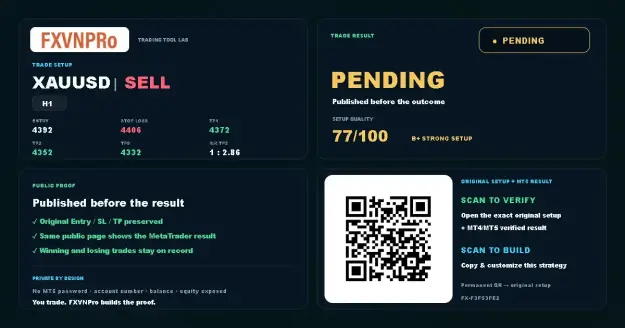 1 · SETUP
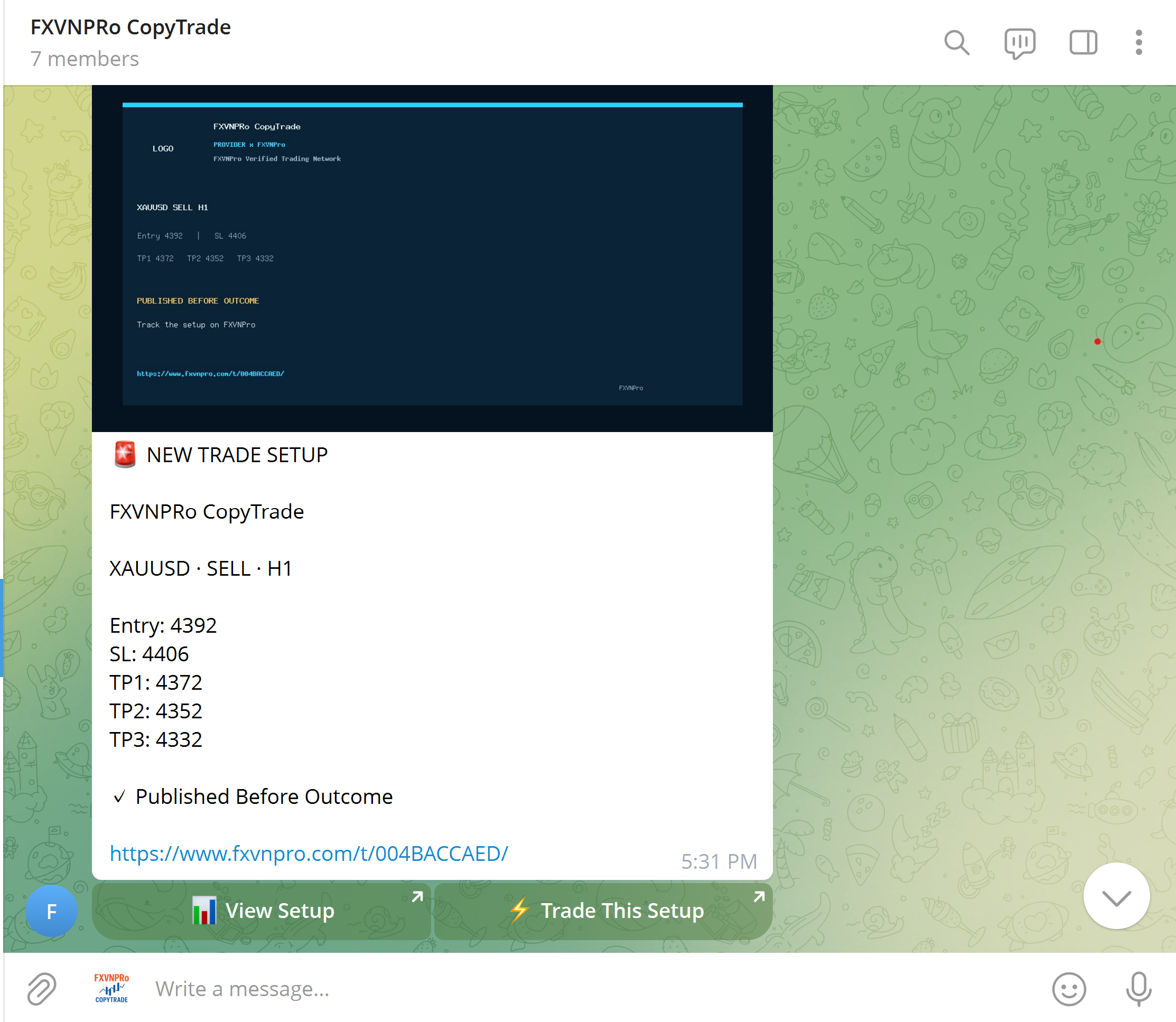 2 · TELEGRAM
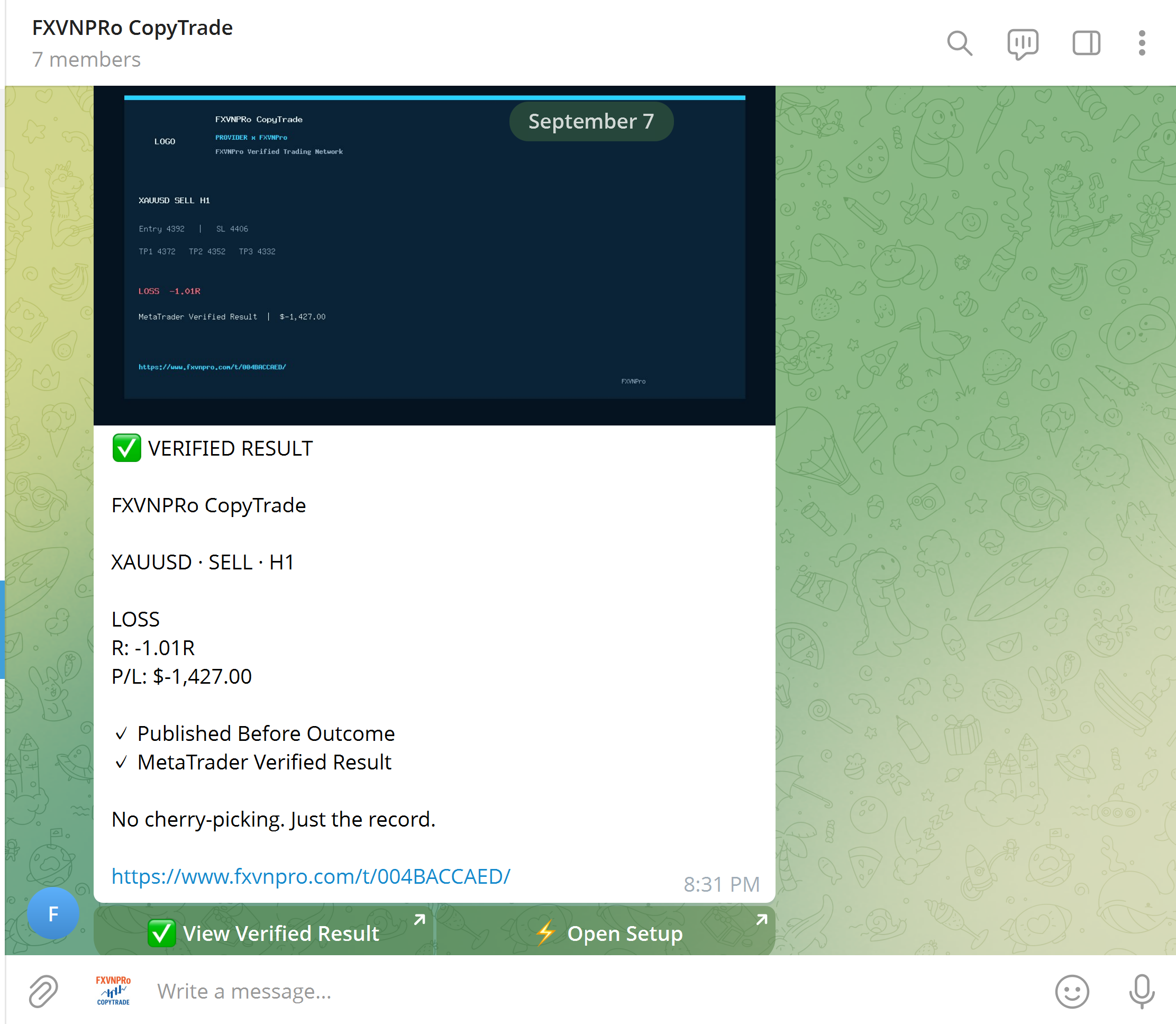 3 · VERIFIED
FXVNPro connects trade plans, Telegram trading communities and verified CopyTrade activity in one practical MT4/MT5 ecosystem.
Turn Entry, Stop Loss and Targets into a trade plan. Publish it before the outcome, then track and verify the result.
Turn Telegram signals into actionable MT4/MT5 setups. Signal Admins create the strategy while Members stay in control of risk.
Discover TRADERs, inspect verified trading history and performance, then decide who you want to follow across MT4 & MT5.
Build your strategy, distribute it to a community, or follow trading activity across MT4 & MT5.
Create Entry, Stop Loss and Targets before the outcome, then build a verified trading record.
Turn Telegram signals into an actionable workflow while followers keep control of their own risk.
Connect Chrome to MT4 or MT5 and open, modify or close trades from your browser.
Explore Masters and copy trading activity to your own MT4 or MT5 terminal with independent risk rules.