Plan a Trade
Build a structured setup and use practical trading tools before you act.
Trade IdeasRisk ToolsCalculators
BUILD A TRADE IDEA →
Plan trades, connect MT4 & MT5, review verified execution, explore traders and research brokers — without learning the whole platform first.
Build a structured setup and use practical trading tools before you act.
Use Browser Trading or turn supported Telegram signals into a structured trading workflow.
Explore CopyTrade Masters, review their records and choose your own risk settings.
Compare FP Markets and XM by rating, regulation, minimum deposit, platforms, spreads, and overall trading conditions.
Use the FXVNPro Broker Checker Chrome extension to quickly review broker trust signals, ratings, and safety information while browsing broker websites.


| Feature | FP Markets | XM |
|---|---|---|
| Rating | 6.7 | 7.1 |
| Minimum Deposit | $100 AUD | $5 |
| Regulation | ASIC, CySEC | CySEC, ASIC, IFSC |
| Platforms | MT4, MT5, cTrader | MT4, MT5 |
| Spread | From 0.0 pips | From 0.6 pips |
Below is a detailed breakdown of fees, spreads, regulation, platforms, and real trading suitability to help you decide which broker fits your trading style better.
If you’ve traded long enough, you already know the ugly truth: most brokers don’t lose you money directly. They do it indirectly—through spreads that widen at the wrong time, execution that’s a little slower than you think, and withdrawal friction that shows up just when you want your funds back. That’s why this isn’t a “brochure comparison.” It’s FP Markets vs XM through a trader’s lens, focused on spreads and trading costs, platform usability, and the day-to-day experience that actually changes your results.
So who should care? Honestly, almost everyone—new traders who are funding small accounts, and active traders who care about slippage, latency, and consistency. If you’re running an EA, scalping London opens, or just trying to keep risk tight with stable execution, broker differences start to matter quickly.
Here’s the quick summary before we dig deep: FP Markets scores 6.7 and offers very competitive spreads “from 0.0 pips,” with MT4, MT5, and cTrader. XM scores 7.1, has a lower minimum deposit ($5), and lists spreads “from 0.6 pips,” running MT4 and MT5. Both are regulated (FP Markets by ASIC and CySEC; XM by CySEC, ASIC, and IFSC), but the cost profile and platform fit are where the decision really lives.
Let’s get into the parts that hit your P&L, not just your dashboard.
When people say “low spreads,” they usually mean the headline. But in real trading, what matters is how often you see that number. FP Markets lists spreads from 0.0 pips. XM lists spreads from 0.6 pips. On paper, FP Markets looks cheaper—yet the full fees comparison isn’t just about minimums.
In practice, spreads widen around news, during rollover, and when liquidity thins. Suppose you trade EUR/USD on a normal weekday during mid-range volatility. If your strategy targets 10–15 pip moves and you open and close multiple times, a consistent spread advantage adds up. If FP Markets is truly offering near-zero pips frequently (especially on liquid pairs), that can slightly reduce your effective entry cost.
Now flip the scenario. Imagine you’re trading during a high-impact news release like CPI. Both brokers can widen spreads and you can also see slippage. The question becomes: how stable is execution speed and pricing during volatility? Even a broker with a great “from” spread can become expensive if fills degrade exactly when you’re trading.
Also, watch for commission structures. Your provided broker data includes spread ranges, but not commission details. That’s a big deal: some brokers advertise low spreads but rely on commission on top. Without that information, I’d treat the “from 0.0” and “from 0.6” as a starting point, then confirm total trading costs using their own account pricing pages and a small test trade.
Bottom line: for frequent trading, FP Markets likely has an edge on spreads and trading costs if spreads remain tight when you trade. For less frequent traders, XM’s slightly higher headline spread may not matter as much—especially if you value easier account funding.
Regulation is one of those topics traders talk about in theory—then ignore until something goes wrong. Let’s make it practical. FP Markets is regulated by ASIC and CySEC. XM is regulated by CySEC, ASIC, and IFSC. These are not identical in scope, but they generally signal that the broker operates under rules around client money handling, risk controls, and oversight.
ASIC tends to be strict on investor protection and product governance. CySEC also provides a regulatory framework, especially for EU-related retail trading activities. IFSC is often relevant for international clients and can add another layer of licensing. Still, “regulated” doesn’t automatically mean “risk-free.” It means there’s oversight and accountability if the broker behaves badly.
Here’s what matters for verification importance: traders should verify the exact entity listed for their country and confirm you’re opening the account under the regulated legal entity, not just the brand. That’s one place people get careless—then they’re surprised later. Another point: regulation can affect how leverage is capped, how negative balance protection is handled, and what dispute pathways exist.
In real trading conditions, your biggest safety concern isn’t usually “will they be regulated?” It’s operational stability: execution consistency, server reliability, and withdrawal behavior. Regulation won’t stop slippage, but it can influence the environment the broker runs in.
Based on the data alone, both brokers have credible regulatory coverage. If you’re choosing purely on safety signals, it’s not a dramatic split. The more meaningful difference for day-to-day outcomes is execution quality and cost consistency—because that’s what hits your balance every week.
Platforms sound like personal preference until you’re actually trying to manage risk in live markets. FP Markets offers MT4, MT5, and cTrader. XM offers MT4 and MT5. If you’ve never used cTrader, it can be a bit of a “you either love it or don’t” situation—especially for order management and charting workflow.
From a trader’s perspective, MT4 remains the most universally compatible platform for EAs and older indicators. If you have a strategy you’ve been running for years, MT4 is usually the least painful route. MT5 is improving the ecosystem too, but some legacy EAs never translate cleanly.
FP Markets’ inclusion of cTrader is a practical advantage if you care about execution experience and a different interface style. I’ve seen traders switch to cTrader for cleaner order tickets and a smoother operational feel, particularly when placing multiple orders or managing stops quickly. Does that automatically mean better execution speed? Not guaranteed. But the workflow can reduce mistakes, and mistakes are expensive when you’re trading size.
XM’s platform set is simpler—MT4/MT5 only. That’s not bad, but it narrows your options if you’re specifically searching for cTrader-style order management. Also consider how the broker’s execution behaves on each platform. Sometimes MT4 and MT5 can feel different even on the same broker because of how orders are handled.
Ask yourself: are you running an EA, or are you discretionary trading? If you’re discretionary and you want a fast, controlled order workflow, FP Markets’ cTrader availability could be a real differentiator. If you’re strictly using MT4/MT5 and you already know the platform inside out, XM isn’t a downgrade—it’s just less flexible.
Deposits and withdrawals are where good intentions meet reality. You can have a broker with great spreads, but if withdrawals take forever or add annoying steps, your stress level rises fast—especially after a winning streak.
On minimum deposit, XM clearly lowers the barrier: $5. FP Markets’ minimum deposit is $100 AUD. That changes who can start quickly and how easily you can fund an account for testing. If you’re practicing a strategy, that matters. I’ve watched traders delay testing because they didn’t want to put up a larger minimum—then they ended up trading live with no real run-through.
However, minimum deposit is only half the story. Real-world experience depends on withdrawal methods, processing times, and any fees. Your data doesn’t specify withdrawal timelines or withdrawal fees, so I can’t claim one broker is faster across the board. What you can do is check their help center and confirm which payment rails are available in your region—bank transfers, cards, and e-wallets often have different processing speeds.
Consider a scenario: you deposit, run a strategy for two weeks, and then want to withdraw part of your profit. If you’re using a small account, the ability to withdraw quickly and without surprises becomes more important proportionally. For larger accounts, the relative effect of fees is smaller, but processing time still affects your ability to reallocate capital.
In other words: XM’s low minimum deposit helps you get started and test with less risk. FP Markets’ higher minimum deposit could be fine for funded traders, but it may be a hurdle if you want to trial the broker first.
For beginners, the “which broker is better” answer often comes down to friction and learning curve—not just spreads. XM’s minimum deposit of $5 is a big psychological win. You can open, fund, and start learning without feeling like you’re burning capital before you even understand execution, margin, and position sizing.
FP Markets has a $100 AUD minimum deposit. That’s not outrageous, but it’s higher than what many brand-new traders can comfortably risk while they’re still mastering basic stuff like stop-loss placement, lot sizing, and avoiding overtrading. This matters because beginners rarely trade just once—they take mistakes, and mistakes cost.
Now, let’s talk about trading costs for beginners. If you’re trading small and experimenting, spreads can matter, but your bigger cost is usually learning. Still, tighter spreads reduce the “gap” between your intended entry and your actual cost. FP Markets advertising spreads from 0.0 pips suggests there’s potential for lower trading costs, assuming those spreads are realistic for your account type and your chosen pairs.
XM listing spreads from 0.6 pips is not necessarily expensive, but it can be noticeable if you’re doing lots of small trades. The key question is whether you’ll actually avoid overtrading. Most beginners don’t. So if you’re likely to trade more often, the cost structure becomes more relevant.
So which is easier to start? XM looks more beginner-friendly on access and initial funding. FP Markets may be better if you’re already disciplined and you want to reduce ongoing costs, but the higher minimum deposit raises the entry bar.
Active traders live and die by consistency. It’s not enough to have “good spreads” once. You need stable spreads, reliable execution speed, and minimal unpleasant surprises when volatility spikes.
FP Markets has the headline advantage on spreads: from 0.0 pips. XM starts from 0.6 pips. If you’re scalping or running day-trading strategies with tight targets—say 5–10 pips on liquid pairs—spread differences can directly affect how many trades are net profitable after costs. This matters because active traders can take 50–200 trades in a week. Even small cost edges compound fast.
But spreads alone don’t win. Slippage and execution speed during fast markets are huge. Imagine you’re trading GBPJPY around a scheduled event. Prices jump, your stop gets tested, and your entry may fill at a worse level than expected. In that environment, the broker’s infrastructure and how it handles order execution becomes as important as the quoted spread.
FP Markets also offers cTrader in addition to MT4/MT5. For active traders, having another platform can be useful if one platform gives you a better order workflow or helps reduce execution errors. XM only offers MT4 and MT5, which is fine, but you have fewer options if you end up preferring a different interface.
If you’re high-volume, you also want to think about whether your account type (not just the broker) is optimized for tight spreads and stable fills. Your provided data doesn’t include account tiers or commission details, so the best move is to test both brokers with a demo or small live account and compare real trading costs, not just the minimums.
My lean for active traders: FP Markets is the more obvious fit on spreads and platform flexibility. XM can still work, but the headline spread difference suggests FP Markets may be cheaper more often, especially if execution stays tight.
That’s the core trade-off in one paragraph: FP Markets looks built for tighter trading costs and more platform choice, while XM looks built to get you trading sooner with less upfront commitment.
This is where we stop being polite and make a decision. Based on the data you provided and how traders typically feel the differences in real life, here’s my clear recommendation—by type of trader.
Choose FP Markets if you’re an active trader (day trading, scalping, or running frequent strategies). The “spreads and trading costs” profile is the standout: from 0.0 pips can matter a lot when you’re trading often. Add the extra platform option with cTrader, and it becomes easier to find an execution workflow that suits your style. If you trade around fast markets, you should still test real fills, but the starting cost structure is more favorable.
Choose XM if you’re a beginner or you want low-friction testing. The $5 minimum deposit is a practical advantage that directly affects your ability to practice without overcommitting. If you’re learning discretionary trading or running smaller position sizes while you build consistency, XM’s setup is easier to enter and easier to manage psychologically.
Which broker is better overall? If you force me into one pick for “which broker is better” for most active retail traders, I’d lean FP Markets—mainly because tighter spreads and additional platform support fit how trading costs behave across a busy week.
But don’t just take my word. Open a small test account (or demo) and compare your actual spreads and execution speed on the pairs you trade. That’s the only way to confirm the numbers match your real trading conditions.
If you want, tell me your typical instruments (EUR/USD, XAU/USD, indices, etc.), your strategy style (scalp/day/swing), and your average trade frequency. I can help you decide which one is likely to be cheaper for your exact use case.
One real XAUUSD trade: created before the outcome, sent to Telegram, executed in MT5 and returned as a verified result.
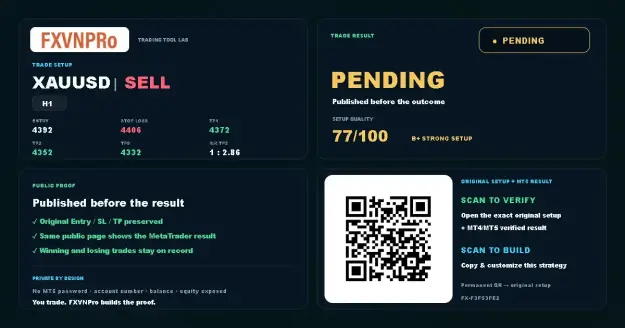 1 · SETUP
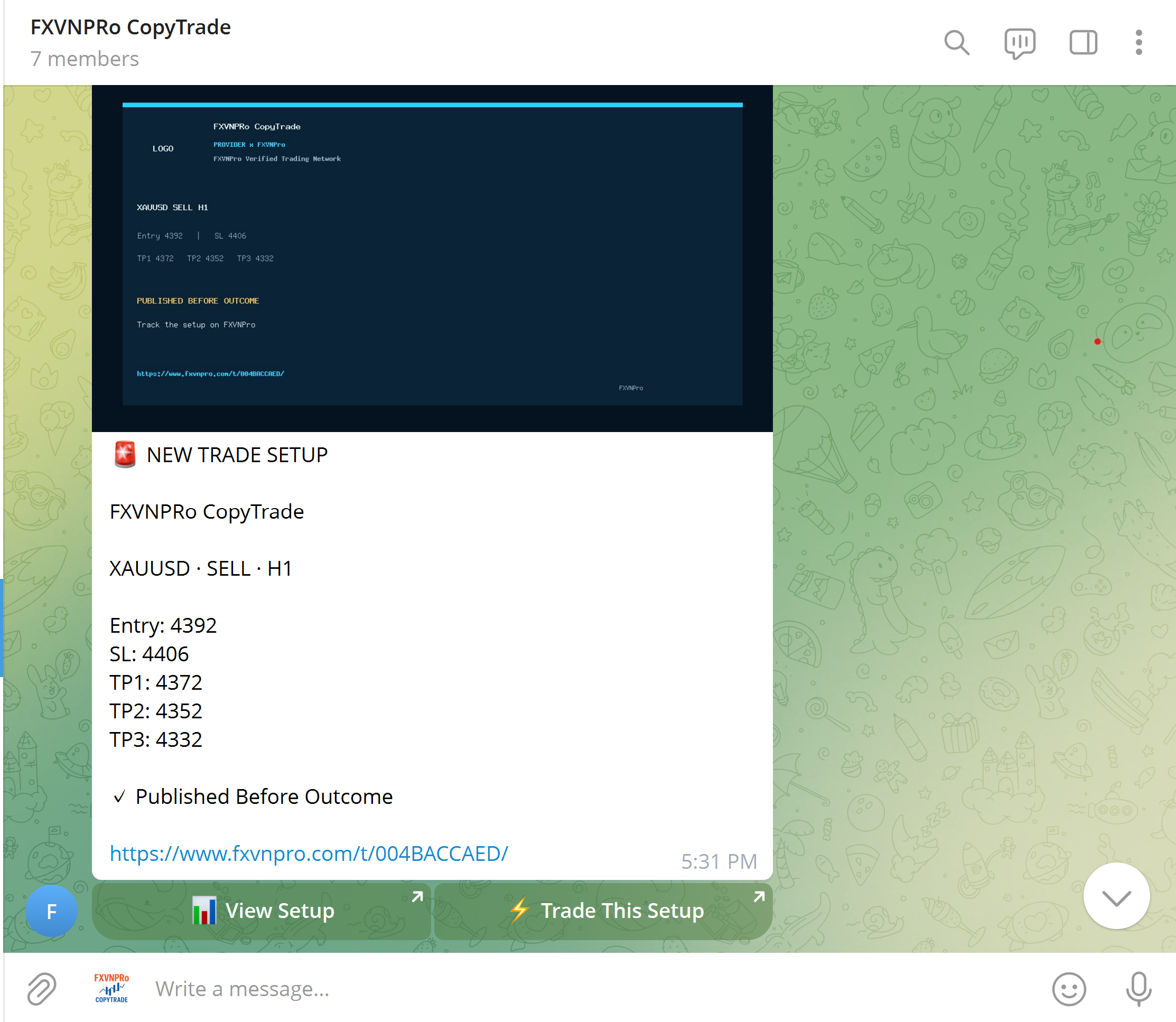 2 · TELEGRAM
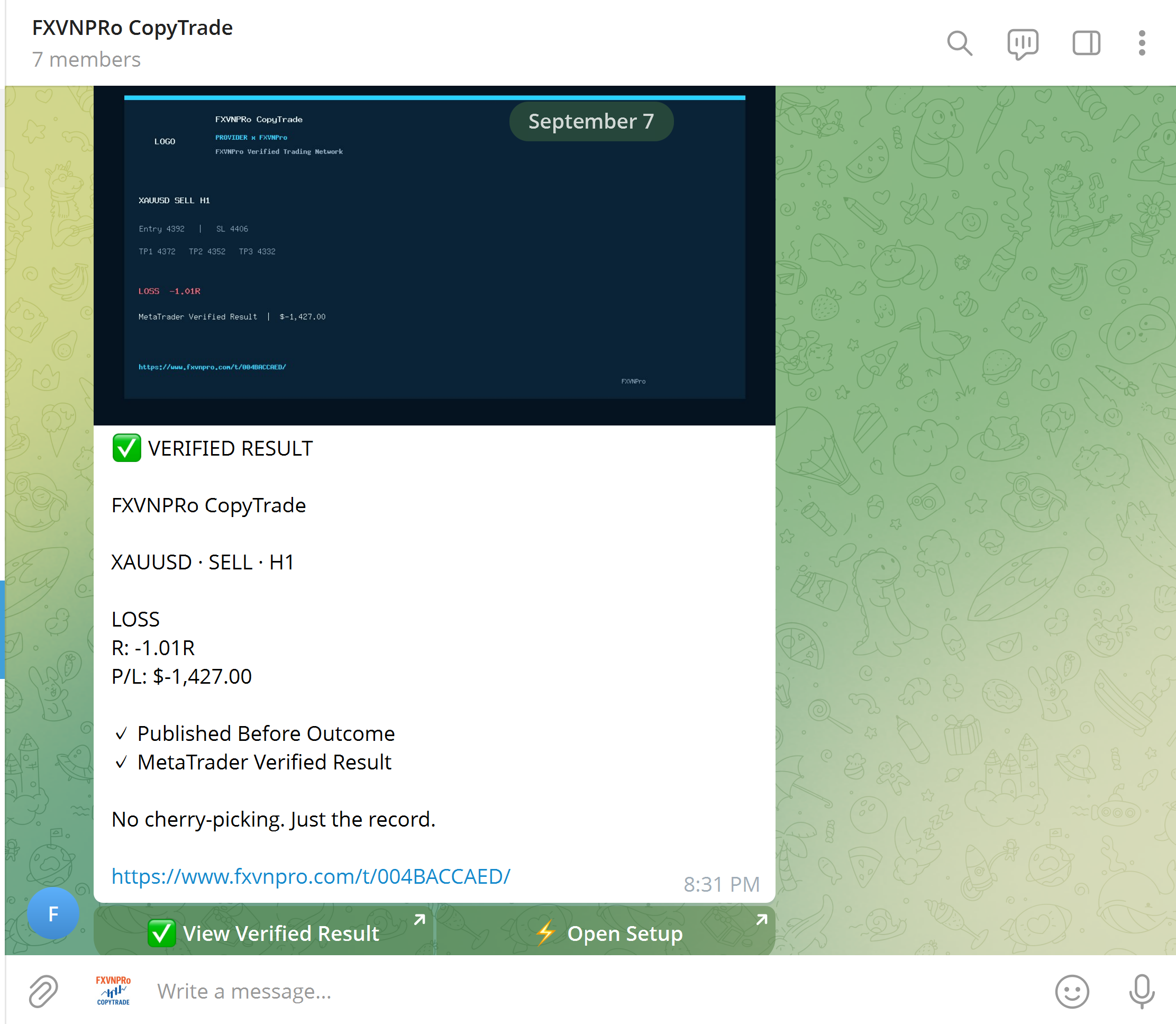 3 · VERIFIED
Build your strategy, distribute it to a community, or follow trading activity across MT4 & MT5.
Create Entry, Stop Loss and Targets before the outcome, then build a verified trading record.
Turn Telegram signals into an actionable workflow while followers keep control of their own risk.
Connect Chrome to MT4 or MT5 and open, modify or close trades from your browser.
Explore Masters and copy trading activity to your own MT4 or MT5 terminal with independent risk rules.