Plan a Trade
Build a trade plan and use practical trading tools before you act.
Trade IdeasRisk ToolsCalculators
BUILD A TRADE IDEA →
Start with your goal. You do not have to learn the FXVNPro architecture before using the tools.
Build an idea, use Telegram signals, trade from Chrome or follow a trader while technical setup stays in the background.
Technical connection details remain available inside each product when needed.
Plan trades, connect MT4 & MT5, review verified execution, explore traders and research brokers — without learning the whole platform first.
Build a trade plan and use practical trading tools before you act.
Use Browser Trading or turn supported Telegram signals into a structured trading workflow.
Explore CopyTrade TRADERs, review their records and choose your own risk settings.
Everything is still here — organized by what it helps you do.
Compare FP Markets and IC Markets by rating, regulation, minimum deposit, platforms, spreads, and overall trading conditions.
Use the FXVNPro Broker Checker Chrome extension to quickly review broker trust signals, ratings, and safety information while browsing broker websites.


| Feature | FP Markets | IC Markets |
|---|---|---|
| Rating | 6.7 | 7 |
| Minimum Deposit | $100 AUD | $1 |
| Regulation | ASIC, CySEC | ASIC, CySEC |
| Platforms | MT4, MT5, cTrader | MT4, MT5 |
| Spread | From 0.0 pips | From 0.0 pips |
Below is a detailed breakdown of fees, spreads, regulation, platforms, and real trading suitability to help you decide which broker fits your trading style better.
If you’ve ever watched a trade go your way… and then the spread widened, execution lagged, or the “from X pips” number didn’t match what you paid in practice, you already know the problem. FX brokers don’t all feel the same once you’re actually placing orders. That’s the difference between reading marketing copy and understanding fees, spreads and execution under real trading conditions.
This comparison is for traders who want a decision, not a brochure. If you’re building a strategy around tight entries, scalping around news, or even just trying to avoid death by a thousand small costs, “which broker is better” depends on how their trading model hits your P&L.
Quick snapshot: FP Markets (Broker A) and IC Markets (Broker B) are both regulated by ASIC and CySEC and both offer MetaTrader 4 and 5. FP Markets also adds cTrader, which matters if you prefer a different workflow. IC Markets has a much lower minimum deposit (listed as $1 vs $100 AUD), which can reduce friction for starting small. On spreads, both advertise “from 0.0 pips,” but in real trading you still need to think about commission structure and the conditions behind those tight prints.
In the sections below, I’ll break down the fees comparison, spreads and trading costs, regulation and safety, platform execution feel, deposit/withdrawal friction, and which broker fits beginners vs active traders. And yes—there will be a clear recommendation, because your time and risk aren’t free.
Let’s talk money the way it shows up in your account statement. When brokers advertise “from 0.0 pips,” that’s not a lie, but it’s also not the whole story. The cost you pay typically comes from a mix of spread and (depending on account type) commission. The key question is: what do your average trades cost during the sessions you actually trade?
With both FP Markets and IC Markets, you’ll see “spreads and trading costs” marketed as highly competitive, including “from 0.0 pips.” In real trading, tight spreads are often available only during high liquidity windows (major overlap sessions, liquid news moments with fast feeds, etc.). Outside those windows, spreads can widen—sometimes noticeably—especially if you’re trading less liquid Connects or using very aggressive order settings.
Here’s how this impacts strategy. Imagine you run a mean reversion system on EUR/USD with frequent entries—say 20–40 trades per week. A half-pip of extra average spread (or occasional slippage) compounds. If your edge is small, that extra cost doesn’t “slightly matter”—it changes whether the strategy survives.
So which is cheaper in real scenarios? Without account-type specific fee tables included here, the practical approach is to compare your own historical cost metrics: average spread at your trade times, and whether you’re paying commission on top. Generally, IC Markets is known in the industry for cost-focused pricing on active accounts, while FP Markets is also competitive but you’ll want to match account type and instrument. If you’re comparing apples to apples (same Connect, same session, same account model), you’ll usually feel the difference most on high frequency strategies—because that’s where every tiny spread improvement turns into real money.
Both FP Markets (Broker A) and IC Markets (Broker B) are regulated by ASIC and CySEC. That’s meaningful. Regulation isn’t just a badge—it affects minimum capital requirements, business conduct expectations, and how brokers are supervised when things go wrong. For traders, the practical benefit is reduced “mystery risk.” You’re less likely to run into situations where your funds or execution conditions are handled in a vague, unregulated way.
Still, let’s be honest: no retail trader reads regulatory texts. So what should you actually verify? First, confirm the exact entity you’re trading with (companies can be region-specific). Second, check whether the broker offers negative balance protection (if applicable in your region) and understand how client money is handled. These details matter more than the headline regulators.
In real trading conditions, safety shows up when markets get chaotic. Think about fast moves during major news releases or sudden liquidity gaps during risk-off events. In those moments, you want a broker with solid operational controls and stable execution infrastructure. Regulation can’t eliminate slippage, but it can correlate with better supervision and more consistent business practices.
So, is one “safer” than the other based solely on these listings? With both at ASIC and CySEC, the difference is not the regulator logo—it’s execution quality, dispute handling, and account setup clarity. If you want a concrete checklist: verify the legal entity, review product disclosures, and read the broker’s execution policy. That’s where the trust level becomes tangible.
Platforms aren’t just where you click. They shape how you manage risk, how quickly you react, and how clean your charting-to-order workflow feels. FP Markets supports MT4, MT5, and cTrader. IC Markets supports MT4 and MT5. If you’ve ever used cTrader for tighter UI control and different order handling, you already know some traders genuinely prefer it for execution and chart cleanliness.
Execution speed is often discussed like it’s a magic number. In practice, what you feel is “order goes in, then what happens next?” Can you place multiple orders quickly? Does the platform respond smoothly under load? Are there delays between clicking and the order confirming? Even the best liquidity in the world doesn’t help if the platform layer or routing introduces friction.
For example, suppose you trade US session breakouts and you need to scale positions in two or three steps. If your platform workflow is clunky, you end up missing the exact price zone you planned for. That turns a good plan into a mediocre one.
MT4 and MT5 are familiar to most retail traders, and both brokers offer them—so the baseline is good. The real differentiator here is whether you want cTrader. If you’re purely MT4/MT5 focused, you may not feel the difference. But if you’re serious about trading experience—especially if you’ve been through the “why is this order not filling like yesterday?” phase—having cTrader in FP Markets can be a practical advantage for your style.
Depositing is boring—until it isn’t. The minimum deposit difference is huge on paper: FP Markets lists a minimum deposit of $100 AUD, while IC Markets lists a minimum deposit of $1. On a first read, you might think: “Great, IC Markets lets me start instantly.” But here’s the more realistic angle: starting small can be a double-edged sword.
For beginners, low minimums reduce pressure. You can fund an account, test basic order types, and learn how spreads behave at different times without tying up a bigger chunk of money. For traders transitioning strategies, it also lets you trial a new approach with less risk.
For experienced traders, deposits and withdrawals still matter, but less because of the amount and more because of speed and friction. If withdrawals take longer than expected—or if the process requires extra steps—you’ll feel it when you need to manage risk quickly or when you’re moving funds between brokers.
In real-world practice, the “best” broker is the one that doesn’t interrupt your trading rhythm. If you frequently top up, you want a smooth deposit path. If you withdraw regularly, you want clarity around processing times and any fees (if they exist).
Because the details of withdrawal times and fees aren’t provided in your dataset, I won’t pretend to know the exact mechanics. But based on the minimum deposit and typical broker behavior in this space, IC Markets is likely more frictionless for starting. FP Markets can still be fine for deposits, but the higher minimum deposit means you’ll commit more capital up front before you can truly “learn by doing.”
Beginner suitability isn’t only about having MT4/MT5. It’s about reducing the number of unpleasant surprises. Spreads and execution matter for novices because beginners tend to trade more frequently, with less precise sizing, and often during less liquid hours. That’s when costs can bite.
Let’s connect this to the minimum deposit. With IC Markets listing a $1 minimum, you can start with less money, test the platform, and get comfortable placing trades. That matters because many beginners don’t just need a chart—they need reps. They need to see what a “market order” does at the current spread, and how stop-loss placement behaves when price moves quickly.
FP Markets has a $100 AUD minimum deposit. That can still be workable, but it can feel like more commitment. If you’re learning, you might want the option to practice with a smaller account while you figure out your risk management. And yes, “from 0.0 pips” spreads can look amazing on day one. But beginners should remember: the real spread you pay depends on the session, Connect, and account structure.
Platform-wise, both brokers give you MT4 and MT5. That’s a safe choice for beginners because tutorials and community knowledge are everywhere. FP Markets adds cTrader, but that’s not automatically beginner-friendly if someone is already overwhelmed by MT4/MT5.
So which broker is easier to start with? If you’re truly starting from scratch and want the lowest barrier to entry, IC Markets edges it. If you’re comfortable committing $100 AUD and you specifically like cTrader’s workflow, FP Markets can feel smoother after the initial setup.
Active traders don’t care about generic features. They care about the stuff that hits the account repeatedly: spreads and trading costs, execution speed, slippage, and how consistent fills are when volatility spikes.
Both brokers advertise “from 0.0 pips,” and both support MT4/MT5, which is a common base for scalpers, day traders, and algorithmic traders. The difference in suitability becomes about the cost profile and execution reliability under pressure. When you’re trading high volume—multiple trades per session—tiny variations in average spread and commission structure start to dominate your results.
Picture a day trader who’s running EUR/USD and GBP/USD around London open, then again into New York overlap. During those periods, liquidity improves and spreads often tighten. But if your strategy uses small profit targets, you’re still sensitive to the execution details. One wider spread print can turn a winner into a scratch. And if slippage shows up during fast price changes, you feel it immediately.
IC Markets typically appeals to active traders because it has a reputation for cost-focused conditions on the accounts many scalpers prefer. FP Markets is competitive too, and the presence of cTrader can be helpful if your execution style benefits from that interface.
Which broker fits active traders better? If your priority is pure trading cost efficiency in high-frequency scenarios, IC Markets is the stronger default pick. If you’re an active trader but strongly prefer cTrader’s workflow and order handling, FP Markets can still be a serious contender—just make sure you compare your exact account fees and trading conditions, not just the “from” spreads.
One thing I’d challenge you on: don’t decide based on the minimum deposit alone. A cheap on-ramp doesn’t help if your real cost per trade is higher in the hours you actually trade. That’s the trap most people fall into when they only look at “from 0.0 pips.”
Here’s my clear recommendation for FP Markets vs IC Markets, based on the differences that matter to money and day-to-day execution.
If you’re a beginner or you want the easiest start with minimal capital risk: IC Markets is the better pick. The $1 minimum deposit lowers the barrier to entry, and both brokers offer the MT4/MT5 ecosystem you’ll need to learn. For new traders, that reduced friction can be the difference between “I’ll test this properly” and “I’ll overthink it and never start.”
If you’re an active trader focused on scalping/day trading and you obsess over trading costs and fill consistency: IC Markets is also the better default choice. Both advertise “from 0.0 pips,” but in real trading conditions—multiple trades, tight targets, and frequent entries—cost efficiency and execution quality tend to matter more than anything else.
If you specifically want cTrader alongside MT4/MT5: FP Markets becomes the more compelling option. You’re paying a higher minimum deposit (listed $100 AUD), but if your trading experience improves with cTrader’s workflow, it’s a practical advantage rather than a cosmetic one.
So, which broker is better overall? For most traders asking “fees comparison” and “spreads and trading costs” first, IC Markets has the stronger position. FP Markets is a solid alternative, especially if cTrader is part of your toolkit. Just don’t forget the most trader-friendly rule: compare your actual average costs at your actual trading times, not the best-case marketing spreads.
One real XAUUSD trade: created before the outcome, sent to Telegram, TRADEd in MT5 and returned as a verified result.
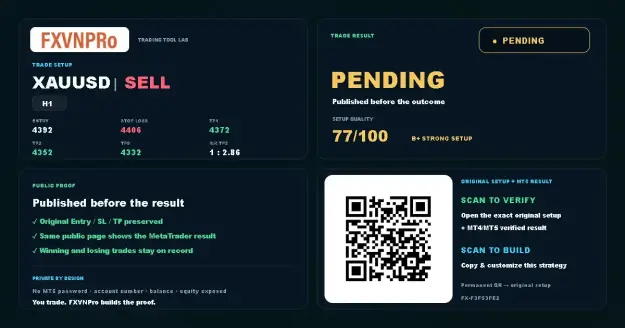 1 · SETUP
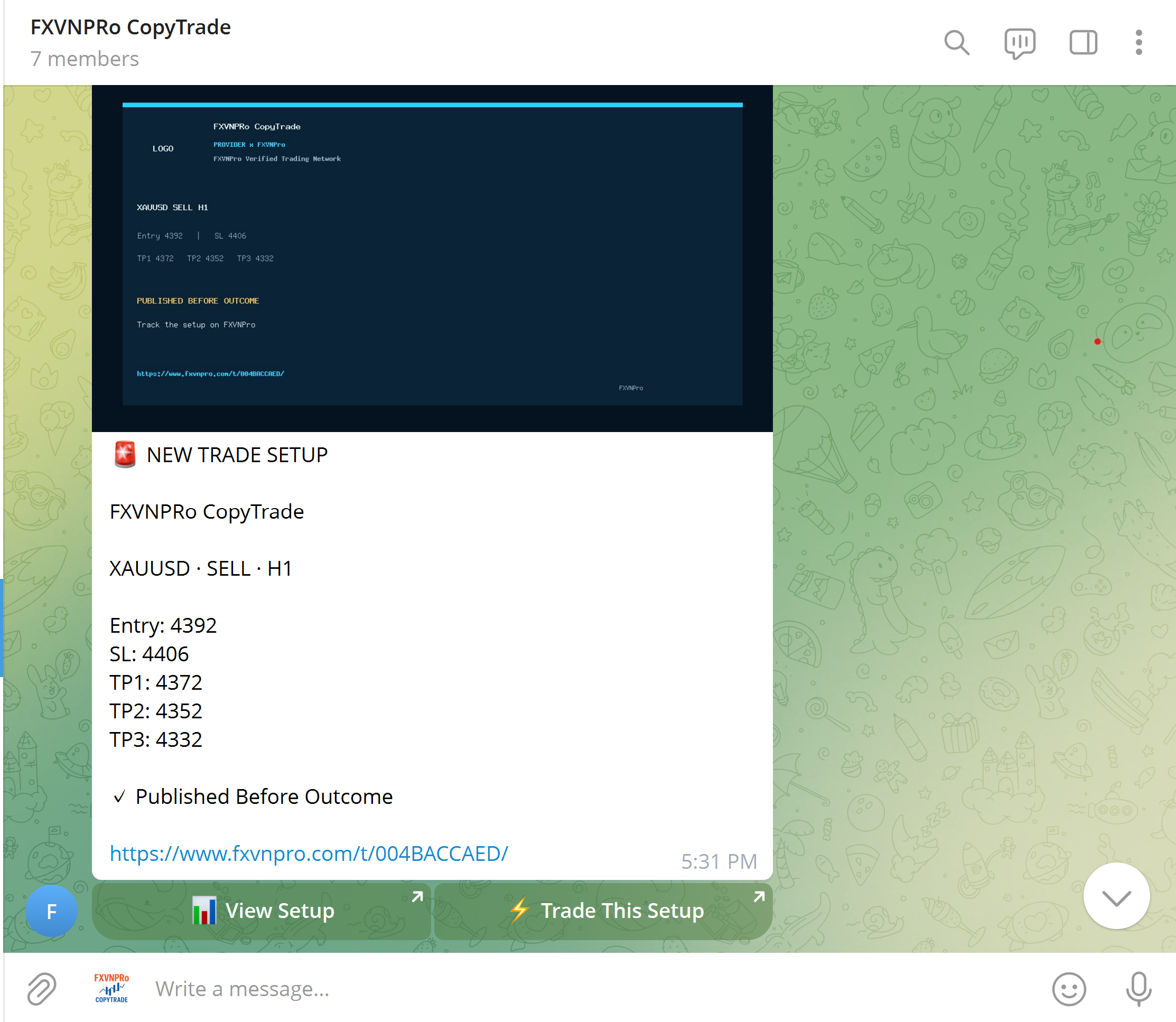 2 · TELEGRAM
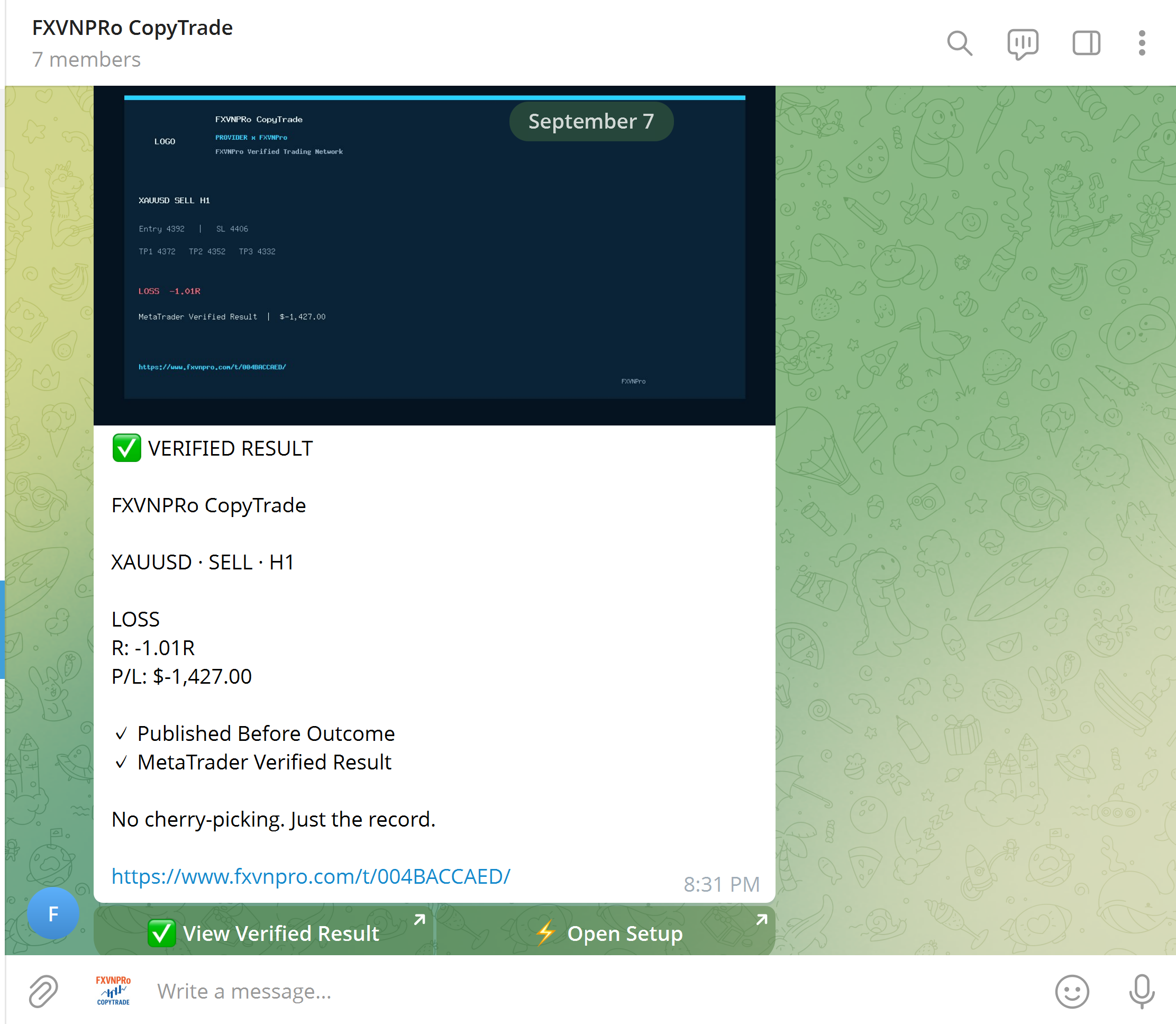 3 · VERIFIED
FXVNPro connects trade plans, Telegram trading communities and verified CopyTrade activity in one practical MT4/MT5 ecosystem.
Turn Entry, Stop Loss and Targets into a trade plan. Publish it before the outcome, then track and verify the result.
Turn Telegram signals into actionable MT4/MT5 setups. Signal Admins create the strategy while Members stay in control of risk.
Discover TRADERs, inspect verified trading history and performance, then decide who you want to follow across MT4 & MT5.
Build your strategy, distribute it to a community, or follow trading activity across MT4 & MT5.
Create Entry, Stop Loss and Targets before the outcome, then build a verified trading record.
Turn Telegram signals into an actionable workflow while followers keep control of their own risk.
Connect Chrome to MT4 or MT5 and open, modify or close trades from your browser.
Explore Masters and copy trading activity to your own MT4 or MT5 terminal with independent risk rules.