Plan a Trade
Build a structured setup and use practical trading tools before you act.
Trade IdeasRisk ToolsCalculators
BUILD A TRADE IDEA →
Plan trades, connect MT4 & MT5, review verified execution, explore traders and research brokers — without learning the whole platform first.
Build a structured setup and use practical trading tools before you act.
Use Browser Trading or turn supported Telegram signals into a structured trading workflow.
Explore CopyTrade Masters, review their records and choose your own risk settings.
Compare IC Markets and XM by rating, regulation, minimum deposit, platforms, spreads, and overall trading conditions.
Use the FXVNPro Broker Checker Chrome extension to quickly review broker trust signals, ratings, and safety information while browsing broker websites.


| Feature | IC Markets | XM |
|---|---|---|
| Rating | 7 | 7.1 |
| Minimum Deposit | $1 | $5 |
| Regulation | ASIC, CySEC | CySEC, ASIC, IFSC |
| Platforms | MT4, MT5 | MT4, MT5 |
| Spread | From 0.0 pips | From 0.6 pips |
Below is a detailed breakdown of fees, spreads, regulation, platforms, and real trading suitability to help you decide which broker fits your trading style better.
If you’ve ever sat through a fast-moving news candle and felt your fills slip a little, you already know the truth: broker choice isn’t just a “nice to have.” It can quietly eat your edge through spreads, commissions, and execution quality. And when you’re trading repeatedly—scalping, intraday, or running a systematic strategy—those small differences compound fast.
This is exactly why traders keep asking “IC Markets vs XM” and, more importantly, which broker is better for their style. In this comparison, I’m going to focus on the stuff that shows up on your trading statement and in your live experience: fees comparison, spreads and trading costs, regulation and safety, platform usability, and even the friction of deposits and withdrawals.
Quick snapshot: IC Markets (ASIC, CySEC) typically leans toward lower-cost trading with spreads “from 0.0 pips” and a low minimum deposit of $1. XM sits at a higher minimum deposit ($5) and has spreads “from 0.6 pips,” while being regulated by CySEC, ASIC, and IFSC. Both offer MT4 and MT5, so platform access isn’t the differentiator—cost and execution conditions usually are.
So who should care? If you’re trying to keep your risk-to-reward intact, or you’re switching from a demo mindset to live trading, this comparison is built for you. Let’s get into the numbers that actually matter.
Let’s talk spreads and trading costs in the way you feel them: not in theory, but in the middle of a trade. IC Markets lists spreads from 0.0 pips, while XM lists spreads from 0.6 pips. That doesn’t mean IC Markets is always cheaper every second of every day. Live spreads can widen with volatility, liquidity drops, or during rollovers and news. But the headline matters because it sets expectations for how “tight” the market usually is for you.
Here’s the practical impact. Suppose you run a strategy that targets 10–20 pips and you’re entering and exiting quickly. A consistent 0.6 pip difference isn’t huge on one trade. Over 50 trades, though? That’s 30 pips of extra cost you need to overcome—plus any potential widening during execution. This matters because the market doesn’t care about your intentions; it only cares about your actual entry price and exit price.
Now, the common question: “Is it all spread, or is there commission too?” The data you provided only gives minimum deposit, regulation, platforms, and spread ranges—no commission schedule. So I can’t invent fees that aren’t stated. In real trading, the cheapest broker is the one with the lowest all-in cost (spread plus commission, plus any non-obvious charges like inactivity fees). If IC Markets’ 0.0 pip availability is achieved on the account type you’re using, it can be a real advantage for systematic traders.
For example: during a typical London session when EUR/USD liquidity is strong, IC Markets may let you start closer to mid. XM might still be fine, but you’re paying an extra “tax” from the outset. Over time, that changes expectancy. Which broker is cheaper in real scenarios? For cost-sensitive traders, IC Markets usually has the edge based on the spread floor alone.
Regulation is one of those topics that gets treated like a checklist. But as a trader, you care about what regulation means when something goes wrong: segregated client assets, oversight intensity, and how quickly disputes can be resolved. In other words, regulation affects your risk profile, not just your peace of mind.
IC Markets is regulated by ASIC and CySEC. XM is regulated by CySEC, ASIC, and IFSC. On paper, XM has an extra regulatory jurisdiction, which can be a comfort factor for some traders. Still, the more important part is that both brokers are under ASIC and CySEC—two regulators many traders recognize and understand. That overlap matters because it suggests similar baseline compliance expectations, including capital requirements and conduct rules.
What should you do as a trader? Verify the broker entity you’re actually using (the legal company name in your account details, not just the brand). This matters because “IC Markets” and “XM” can operate through different subsidiaries depending on your region. And those subsidiaries can have different terms, protections, and account conditions.
In real-world trading conditions, regulation doesn’t stop slippage or stop market moves—but it can influence how your funds are handled and how transparent the broker is. If you’re deploying serious capital, you want confidence that your trading activity is being executed under a supervised framework.
So which feels safer? With both brokers sharing ASIC and CySEC, the core safety baseline is comparable. XM’s additional IFSC license tilts it slightly for coverage breadth, but IC Markets’ tight cost profile often matters more for day-to-day results. Safety and costs both matter—just don’t ignore one by pretending the other is enough.
Both IC Markets and XM offer MT4 and MT5. On paper, that sounds identical. In practice, your experience can still diverge based on execution behavior, how cleanly the platform reflects quotes, and how stable the environment feels during high volatility.
If you’re an MT4 trader, you’ll likely care about how well the platform handles your EA or custom indicator setup, and whether your charting matches the live feed closely enough to avoid confusion when placing orders. For manual trading, you care about responsiveness—how quickly the price updates, how smooth the order tickets feel, and whether you get consistent requotes.
Execution speed and slippage are the hidden variables here. Even with the same platform, a broker’s infrastructure and liquidity model can influence real fills. That’s why “platform availability” isn’t the decision point. The decision point is: how do you feel trading with the platform when the spread is moving and the market is running?
MT5 users often care about depth of features and strategy testing. MT5’s multi-asset support and strategy tester can be attractive if you run more complex systems. But here’s the catch: if your broker’s trading conditions aren’t consistent, your backtest assumptions can drift. And then you’re not just trading—you’re compensating for brokerage noise.
In real trading conditions, I’ve seen traders switch brokers and suddenly notice that their “same EA” behaves differently—not because the code changed, but because fills and spreads did. So while MT4/MT5 is table stakes, the underlying execution environment is where you’ll feel the difference.
Given IC Markets’ advantage on spread-from-0.0 pips, many traders report tighter trading conditions. XM can still be perfectly usable, but if you’re sensitive to costs (especially scalping), IC Markets tends to fit that mindset better.
Deposits and withdrawals sound boring until you need them quickly—like when you’re scaling up after a good month, or when you’re dealing with a sudden margin pressure situation. Even if both brokers offer standard payment methods, the friction level (processing time, fees, and how painless the steps are) affects your ability to manage risk.
IC Markets has a minimum deposit of $1, which is a big deal for traders who want to test the waters with minimal commitment. XM’s minimum deposit is $5. That difference might not sound dramatic, but it can change how you approach setup: do you fund, configure, and run a few live trials—or do you hold back because you feel you have to “put in enough”?
Now, I can’t claim withdrawal speeds or specific fee structures without data. But I can tell you what to watch for. Look for: whether withdrawals require additional verification, whether fees can be charged by payment processors, and how long it typically takes for funds to show up on your side. The real-world experience is usually less about “marketing speed” and more about consistency.
For example, if you’re a day trader and you plan to withdraw profits weekly, you don’t want a process that interrupts your workflow. You also don’t want to discover late that a funding method you used has higher withdrawal fees than another.
In my view, the minimum deposit difference gives IC Markets a slight practical edge for experimentation. But if you already plan to deposit at least $100 or $500, the minimum deposit becomes less relevant. The bigger question becomes: which broker’s withdrawals feel smoother for your region and payment method?
Bottom line: IC Markets is easier to start with from a funding perspective. If your priority is scaling and withdrawing smoothly, you’ll need to check the specific payment rails available to you.
Beginners usually don’t lose money because they “can’t read charts.” They lose money because they misunderstand costs, overtrade, ignore spread effects, and then blame themselves—or the platform—when execution doesn’t match their expectations. So beginner suitability isn’t about whether a broker offers MT4/MT5. It’s about how forgiving the broker’s trading conditions are when you’re still learning.
IC Markets has a minimum deposit of $1 and spreads from 0.0 pips. That combination can be helpful for beginners because it lowers the barrier to running a live mini-test—deploying a simple strategy, learning order placement, and seeing how spreads behave during different sessions. This matters because the learning curve is steep, and the first real account experience should ideally be low-stakes.
XM’s minimum deposit is $5, which isn’t large, but it can feel more “serious” right away. XM also has a spread from 0.6 pips, which means beginners who enter and exit frequently may pay slightly more cost per trade. Again, not catastrophic—but it can affect how quickly you learn the relationship between trade size, cost, and expectancy.
Here’s a real scenario: a beginner sets a tight stop-loss and targets small moves. If their broker’s spreads are wider on average, their stop gets hit more often than expected—even if their analysis is decent. Then they start making bigger mistakes: widening stops too much, increasing lot sizes, or skipping risk management.
In that sense, IC Markets is often more forgiving for beginners who are cost-aware and want to learn with a smaller initial deposit. XM can still work for beginners, but the spread floor suggests IC Markets may be slightly better for learning through frequent practice.
If you’re an active trader—scalping, day trading, or running a high-frequency discretionary routine—your broker choice becomes a performance variable. You’re not placing one trade a day. You’re placing dozens, sometimes hundreds. That means spreads and execution behavior aren’t “small”—they’re your paycheck.
IC Markets lists spreads from 0.0 pips, while XM lists spreads from 0.6 pips. For active traders, that difference is usually felt immediately. Even if both brokers can quote tight spreads at times, the spread floor and typical liquidity conditions matter. This matters because scalping strategies often target moves smaller than what many traders think of as “normal.” If you’re targeting, say, 5–10 pips, a 0.6 pip starting cost is a large percentage of your goal.
Execution speed and slippage also matter. You can have a tight spread but still get poor fills when things move. So what you want is consistent market execution, minimal requotes, and stable quote updates during the sessions you trade.
For example, imagine you trade EUR/USD around economic releases. Liquidity spikes, spreads can briefly tighten or widen depending on the broker’s feed and routing. In a good setup, your orders still get filled near expected levels. In a weaker setup, you see more slippage that forces you to widen stops or reduce size—both reduce performance.
Active traders also care about platform stability and order handling. MT4/MT5 are the tools, but the execution environment is the engine.
Based on the spread data alone, IC Markets is the more natural fit for active traders who are cost-sensitive and run frequent entries. XM can be workable, but if you’re optimizing for scalping and intraday efficiency, IC Markets has the stronger foundation here.
Here’s the trade-off in plain language: IC Markets leans toward lower trading costs, which is usually the deciding factor for serious execution-focused traders. XM leans toward broader regulatory listing, but its spread baseline suggests a higher all-in cost for frequent trading.
Let’s make this decisive, because “both are fine” isn’t what you need. The better choice depends on your trading style, but the direction is clear.
If you’re asking which broker is better for costs and frequent trading: IC Markets is the stronger pick. The spreads from 0.0 pips vs XM from 0.6 pips can matter a lot once you scale up trade frequency. Combine that with the $1 minimum deposit, and it’s easy to test live execution, learn the rhythm, and keep costs under control. For scalpers, day traders, and systematic traders who track expectancy closely, this usually translates into better outcomes over time.
If you’re asking which broker is better for broader regulatory coverage comfort (and you don’t mind a slightly higher spread baseline): XM can be the better fit. With CySEC, ASIC, and IFSC listed, some traders prefer that extra layer of jurisdiction. If your strategy doesn’t rely on tight spreads—say you hold trades longer and your average move is bigger than the spread difference—XM may be perfectly acceptable.
My recommendation, based on the data you provided: Choose IC Markets if your priority is fees comparison, spreads and trading costs, and execution efficiency. Choose XM if your priority is a more expansive regulatory listing and you trade less frequently or with wider targets.
Whatever you choose, do one thing before committing serious capital: run a proper live test on your intended account type. Check your typical spread during your trading hours, watch for slippage during volatility, and only then decide who deserves your money. That’s the trader’s way.
One real XAUUSD trade: created before the outcome, sent to Telegram, executed in MT5 and returned as a verified result.
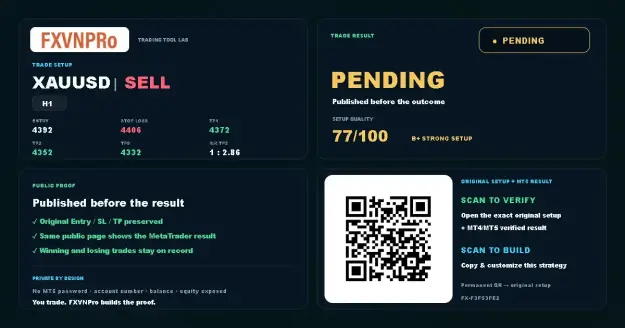 1 · SETUP
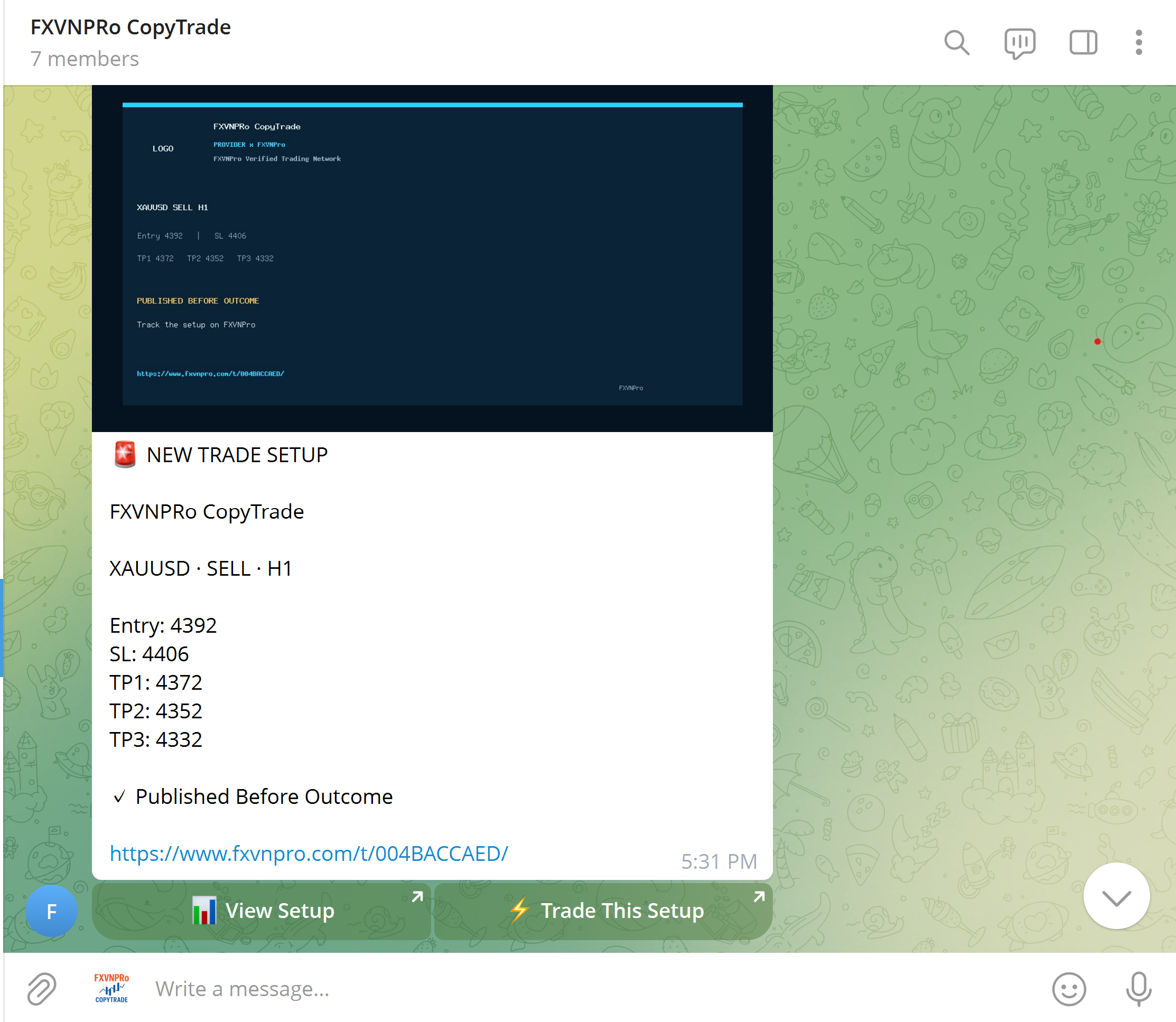 2 · TELEGRAM
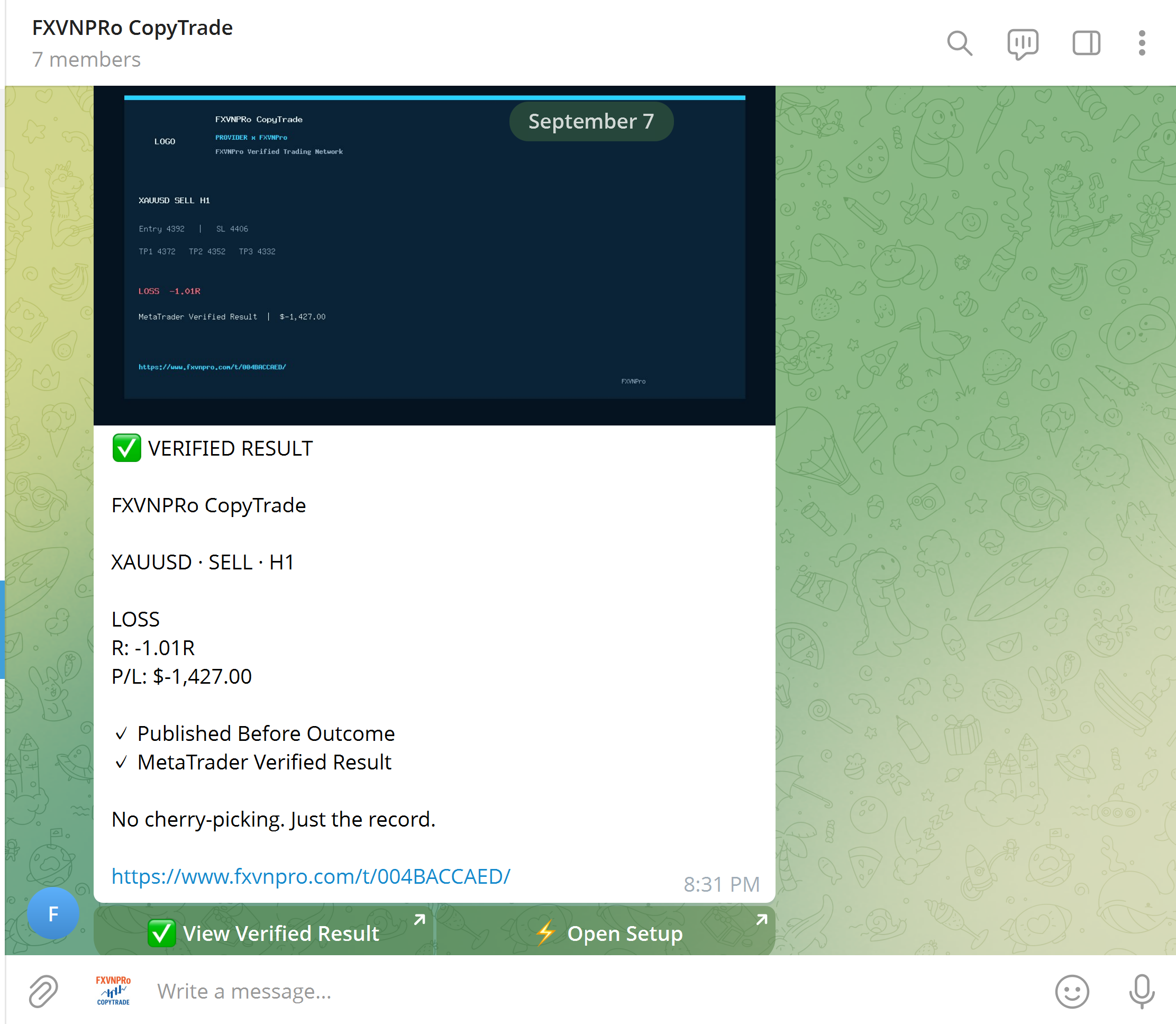 3 · VERIFIED
Build your strategy, distribute it to a community, or follow trading activity across MT4 & MT5.
Create Entry, Stop Loss and Targets before the outcome, then build a verified trading record.
Turn Telegram signals into an actionable workflow while followers keep control of their own risk.
Connect Chrome to MT4 or MT5 and open, modify or close trades from your browser.
Explore Masters and copy trading activity to your own MT4 or MT5 terminal with independent risk rules.