Plan a Trade
Build a trade plan and use practical trading tools before you act.
Trade IdeasRisk ToolsCalculators
BUILD A TRADE IDEA →
Start with your goal. You do not have to learn the FXVNPro architecture before using the tools.
Build an idea, use Telegram signals, trade from Chrome or follow a trader while technical setup stays in the background.
Technical connection details remain available inside each product when needed.
Plan trades, connect MT4 & MT5, review verified execution, explore traders and research brokers — without learning the whole platform first.
Build a trade plan and use practical trading tools before you act.
Use Browser Trading or turn supported Telegram signals into a structured trading workflow.
Explore CopyTrade TRADERs, review their records and choose your own risk settings.
Everything is still here — organized by what it helps you do.
Compare IC Markets and Just Markets by rating, regulation, minimum deposit, platforms, spreads, and overall trading conditions.
Use the FXVNPro Broker Checker Chrome extension to quickly review broker trust signals, ratings, and safety information while browsing broker websites.


| Feature | IC Markets | Just Markets |
|---|---|---|
| Rating | 7 | 6.5 |
| Minimum Deposit | $1 | $10 |
| Regulation | ASIC, CySEC | CySEC, FSA, FSCA, FSC |
| Platforms | MT4, MT5 | MT4, MT5 |
| Spread | From 0.0 pips | From 0.1 pips |
Below is a detailed breakdown of fees, spreads, regulation, platforms, and real trading suitability to help you decide which broker fits your trading style better.
If you’ve traded long enough, you know this truth: broker choice doesn’t just affect your account headline—it affects your monthly P&L. A few tenths of a pip here, an unexpected fee there, and suddenly your “strategy edge” starts disappearing. That’s why IC Markets vs Just Markets is worth a proper look, especially if you care about spreads and execution speed rather than marketing lines.
This comparison is for traders who actually place trades frequently (or plan to). You might be a day trader testing momentum entries, a swing trader watching weekend gaps, or a scalper who cares about whether slippage shows up when it matters. Either way, fees comparison and trading costs aren’t academic. They’re the difference between tolerable drawdowns and avoidable ones.
Quick snapshot: IC Markets (Broker A) has a lower minimum deposit ($1) and spreads “from 0.0 pips,” with ASIC and CySEC regulation. Just Markets (Broker B) has a higher minimum deposit ($10) and spreads “from 0.1 pips,” but operates under a wider set of regulators listed as CySEC, FSA, FSCA, and FSC.
So which broker is better for you? Keep reading, because the answer changes depending on your trading style, account size, and how sensitive you are to spreads and commissions in real trading conditions.
Let’s talk spreads and trading costs in a way that matches how real accounts behave. IC Markets advertises spreads from 0.0 pips. Just Markets starts from 0.1 pips. On paper, that difference looks small. In real trading conditions, it can matter a lot—especially for scalpers and day traders who stack multiple entries.
Here’s the practical part. Suppose you run a strategy that averages 30 round-turn trades per week. A “0.1 pip” difference isn’t always the same in your account, because spreads widen during news, rollover, and lower liquidity hours. Still, if your typical spread is consistently tighter on one broker, your break-even distance shrinks. That means fewer trades need to run to target just to cover costs. This matters because most traders don’t lose only on direction—they lose on cost drag.
Now, about hidden fees. Forex brokers sometimes have costs that aren’t obvious in the spread number alone—like commissions (if applicable), financing/rollover charges, or charges tied to account activity. I can’t confirm commission structures beyond what’s provided here, so you should verify your exact account type details before funding. Look at the “all-in” cost for your instrument and account currency, not just the advertised “from” spread.
In a real example: if you trade EUR/USD around London open, both brokers may show tight spreads. But if you’re trading during quieter hours, the broker that starts from a lower minimum spread often still performs better on average. That’s why many traders choose IC Markets vs Just Markets based on day-to-day execution cost, not the best-case headline.
Regulation isn’t just a checklist. It affects how seriously a broker is expected to handle client funds, risk controls, and dispute processes. IC Markets is regulated by ASIC and CySEC. Just Markets lists CySEC, FSA, FSCA, and FSC. The names sound reassuring, but the real question is: how do these regimes translate into operational safety for you as a trader?
ASIC and CySEC are widely recognized regulators in the retail FX space. ASIC is known for a generally strict approach to conduct and financial services, while CySEC is also established and active. When you’re trading frequently, you want the broker to be consistent—especially during volatility spikes when execution quality and customer support suddenly matter more than usual.
For Just Markets, the broader list of regulators suggests they may be set up to operate across multiple jurisdictions. That can be beneficial, but it also means you need to be careful: different entities under different regulatory umbrellas can mean different terms, leverage rules, and client protections. Always verify which specific entity your account is tied to (the legal name on your account agreement), because that determines what regulator rules actually apply to you.
In practice, verification matters because it’s your protection layer when things go wrong—withdrawal delays, platform issues, or disputes. And no, you don’t want to find out during a drawdown that your “broker safety” is more complicated than you thought.
So on safety alone, both brokers have credible oversight listed. Still, if you value regulatory clarity and a strong reputation in major markets, IC Markets often feels like the simpler choice. If you want multi-jurisdiction coverage, Just Markets can look attractive—just verify the exact entity behind your account.
Both brokers offer MT4 and MT5, which is a major plus if you already have indicators, EAs, or a workflow built around MetaTrader. The platform choice becomes less about “can I trade?” and more about how the broker supports execution speed, order handling, and stability under pressure.
Let’s get specific. MT4 is still the go-to for many automated traders because it’s lighter and has a huge ecosystem of custom scripts. MT5 adds improvements, like more order types and depth for indicators, but some EAs aren’t as plug-and-play. Since both IC Markets and Just Markets support both, you’re free to pick what matches your trading experience.
Now for the part people underestimate: execution behavior. In real trading, your MT4/MT5 experience is tied to how quickly orders are filled, how consistent the quotes are, and whether you experience issues during fast markets. If you’re running limit orders, stop orders, or strategies that depend on tight entry conditions, execution speed and slippage become a lived reality.
Example scenario: you’re trading a breakout strategy and placing stop orders just above a range. During a volatile push, one broker may fill closer to your requested price while the other fills a bit worse due to quote speed or liquidity routing. Over a month, that slippage can become meaningful—especially if your strategy targets small-to-moderate moves.
Tooling also matters. Beyond MetaTrader, traders care about things like VPS compatibility, charting quality, and how easy it is to manage trade history and statements. Both brokers likely provide standard account management, but the “feel” comes down to the broker’s platform integration and reliability.
So for platforms and tools, the winner is less obvious than for spreads. Still, if your trading experience is EA-heavy, you’ll likely choose based on how smooth execution is in MT4/MT5 rather than which platform list looks nicer.
Deposits and withdrawals don’t get talked about enough in broker comparisons, but they can make or break your trading rhythm. IC Markets has a minimum deposit of $1. Just Markets shows $10. That difference matters if you’re testing the water, rebuilding after a loss, or simply want to fund a demo-to-live transition with less commitment.
In real life, deposits aren’t only about minimums. Traders also care about how fast funds arrive, what fees might apply (by your bank/card Signal Admin or payment processor), and how smooth withdrawals are when you’re actually trying to pull profit.
Here’s the scenario I’ve seen repeat: a trader starts live with a small balance, makes a decent run, then requests a withdrawal. If the process is slow or requires extra verification steps, the trader’s confidence drops. Even worse, if the broker is strict about compliance documentation, you don’t want to be scrambling during a profitable week.
With IC Markets’ lower minimum deposit, it’s easier to start small and verify your workflow—placing trades, checking spreads and execution, and confirming that your account behaves the way you expect. With Just Markets’ $10 minimum deposit, you may feel slightly more “locked in” earlier, which isn’t bad, but it can be a psychological barrier for beginners.
Also, think about account funding frequency. If you deposit occasionally, the minimum deposit may matter less. If you’re topping up regularly—common for traders who scale after hitting targets—then a lower minimum can reduce friction.
Bottom line: both brokers should be assessed for deposit/withdrawal speed and any third-party fees, but based on what we know here, IC Markets is more flexible for starting light. That said, don’t judge withdrawals purely on minimum deposits—always check withdrawal terms and verification requirements in advance.
Beginners don’t need “more features.” They need fewer surprises. That usually means predictable trading costs, simple onboarding, and a clear path to learning without risking too much too soon.
IC Markets’ $1 minimum deposit is a big deal for beginners. It lowers the barrier to getting hands-on with live pricing and order placement. You can run a basic plan—like trading a simple EMA crossover or a support/resistance approach—without having to park a large amount of money right away. This matters because early mistakes are expensive when your account size starts too big.
Just Markets has a higher minimum deposit ($10), which isn’t huge, but it changes the psychological and practical reality for brand-new traders. If someone is learning and making errors, a larger initial deposit increases the stress level. Stress can lead to poor trade management—moving stops too early, overtrading, or abandoning a strategy too fast.
Cost predictability is also key. IC Markets advertises tighter spreads “from 0.0 pips,” while Just Markets starts “from 0.1 pips.” For beginners, tighter spreads can reduce break-even distance and help you understand your strategy’s actual performance without costs dominating results.
However, beginners should also consider regulation and safety. Both brokers list credible regulators, but IC Markets’ combination of ASIC and CySEC can feel more straightforward to many traders when they’re trying to understand what protections apply.
So which broker is easier to start with? If you’re truly early in your trading journey, IC Markets usually offers the friendlier entry point. You can learn the mechanics with less financial pressure, and that tends to make the first months smoother.
For active traders, the question becomes brutally simple: how much does each trade cost you, and how consistent is execution when the market speeds up? This is where the spreads and the “from” levels matter, but also where the broker’s real execution quality shows up.
IC Markets has spreads from 0.0 pips. Just Markets from 0.1 pips. If you’re scalping or day trading, you’re typically entering and exiting more often, meaning you’re multiplying costs. Even if the average spread difference is small, the cumulative effect can be the difference between a strategy that works and one that barely breaks even after fees and slippage.
Let’s make it concrete. Imagine you trade intraday around news releases and you’re not just trading direction—you’re trading reaction. Spreads can widen during those moments. The broker with tighter baseline spreads may still perform better overall, but you’ll only know by checking your actual account behavior during volatile sessions.
Execution speed and slippage are the other half of the equation. A strategy might be profitable on backtests but lose money in live markets due to order fills that are consistently worse than expected. Active traders notice that fast. If your entry trigger is based on a short-term move, even a tiny slippage can shift your risk/reward ratio.
MT4/MT5 support helps active traders because it allows faster strategy testing and easier order management. Both brokers offer the platforms, but you’ll still want to observe: Are quotes stable? Do stop orders behave well? Are market orders filled smoothly when spreads spike?
With all else equal, for active trading focused on spreads and trading costs, IC Markets has the edge on paper. Just Markets can still be a solid choice, but if your style is sensitive to execution and spread quality, you’ll likely gravitate toward IC Markets vs Just Markets and test thoroughly on a live account.
If you’re trying to decide which broker is better for your style, don’t stop at “from spreads.” Watch what happens during the sessions you actually trade—especially around rollover and news. That’s where differences stop being theoretical.
Here’s my clear call, based on the data provided and how these details typically impact trading outcomes. For most traders who care about spreads and trading costs, IC Markets is the stronger pick overall.
IC Markets vs Just Markets for beginners: IC Markets is usually better. The $1 minimum deposit is genuinely helpful when you’re learning execution, managing risk, and trying not to overfund before you have consistency. The “from 0.0 pips” spread positioning also supports beginners by lowering break-even pressure.
For active traders, day traders, and scalpers: IC Markets again has the advantage. When you trade frequently, even small spread differences become noticeable. If your strategy depends on tight entries, IC Markets’ tighter advertised spread level is the more favorable starting point. That doesn’t eliminate the need to monitor slippage and execution quality—just makes IC Markets the better candidate to test first.
When Just Markets might be the better fit: Choose Just Markets if the multi-regulator footprint is important to you, or if your account setup under the relevant entity matches your preferences. Just don’t ignore the “spreads and trading costs” side—especially if you’re scalping. A 0.1 pip baseline can be fine for swing trading, but it’s not the best starting point for high-frequency strategies.
So, if your real question is which broker is better for your trading style, my recommendation is straightforward: pick IC Markets first for lower entry friction and tighter spread positioning, then confirm your own all-in costs and execution behavior before scaling up. For Just Markets, consider it a secondary option mainly if its regulatory coverage aligns better with your situation.
One real XAUUSD trade: created before the outcome, sent to Telegram, TRADEd in MT5 and returned as a verified result.
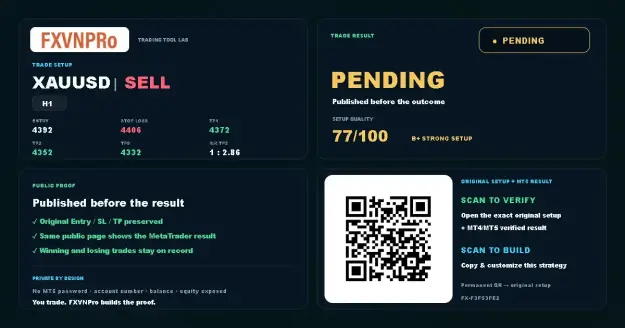 1 · SETUP
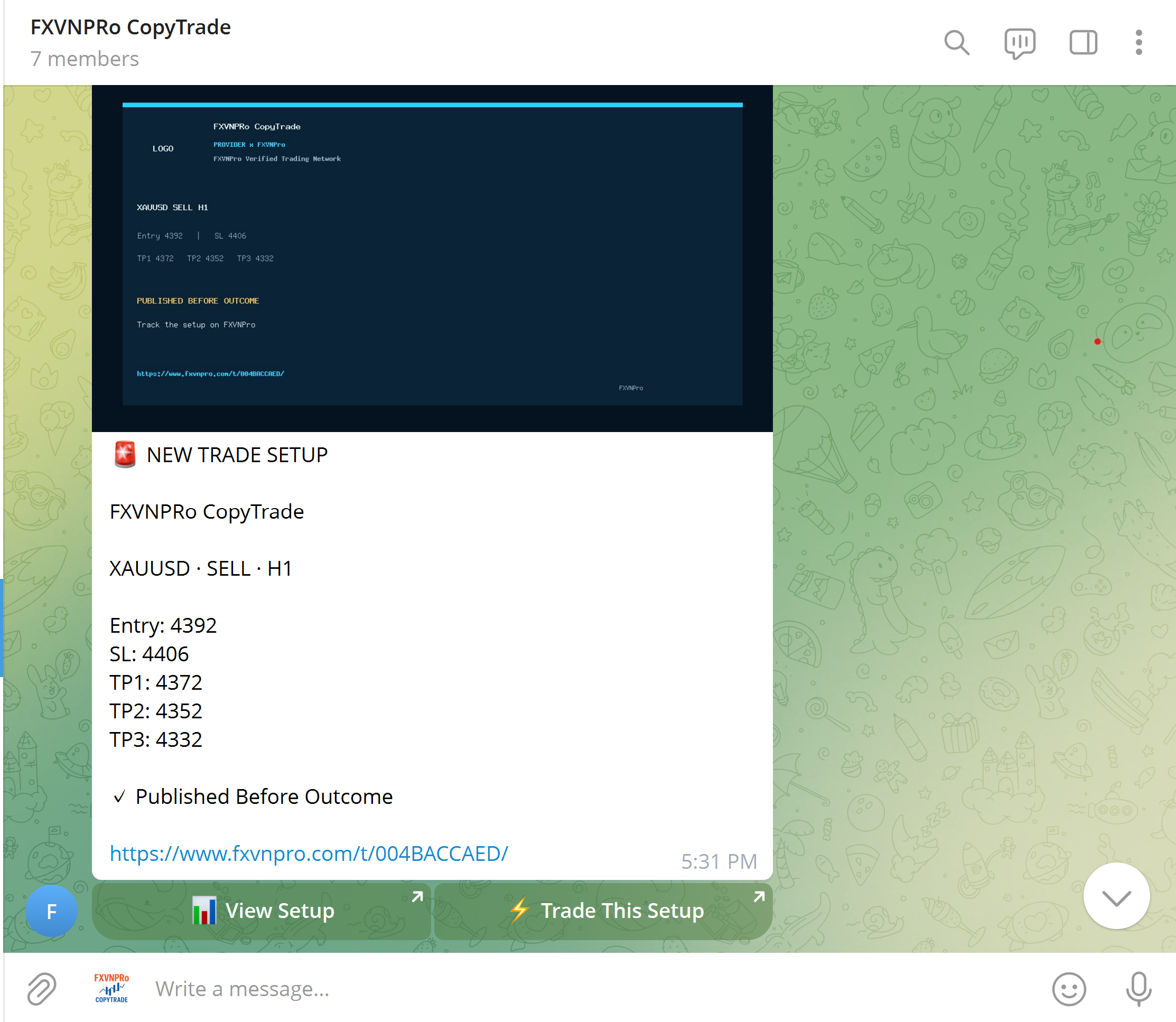 2 · TELEGRAM
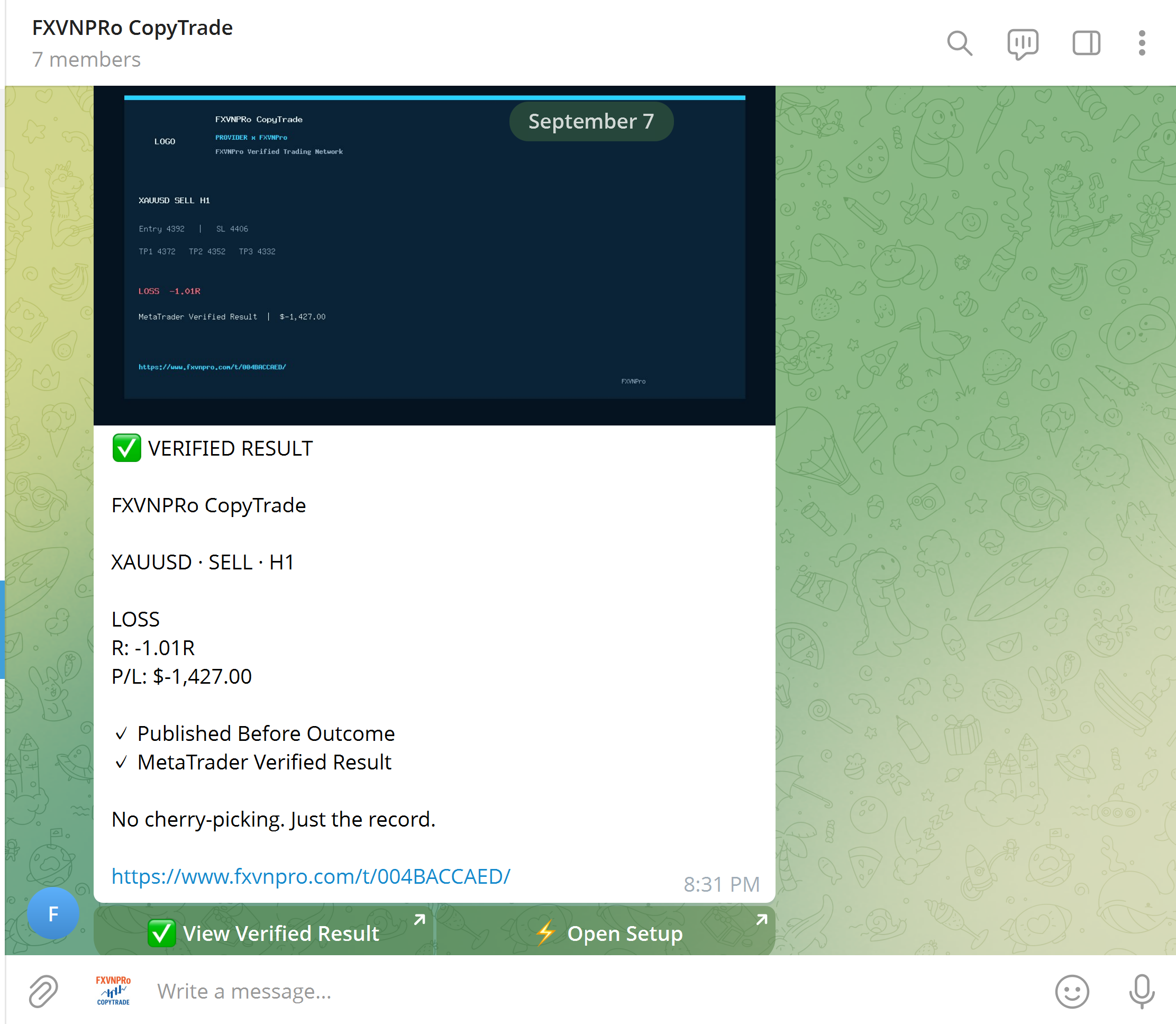 3 · VERIFIED
FXVNPro connects trade plans, Telegram trading communities and verified CopyTrade activity in one practical MT4/MT5 ecosystem.
Turn Entry, Stop Loss and Targets into a trade plan. Publish it before the outcome, then track and verify the result.
Turn Telegram signals into actionable MT4/MT5 setups. Signal Admins create the strategy while Members stay in control of risk.
Discover TRADERs, inspect verified trading history and performance, then decide who you want to follow across MT4 & MT5.
Build your strategy, distribute it to a community, or follow trading activity across MT4 & MT5.
Create Entry, Stop Loss and Targets before the outcome, then build a verified trading record.
Turn Telegram signals into an actionable workflow while followers keep control of their own risk.
Connect Chrome to MT4 or MT5 and open, modify or close trades from your browser.
Explore Masters and copy trading activity to your own MT4 or MT5 terminal with independent risk rules.