

HFM
FVP Score
6.8/10
HFM
- Minimum Deposit$5
- RegulationFCA, DFSA, FSA
- PlatformsMT4, MT5
- SpreadFrom 0.1 pips
Start with your goal. You do not have to learn the FXVNPro architecture before using the tools.
Build an idea, use Telegram signals, trade from Chrome or follow a trader while technical setup stays in the background.
Technical connection details remain available inside each product when needed.
Compare HFM and Just Markets by rating, regulation, minimum deposit, platforms, spreads, and overall trading conditions.
Use the FXVNPro Broker Checker Chrome extension to quickly review broker trust signals, ratings, and safety information while browsing broker websites.

| Feature | HFM | Just Markets |
|---|---|---|
| Rating | 6.8 | 6.5 |
| Minimum Deposit | $5 | $10 |
| Regulation | FCA, DFSA, FSA | CySEC, FSA, FSCA, FSC |
| Platforms | MT4, MT5 | MT4, MT5 |
| Spread | From 0.1 pips | From 0.1 pips |
Below is a detailed breakdown of fees, spreads, regulation, platforms, and real trading suitability to help you decide which broker fits your trading style better.
If you’ve ever watched a trade go from +$30 to -$40 in the time it takes price to tick, you already know the truth: forex broker reviews that only talk about “low spreads” miss the part that actually hurts—execution, trading costs in context, and how reliable the whole setup feels when the market gets messy. That’s why this HFM vs Just Markets comparison matters.
In this article, I’m comparing HFM (Broker A) and Just Markets (Broker B) using the details that matter to traders: minimum deposit, regulation footprint, platform support, and spreads “from” 0.1 pips. But I’ll also get into the stuff you feel in real trading—slippage around news, how costs behave when volatility spikes, and what kind of trader each broker tends to suit.
Quick snapshot: HFM starts lower on the minimum deposit ($5) and operates under FCA/DFSA/FSA oversight, while Just Markets lists a $10 minimum and is regulated across CySEC/FSA/FSCA/FSC. Both offer MT4 and MT5 with spreads from 0.1 pips. On paper, the spreads look similar. In practice, the winner depends on how active you are and how sensitive you are to execution quality and total fees.
Let’s talk costs like a trader, not a brochure. When a broker advertises “spreads from 0.1 pips,” what you’re really asking is: how often do you actually see 0.1 pips, and what happens when it’s not? Because the spread isn’t the only cost—execution quality, commissions (if any), and the “effective spread” caused by slippage can matter just as much.
With both HFM and Just Markets showing spreads from 0.1 pips, the headline looks like a tie. But here’s where reality bites. In real trading conditions—especially during London open, US session overlaps, and major news—spreads can widen fast. If you’re scalping or trading short timeframes, a broker that holds its pricing better during volatility usually wins on net cost, even if both start from the same number.
Think about a common scenario: you place 50 trades in a week on EUR/USD or GBP/USD. Even small differences in average spread or slippage add up. For example, a “near 0.1 pip” average spread versus a “near 0.3 pip” average spread can swing your weekly P&L more than many traders expect—especially if your strategy targets tight ranges and quick exits.
Also watch for hidden friction beyond spreads: rollover considerations, any platform-related fees, and how deposits/withdrawals work (because those costs don’t show up in your charts, but they still hit your account). In a true fees comparison, the cheaper broker is the one that gives you the lowest average trading cost—not the one with the lowest advertised spread.
Regulation matters because it shapes the rules of the road: how client money is handled, what reporting standards apply, and what happens if something goes wrong. It’s not just “more regulators = better.” It’s about which regulatory frameworks are active in the broker’s operating model and how that translates into day-to-day safety.
HFM lists regulation under FCA, DFSA, and FSA. The FCA is widely regarded as one of the stricter and most transparent regimes in retail trading, and that typically influences how brokers structure risk controls and compliance. DFSA and FSA add further coverage for clients in their respective jurisdictions. The key question for traders isn’t whether the broker is licensed—it’s whether the broker’s execution and account handling practices align with the regulator’s expectations.
Just Markets lists regulation under CySEC, FSA, FSCA, and FSC. CySEC is another major European regulator, and it tends to require strong oversight and capital/risk frameworks. FSCA and FSC add more jurisdictional reach depending on where you’re located. For many traders, this broader footprint can feel comforting because it reduces the “single-jurisdiction” risk profile.
In real terms, regulation also affects how seriously brokers treat verification and account controls. If you’ve been through KYC and then had issues with withdrawals or documentation delays, you know why this matters. Verification processes can’t be ignored. A broker with smooth, clear compliance tends to reduce friction later—especially when you’re trying to withdraw profits.
So, which broker feels safer? Based on the regulator mix and the general market perception of FCA oversight, HFM edges out in “trust psychology.” But don’t take that as a blanket win—always verify you’re covered under the correct entity for your country and trading account type.
Both HFM and Just Markets offer MT4 and MT5. That’s a big deal because it means you’re not locked into a proprietary platform, and most experienced traders already have preferences—indicator sets, automated strategies, and execution habits built around MT4 or MT5.
The more interesting question is how each broker supports those platforms in real usage. MT4 is still a favorite for many systematic traders because of its simplicity and the sheer availability of Trading Programs (Expert Advisors). MT5 is attractive if you like the extra features: better market depth options (depending on symbol), different order handling structures, and more modern tooling for backtesting (though backtesting quality depends heavily on data and broker conditions).
Execution speed and order handling are where you feel differences. In fast markets, you care about how quickly the platform processes your entry, whether market orders slip more than you expect, and how reliably stop-loss and take-profit levels are respected. This is where “execution speed” becomes more than a buzzword—because a delayed fill can turn a winning setup into a stop-out.
For example, imagine you run an intraday strategy that enters on a breakout confirmation candle and uses tight stops. If your broker’s pricing feed is stable and your order fills are consistent, you can trust the system rules. If not, you end up adapting your strategy to the broker rather than the market—which is a different game entirely.
Both brokers provide the core platform experience, but the real differentiator is execution quality and the quality of the trading environment around news and volatility. If you trade actively, focus on how spreads behave during your typical high-intensity windows, not just the minimum spread number on the website.
Deposits and withdrawals are one of those areas traders underestimate—until they need the money. A broker can look great on a chart and still frustrate you if withdrawal processing is slow, documentation is unclear, or fees are unexpected.
Here, we have a straightforward difference in minimum deposit: HFM starts at $5, while Just Markets starts at $10. That might sound minor, but it affects how easily you can fund an account for testing. If you’re trying to run a small live demo-to-live transition—like placing a handful of trades to validate slippage and spread behavior—lower minimum deposit reduces risk and stress.
Speed and fee structure for withdrawals matter just as much. Even if a broker offers fast withdrawals, banks and payment Signal Admins can add their own timelines. Also, check whether withdrawals are free or if there are processing fees—because those are costs that don’t show up in your “spreads and trading costs” section.
In real trading, withdrawals tend to happen at the worst possible time: after a good run, you want funds out quickly, but verification delays or compliance checks can slow you down. This is why regulation and verification processes connect directly to your trading experience. The best setup is the one where you can withdraw smoothly without having to “fight the paperwork.”
So what should you do? Before committing, confirm the withdrawal methods available in your region and read how the broker handles proof of funds, proof of identity, and address verification. If you’re using multiple payment methods, check what happens when you try to withdraw back—some brokers require withdrawals to go back to the original funding source, which can be annoying if you’ve cycled deposits.
If you’re new, your biggest enemy isn’t the market—it’s inconsistency. New traders often struggle with two things at once: understanding execution and managing risk while still learning how spreads, slippage, and order types work. That’s where broker setup can either help you or quietly punish you.
Both brokers offer MT4/MT5, which is great for beginners because the ecosystem is familiar and tutorials are everywhere. But beginner suitability isn’t only about platforms. It’s about how affordable it is to make mistakes. HFM’s $5 minimum deposit is a meaningful advantage here. You can test a strategy with a smaller account size while you’re still learning position sizing and stop-loss discipline.
Just Markets starts at $10, which still isn’t high, but it’s a slightly higher barrier if you’re trying to keep risk tiny while you build confidence. For beginners, that extra $5 can influence how many trades you can realistically place during the learning phase.
Another beginner issue is trading costs during “bad moments.” New traders often click into trades during volatility spikes because they’re watching price movement rather than checking spread conditions. A broker that handles spreads cleanly and reliably helps beginners learn faster, because their stop-loss and take-profit levels behave closer to what they expect.
So which broker is easier to start with? In my view, HFM is slightly better for beginners mainly due to the lower minimum deposit and the perception of strong oversight. But don’t ignore your own execution experience—open a small live account or use minimal funding and observe spreads during your typical trading times before going bigger.
Active traders don’t win by “having low spreads” in theory. They win by keeping trading costs predictable and limiting the damage when price moves fast. If you’re scalping, trading news, or running high-frequency entries, the differences between HFM vs Just Markets show up in the day-to-day mechanics: average spread, slippage, and order filling consistency.
Both brokers advertise spreads from 0.1 pips, which is attractive. But for active traders, the key is not the minimum—it’s the average during your strategy windows. During London open and US session, spreads can fluctuate. During news, they can gap. If your system depends on precise entries, slippage becomes a silent tax.
Let’s say you’re a day trader using a short-term mean reversion setup on GBP/USD. You might enter and exit multiple times a day with stops that are tight. If your broker’s execution is stable, you can keep your risk per trade tight and let your edge do the work. If execution is inconsistent, you either widen stops (hurting your risk/reward) or accept more stop-outs (hurting your win rate).
Tools matter too. MT4/MT5 are baseline, but active traders also care about how well the broker supports automated trading and whether there are any quirks with order management. Does the platform handle partial closes smoothly? Do market orders fill predictably? Do stop orders trigger where you expect? These aren’t academic questions when you’re placing dozens of trades a week.
Between the two, I’d lean toward HFM for active traders who want a more straightforward “lower friction” entry point and a strong regulatory reputation. But Just Markets can still be a solid fit if your testing shows execution costs are competitive in your symbols and timeframes.
If you’re trying to decide which broker is better for your style, don’t stop at this list. The deciding factor usually comes down to one question: in your symbols, at your times, with your order types, which broker produces the lowest effective cost?
Here’s the clean recommendation, because “both are fine” isn’t helpful when you’re risking real money.
Choose HFM if: you want the easiest start (minimum deposit $5), you value the strongest regulatory trust signals (FCA included), and you trade often enough that the “small” differences in execution and trading costs compound over time. For beginners who want to learn without funding a large account immediately, HFM also feels like the lower-friction option.
Choose Just Markets if: you’re comfortable with a slightly higher minimum deposit ($10), you’re operating from a region where its regulated entities match your setup, and your own testing confirms that spreads and slippage are competitive for your specific instruments and trading schedule. If your strategy is more about medium-frequency trades and you’re not scalping every minute, Just Markets can still fit well.
For the active trader, the decision is basically: which broker gives you more predictable realized costs? Both advertise spreads from 0.1 pips, so you should test the “in the wild” version. Run a short trial period using your normal order sizes, watch effective spread during high volatility, and compare how often your fills match expectations.
In the HFM vs Just Markets debate, my final call is that HFM is the slightly better all-around pick—mainly due to lower minimum deposit and stronger regulatory trust perception. But the smarter move is to confirm with a small live test, because execution speed and slippage are where your strategy’s edge either survives or gets quietly eaten.
One real XAUUSD trade: created before the outcome, sent to Telegram, TRADEd in MT5 and returned as a verified result.
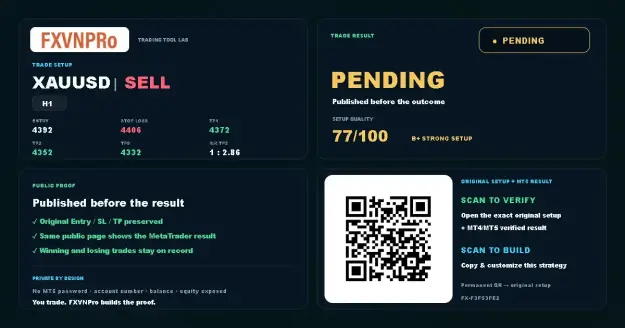 1 · SETUP
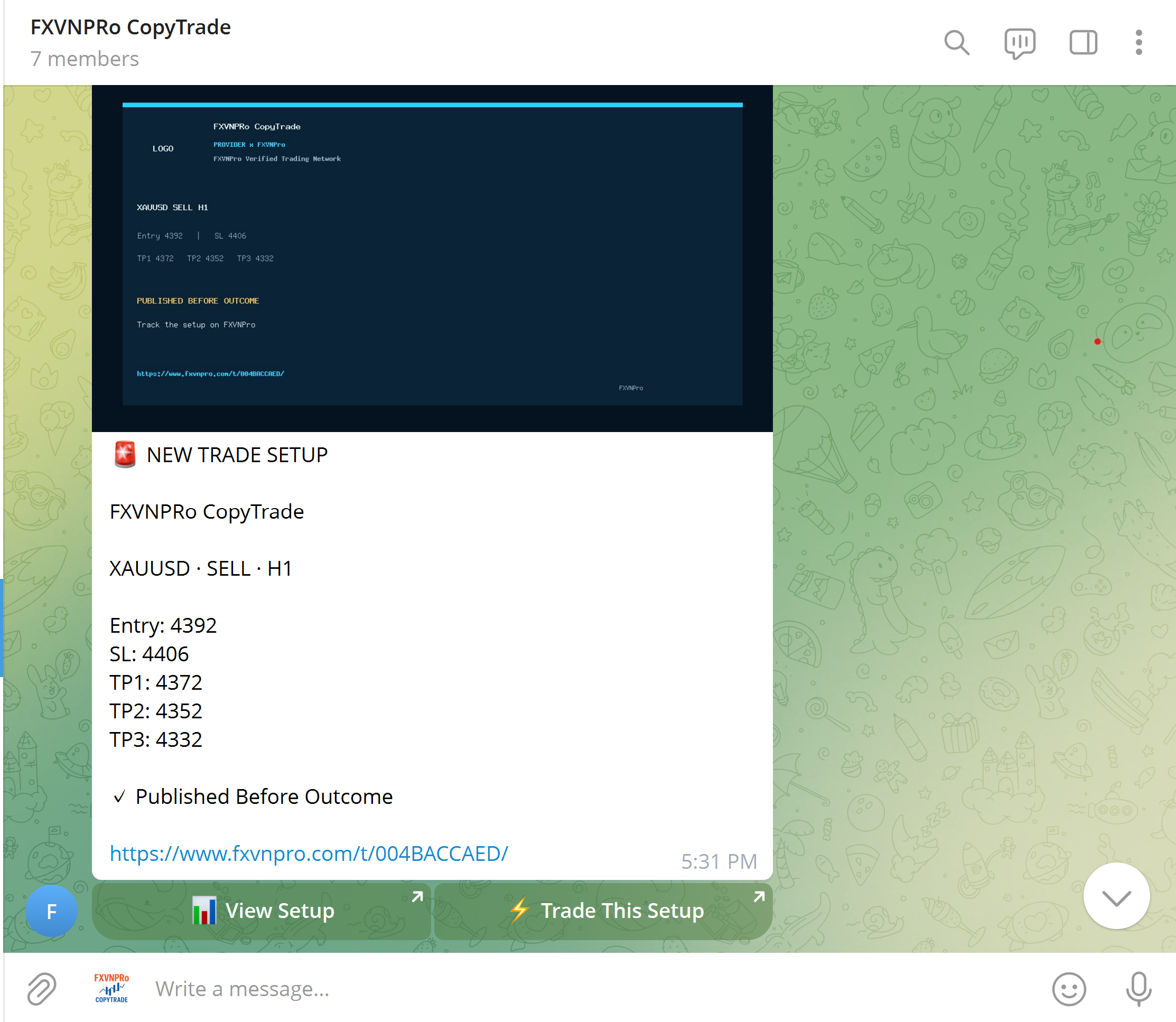 2 · TELEGRAM
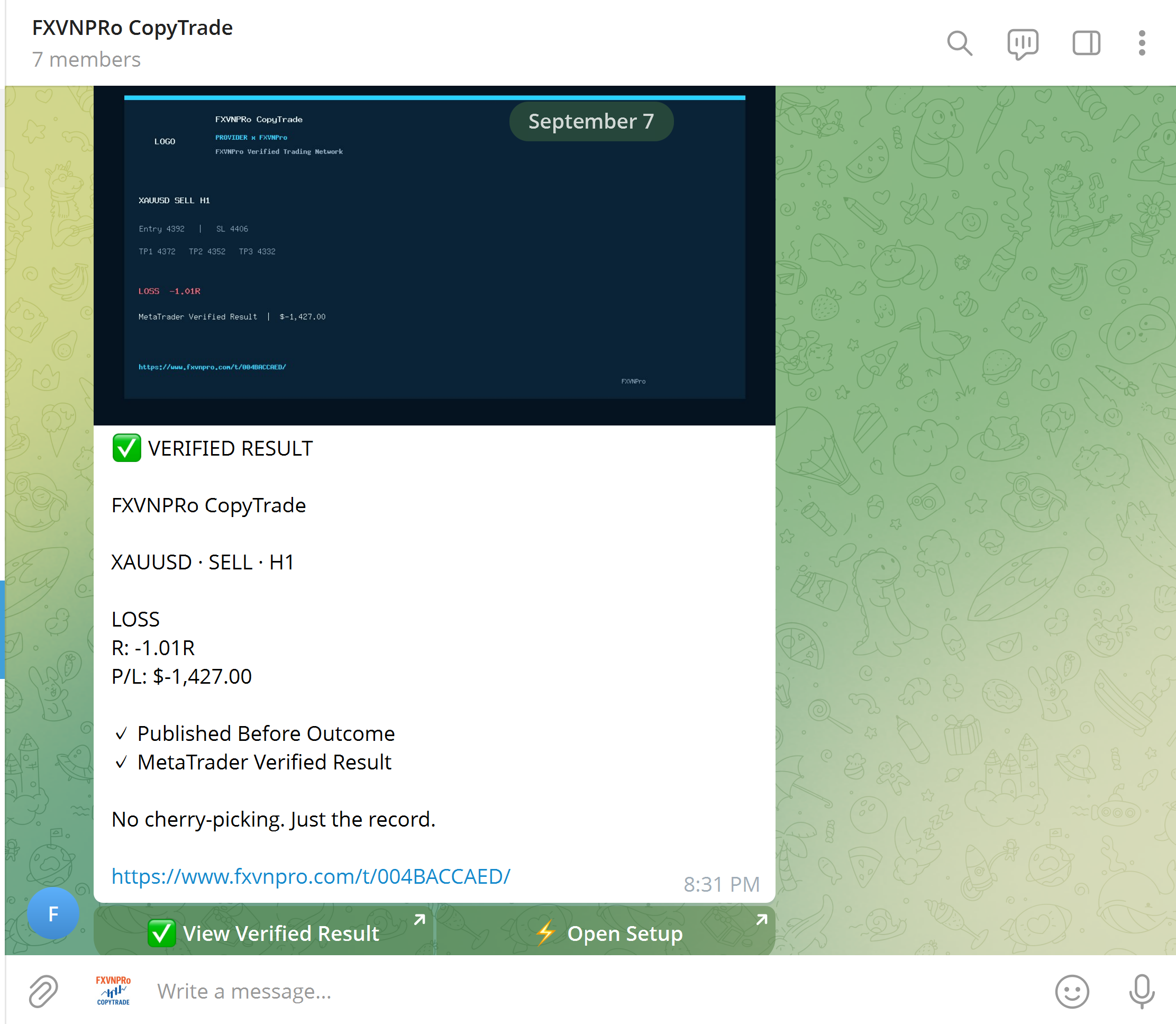 3 · VERIFIED
FXVNPro connects trade plans, Telegram trading communities and verified CopyTrade activity in one practical MT4/MT5 ecosystem.
Turn Entry, Stop Loss and Targets into a trade plan. Publish it before the outcome, then track and verify the result.
Turn Telegram signals into actionable MT4/MT5 setups. Signal Admins create the strategy while Members stay in control of risk.
Discover TRADERs, inspect verified trading history and performance, then decide who you want to follow across MT4 & MT5.
Build your strategy, distribute it to a community, or follow trading activity across MT4 & MT5.
Create Entry, Stop Loss and Targets before the outcome, then build a verified trading record.
Turn Telegram signals into an actionable workflow while followers keep control of their own risk.
Connect Chrome to MT4 or MT5 and open, modify or close trades from your browser.
Explore Masters and copy trading activity to your own MT4 or MT5 terminal with independent risk rules.