Plan a Trade
Build a trade plan and use practical trading tools before you act.
Trade IdeasRisk ToolsCalculators
BUILD A TRADE IDEA →
Start with your goal. You do not have to learn the FXVNPro architecture before using the tools.
Build an idea, use Telegram signals, trade from Chrome or follow a trader while technical setup stays in the background.
Technical connection details remain available inside each product when needed.
Plan trades, connect MT4 & MT5, review verified execution, explore traders and research brokers — without learning the whole platform first.
Build a trade plan and use practical trading tools before you act.
Use Browser Trading or turn supported Telegram signals into a structured trading workflow.
Explore CopyTrade TRADERs, review their records and choose your own risk settings.
Everything is still here — organized by what it helps you do.
Compare Exness and Just Markets by rating, regulation, minimum deposit, platforms, spreads, and overall trading conditions.
Use the FXVNPro Broker Checker Chrome extension to quickly review broker trust signals, ratings, and safety information while browsing broker websites.


| Feature | Exness | Just Markets |
|---|---|---|
| Rating | 7 | 6.5 |
| Minimum Deposit | $10 | $10 |
| Regulation | - | CySEC, FSA, FSCA, FSC |
| Platforms | MT4, MT5 | MT4, MT5 |
| Spread | From 0.0 pips | From 0.1 pips |
Below is a detailed breakdown of fees, spreads, regulation, platforms, and real trading suitability to help you decide which broker fits your trading style better.
If you’ve ever looked at a broker’s spread chart and thought, “Nice… but what does that mean for my account after a few weeks of trading?”—you’re asking the right question. In forex, the winner isn’t always the one with the lowest headline spread. It’s the broker whose overall trading costs and execution quality match the way you actually trade.
This is exactly why “Exness vs Just Markets” matters. Both offer MT4/MT5 and support deposits as low as $10. But the details diverge quickly: spreads starting from 0.0 pips at Exness versus from 0.1 pips at Just Markets, plus different regulatory coverage (or the lack of it) that affects trust and risk management. And for active traders, small differences compound—especially when you’re doing multiple trades per day and markets are moving fast.
Who should care most? If you scalp, trade news, or run an EA, you care about spreads and slippage. If you’re building momentum as a beginner, you care about friction: deposit/withdrawal reliability, platform stability, and how easy it is to not get overwhelmed by trading conditions. Either way, this comparison will focus on fees comparison, spreads and trading costs, regulation, and practical execution realities—because that’s what ultimately impacts your performance, not a marketing badge.
Let’s start where most traders feel it first: trading costs. Exness advertises spreads “from 0.0 pips.” Just Markets lists “from 0.1 pips.” On paper, that looks like Exness wins instantly. But in real trading conditions, the story depends on whether those minimums are typical or only appear under ideal liquidity (tight spreads during quiet hours) and whether spreads widen during volatility.
This matters because the cost of a trade isn’t just the spread—it’s spread plus how your orders get TRADEd when price moves. For example, if you place a quick breakout trade and execution is slightly delayed, the spread might not be your biggest enemy anymore. Slippage and requotes (or the lack of them) can quietly change the true cost of the same strategy.
Also watch for the “hidden” angles traders forget to model. Many brokers have commission structures, overnight financing differences, or account-type variations that change the effective fees comparison. You only provided a spread minimum and no commission numbers, so I can’t claim which broker is definitively cheaper across every account type. But I can tell you how to test it properly.
In real terms, do this: run both brokers on a demo or micro account, trade the same Connect (like EURUSD or GBPUSD) and compare your average cost per 100 trades. Track average spread at entry, plus the difference between expected and TRADEd price. If Exness is consistently tighter during your active trading windows, that 0.0 vs 0.1 can matter a lot. If Just Markets stays steadier during volatility, it can beat the other broker when it counts.
Now the uncomfortable part: regulation. You listed Exness regulation as “-” (not specified here), while Just Markets shows CySEC, FSA, FSCA, and FSC. That’s a meaningful difference in terms of oversight and investor protection frameworks—at least in the jurisdictions those regulators cover.
Why does this affect a trader’s decisions? Because forex isn’t just about winning trades. It’s also about operational risk: what happens if a broker faces enforcement actions, liquidity stress, or disputes over account handling. Regulated environments generally come with additional requirements around segregation of funds, reporting, complaint handling, and compliance expectations. Even if you never “need” those protections, the existence of supervision changes the risk profile.
Verification is also important. Traders sometimes assume “the broker exists so it’s fine.” But in real trading experience, the safest brokers tend to be the ones that are transparent about licensing and the correct entity name tied to your account. If you’re opening an account, you should verify the exact legal entity you’re trading with and what protections (if any) apply to your region.
So in the Exness vs Just Markets debate, safety isn’t about vibes—it’s about regulatory coverage and the credibility it brings. Without clear regulation details for Exness in the data you shared, I’d treat it as a bigger question mark for risk-averse traders. Just Markets has a stronger safety signal on paper, which matters if you’re planning to keep capital there long-term.
Both Exness and Just Markets offer MT4 and MT5. That’s good news, because it means you’re not locked into a proprietary platform. MT4 is still the workhorse for many EAs and custom indicators, while MT5 can be attractive for newer strategies and additional order types. In daily use, what matters more than the platform name is execution behavior and stability under stress.
When people say “execution speed,” they’re often talking about how quickly quotes reflect market changes and how consistent fills are during fast moves. In real trading conditions—say, around major data releases—this can show up as wider spreads, delayed fills, or less favorable entry prices. If you’re running a scalping method, those differences can be the difference between a small profit and a stop-out.
Another practical angle: chart usability and order management. MT4/MT5 are familiar, but some brokers have subtle differences in server response, minimum stop distances, and how hedging/netting works. For example, if you trade with multiple positions and manage risk manually, the platform’s responsiveness matters more than the “features” list.
For trading experience, I’d evaluate both brokers the same way: set up the same EA (or at least the same manual routine), trade the same sessions (London open, NY open, and a quieter mid-day window), and compare execution quality. Don’t just look at spreads on a screenshot—watch how the platform behaves when the market gets messy.
On deposits and withdrawals, both brokers show a minimum deposit of $10, which lowers the barrier to entry. That’s particularly relevant for beginners who want to start small while learning execution and risk management. But the “minimum deposit” number is only half the story. Real-world trading experience is mostly about friction: how long transfers take, what fees show up, and how predictable the process is when you’re actively trading.
In practice, delays can harm traders in two ways. First, if withdrawals are slow, you’re effectively tying up capital longer than you expected. Second, if a broker requires extra verification steps, it can interrupt momentum—especially for traders who start with a small live account and then move quickly as they improve.
So what should you look for? Check the availability of your preferred funding methods (cards, bank transfers, e-wallets) and whether withdrawal fees or minimum withdrawal amounts apply. Also pay attention to how verification works. If you deposit and then need to withdraw within days, you’ll quickly learn whether the broker smooths the process or makes you wait.
Since your data doesn’t specify withdrawal speed or fees for either broker, the best approach is to trial it: deposit a small amount, withdraw a smaller test amount, and observe the timeline. That’s not “paranoia”—it’s normal due diligence. In forex, the broker is part of your operating system. If the system is slow or unpredictable, it affects your risk management more than you’d think.
For beginners, the best broker is often the one that reduces surprises. Exness and Just Markets both use MT4/MT5, so the learning curve can be similar. The difference is how trading conditions feel once you start placing real orders—especially if you’re trading small sizes and trying to understand what affects your P/L.
Take the spread point again. Exness advertises spreads “from 0.0 pips.” If those ultra-tight conditions appear frequently during the sessions beginners tend to trade (often when they’re awake and actively watching charts), that could help beginners learn the mechanics without constantly feeling like the market is “taking” their profits at the spread level.
But beginners also benefit from regulatory clarity. Just Markets listing multiple regulators in your data provides a stronger safety signal for new traders who may not yet know how to verify the legal entity or understand compliance risk. This matters because beginners typically don’t have the experience to recognize operational red flags early.
Here’s a realistic scenario: a new trader opens a $10 account, trades EURUSD a few times a day, and gets frustrated when the spread widens during volatility. If that trader can’t easily track execution quality, they’ll blame themselves, even when costs are part of the problem. That’s why predictable trading conditions and transparent oversight matter.
If you’re brand new and want less uncertainty overall, Just Markets looks like the safer bet from a regulatory standpoint. Exness can still be fine for learning, but only if you’re comfortable doing extra due diligence on regulation and account conditions before committing meaningful capital.
Active traders don’t just care about “tight spreads.” They care about how those spreads behave during the exact moments they trade. A scalper might hold for seconds. A day trader might enter around session opens. Both are exposed to sudden spread widening and the execution quality of market orders.
Exness, with spreads from 0.0 pips, is appealing if you scalp or use strategies that rely on tight entry costs. In the best-case scenario, you get lower average cost per trade, which can improve the expectancy of strategies with small profit targets. But you also need to consider what happens when liquidity drops or volatility rises. If the spread minimum is only achieved briefly, the real advantage might be smaller than it looks.
Just Markets starts from 0.1 pips, which is not a huge difference. In a high-frequency strategy, though, 0.1 pips can add up across dozens or hundreds of trades per week. The counterpoint is stability: if Just Markets delivers more consistent spreads and cleaner execution (less widening and less chaotic fills), it can outperform Exness in practice even with a slightly higher minimum.
Execution speed and slippage become the deciding factors here. For example, during a fast-moving news release, a strategy that works in backtests can fail live if orders fill at worse prices than expected. That’s where you should compare both brokers under the same conditions—ideally in a live mini test or a demo with realistic settings.
My practical take: active traders should choose the broker that has the most consistent real trading costs during their actual sessions. If your sessions align with tight liquidity, Exness’s lower minimum spread could help. If your trading includes volatile moments and you value regulatory certainty, Just Markets has the stronger safety profile.
Here’s the trader’s reality: pros and cons aren’t theoretical. They show up when you’re down three trades in a row and you start checking whether costs and fills are working against you. If you’re paying more than you think, your strategy needs a higher hit rate just to break even.
If you forced me to pick “which broker is better” based on the information provided, I’d separate the decision by trader type.
For beginners: Just Markets edges ahead. The regulation coverage listed in your data provides more reassurance, and the platform environment (MT4/MT5) is standard enough to help you learn without fighting the interface. You may not get the absolute tightest spread minimum, but you’ll likely feel less uncertainty overall.
For active traders and scalpers focused purely on spreads: Exness has the stronger headline on spreads (from 0.0 pips). If those tight spreads appear frequently in your trading hours and execution is consistently solid, it can reduce the cost per trade. But you should verify the regulation status and the specific account entity before you scale up—this is not the place to be casual with operational risk.
For traders who care about safety first: Just Markets is the clearer choice because the regulatory signal is stronger in the data. Even if spreads aren’t the absolute lowest, the combination of competitive spreads and oversight can be worth it when you’re protecting capital.
Bottom line: Exness vs Just Markets isn’t just about a number on a spread table. It’s about how costs behave in the sessions you trade and how comfortable you are with the regulatory framework behind your account. Choose the broker that matches your risk tolerance and your trading style—then test the real costs with the same strategy before committing seriously.
One real XAUUSD trade: created before the outcome, sent to Telegram, TRADEd in MT5 and returned as a verified result.
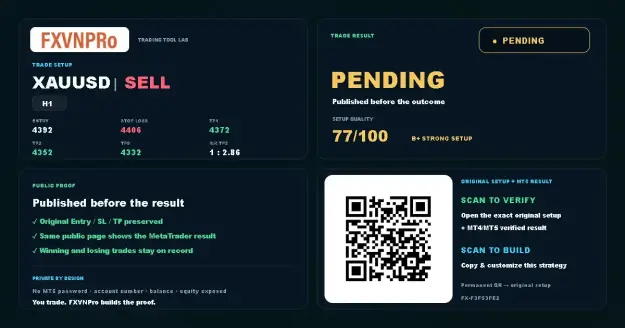 1 · SETUP
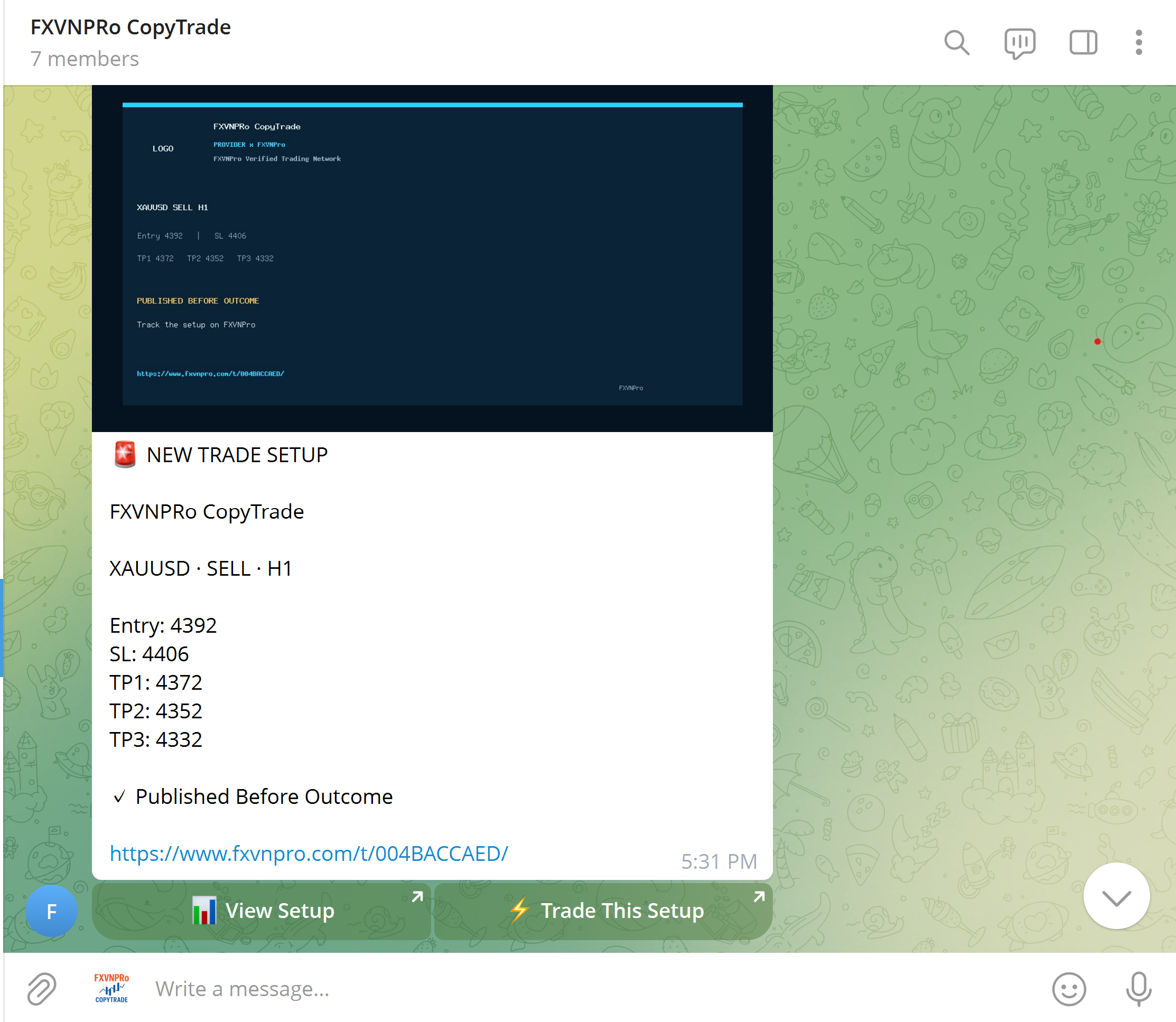 2 · TELEGRAM
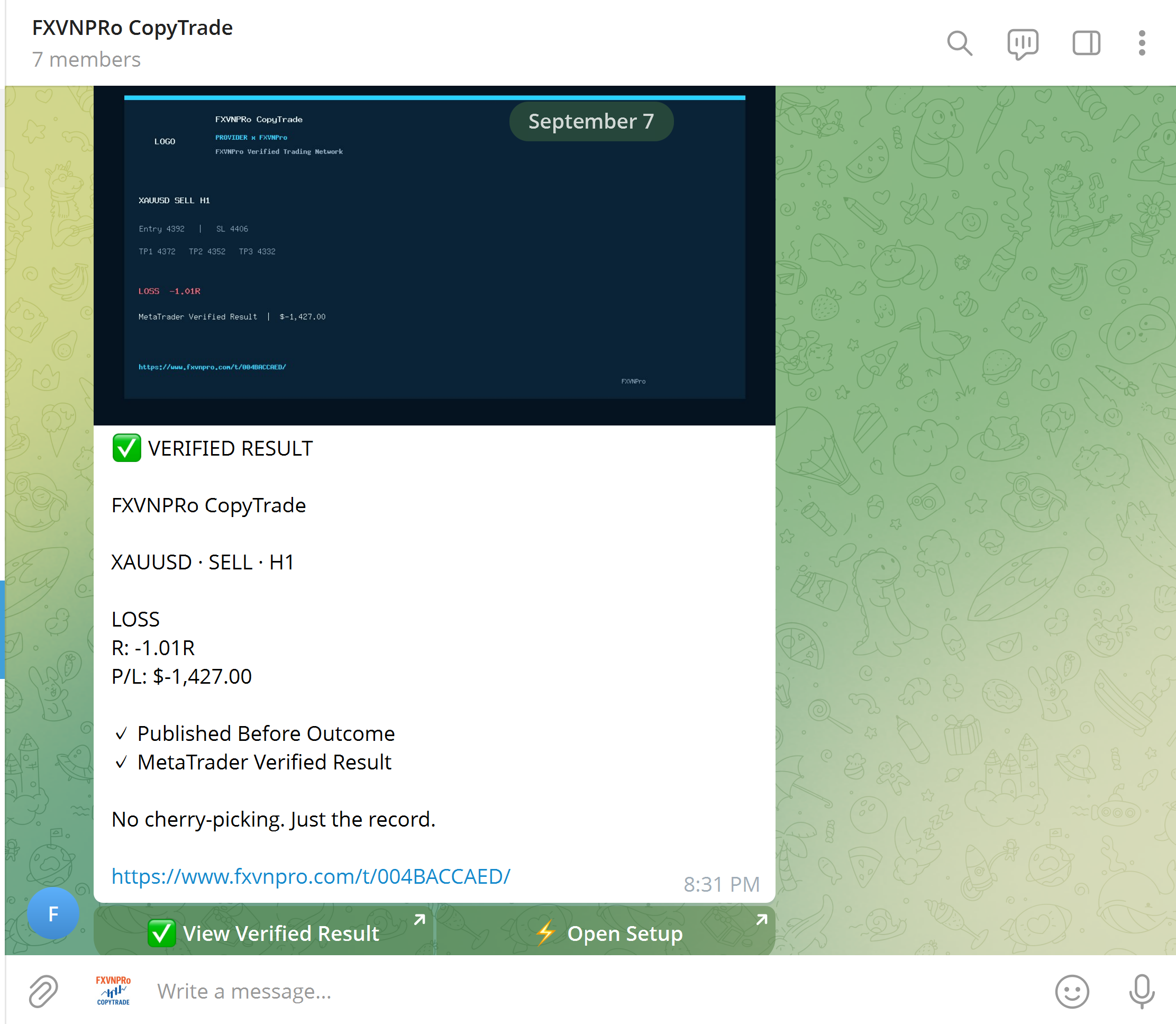 3 · VERIFIED
FXVNPro connects trade plans, Telegram trading communities and verified CopyTrade activity in one practical MT4/MT5 ecosystem.
Turn Entry, Stop Loss and Targets into a trade plan. Publish it before the outcome, then track and verify the result.
Turn Telegram signals into actionable MT4/MT5 setups. Signal Admins create the strategy while Members stay in control of risk.
Discover TRADERs, inspect verified trading history and performance, then decide who you want to follow across MT4 & MT5.
Build your strategy, distribute it to a community, or follow trading activity across MT4 & MT5.
Create Entry, Stop Loss and Targets before the outcome, then build a verified trading record.
Turn Telegram signals into an actionable workflow while followers keep control of their own risk.
Connect Chrome to MT4 or MT5 and open, modify or close trades from your browser.
Explore Masters and copy trading activity to your own MT4 or MT5 terminal with independent risk rules.