Plan a Trade
Build a structured setup and use practical trading tools before you act.
Trade IdeasRisk ToolsCalculators
BUILD A TRADE IDEA →
Plan trades, connect MT4 & MT5, review verified execution, explore traders and research brokers — without learning the whole platform first.
Build a structured setup and use practical trading tools before you act.
Use Browser Trading or turn supported Telegram signals into a structured trading workflow.
Explore CopyTrade Masters, review their records and choose your own risk settings.
Compare FP Markets and Just Markets by rating, regulation, minimum deposit, platforms, spreads, and overall trading conditions.
Use the FXVNPro Broker Checker Chrome extension to quickly review broker trust signals, ratings, and safety information while browsing broker websites.


| Feature | FP Markets | Just Markets |
|---|---|---|
| Rating | 6.7 | 6.5 |
| Minimum Deposit | $100 AUD | $10 |
| Regulation | ASIC, CySEC | CySEC, FSA, FSCA, FSC |
| Platforms | MT4, MT5, cTrader | MT4, MT5 |
| Spread | From 0.0 pips | From 0.1 pips |
Below is a detailed breakdown of fees, spreads, regulation, platforms, and real trading suitability to help you decide which broker fits your trading style better.
If you’ve traded long enough, you already know the punchline: forex doesn’t punish big mistakes only—it punishes small frictions. A few extra tenths on spreads. A commission you didn’t fully account for. A withdrawal that takes “a bit longer than expected.” Those things don’t sound dramatic… until you scale size, trade frequently, or run a tight strategy where timing is everything.
This FP Markets vs Just Markets comparison is for traders who actually look at trading costs and execution conditions, not just marketing ratings. You might be choosing between brokers for MetaTrader builds, scalping sessions, or simply because you want cleaner spreads and sensible account requirements.
Quick snapshot? FP Markets has a higher “minimum deposit comfort” at $100 AUD and a platform lineup that includes cTrader alongside MT4/MT5. Just Markets is cheaper to start at $10, with spreads advertised from 0.1 pips and a wider list of entities under regulation. Both offer MT4 and MT5, and both operate under well-known licensing frameworks (though the exact entity matters for where you’re protected).
So which broker is better? The honest answer depends on your style: cost sensitivity, platform preference, and how much you value account funding friction. Let’s get into the stuff that hits your account balance.
When traders say “spreads matter,” they’re not wrong—but they often stop there. In real trading conditions, the cost picture is a mix of spreads and how the broker’s pricing behaves across the day: during London and NY overlaps, around news, and in less liquid hours.
FP Markets advertises spreads from 0.0 pips. That sounds like the kind of number you want for scalping, but here’s the practical angle: spreads rarely sit at the minimum all day. You’ll typically see the best pricing when liquidity is strong, and the “from” number is only guaranteed under certain conditions. Still, if you trade EAs or run fast entries, that low starting spread can help offset other costs you can’t fully control, like occasional slippage.
Just Markets advertises spreads from 0.1 pips. That difference looks small on paper, but let’s translate it. Suppose you’re trading a strategy that opens and closes 50 times a week. If the average spread difference is even 0.1 pips and you’re in a meaningful lot size, the gap adds up fast. This matters because consistency beats occasional “best spread” moments.
Now, hidden costs. Many brokers that show attractive spreads still have the other side of the coin—commission structures, financing/rollover adjustments, or inactivity terms depending on account type. Without the full fee schedule in front of us, you should treat “spread from X pips” as only half the fees comparison. Look for any commission (if applicable), weekend pricing behavior, and whether swaps/rollover are competitive for the instruments you actually hold.
In real scenarios, I’ve seen traders pick the broker with the nicer headline spread, then lose more money to the version of costs they didn’t calculate—especially when trading during volatile news. If you rely on tight stop-loss distances, that matters even more.
Regulation isn’t just a logo on a website. It affects how seriously the broker is expected to treat client funds, how complaints are handled, and how oversight works when something goes wrong. For traders, the goal is simple: reduce the probability that you’re stuck fighting for your money while markets move.
FP Markets is regulated by ASIC and CySEC. ASIC is generally viewed as strict on financial conduct in Australia, and CySEC is a major European regulator. In practice, dual oversight can mean more robust compliance expectations. That tends to matter for execution standards, disclosure, and operational discipline.
Just Markets lists regulation under CySEC, FSA, FSCA, and FSC. This looks broader, and on paper it can be a positive sign—more jurisdictional coverage can mean more layers of accountability. But here’s the nuance that matters: in forex, “which entity you are actually trading with” is the difference between being protected and thinking you are protected. Brokers sometimes operate under multiple brand or legal structures. The client protections can vary by entity even when the name looks the same.
This matters because verification isn’t optional. Before funding, confirm the regulated entity on your account documentation, check the license number, and verify the scope. Ask yourself: if I had to file a complaint, which regulator would actually handle it?
In real trading, the “safety” question only becomes urgent when volatility hits and something feels off—withdrawal delays, unusual execution behavior, or a platform outage. Regulation won’t eliminate all risks, but it changes what happens next.
From a risk-management standpoint, both brokers are operating under recognizable frameworks. The safer move is to confirm the exact licensing entity relevant to your region and account, then judge trust level accordingly.
Platforms are where “broker choice” becomes real. A lot of traders say they use MT4/MT5 and stop there—but the difference between a broker that feels smooth and one that feels clunky shows up in your workflow: order placement, chart responsiveness, and how reliable the connection feels when the market gets active.
FP Markets offers MT4, MT5, and cTrader. That’s a meaningful advantage if you like modern order handling, cleaner depth-of-market views, or a different charting workflow. cTrader also often appeals to traders who care about execution transparency and want a UI that feels less “legacy.” If you’ve ever run a high-frequency strategy, you know that platform friction can cost time—and time is money.
Just Markets offers MT4 and MT5 only. For most traders, that’s still plenty. MT4 remains the choice for countless EAs and indicator ecosystems, while MT5 is useful if you want more order types and a more modern platform architecture.
Execution speed and slippage are the parts you can’t fully see until you test in live conditions. In real trading conditions, the broker’s server location, the quality of their liquidity routing, and how they handle market volatility all affect slippage. If you’ve ever placed a stop during a news spike and watched your stop fill at a worse price than expected, you already know why this matters.
So which platform setup fits which trader? If you’re comfortable in MT4/MT5 and you want a lower minimum deposit, Just Markets can be fine. If you’re platform-flexible and you value cTrader as a serious tool (not a gimmick), FP Markets has the edge.
My rule of thumb: pick the broker whose platform you’ll actually use every day without fighting it.
Deposit and withdrawal experience is one of those “silent” factors that most traders ignore—until they need it. Imagine you’ve just hit a good run, then you decide to withdraw to manage risk. Or worse: you lose a position, decide to add margin protection, and the funds you expected aren’t there yet.
FP Markets lists a minimum deposit of $100 AUD. That’s not outrageous, but it does create a higher initial commitment. For traders starting from scratch, that minimum can feel like a barrier. For experienced traders, it’s usually manageable, and they often prefer having a deposit large enough to avoid constant funding cycles.
Just Markets has a minimum deposit of $10. For beginners and casual traders, that’s a big deal because it reduces friction. You can experiment with strategies, test execution conditions, and learn platform mechanics without tying up more capital than you’re comfortable with.
Now, about withdrawal speed and fees: we don’t have specific transaction fee schedules or exact processing times here, so I won’t pretend. But here’s what matters in practice. Look for: withdrawal methods available in your country, minimum withdrawal amounts, whether third-party payment providers add fees, and how long “processing” takes versus “completion” at your bank.
In real trading life, delays become more painful when the broker limits withdrawals during certain account statuses or when you’re trying to move quickly around rollover or news risk. So, if withdrawals are part of your routine, prioritize a broker that makes funding and withdrawing feel boring and predictable.
On deposit friction alone, Just Markets looks friendlier. On commitment stability, FP Markets is more “serious-trader” friendly simply because you can’t start too small.
Beginners often focus on spreads and regulation (good instincts), but they miss the bigger daily question: “Will the broker feel easy when I’m still learning?” Trading is already mentally demanding. If your broker setup adds confusion—too many account types, unclear costs, platform quirks—it can slow your learning curve.
Just Markets wins on entry cost. A $10 minimum deposit lowers the barrier to trying MT4/MT5, learning order placement, and testing how spreads behave on the instruments you actually watch. In real terms, this matters because beginners need reps. You want to make mistakes in smaller size while you learn discipline, not because you enjoy losing, but because it’s part of building process.
FP Markets asks for $100 AUD minimum. That can be totally fine for someone with a funded trading plan, but for a true beginner, it may feel like too much to risk while they’re still figuring out stop-loss placement, position sizing, and how spreads move during the day.
Both brokers offer MT4 and MT5, so the platform learning curve is similar if you choose one of those. However, FP Markets’ extra cTrader option might help some beginners who dislike MT4’s older vibe. Still, if a beginner is already overwhelmed, adding another platform option can be more distraction than help.
Which is better for a first broker? If you’re starting small and you want low friction to begin, Just Markets is the practical pick. If you’re starting with a more committed budget and you like platform variety, FP Markets can be smoother long-term.
Active traders live and die by execution quality. It’s not romantic. It’s spreads at the moment of entry, slippage when volatility spikes, and how consistent pricing remains when your strategy is placing lots of orders.
FP Markets advertises spreads from 0.0 pips and offers cTrader in addition to MT4/MT5. If you scalp, run fast mean reversion, or execute high-frequency entries, those are real advantages. Why? Because you’re paying spread repeatedly, and you want the broker to keep pricing competitive during London/NY sessions—the times when liquidity is best and your strategy actually has an edge.
Just Markets advertises spreads from 0.1 pips and supports MT4/MT5 only. That isn’t automatically a deal-breaker. Many day traders are perfectly happy with 0.1 pip starting spreads if the execution is stable and slippage isn’t excessive. But the cost difference tends to show up faster when trade frequency increases.
For example, if you’re a day trader placing 100 trades a month, a consistent spread advantage—even small—can become a measurable part of your monthly results. And if you’re running an EA, the difference shows up as “how often did price move against me between signal and fill?”
Also consider platform features for active trading. cTrader can be helpful if you like fast order modifications, clean interface workflows, or depth visibility. MT4 is still excellent for EAs, but you’ll often rely on broker execution quality more than platform bells and whistles.
If you’re a high-volume trader who cares about minimizing repeated cost, FP Markets is the more compelling choice based on the spreads headline and the platform ecosystem. If you’re active but you value lower account entry and you’re confident in MT4/MT5 execution, Just Markets can still work—just monitor slippage during high-impact news and overlap hours.
FP Markets pros: spreads advertised from 0.0 pips; platform choice includes cTrader; regulated by ASIC and CySEC (with the usual caveat of checking the exact entity).
FP Markets cons: higher minimum deposit ($100 AUD) may be annoying for beginners; as always, “from” spreads depend on market conditions.
Just Markets pros: very low minimum deposit ($10 AUD); spreads advertised from 0.1 pips; multiple regulators listed (CySEC, FSA, FSCA, FSC) but confirm the specific legal entity behind your account.
Just Markets cons: no cTrader offering listed; starting spread is slightly higher (which can matter more for scalpers/day traders); cost comparison needs a full fees review beyond the headline spread.
If you’re wondering which broker is better for trading experience, I’d frame it like this: FP Markets feels more “serious execution and platform flexibility,” while Just Markets feels more “easy entry and lower friction.” Neither is universally best, but your style decides which matters more.
If you force me to pick based on trader reality—not vibes—here’s the clear split for FP Markets vs Just Markets.
Choose FP Markets if: you’re active (day trading or scalping), you want the potential for tighter spreads (from 0.0 pips), and you value platform flexibility with cTrader alongside MT4/MT5. The higher $100 AUD minimum deposit is a fair trade if you’re serious and plan to keep trading rather than constantly re-funding.
Choose Just Markets if: you’re a beginner or you want to start small, learn the mechanics, and test execution without committing $100 AUD upfront. The $10 minimum deposit is genuinely helpful, and if your strategy works well on MT4/MT5 and slippage stays reasonable, the slightly higher starting spread (from 0.1 pips) may be acceptable.
For which broker is better overall? I’d lean FP Markets for traders who care most about spreads and execution consistency over time, especially if they’ll put volume on the account. I’d lean Just Markets for traders who need an easier on-ramp and prefer MT4/MT5 while keeping initial risk low.
Before you open either account, do one thing that most people skip: confirm the exact regulated entity for your region, then check the full fees/commission and trading-cost details for the instruments you trade. That’s where the “which broker is better” question stops being theoretical—and becomes a decision you can stand behind.
One real XAUUSD trade: created before the outcome, sent to Telegram, executed in MT5 and returned as a verified result.
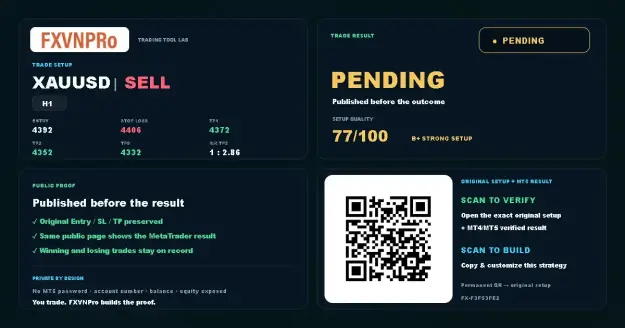 1 · SETUP
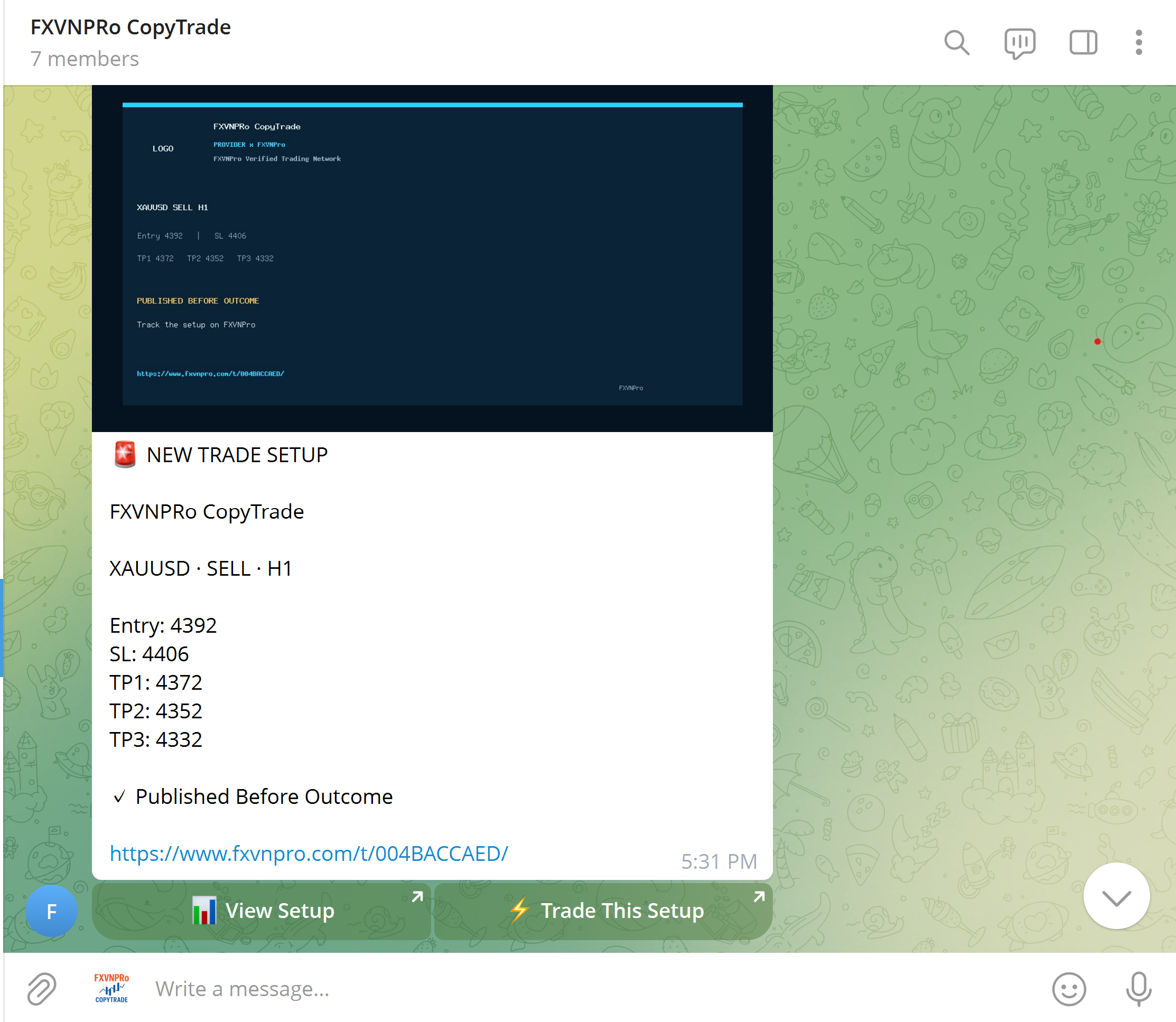 2 · TELEGRAM
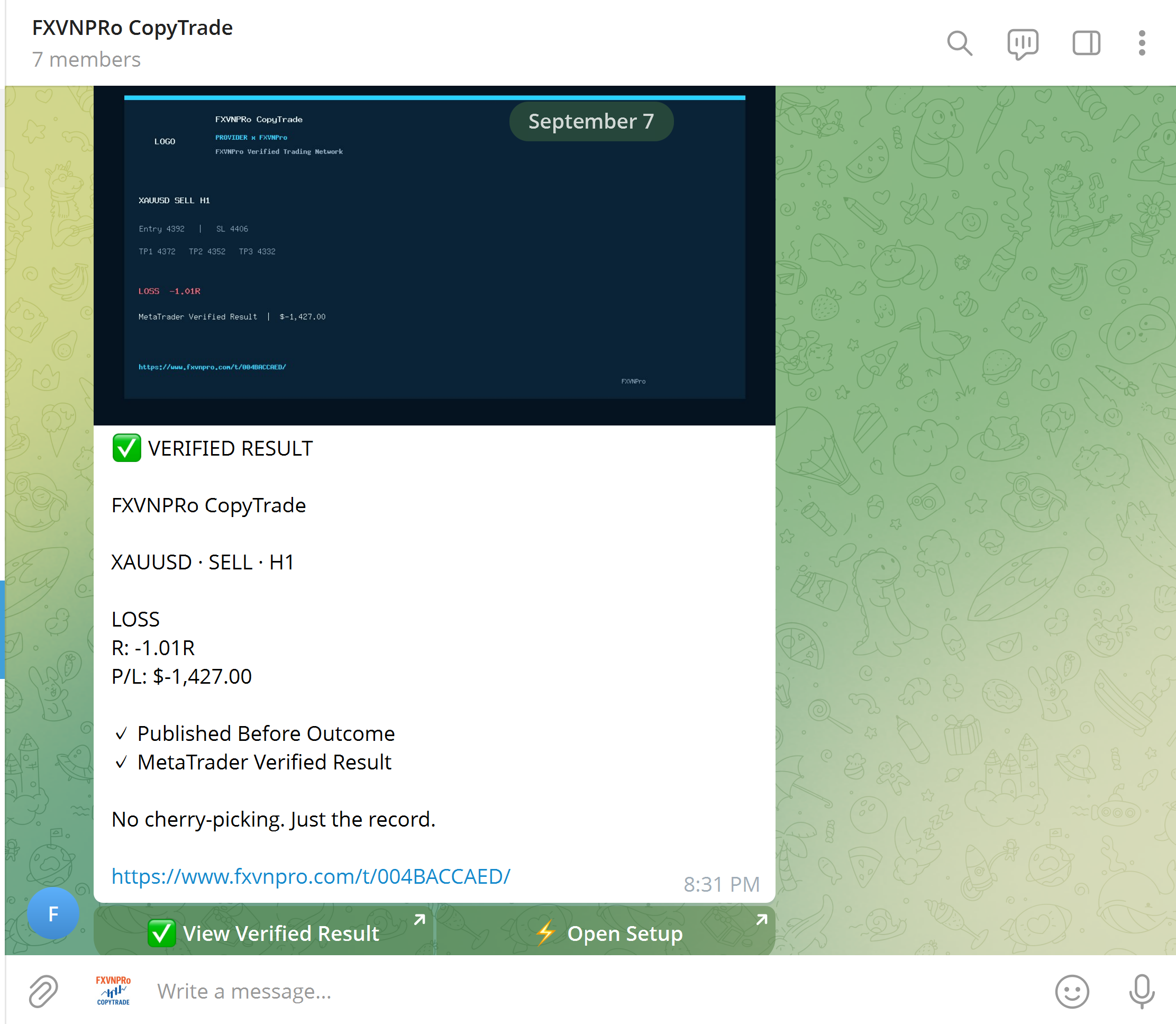 3 · VERIFIED
Build your strategy, distribute it to a community, or follow trading activity across MT4 & MT5.
Create Entry, Stop Loss and Targets before the outcome, then build a verified trading record.
Turn Telegram signals into an actionable workflow while followers keep control of their own risk.
Connect Chrome to MT4 or MT5 and open, modify or close trades from your browser.
Explore Masters and copy trading activity to your own MT4 or MT5 terminal with independent risk rules.