Plan a Trade
Build a trade plan and use practical trading tools before you act.
Trade IdeasRisk ToolsCalculators
BUILD A TRADE IDEA →
Start with your goal. You do not have to learn the FXVNPro architecture before using the tools.
Build an idea, use Telegram signals, trade from Chrome or follow a trader while technical setup stays in the background.
Technical connection details remain available inside each product when needed.
Plan trades, connect MT4 & MT5, review verified execution, explore traders and research brokers — without learning the whole platform first.
Build a trade plan and use practical trading tools before you act.
Use Browser Trading or turn supported Telegram signals into a structured trading workflow.
Explore CopyTrade TRADERs, review their records and choose your own risk settings.
Everything is still here — organized by what it helps you do.
Compare FP Markets and Titan FX by rating, regulation, minimum deposit, platforms, spreads, and overall trading conditions.
Use the FXVNPro Broker Checker Chrome extension to quickly review broker trust signals, ratings, and safety information while browsing broker websites.


| Feature | FP Markets | Titan FX |
|---|---|---|
| Rating | 6.7 | 6.3 |
| Minimum Deposit | $100 AUD | $50 |
| Regulation | ASIC, CySEC | VFSC, FSA, FSC |
| Platforms | MT4, MT5, cTrader | MT4, MT5 |
| Spread | From 0.0 pips | From 0.1 pips |
Below is a detailed breakdown of fees, spreads, regulation, platforms, and real trading suitability to help you decide which broker fits your trading style better.
If you’ve ever watched a trade go your way, only to see the price “stutter” on entry or the spread widen right when you’re trying to get filled, you already know why broker choice isn’t a box-ticking exercise. It’s not just about pretty platforms or a low headline spread. It’s about the money you quietly lose through trading costs, execution conditions, and the friction around deposits and withdrawals.
This comparison—FP Markets vs Titan FX—breaks down the differences that matter for day-to-day trading. We’re talking about fees comparison, spreads and trading costs, execution speed and slippage realities, and how regulation affects risk in the background. If you’re trading forex, you already live in a world of small edges. So even “tiny” cost differences can compound fast.
Quick snapshot: FP Markets (ASIC, CySEC; MT4/MT5/cTrader; spreads from 0.0 pips; min deposit $100 AUD) tends to appeal to traders who want platform flexibility and tighter headline spreads. Titan FX (VFSC, FSA, FSC; MT4/MT5; spreads from 0.1 pips; min deposit $50) can be more approachable on deposit size and may suit certain traders who prioritize simpler platform access.
But which broker is better for you? The answer depends on how you trade—scalping, swing trading, or just getting started with small risk. Let’s get practical.
Let’s start where it hurts most: costs. On paper, FP Markets has “from 0.0 pips” spreads, while Titan FX lists “from 0.1 pips.” That difference looks small, but in real trading conditions it affects outcomes depending on your strategy and time in the market.
Here’s the practical way I think about it: spreads aren’t static. During active liquidity windows (London open overlap, US news), spreads often tighten; outside those windows they can widen. So the real question isn’t the best-case spread—it's what you experience during your typical session.
Example scenario: imagine you run a day-trading strategy on EUR/USD with 0.5–1.0 pip targets and multiple entries per day. If your average spread at execution is even 0.3–0.5 pips higher than expected, that can turn a “barely profitable” plan into a losing one. Now add commission (if your account type uses one) and any swap/overnight charges depending on your holding time. That’s where brokers with lower headline spreads often show up as cheaper, even if the difference seems minor.
Hidden fees are another area people miss. Some brokers have non-trading costs like withdrawal fees, inactivity charges, or less favorable conversion rates. Even if those aren’t in the headline numbers, they matter if you scale up or trade monthly.
So which is cheaper in real scenarios? Based on spread positioning alone, FP Markets has the edge for traders who can capture tight spreads consistently. Titan FX can still be cost-effective, but the “from 0.1 pips” starting point suggests you may pay a touch more in spread-heavy scalping and high-frequency trading—especially when your edge is measured in pips.
Regulation isn’t a marketing accessory—it’s part of your risk stack. When traders say “safety,” they’re usually thinking about two things: how funds are handled and what happens if the broker runs into trouble. In practice, that comes down to regulator oversight, reporting standards, and enforcement.
FP Markets is regulated by ASIC and CySEC. ASIC is known for strict financial conduct expectations, and CySEC has meaningful oversight standards for entities under its jurisdiction. This doesn’t eliminate risk (nothing does), but it typically means more structured compliance processes and clearer expectations around conduct and client treatment.
Titan FX is regulated by VFSC, FSA, and FSC. That regulatory footprint can look respectable, but it’s generally perceived differently by traders in terms of investor protection expectations and the “comfort level” many seek. In real trading terms, what matters is how confidently you believe disputes, account handling issues, and operational problems would be handled under that structure.
Verification importance is huge. Before depositing, traders should confirm the exact entity they’re dealing with, because broker groups sometimes operate through multiple legal entities. If you’re serious, don’t stop at the regulator logos—verify the registration details and client fund policies in the broker’s official documentation.
So, which broker is safer? If your priority is stronger, more recognizable oversight, FP Markets has the advantage. Titan FX may still be workable for many traders, but if you’re asking which broker is better from a “regulation confidence” standpoint, FP Markets edges it.
Platforms are where you feel the broker. FP Markets supports MT4, MT5, and cTrader, while Titan FX offers MT4 and MT5. If you’ve ever used cTrader for order management and charting workflow, you’ll know why some traders prefer it—especially when managing multiple positions and wanting a clean interface for execution.
Execution speed and “feel” are hard to measure without your own testing. But traders can still infer patterns. MT4 and MT5 are robust and widely supported, and most brokers can run them smoothly. The difference tends to show in how reliably orders are filled during fast markets, how the platform handles requotes (or avoids them), and how consistent the price feed feels when volatility spikes.
For example, suppose you’re trading breakouts around session opens. You’re not just entering—you’re adjusting stop-loss placement quickly, sometimes across several orders. If the platform lags, the chart updates slowly, or you get frequent slippage that doesn’t match your expectations, your strategy gets stressed.
Tools also matter. With cTrader available at FP Markets, you get another route for advanced order types and a different workflow. That can reduce friction for traders who hate clicking through layers. Titan FX’s MT4/MT5 focus is fine, but you’re effectively committing to those environments.
Execution speed, slippage, and platform responsiveness are where real trading experience shows up. In that sense, FP Markets is the more flexible option because you’re not limited to just one ecosystem.
Minimum deposit is one thing, but it’s rarely the whole story. Deposits and withdrawals affect how quickly you can fund your account, test conditions, and stay consistent with your trading plan.
FP Markets lists a minimum deposit of $100 AUD, while Titan FX is lower at $50. If you’re starting small, Titan FX’s lower threshold can feel less risky—because your first test deposit can be smaller. That matters if you want to try different Connects, compare spreads and execution, and run a short “real money” trial without tying up too much capital.
But let’s be honest: withdrawal experience is what many traders only find out about after they’ve had a few winners. If withdrawals are slow, require extra verification, or involve unclear fees, it changes how you manage risk and position sizing. You don’t want uncertainty around getting profits out when you’re trading a volatile market.
In real-world trading, I also watch for conversion friction. If you deposit in one currency and trade in another, spreads on FX conversion and internal processing can slightly alter the effective cost of trading. Even small conversion differences matter when your strategy relies on consistent execution.
So where does each broker lean? Titan FX is easier to access for smaller accounts due to the $50 minimum. FP Markets may require more upfront commitment, but it’s often the type of broker traders stay with once they’re confident in execution and platform fit.
If you’re the type who wants to test first and deposit later, Titan FX can reduce initial friction. If you’re planning to scale, FP Markets is the smoother long-run bet.
Beginners don’t struggle with “platform features.” They struggle with understanding costs, handling emotions, and not getting derailed by execution surprises. So the better beginner choice is usually the one that offers a straightforward path to learn without nasty friction.
Titan FX’s lower minimum deposit ($50) is a real advantage for beginners. It lets you start smaller, practice position sizing, and learn what spreads look like across your chosen Connects. If your first goal is to build discipline—entering with a plan, placing stops correctly, not overtrading—then starting with less money reduces the pressure that can lead to mistakes.
FP Markets offers more platform variety (MT4, MT5, cTrader) and can show spreads from 0.0 pips. For a beginner, that headline spread may be exciting, but beginners should focus on the average execution they actually get. In volatile moments, spreads can widen for anyone. The learning curve is understanding that reality, not chasing the best-case print.
Regulation comfort also matters for beginners. If you’re new, you want confidence that your account is handled under solid oversight. FP Markets’ ASIC and CySEC footprint generally provides more comfort than multiple offshore-style regulators, even if those regulators can still be legitimate.
So which broker is better for beginners? If you’re purely optimizing for “lowest barrier to start,” Titan FX wins with the $50 minimum. If you’re optimizing for “start small but feel safer,” FP Markets is the stronger long-term learning environment.
This is where “from X pips” becomes less theoretical. Active traders live and die by spreads, execution consistency, and the broker’s behavior during fast price movement. You’re not holding positions for weeks while the market does its thing—you’re reacting. Often quickly. Often repeatedly.
FP Markets starts from 0.0 pips spread (headline), and it also gives you cTrader access. For scalpers and day traders, that matters because any micro-friction can break an otherwise valid edge. If your strategy uses tight stops and targets, a spread that’s sometimes higher than expected can turn your win rate into a slow bleed.
Titan FX starts from 0.1 pips and limits you to MT4 and MT5. That’s not automatically bad—plenty of active traders use MT4/MT5 successfully. But your cost baseline may be slightly higher, particularly when trading during times when spreads are wider anyway.
Now consider execution speed and slippage. Even with good connectivity, fast markets can produce slippage. The key is whether slippage is random and manageable—or consistently worse than what you planned for. Active traders should test both brokers during the exact sessions they trade: London open, New York open, and major news windows if your strategy touches them.
For high-volume traders, platform stability and order management matter just as much as raw spreads. cTrader at FP Markets gives another workflow option, which can help with order handling when you’re managing multiple positions and adjusting stops.
If I have to pick for active traders on the information given, FP Markets is the more competitive option—mainly due to tighter headline spread positioning and broader platform choice.
This isn’t about which brand sounds better. It’s about which trade-offs fit your style. Do you scalp and need the tightest costs? Or do you trade less frequently and care more about low friction to begin?
If your main focus is fees comparison and spreads and trading costs—especially for day trading or scalping—then FP Markets vs Titan FX tilts toward FP Markets. The combination of tighter headline spreads (from 0.0 pips) and extra platform flexibility (MT4/MT5/cTrader) gives active traders more room to optimize execution and reduce friction.
If you’re asking “which broker is better” for someone who wants to start with less money and test the waters, Titan FX has the clear advantage on the minimum deposit ($50). For beginners and smaller accounts, that lower barrier can reduce pressure and make it easier to run a controlled learning phase.
Regulation is the deciding factor for many professionals. If you want the stronger oversight confidence, FP Markets is the better call thanks to ASIC and CySEC. Titan FX may still be tradable and may work fine for many traders, but if you’re choosing where to park longer-term capital, FP Markets is the safer-feeling option.
My recommendation, in plain terms:
Whatever you pick, do one thing before going “all in”: test both brokers during your usual trading hours and track the average spread and real fills. That’s the only way to turn “headline numbers” into a decision you can stand behind.
One real XAUUSD trade: created before the outcome, sent to Telegram, TRADEd in MT5 and returned as a verified result.
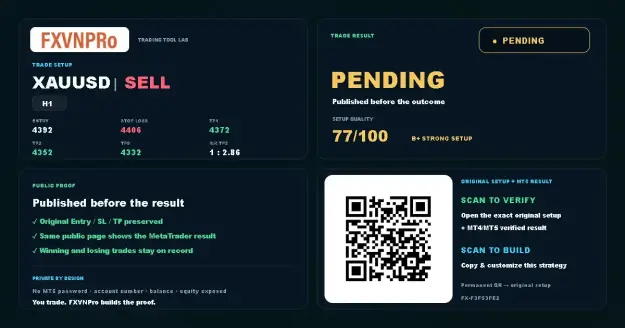 1 · SETUP
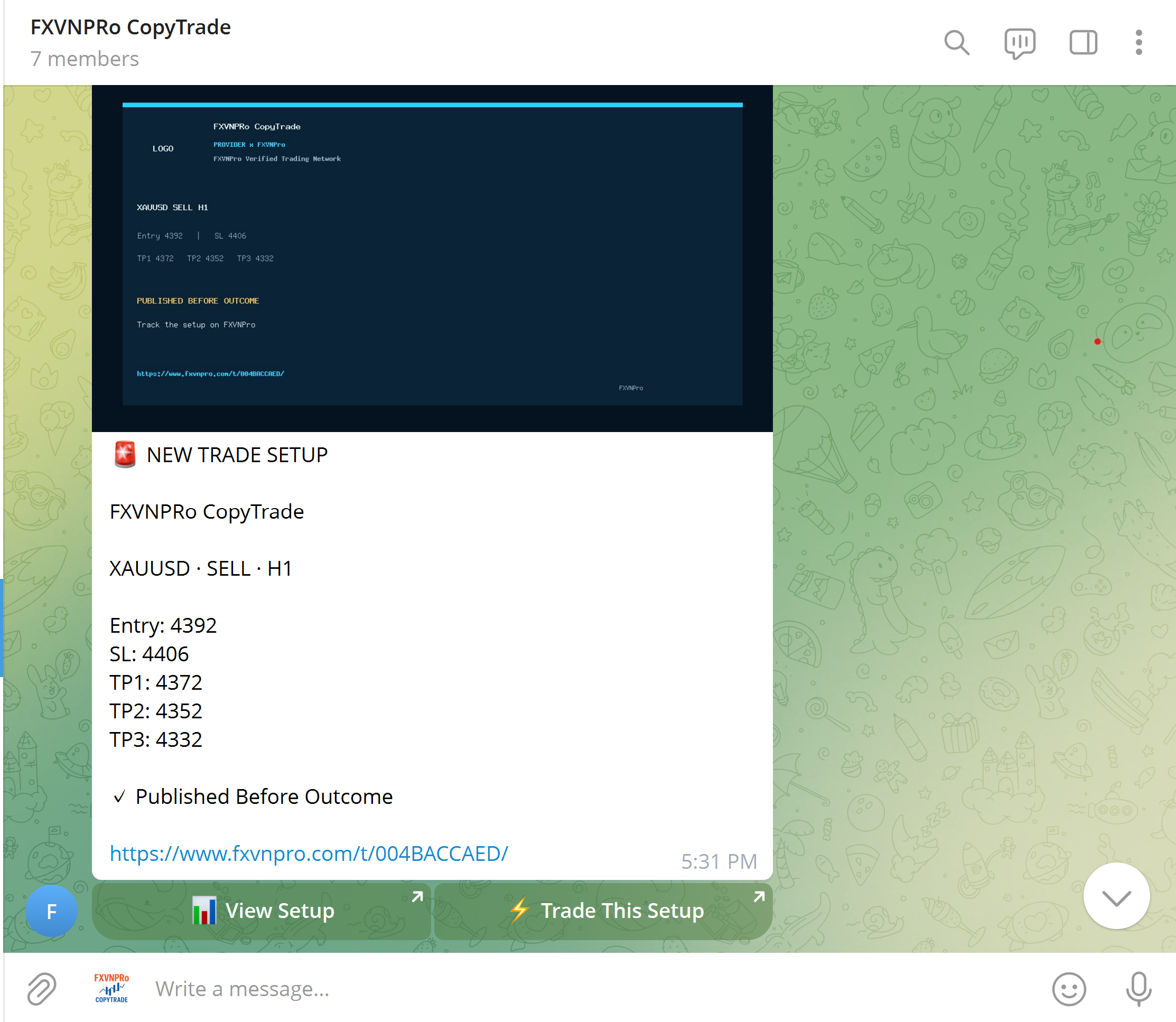 2 · TELEGRAM
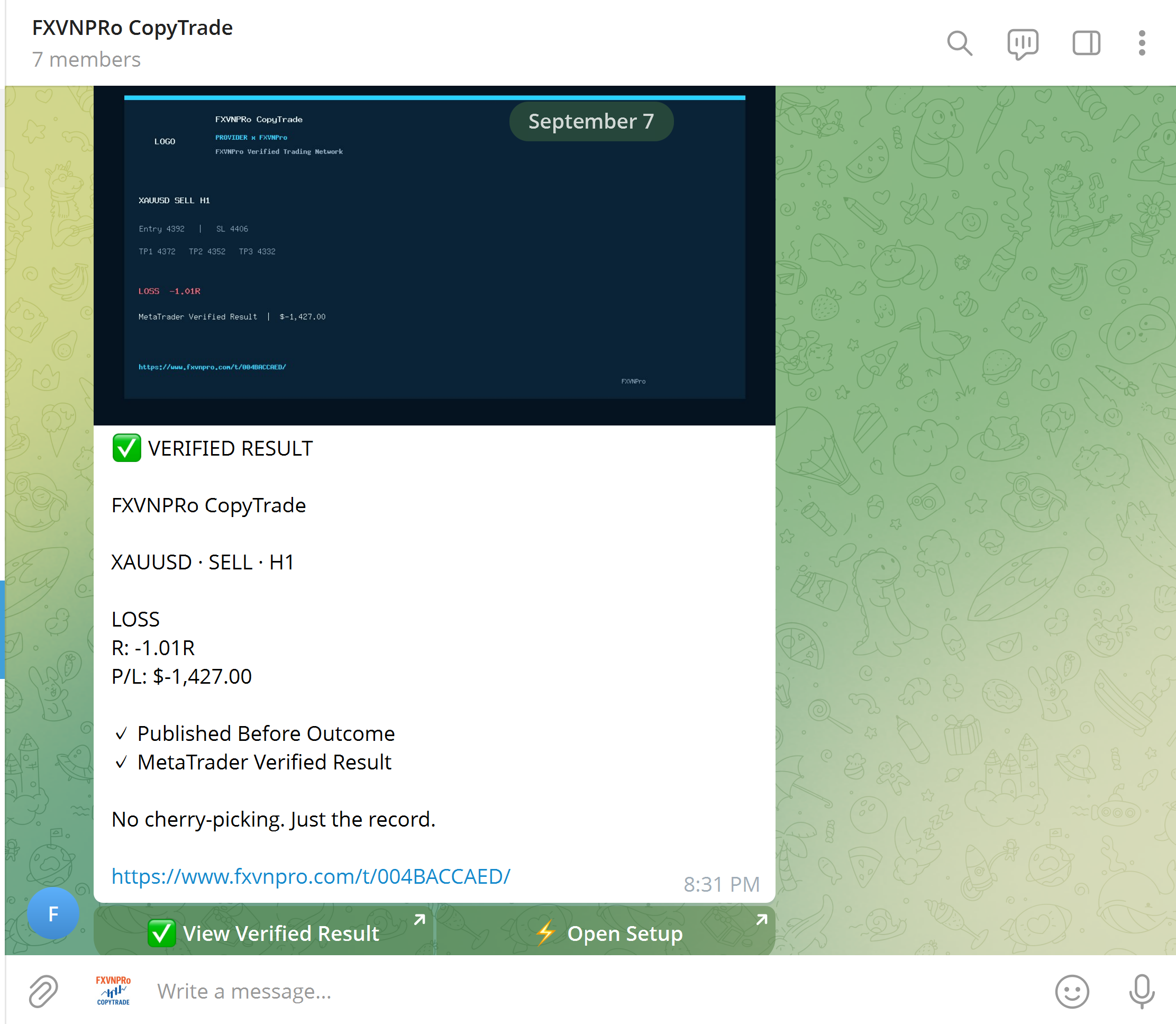 3 · VERIFIED
FXVNPro connects trade plans, Telegram trading communities and verified CopyTrade activity in one practical MT4/MT5 ecosystem.
Turn Entry, Stop Loss and Targets into a trade plan. Publish it before the outcome, then track and verify the result.
Turn Telegram signals into actionable MT4/MT5 setups. Signal Admins create the strategy while Members stay in control of risk.
Discover TRADERs, inspect verified trading history and performance, then decide who you want to follow across MT4 & MT5.
Build your strategy, distribute it to a community, or follow trading activity across MT4 & MT5.
Create Entry, Stop Loss and Targets before the outcome, then build a verified trading record.
Turn Telegram signals into an actionable workflow while followers keep control of their own risk.
Connect Chrome to MT4 or MT5 and open, modify or close trades from your browser.
Explore Masters and copy trading activity to your own MT4 or MT5 terminal with independent risk rules.