

FP Markets
FVP Score
6.7/10
FP Markets
- Minimum Deposit$100 AUD
- RegulationASIC, CySEC
- PlatformsMT4, MT5, cTrader
- SpreadFrom 0.0 pips
Start with your goal. You do not have to learn the FXVNPro architecture before using the tools.
Build an idea, use Telegram signals, trade from Chrome or follow a trader while technical setup stays in the background.
Technical connection details remain available inside each product when needed.
Compare FP Markets and Vantage Markets by rating, regulation, minimum deposit, platforms, spreads, and overall trading conditions.
Use the FXVNPro Broker Checker Chrome extension to quickly review broker trust signals, ratings, and safety information while browsing broker websites.

| Feature | FP Markets | Vantage Markets |
|---|---|---|
| Rating | 6.7 | 6.5 |
| Minimum Deposit | $100 AUD | $50 |
| Regulation | ASIC, CySEC | ASIC, FSCA, VFSC |
| Platforms | MT4, MT5, cTrader | MT4, MT5,cTrader,TradingView |
| Spread | From 0.0 pips | From 1.0 pips |
Below is a detailed breakdown of fees, spreads, regulation, platforms, and real trading suitability to help you decide which broker fits your trading style better.
If you’ve ever blown up a backtest with “perfect” spreads that somehow never show up live, you already know the uncomfortable truth: broker differences are not academic. They hit your equity curve through fees, execution quality, and the way costs accumulate across hundreds of trades. That’s why the question “which broker is better” for your style matters more than most people admit—especially when you’re trading frequently or using tight stop losses.
In this review-style comparison, I’m going to look at FP Markets vs Vantage Markets with the lens of a practical trader: spreads and trading costs, platform usability, and what regulation really means when something goes wrong. We’ll also talk about friction points like minimum deposits and withdrawals, because those “small” hurdles can decide whether you stick with a strategy or abandon it after frustration.
Quick summary: FP Markets tends to advertise cheaper starting spreads (from 0.0 pips) and has a slightly higher overall rating in the data you provided (6.7 vs 6.5). Vantage Markets has a lower minimum deposit ($50 vs $100 AUD) and adds TradingView to the tool stack, which can matter if you live in charts all day.
So who should care? Beginner traders who need simple onboarding and a low-stress start, and active traders who obsess over spreads and slippage. And yes—active traders should care even more than beginners, because costs scale with frequency.
Let’s get straight to the money: “from X pips” spreads can look similar on paper, but the real question is what happens when price moves and liquidity thins. In live trading conditions, your average spread and your worst-case moments matter more than the headline number.
Based on the data you shared, FP Markets advertises spreads from 0.0 pips. Vantage Markets advertises spreads from 1.0 pips. On a calm market, that might not feel dramatic. But for scalpers and fast-moving strategies, even 0.5–1.0 pip can be the difference between a strategy that survives and one that bleeds.
Here’s a practical example. Imagine you trade EUR/USD with a 0.8 pip average spread and you’re targeting 6–10 pip moves. If your broker’s typical spread widens by 1 pip during your session window, your effective risk-to-reward changes immediately. Over 200 trades, that’s not “a little noise”—it can be a meaningful chunk of P&L.
Now, spreads aren’t the only “fees comparison” piece. Many brokers also use commission structures on certain account types, and there can be other costs like financing/rollover differences (swap rates) and inactivity fees depending on account setup. You didn’t list commission or swap data here, so I can’t responsibly claim “Broker A is definitely cheaper” across the board. But if we stick to what we can measure from your provided info, FP Markets has the edge on headline spreads, which usually favors high-frequency traders.
Hidden fees are rarely hidden from the broker—more often they’re overlooked by the trader. Always check your account type, commission per lot (if applicable), and swap rates before you fund. That’s where “cheap spreads” can flip into “not so cheap” if your account is structured differently.
Regulation sounds like a stamp on a website, but in real life it’s about accountability, segregation rules, dispute handling, and how seriously the entity is supervised. The traders who only care about spreads often get surprised when they need the broker to behave predictably during stress.
FP Markets is regulated by ASIC and CySEC (per your data). Vantage Markets is regulated by ASIC, FSCA, and VFSC. Both brokers have ASIC, which is a strong baseline signal for investor protection standards. CySEC and FSCA add additional layers of oversight in their respective jurisdictions, which can be relevant if your trading is based in those regions or if you interact with local policies.
Why does this matter? Because execution issues, platform outages, or account funding/withdrawal delays become much more than “annoying” when you can’t easily escalate. In real trading conditions, you might not think about regulation—until you need verification, documentation, or a clean resolution pathway.
Also, verification importance can’t be ignored. Even “fully regulated” brokers still require identity checks for compliance. If you’re planning to deposit and withdraw frequently, make sure your onboarding documents are ready (ID, proof of address if requested) and that your account details match your bank information. That reduces the risk of withdrawal friction later.
Trust level is built from regulation plus operational transparency. I can’t guarantee outcomes—no broker can—but the presence of multiple regulators is generally a positive sign compared to a broker with only offshore oversight.
Between these two, the regulatory footprint is slightly broader for Vantage Markets due to FSCA and VFSC in addition to ASIC. FP Markets is still solid with ASIC and CySEC. If your main concern is regulatory redundancy, Vantage Markets edges it. If your main concern is staying cost-efficient while still being within reputable oversight, FP Markets remains compelling.
Most serious traders don’t just “use” a platform—they live inside it. The charting, order ticket workflow, and how quickly your platform responds under volatility can influence your consistency. If you’ve ever tried to place trades during a fast candle and your terminal lagged, you know how annoying that is.
FP Markets offers MT4, MT5, and cTrader. Vantage Markets offers MT4, MT5, cTrader, and TradingView (per your data). That TradingView addition might sound like a convenience feature, but for many traders it’s a big deal. If you already build ideas on TradingView indicators and want a smoother path into executing orders, that can shorten your decision loop.
Execution speed and slippage are tied to broker infrastructure, server location, and how your orders route. We don’t have latency metrics here, so I won’t pretend we can quantify “who is faster” from the platform list alone. Still, platform choice affects how you manage risk: trailing stops, partial closes, and the reliability of order modifications during fast markets.
Let’s talk real workflow. Suppose you scalp during London open and you’re manually entering with tight risk. MT4/MT5 can be fine, but many traders prefer cTrader for its order management clarity. If you trade with automation, MT4/MT5 are the usual home for EAs. TradingView is more popular for discretionary analysis and community-derived ideas, and some traders like bridging that into execution without constantly switching tools.
Which broker is better for platforms? If you rely heavily on TradingView, Vantage Markets has a clearer advantage. If you’re EA-focused and already comfortable in MT4/MT5, both are equally relevant. If you’re a cTrader user who cares about clean order handling, both support it—so the deciding factor becomes account cost and execution conditions, which loops us back to spreads and trading costs.
People obsess over spreads and forget the operational side. But deposits and withdrawals affect how calmly you can trade. If funding feels slow or withdrawals become paperwork-heavy, it changes your behavior—sometimes for the worse.
On minimum deposit, FP Markets requires $100 AUD. Vantage Markets requires $50. That difference matters if you’re starting small, testing strategies, or scaling gradually. If you’re building confidence, a lower minimum deposit can reduce the psychological pressure. On the flip side, once you’re consistently profitable, minimum deposit becomes less relevant than spreads and execution.
We don’t have your provided data for withdrawal speed, fees, or processing times. So I can’t truthfully claim one broker is “faster.” What I can say as a trader: withdrawal friction often comes from compliance checks and documentation mismatches, not from the broker being “bad.” If your bank details don’t line up with your account, or you wait too long to complete verification, any broker can slow down withdrawals.
In real-world terms, here’s a scenario. You finish a profitable week, withdraw a portion to your card, and then your platform drops out for maintenance right after. If you’re still waiting on verification or you haven’t updated your proof of address, you’ll feel that stress. It’s not just inconvenience—it can disrupt your trading rhythm and risk management.
So what should you do? Verify early. Use a consistent funding source. Keep copies of statements if asked. And when comparing brokers, check whether there are withdrawal fees and how long processing takes (especially on weekends and holidays). Those details are often where the “hidden” friction lives.
Between the two, Vantage Markets has the edge for easier entry on minimum deposit. FP Markets may still win for active traders who value tighter spreads, but for first funding, $50 can be a lot friendlier than $100 AUD.
Beginners usually don’t lose because they can’t read charts. They lose because they don’t fully understand costs, risk sizing, and the mechanics of getting orders filled. A broker can’t teach you trading, but it can absolutely make learning easier—or harder.
So which broker is easier to start with? Based on your data, Vantage Markets has a lower minimum deposit ($50), which reduces the “all-in” pressure. Many new traders want to test a strategy with small size first. If the minimum is too high, they rush into larger risk than they’re ready for. That’s how mistakes become expensive.
Platform-wise, both brokers provide MT4/MT5 and cTrader, which is a good baseline. But TradingView matters for beginners because it’s familiar. If you’re learning with indicators and drawing tools and you already watch markets on TradingView, having that tool in the broker ecosystem can reduce confusion. Less time figuring out interfaces means more time focusing on trade review.
Now, the part beginners often miss: spreads and trading costs. Even with a small account, costs matter. A strategy that barely covers its spread on backtests can fail instantly in live trading. FP Markets has the advantage on headline spreads (from 0.0 pips). That could help beginners who start with frequent small trades, especially during liquid sessions.
Here’s the honest tradeoff. If you’re a brand-new trader with limited capital, Vantage Markets is more approachable. If you’re a beginner who already understands cost sensitivity and plans to trade actively (not just demo), FP Markets may reduce the “tax” per trade due to tighter starting spreads.
Either way, don’t skip the demo/testing phase. And when you go live, start small enough that one bad week doesn’t wreck your confidence. That’s not a broker feature—it’s survival.
Active traders live and die by micro-costs. This is where “from X pips” becomes more than marketing. If you’re scalping or day trading, you care about spreads and the consistency of execution speed, because your strategy is built on repeatability.
On headline spreads, FP Markets again looks stronger: from 0.0 pips versus Vantage Markets from 1.0 pips (per your data). In high-frequency trading, that difference can stack fast. You’re not taking 5 trades a week—you’re taking 50, 100, sometimes more. If the broker’s average spread is consistently lower, your breakeven rate improves. That matters because even a slight edge in spread can let a strategy survive longer before performance degrades.
Execution speed and slippage are also critical for active traders. We don’t have slippage statistics here, so you’ll need to evaluate through your own testing—especially on the Connects and sessions you trade. For example, if you trade GBPJPY around London/early NY overlap, you’ll want to see how spreads behave when volatility spikes. The “0.0 pips” claim won’t help you if the spread widens at the exact times you trade.
Tools can matter too. cTrader users often like its order management workflow, and MT4/MT5 remain the standard for many EAs. Vantage Markets adds TradingView, which can be useful for fast chart-based decision-making and for those who prefer a particular chart layout before execution.
Let me put this into a real scenario. You run a simple day-trading rule: enter on breakout confirmation, place a tight stop, take profit quickly. If your average spread is higher, your stop-out probability rises and your win rate drops. That’s not theoretical—it’s geometry. Your risk is fixed in pips, but your cost basis is not.
Given the data provided, if I had to pick for active traders purely on spreads and cost positioning, FP Markets is the more natural fit. Vantage Markets isn’t automatically wrong—especially if you value TradingView integration—but the spread advantage leans FP Markets for frequent traders.
But here’s what I’d watch if I were choosing today: don’t decide based only on the headline spread. Check your account type (commission vs spread model), verify the typical spreads during the exact hours you trade, and test execution under volatility. That’s where “which broker is better” becomes real, not just a comparison table.
Let’s make this decision practical. For the question “FP Markets vs Vantage Markets, which broker is better,” the honest answer depends on what you trade and how often you trade.
Choose FP Markets if: you’re an active trader who cares about spreads and trading costs, or you run frequent strategies where micro-costs matter. The data you provided shows an advantage on headline spreads (from 0.0 pips) and a slightly higher overall rating (6.7 vs 6.5). If you’re day trading or scalping, that cost positioning usually translates into better survival odds for tight stop strategies.
Choose Vantage Markets if: you want a lower barrier to entry ($50 minimum deposit) and you strongly prefer a TradingView-first workflow. The regulatory footprint in your data is also broader (ASIC + FSCA + VFSC). For beginners or chart-driven discretionary traders, that combination can reduce friction and improve your day-to-day experience—assuming spreads and commissions on your chosen account type are acceptable.
If you force me into one clear recommendation based strictly on the information provided: FP Markets is the more compelling pick for traders focused on spreads and active execution cost control. Vantage Markets is the better “start smaller and chart smarter” option.
One last thing—don’t skip a short live test. Open a small account, run your strategy during your normal session hours, and track average spread and execution outcomes. Because in FX, the broker you pick is the environment your strategy has to survive in.
One real XAUUSD trade: created before the outcome, sent to Telegram, TRADEd in MT5 and returned as a verified result.
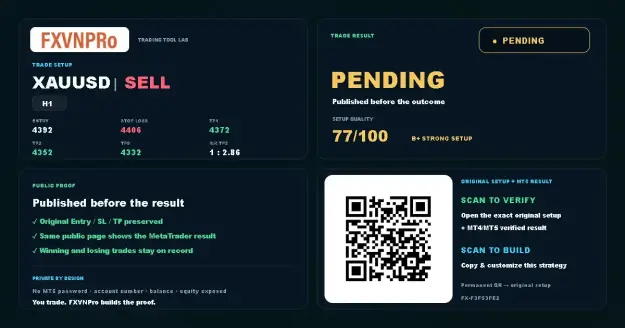 1 · SETUP
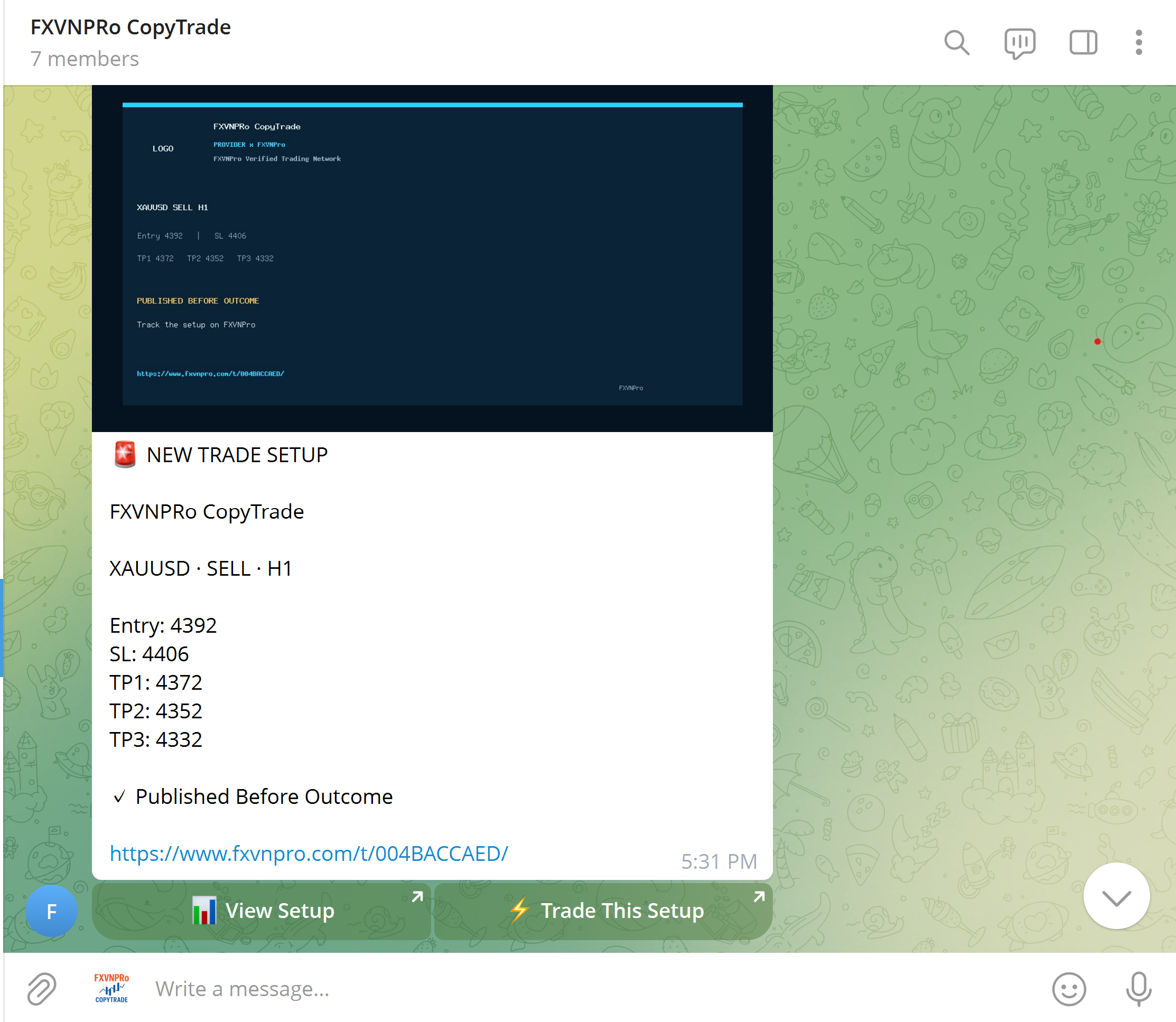 2 · TELEGRAM
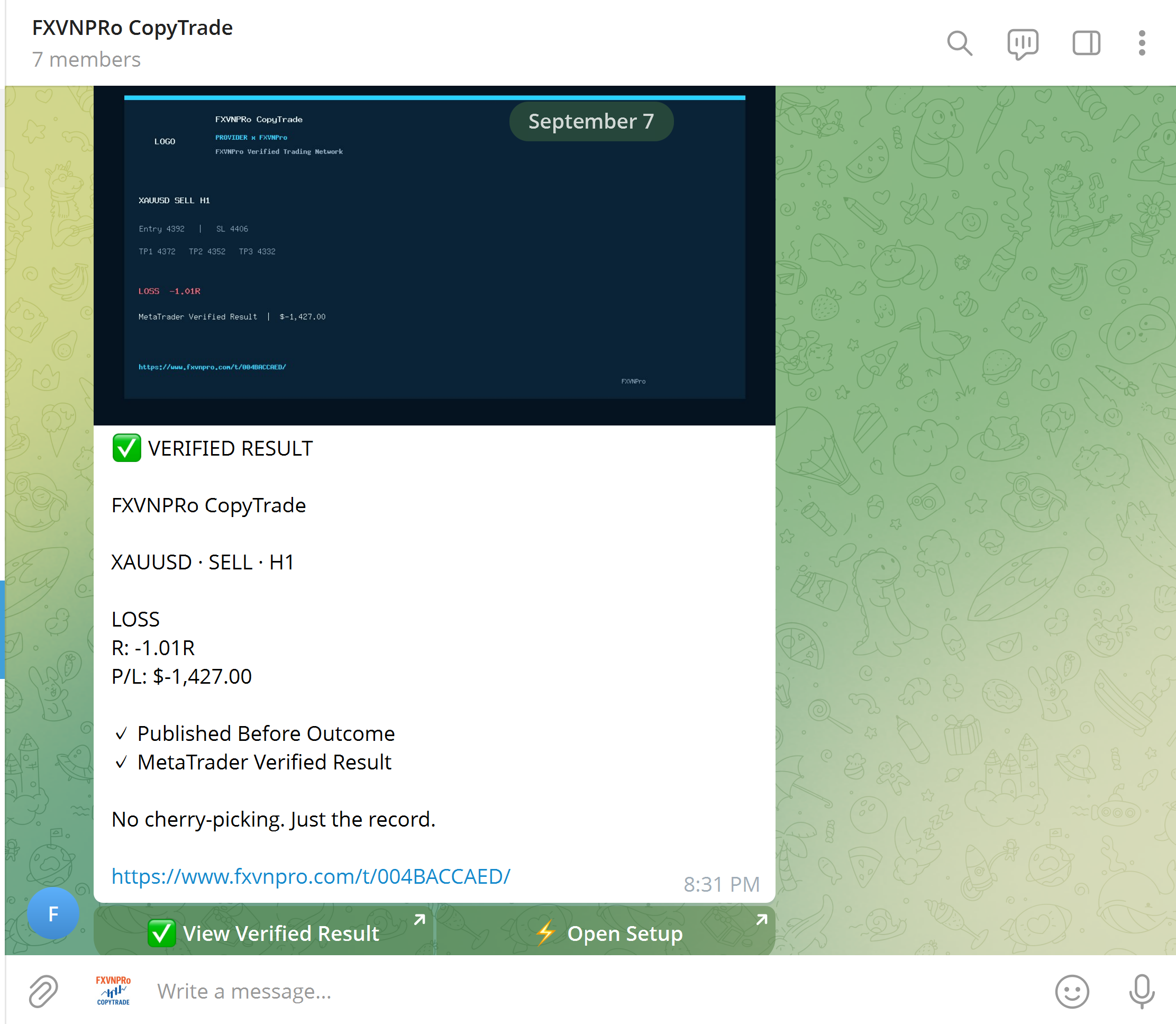 3 · VERIFIED
FXVNPro connects trade plans, Telegram trading communities and verified CopyTrade activity in one practical MT4/MT5 ecosystem.
Turn Entry, Stop Loss and Targets into a trade plan. Publish it before the outcome, then track and verify the result.
Turn Telegram signals into actionable MT4/MT5 setups. Signal Admins create the strategy while Members stay in control of risk.
Discover TRADERs, inspect verified trading history and performance, then decide who you want to follow across MT4 & MT5.
Build your strategy, distribute it to a community, or follow trading activity across MT4 & MT5.
Create Entry, Stop Loss and Targets before the outcome, then build a verified trading record.
Turn Telegram signals into an actionable workflow while followers keep control of their own risk.
Connect Chrome to MT4 or MT5 and open, modify or close trades from your browser.
Explore Masters and copy trading activity to your own MT4 or MT5 terminal with independent risk rules.