

Just Markets
FVP Score
6.5/10
Just Markets
- Minimum Deposit$10
- RegulationCySEC, FSA, FSCA, FSC
- PlatformsMT4, MT5
- SpreadFrom 0.1 pips
Start with your goal. You do not have to learn the FXVNPro architecture before using the tools.
Build an idea, use Telegram signals, trade from Chrome or follow a trader while technical setup stays in the background.
Technical connection details remain available inside each product when needed.
Compare Just Markets and Vantage Markets by rating, regulation, minimum deposit, platforms, spreads, and overall trading conditions.
Use the FXVNPro Broker Checker Chrome extension to quickly review broker trust signals, ratings, and safety information while browsing broker websites.

| Feature | Just Markets | Vantage Markets |
|---|---|---|
| Rating | 6.5 | 6.5 |
| Minimum Deposit | $10 | $50 |
| Regulation | CySEC, FSA, FSCA, FSC | ASIC, FSCA, VFSC |
| Platforms | MT4, MT5 | MT4, MT5,cTrader,TradingView |
| Spread | From 0.1 pips | From 1.0 pips |
Below is a detailed breakdown of fees, spreads, regulation, platforms, and real trading suitability to help you decide which broker fits your trading style better.
If you’ve ever looked at a month of trading and thought, “Wait… why did I keep losing even when my entries weren’t terrible?”—this is where the answer often hides. Not in your strategy. In your trading costs: spreads, execution quality, and how the broker’s setup actually behaves during fast markets.
In this Just Markets vs Vantage Markets comparison, I’m focusing on the stuff that matters once you’re putting real money at risk. We’re comparing two commonly discussed brokers with overlapping platform options, but different minimum deposits, spreads, and tool ecosystems. On paper, their ratings are identical (6.5), yet the day-to-day experience can feel very different depending on whether you’re trading a few times a week or scalping for hours.
Quick takeaway: Just Markets starts cheaper and advertises tighter spreads “from 0.1 pips,” which matters if you’re sensitive to spread and you trade frequently. Vantage Markets has a higher minimum deposit and wider spreads “from 1.0 pips,” but offers a broader platform/tool mix (including cTrader and TradingView) that can suit certain workflows.
So the big question becomes: which broker is better for your style—swing trading where costs are less brutal, or active trading where every tenth of a pip can decide whether you survive?
Let’s talk spreads and trading costs like a trader, not a brochure. Both brokers list spreads starting from different levels, and that alone can swing performance—especially if you’re trading EURUSD, GBPUSD, or any liquid Connect multiple times per day.
Just Markets: spreads from 0.1 pips. That’s extremely competitive on a “from” basis. In real trading conditions, you don’t always get the minimum—news spikes, rollover periods, and even normal volatility can widen spreads. Still, a lower baseline generally means lower average spread if execution is reasonably consistent.
Vantage Markets: spreads from 1.0 pips. Again, “from” means you might see better moments, but the default expectation is higher trading cost than Just Markets. If you’re day trading and entering/exiting frequently, that adds up fast.
Here’s a practical example. Imagine a strategy that targets 6 pips on average and you take 40 round-turn trades in a month. If your effective spread cost is 0.5 pips higher on Vantage than on Just Markets (just as a simple illustration), you’ve added roughly 20 pips worth of drag on performance. Convert that into dollars depending on lot size, and you’ll see why traders obsess over fees comparison and spreads and trading costs.
Hidden fees can also matter—overnight financing, inactivity charges, and any non-obvious costs tied to account type. But with the data provided, the clearest differentiator is the headline spread level. When your system has a tight profit target, spread becomes part of your risk model, not an afterthought.
Regulation isn’t just a logo on the homepage. It’s about oversight, complaint handling, and the rules that shape how your funds and trading environment are supposed to work. In Just Markets vs Vantage Markets, both have multiple regulators listed—but they’re not identical in structure and geographic coverage.
Just Markets lists CySEC, FSA, FSCA, and FSC. That suggests the broker operates under multiple regulatory umbrellas across regions. This matters because different regulators impose different standards around risk management, leverage practices, and disclosure requirements. In real terms, traders often feel safer when a broker is clearly accountable to regulators that require regular reporting and compliance processes.
Vantage Markets lists ASIC, FSCA, and VFSC. ASIC is often associated with strict consumer protection expectations. FSCA is also an important African regulator presence. VFSC adds another layer depending on how the broker structures entities and account types.
Now, the key part most people miss: “regulated” depends on which entity your account is actually under. Many brokers mention several regulators, but your client agreement and account residency determine which one applies. Always verify the specific legal entity, the account terms, and whether your jurisdiction includes meaningful investor protection.
Why does this matter? Because execution problems, leverage rules, and even withdrawal friction can become a bigger deal when markets are stressed. If you’re trading during high volatility, you want confidence that the broker’s obligations hold up—not just during calm sessions, but when spreads widen and liquidity thins.
Platforms are where trading experience becomes tangible. You can have a perfect chart setup and still lose money if your order handling feels sluggish or inconsistent. Both brokers offer MT4 and MT5, which means you’re not locked out of the classic ecosystem. But Vantage Markets also adds cTrader and TradingView, which changes how different traders work.
Just Markets: MT4 and MT5 only. For many professional traders, that’s fine. MT5 can be great for hedging styles, backtesting, and multi-asset charting. MT4 is still widely used for speed and simplicity, especially if your strategy is built around MT4 indicators and Trading Programs (Expert Advisors).
Vantage Markets: MT4, MT5, cTrader, and TradingView. This is a meaningful difference if you care about charting workflow or prefer cTrader’s interface. TradingView is especially useful if you scan ideas on mobile or want a clean charting experience before you TRADE. In practice, this can reduce friction—less time switching tools, fewer mistakes when you’re placing orders quickly.
Execution speed and slippage are the real “feel” metrics, and neither broker’s provided data confirms exact latencies. Still, platform choice affects how you manage order types, how quickly you can react, and how comfortably you can handle partial closes or advanced order workflows.
Ask yourself: do you run an EA and live inside MT4/MT5? Or do you actively watch charts, trade off signals, and need a smoother chart-to-execution pipeline?
That answer often decides which broker feels better day-to-day, even before you compare spreads.
This is one of those differences that doesn’t look dramatic until you try it. Minimum deposit affects your risk sizing, whether you can test properly, and how comfortable you are with drawdowns while learning.
Just Markets minimum deposit: $10. That’s very low. For beginners, it reduces the “fear factor.” You can start small, get used to the platform, and understand execution in live conditions without tying up much capital. For more serious traders, it can still be useful for running micro-tests of a strategy or checking how spreads behave on the instrument you actually trade.
Vantage Markets minimum deposit: $50. Still reasonable, but it’s a different psychological tier. If you’re switching from paper trading or demo to live, $50 can feel like a meaningful step. It also influences your lot sizing choices—especially if you’re trying to keep risk per trade controlled.
Withdrawals and fees depend on payment methods and local rules. The data you provided doesn’t include specific withdrawal timelines or charges, so I won’t invent numbers. But friction is usually what traders notice: whether withdrawals are straightforward, how long verifications take, and whether you need to submit documents before your first payout.
In real trading, deposits/withdrawals matter when you’re managing risk and capital. If you can’t move funds smoothly, your ability to recover from losses—or to fund the next phase of your trading plan—gets harder.
If you’re the kind of trader who tests strategies with small sizing first, Just Markets’ $10 minimum gives you flexibility. If you’re ready to commit more capital at the start, Vantage’s $50 is still accessible, just slightly less forgiving.
For beginners, the biggest enemy isn’t only bad strategy—it’s poor conditions that amplify mistakes. Spreads and order handling become a hidden tax when you’re still learning timing, stop placement, and trade management.
Just Markets looks friendlier for starting out because of the $10 minimum deposit and the tighter spread profile “from 0.1 pips.” When you’re trading small size, the absolute dollars might not be huge, but the relative impact on your performance is noticeable. Also, tighter spreads mean your stop losses and take profits aren’t fighting the spread as much.
Vantage Markets has a $50 minimum deposit and “from 1.0 pips” spreads. That doesn’t make it bad, but it changes the learning curve. If you’re making lots of small trades while you figure out how the market moves, wider spreads can slow your feedback loop. You may feel like your system “doesn’t work” when the real issue is that costs are eating the edge.
Still, beginners benefit from clear tools and a platform that feels intuitive. Vantage’s inclusion of TradingView and cTrader could help new traders visualize setups more easily. Some people learn faster when charting is smooth and execution is straightforward from a familiar interface.
So which one is better for beginners? If your priority is minimizing trading friction while you learn, Just Markets has the advantage on both minimum deposit and spread expectations. If you’re the type who learns from TradingView-style charting and wants that ecosystem from day one, Vantage can feel smoother—just be aware your live costs may be higher.
Active trading is where broker differences stop being “marketing” and start being math. If you scalp or day trade, spreads and execution quality aren’t small factors—they’re part of your edge calculation.
With Just Markets advertising spreads from 0.1 pips, it’s naturally better aligned with high-frequency strategies. In fast markets, spread widening is unavoidable, but a broker with a lower baseline often gives you more favorable average costs. That matters when your take profit might be 3–10 pips and your stop is tight. A small spread increase can turn a positive expectancy strategy into a negative one over time.
Vantage Markets lists spreads from 1.0 pips and offers multiple platforms including cTrader. For some active traders, cTrader’s order workflow can be useful—especially if you’re working with specific execution styles or want a different interface for monitoring trades. But the starting spread figure suggests your cost floor is higher.
In real trading conditions, slippage and momentary widening during news events often define the difference between “good fills” and “why did that stop get hit?” If your style depends on consistent fills, you should test both brokers on a live micro-account or a short funded trial—then check how often spreads widen beyond your assumptions.
Ask yourself a blunt question: do you run a strategy that needs low spread to work? If yes, Just Markets is the more obvious fit from the cost data. If you prefer a specific platform workflow (like TradingView or cTrader) and your strategy can tolerate higher average spreads, Vantage may still be workable, but you’ll need to be more disciplined with targets and risk.
These aren’t theoretical pros and cons. They show up in the things traders complain about: “I’m paying too much in spread,” “I can’t scale my account without committing more,” or “My platform workflow slows me down when volatility hits.”
If you want the quickest way to decide which broker is better, focus on your trading cadence. Fewer trades? Spreads matter less. More trades? Spreads and trading costs become the entire conversation.
Here’s the clear recommendation based on the data you provided and how these variables usually play out in live trading.
Just Markets is the better pick for cost-sensitive traders. If you care about fees comparison in a practical sense—especially spreads and trading costs—Just Markets has the advantage with a lower minimum deposit ($10) and tighter spreads from 0.1 pips. That combination is ideal for beginners who want to learn without getting hammered by costs, and for active traders who run strategies where every pip counts.
Vantage Markets is the better pick for platform variety and chart-first workflows. If your trading experience depends on TradingView, or you prefer cTrader’s interface for execution management, Vantage’s platform bundle is a genuine differentiator. Yes, its spreads start from 1.0 pips, which likely increases your baseline costs, but if your strategy is built around a platform workflow you enjoy and can TRADE with consistency, that can matter more than people admit.
So, which broker is better? For most people who are primarily chasing efficiency in “spreads and trading costs,” the edge goes to Just Markets. For traders who strongly value TradingView and cTrader and are comfortable operating with higher spread expectations, Vantage Markets makes more sense.
If you’re still unsure, don’t guess—test. Open small, run the same instrument and strategy logic, and compare your real-world fills and spread behavior over several sessions. That’s the only comparison that truly answers which broker is better for you.
One real XAUUSD trade: created before the outcome, sent to Telegram, TRADEd in MT5 and returned as a verified result.
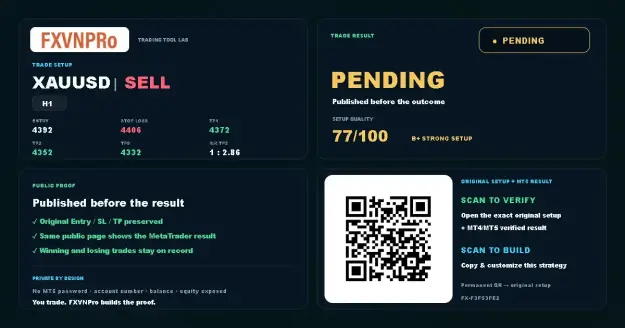 1 · SETUP
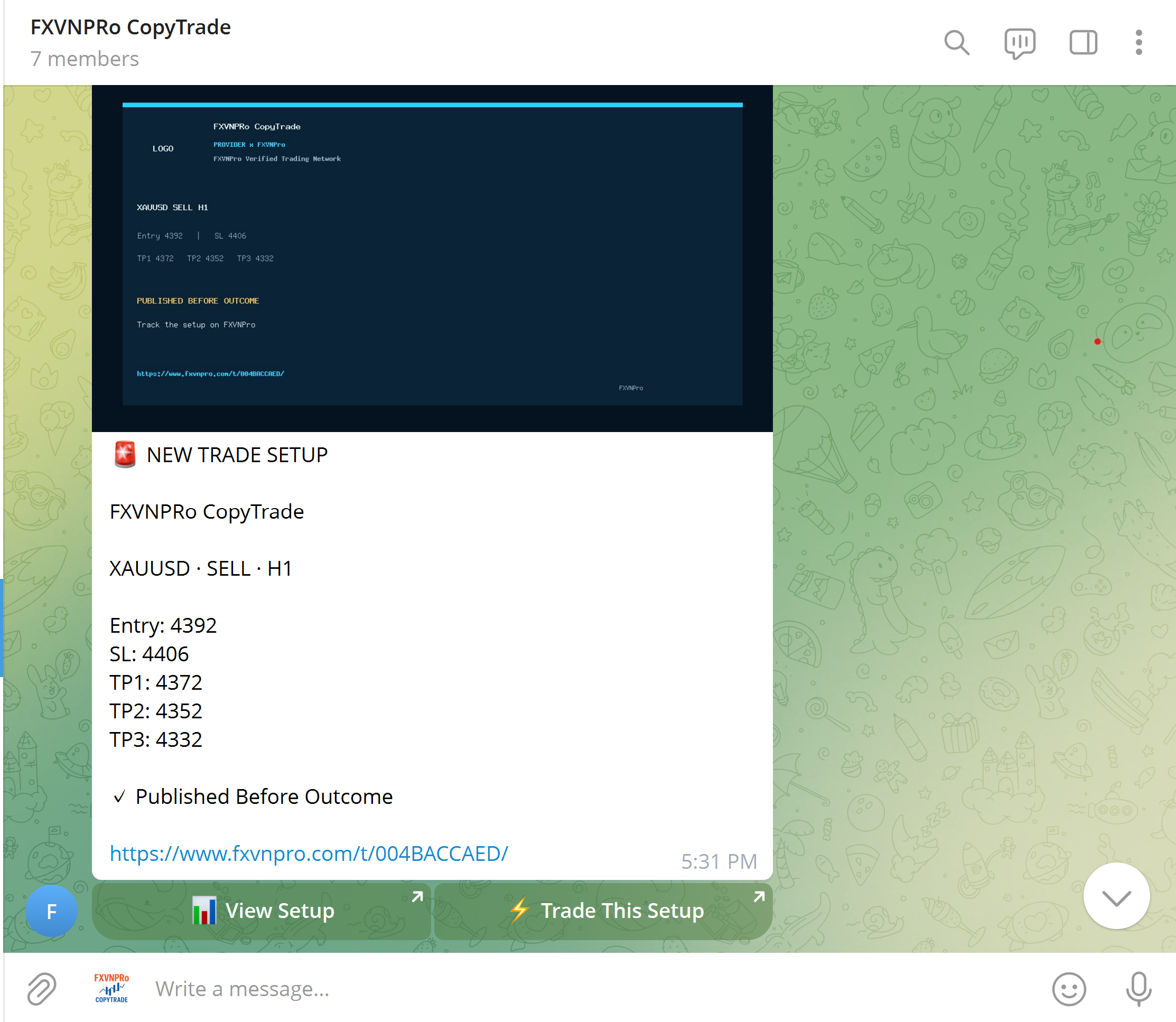 2 · TELEGRAM
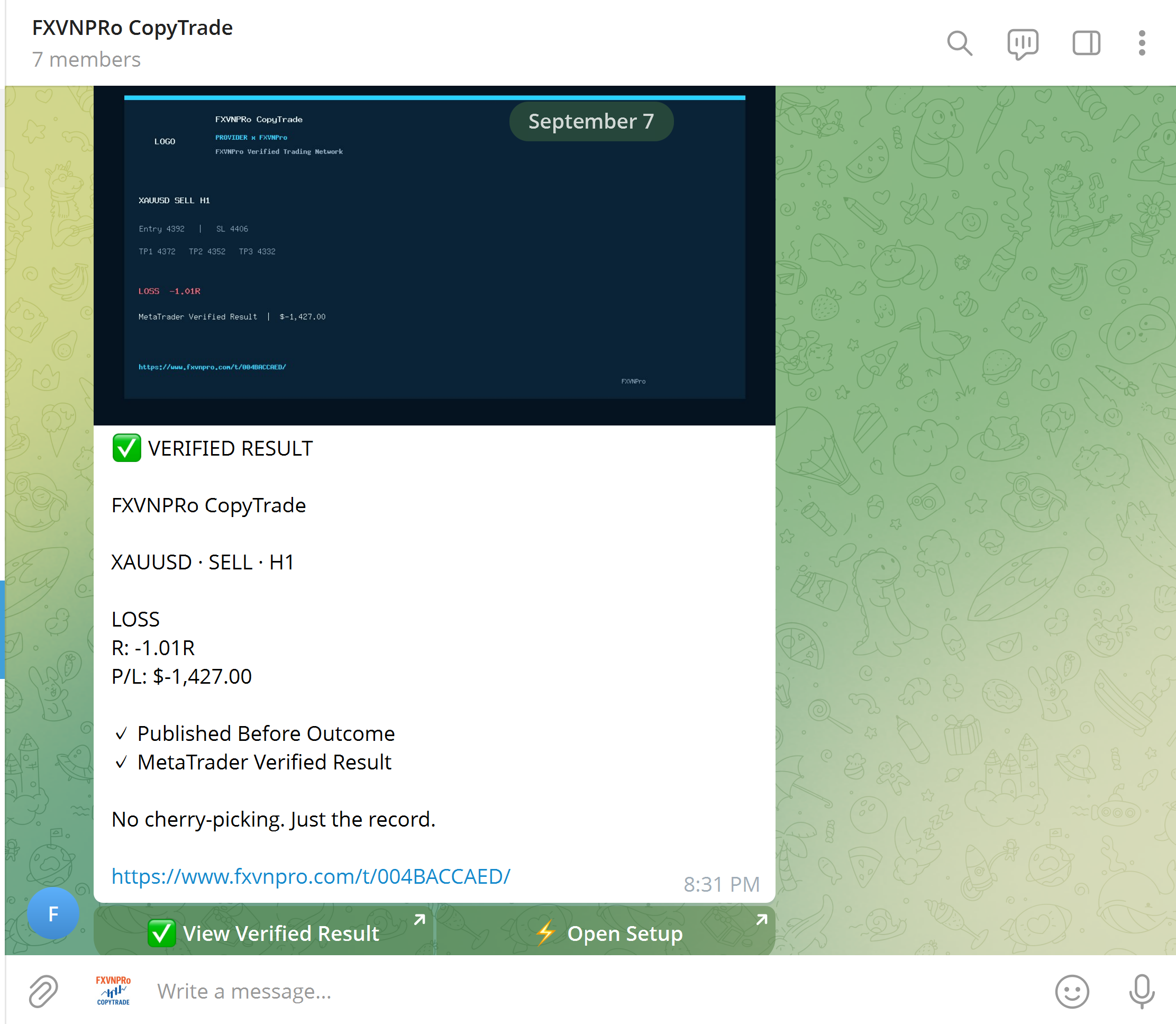 3 · VERIFIED
FXVNPro connects trade plans, Telegram trading communities and verified CopyTrade activity in one practical MT4/MT5 ecosystem.
Turn Entry, Stop Loss and Targets into a trade plan. Publish it before the outcome, then track and verify the result.
Turn Telegram signals into actionable MT4/MT5 setups. Signal Admins create the strategy while Members stay in control of risk.
Discover TRADERs, inspect verified trading history and performance, then decide who you want to follow across MT4 & MT5.
Build your strategy, distribute it to a community, or follow trading activity across MT4 & MT5.
Create Entry, Stop Loss and Targets before the outcome, then build a verified trading record.
Turn Telegram signals into an actionable workflow while followers keep control of their own risk.
Connect Chrome to MT4 or MT5 and open, modify or close trades from your browser.
Explore Masters and copy trading activity to your own MT4 or MT5 terminal with independent risk rules.