

Exness
FVP Score
7/10
Exness
- Minimum Deposit$10
- Regulation-
- PlatformsMT4, MT5
- SpreadFrom 0.0 pips
Start with your goal. You do not have to learn the FXVNPro architecture before using the tools.
Build an idea, use Telegram signals, trade from Chrome or follow a trader while technical setup stays in the background.
Technical connection details remain available inside each product when needed.
Compare Exness and PU PRIME by rating, regulation, minimum deposit, platforms, spreads, and overall trading conditions.
Use the FXVNPro Broker Checker Chrome extension to quickly review broker trust signals, ratings, and safety information while browsing broker websites.

| Feature | Exness | PU PRIME |
|---|---|---|
| Rating | 7 | 6.8 |
| Minimum Deposit | $10 | $20 |
| Regulation | - | ASIC, FSA |
| Platforms | MT4, MT5 | MT4, MT5 |
| Spread | From 0.0 pips | From 0.1 pips |
Below is a detailed breakdown of fees, spreads, regulation, platforms, and real trading suitability to help you decide which broker fits your trading style better.
If you’ve ever watched a backtest look great, then live trading feels… heavier, you’re not imagining it. In forex, the gap between “theory” and “execution” is often made of tiny pieces: spreads that widen at the wrong moment, slippage during news, withdrawal friction, and even the way a broker structures its trading environment. That’s why I like comparing brokers like this—because the cost of trading isn’t one number. It’s a stack.
This review is built for real traders who care about fees comparison, spreads and trading costs, and the practical stuff that affects risk management. If you’re scalping London open, sizing trades tightly, or you’re simply trying to stop bleed from inconsistent execution, the broker choice starts to matter quickly.
So, what are we comparing? Exness vs PU PRIME with two different profiles. Exness comes with a lower minimum deposit ($10) and spreads “from 0.0 pips,” but the regulation data provided here is listed as “-” (which is a major talking point). PU PRIME, by contrast, shows regulation by ASIC and FSA, a slightly higher minimum deposit ($20), and spreads “from 0.1 pips.” Both offer MT4 and MT5.
In short: if you value regulatory oversight and want a safer baseline, PU PRIME looks more solid. If you’re chasing ultra-low spreads and you already understand the regulatory risk trade-off, Exness can be tempting. But which broker is better depends on how you actually trade—let’s get into it.
Let’s talk money like a trader, not like a brochure. When people compare brokers, they often grab the “from” spread and call it a day. But in real trading conditions, that’s only part of the story. Spreads and trading costs are what turn a marginal strategy into a losing one—or save it.
Exness is listed with spreads from 0.0 pips and no regulation shown in the data you provided. That can be attractive for tight-range scalpers. However, “from 0.0 pips” doesn’t mean you’ll see 0.0 pips during every session. In practice, spreads tend to widen around news, rollovers, and low-liquidity hours. If your strategy depends on consistent entry costs, you need stability more than one-off best-case numbers.
PU PRIME shows spreads from 0.1 pips—slightly higher on paper. The key question is: does the broker charge additional commissions, or is it purely spread-based? Your data doesn’t mention commissions either way, so I can’t claim there’s a commission on top. Still, even without commission details, the spread difference matters. On a typical EUR/USD scalping run, 0.1 pip difference can be the difference between “break-even after costs” and “net negative” if you trade many times per day.
Here’s a realistic scenario: you run a day strategy with 40 trades/day, average spread cost is 0.3 pips vs 0.4 pips. That 0.1 pip gap becomes meaningful at scale. Add swap charges, potential execution slippage, and any hidden friction (like inactivity fees or withdrawal processing costs), and you’re looking at a fees comparison that’s bigger than it first appears.
Bottom line for this section: Exness may be cheaper on paper at the best-case spreads, but PU PRIME’s slightly higher “from” spread could still be the lower total cost if execution is smoother during your active hours. You’ll only know by watching live spread behavior for your Connects and times.
When traders ask me which broker is better, I always push the conversation toward regulation. Not because regulators are magic, but because they create a framework. Exness is listed here with regulation shown as “-” (not specified). That doesn’t automatically mean it’s unsafe, but it does mean you’re missing one of the most important risk-management layers you can have as a retail trader.
PU PRIME is listed with ASIC and FSA. This matters because regulators influence how brokers handle client funds, reporting requirements, complaint processes, and operational standards. In real trading experience, the difference you feel isn’t daily—it’s in stress moments: withdrawal disputes, account verification delays, or sudden changes in trading conditions.
Think about verification too. A broker that’s regulated often has more formal KYC/AML checks. Yes, that can feel annoying when you’re trying to fund quickly. But it can also prevent the “why is my withdrawal stuck?” scenario that burns time and nerves. If you’ve ever had your account paused pending documents right after a profitable month, you already know why verification importance is real.
Also, execution speed and slippage are influenced by infrastructure, but regulation influences accountability. If a broker is operating under recognized oversight, traders typically have more predictable pathways for escalation when something goes wrong.
So, if you’re deciding purely on trading experience, you might focus on spreads and execution. But if you’re deciding on risk—long-term capital safety and withdrawal confidence—regulation becomes the anchor. Based on the data provided, PU PRIME has the clearer advantage here.
Both Exness and PU PRIME offer MT4 and MT5. That’s great for flexibility. MT4 is still popular with manual traders and many EA users. MT5 offers more features and modern order handling. If you already have a setup—indicators, EAs, templates—platform compatibility reduces migration pain.
But let’s get real: the platform is only half the story. The other half is execution speed, order routing behavior, and how reliably your orders fill during volatility. In practice, traders notice this in the gaps: entries that look filled on the screen but don’t match the expected price, stops that trigger with a little extra distance, or partial fills that mess up your intended risk.
With Exness, the appeal is the potential for very tight spreads (from 0.0 pips). That tends to fit day traders who want clean chart-to-fill alignment. If you’re running a scalping EA, you’re also paying attention to how often your market orders slip versus your limit orders.
PU PRIME has spreads from 0.1 pips and regulated oversight (per your data). For most traders, that combination often translates into a more “boring but consistent” experience. And boring is underrated. If you trade for a living, you don’t want your execution environment changing personality every session.
Tools matter too—economic calendar integration, VPS options, and whether your broker supports automated trading reliably. Your data doesn’t list additional tools, so I can’t invent them. Still, the practical takeaway is this: MT4/MT5 compatibility is a baseline, but execution consistency and slippage behavior are where traders feel the difference.
Minimum deposit is often discussed like it’s the only deposit factor. In reality, the friction comes from processing speed, fees (if any), and how smooth withdrawals are once you’re trading profitably.
Exness shows a minimum deposit of $10. For beginners trying to build discipline with smaller size, that’s psychologically easier. You can fund, test your platform setup, and learn how spreads and execution behave without tying up too much capital. But remember: the “how easy it is to fund” story isn’t the whole experience. The withdrawal story matters more once you start winning.
PU PRIME lists a minimum deposit of $20. That’s still not high, but it nudges you away from the ultra-low-capital testing phase. For traders who already have a routine, $20 isn’t a barrier. For those trying to practice with micro-risk only, it can feel slightly less convenient.
Where withdrawals become the real test is during busy market periods. If your broker’s internal processing queues get slower during volatility, you’ll notice. Some brokers also have extra withdrawal checks based on changes in account activity or payment method—again, this connects back to regulation and verification processes.
Here’s a practical example: imagine you run a profitable week, then request a withdrawal on Friday evening. If your broker has slower processing, your money is stuck while you’re trying to manage your next week’s risk. That’s not just inconvenience—it can affect your ability to trade the following session.
Your provided data doesn’t include withdrawal timelines or fee schedules, so I can’t compare specifics. But between the lines, PU PRIME’s regulated profile usually correlates with more predictable compliance processes. Exness’s lower minimum deposit is helpful for getting started—just don’t ignore the safety and withdrawal confidence angle.
Beginners usually don’t lose money because they picked the wrong indicator. They lose money because their broker environment amplifies mistakes. Tight spreads are helpful, but consistency, platform stability, and regulatory comfort matter just as much when you’re learning.
Exness has the edge on accessibility with a $10 minimum deposit and spreads “from 0.0 pips.” For a new trader, that can feel motivating—more trades, smaller initial commitment, and the possibility of low entry costs. If you’re practicing a simple breakout strategy, lower spreads can reduce the “leakage” that makes early learning frustrating.
But the regulation field being listed as “-” is a serious question mark for beginners. When you’re new, you’re still building intuition about slippage, order execution, and how withdrawals behave. Beginners benefit from a regulated framework because it adds accountability when something doesn’t go smoothly.
PU PRIME asks slightly more upfront ($20) but shows ASIC and FSA oversight in your data. That matters because beginners need trust. Not blind trust—just a clearer safety net while they’re figuring out position sizing, stop-loss placement, and risk-reward.
Also, beginners often struggle with verification. If PU PRIME’s compliance is structured and predictable, it can actually save time later. A beginner who learns “funding, then trading, then withdrawing” without surprises is more likely to stick with forex long enough to improve.
So, which broker is better for beginners? Based on the info provided, I’d lean toward PU PRIME for safer onboarding. Exness is more inviting for low capital, but beginners should not trade without a clear comfort level on regulation.
Active traders are where “from” spreads become less theoretical and more brutal. When you’re doing dozens (or hundreds) of trades, tiny differences compound. Execution speed, slippage, and spread stability matter more than marketing numbers.
Exness looks optimized for traders chasing tight costs: spreads from 0.0 pips and MT4/MT5 support. If your style is scalping during liquid hours and you route orders with discipline (limits where possible, avoid market orders during news if spreads jump), you can potentially benefit from lower trading costs. This matters because, for scalpers, the spread is often the first “risk barrier” you hit every trade.
But the bigger active-trader question is: are the execution conditions consistent when volatility spikes? Your data doesn’t provide details on slippage behavior or commissions, and regulation data is missing (“-”). When you trade actively, you’re more exposed to operational stress—fast fills, fast reversals, and higher likelihood of edge cases (partial fills, requotes, stop hunting dynamics).
PU PRIME shows spreads from 0.1 pips and regulation by ASIC/FSA. That extra oversight can matter a lot for high-volume traders who need predictable withdrawal and complaint pathways. For execution, a slightly higher “from” spread can still be worth it if real-time spreads stay controlled and slippage is manageable during your usual session windows.
Example: a day trader running EUR/USD from 7:00–11:00 London time cares about consistent fills and low cost per round trip. If PU PRIME’s spreads average only a fraction higher than Exness, the regulated stability might outweigh the cost. But if Exness truly maintains near-zero spreads during your exact trading hours, it could remain the lower-cost option.
If you’re an active trader, don’t just pick based on minimum spreads—monitor your Connect list, your trade times, and your fill quality for at least a couple of weeks on a live demo or very small account.
Notice how none of this is “generic good or bad.” These are the specific trade-offs that show up in real trading experience: cost per trade, confidence in regulation, and the friction you feel when you’re moving money.
If you force me to pick a clear direction based on the data you provided, here’s the honest verdict.
For beginners focused on trust and a smoother long-term experience: PU PRIME is the better choice. Regulation (ASIC and FSA) gives you a safer baseline while you learn. Yes, the minimum deposit is $20 instead of $10, but that’s not a deal-breaker. In forex, the biggest beginner risk isn’t only losing trades—it’s getting stuck in operational headaches. PU PRIME’s regulatory profile reduces that risk.
For active traders and scalpers who are cost-sensitive and can validate execution quality: Exness has a stronger appeal for spreads and trading costs, mainly because it’s listed with spreads from 0.0 pips and a lower minimum deposit. If your strategy depends on tight entry costs and you confirm that slippage and spread behavior are acceptable during your trading times, Exness can be cheaper in practice.
But here’s the key: Exness vs PU PRIME isn’t just a fees comparison. It’s also a risk decision. With Exness, the provided regulation data being blank is a red flag for anyone who values capital safety and predictable oversight.
If you want a simple takeaway: PU PRIME is the safer default. Exness is the potential cost winner—only if you’re confident in execution and comfortable with the regulatory transparency gap.
Before switching, test your exact Connects, watch real spreads and slippage, and do one controlled withdrawal early if your broker allows it. Sounds boring, but that’s how professionals avoid surprises.
One real XAUUSD trade: created before the outcome, sent to Telegram, TRADEd in MT5 and returned as a verified result.
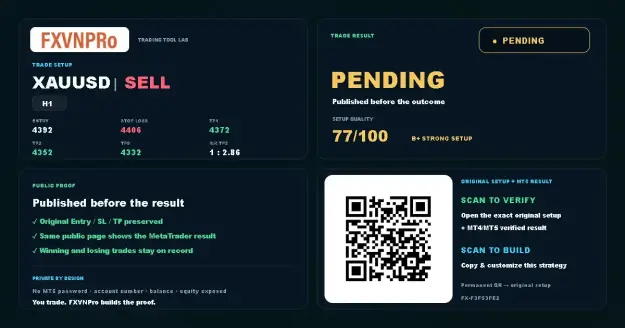 1 · SETUP
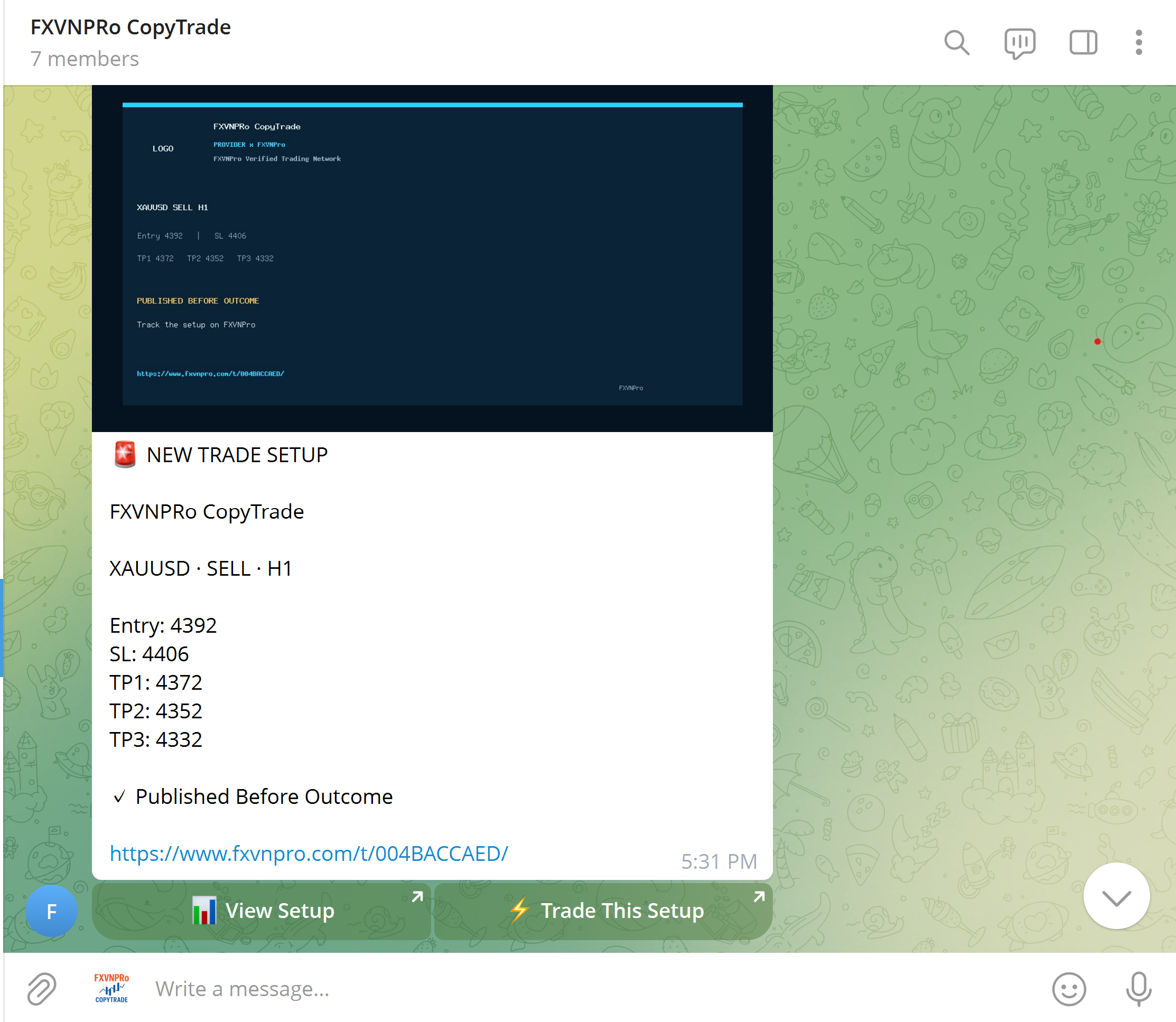 2 · TELEGRAM
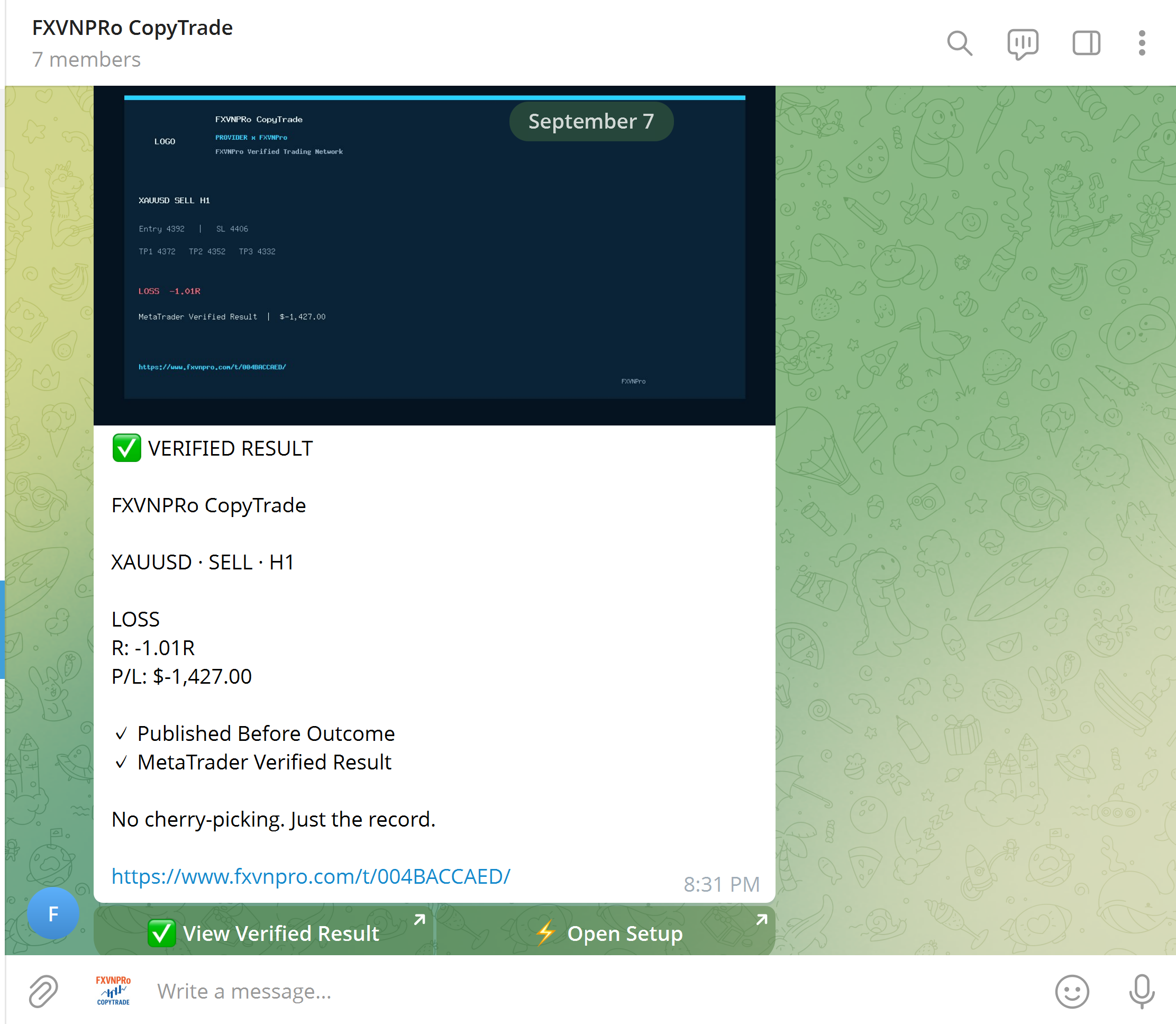 3 · VERIFIED
FXVNPro connects trade plans, Telegram trading communities and verified CopyTrade activity in one practical MT4/MT5 ecosystem.
Turn Entry, Stop Loss and Targets into a trade plan. Publish it before the outcome, then track and verify the result.
Turn Telegram signals into actionable MT4/MT5 setups. Signal Admins create the strategy while Members stay in control of risk.
Discover TRADERs, inspect verified trading history and performance, then decide who you want to follow across MT4 & MT5.
Build your strategy, distribute it to a community, or follow trading activity across MT4 & MT5.
Create Entry, Stop Loss and Targets before the outcome, then build a verified trading record.
Turn Telegram signals into an actionable workflow while followers keep control of their own risk.
Connect Chrome to MT4 or MT5 and open, modify or close trades from your browser.
Explore Masters and copy trading activity to your own MT4 or MT5 terminal with independent risk rules.