

Exness
FVP Score
7/10
Exness
- Minimum Deposit$10
- Regulation-
- PlatformsMT4, MT5
- SpreadFrom 0.0 pips
Start with your goal. You do not have to learn the FXVNPro architecture before using the tools.
Build an idea, use Telegram signals, trade from Chrome or follow a trader while technical setup stays in the background.
Technical connection details remain available inside each product when needed.
Compare Exness and OCTA by rating, regulation, minimum deposit, platforms, spreads, and overall trading conditions.
Use the FXVNPro Broker Checker Chrome extension to quickly review broker trust signals, ratings, and safety information while browsing broker websites.

| Feature | Exness | OCTA |
|---|---|---|
| Rating | 7 | 6.6 |
| Minimum Deposit | $10 | $25 |
| Regulation | - | FSC, FSCA, CySEC, MISA |
| Platforms | MT4, MT5 | MT4, MT5 |
| Spread | From 0.0 pips | From 0.1 pips |
Below is a detailed breakdown of fees, spreads, regulation, platforms, and real trading suitability to help you decide which broker fits your trading style better.
If you’ve ever been stopped out on a “normal” retracement, only to see price come back later, you already know the uncomfortable truth: forex costs aren’t just about spreads on paper. They’re about execution quality, how consistently you can enter/exit at the level you see, and whether the broker’s structure fits your trading style. That’s why “Exness vs OCTA” isn’t a cosmetic comparison—it’s a decision about your day-to-day trading experience.
In this guide, I’ll compare Exness and OCTA across the things that actually move the needle: spreads and trading costs (fees comparison), regulation and safety, platform usability, and the friction you’ll hit when depositing or withdrawing. I’m writing this for traders who are past the “what is leverage?” stage and want something more practical: which broker is better for tight-risk scalpers, which one makes sense for swing traders, and which one will frustrate you less when markets get fast.
Quick snapshot: Exness shows a very low “from 0.0 pips” spread headline and a low minimum deposit, but the regulation info provided is unclear. OCTA lists spreads from 0.1 pips and has multiple regulators (FSC, FSCA, CySEC, MISA), plus a slightly higher minimum deposit.
So the question becomes: which setup is cheaper after reality hits, and which one lets you trade with confidence when slippage and volatility show up?
Let’s talk spreads and trading costs in the way traders actually experience them: not as a number, but as repeated micro-losses. Even if two brokers look close on paper, a difference of 0.1 pip matters over dozens or hundreds of trades—especially if you scalp or day trade.
Exness advertises spreads “from 0.0 pips.” On a calm market, this can look fantastic. But in real trading conditions—think London open, NFP releases, or sudden news wicks—spreads rarely stay at the minimum. They widen based on liquidity and execution flow. If you’re paying attention, you’ll notice how quickly the “best-case” spread disappears when volatility spikes.
OCTA’s spread headline is “from 0.1 pips.” That sounds worse at first glance, but it often Connects better with execution consistency, especially during active sessions. What’s important here is not only the minimum spread; it’s the typical spread you get at the moment you hit buy/sell. This matters because the broker with the lower advertised number can still be more expensive if it widens more frequently or if execution is less favorable.
Now, hidden fees: in many retail forex setups, costs show up as spread widening, commission-like charges via contract specifications, or swap rates depending on the instrument and position size. We don’t have a commission figure here for either broker, so the fairest fees comparison is to treat spreads as the main variable and focus on how spreads behave during your trading hours.
For example, if you run a strategy that targets 10–15 pips and you’re consistently getting an extra 0.2–0.4 pip in effective spread and slippage, that can shrink your expectancy enough that “good” trades stop being profitable. Which broker is cheaper in real scenarios? Based on the provided data alone, Exness can be cheaper in the best-case spread environment, while OCTA can be cheaper if its spreads remain tighter and execution is steadier when conditions change.
When traders say “safety,” they usually mean regulation. But regulation isn’t just a logo on a website—it’s about oversight, dispute handling, capital protection frameworks, and the credibility of the broker’s operating model.
For Exness, the regulation field provided is “-” (not stated in the data you gave). That doesn’t automatically mean Exness is unsafe, but it does mean you don’t have a clear regulatory anchor from the information at hand. As a trader, I can’t ignore that. In practice, ambiguous regulation makes it harder to evaluate risk, and it can affect how comfortable you should be with long-term capital allocation—especially if you’re depositing meaningful amounts or trading heavily.
OCTA, on the other hand, is listed with FSC, FSCA, CySEC, and MISA. Multiple regulators generally suggest the broker operates under more than one compliance framework and can be held accountable by different authorities depending on jurisdiction. This matters because your recovery options, complaint pathways, and operational standards are typically stronger when a regulated entity is clear and verifiable.
Here’s the real-world scenario: you blow up a small account due to a bad month of trading. That happens. But what if you later need a withdrawal and the process becomes messy? Regulation doesn’t prevent losses from trading—nothing does—but it can influence how orderly the broker’s processes are and how seriously they take compliance.
So while regulation doesn’t guarantee profitability (obviously), it changes your risk profile as a customer. If you’re asking “which broker is better,” regulation clarity is one of the fastest ways to filter out uncertainty.
Both brokers offer MT4 and MT5, which is a big practical advantage. You’re not forced into a proprietary platform, and that matters if you already run indicators, EAs (Trading Programs (Expert Advisors)), or custom templates. Still, platform availability is only the start. The difference shows up in execution feel, chart responsiveness, and how smooth order handling is during fast markets.
For traders, MT4/MT5 experience is often “small stuff” that becomes huge on high frequency. Does the terminal freeze during news spikes? Are order confirmations fast? When you modify SL/TP, does it happen instantly or with a delay? Those seconds can turn a planned entry into an ugly one.
Exness’s low spread headline suggests it may be appealing to traders who rely on precise pricing. If you’re using scalping systems on MT5, you’ll care about how reliably your orders fill when price is moving quickly. A “from 0.0 pips” environment can be nice—provided the fills are consistent and you’re not constantly seeing widened effective spread or slippage that undercuts your strategy.
OCTA’s spread headline is slightly higher, but its multi-regulated profile may come with stronger operational discipline. In my experience, that often translates into steadier order handling and fewer weird edge cases—especially for traders who are not watching the screen every second.
Tools and usability aren’t described in the provided data, so I’ll keep this honest: you should test both brokers with your own EA or your own manual workflow. Open a chart, run your indicator set, place test orders during active sessions, and see whether the platform feels “tight” when the market moves. That’s the stuff you notice when you’re trading for real, not demo hunting.
Most traders think deposits and withdrawals are “only admin,” but friction can affect trading decisions in a very direct way. If you fund slowly, you miss opportunities. If withdrawal processing is slow or complicated, you end up delaying risk reduction.
With Exness, the minimum deposit is listed at $10. That’s a clear advantage for new traders or anyone running smaller test phases. In real trading, it’s not just about starting—it’s about being able to scale your account after you validate performance. If you’re refining a strategy, you don’t want to be stuck because the broker’s funding entry point is too high.
OCTA’s minimum deposit is $25. It’s still not a huge barrier, but it does mean beginners who want to start very small may feel the difference. For active traders, the minimum deposit matters less than withdrawal reliability, but for beginners it changes how comfortable they are taking their first steps.
Fees and timing aren’t provided in your data. Still, here’s what matters when you’re making a decision: does the broker support common payment methods in your region, and does it process withdrawals without excessive back-and-forth? In real trading conditions, you might be withdrawing after a profit streak or after you’ve hit your risk limit. If the process drags, your ability to manage capital is weakened.
So my practical advice: before you commit, check withdrawal timelines and whether identity verification is required upfront or later. Verify the steps that typically slow people down—documents, address proof, account matching. It sounds boring, but I’ve watched traders lose momentum because withdrawals became a project rather than a process.
Let’s be blunt: beginners don’t just need a “good broker.” They need a broker that reduces avoidable friction while they learn how spreads, slippage, swaps, and execution actually work.
Exness has a $10 minimum deposit, which is beginner-friendly. That’s meaningful because new traders often make mistakes: oversized position sizes, impulsive entries, panic exits. Starting smaller gives you room to learn without immediately turning one bad week into a serious drawdown. Also, MT4/MT5 support is a plus because beginners can find tutorials, templates, and indicator guidance that match those platforms.
However, regulation clarity is the big question mark in the provided data. For a beginner, uncertainty in regulation can be a psychological stressor. You’re trying to build discipline and skills, not spend your time wondering whether your broker is operating under a clear oversight framework.
OCTA’s $25 minimum deposit is still reachable for most beginners. But the real differentiator is the regulated footprint listed (FSC, FSCA, CySEC, MISA). That gives beginners a steadier foundation to focus on trading mechanics rather than compliance research.
Also, spreads and trading costs matter for beginners because their strategies usually have wider tolerance for error early on. If you’re learning and your fills are consistently worse than expected, you’ll misinterpret the market. That’s how people blame themselves or abandon strategies too early.
So which is easier to start with? If you’re purely looking at entry cost and you’re comfortable doing extra due diligence, Exness has the lower minimum. If you want a clearer safety context from day one, OCTA feels more beginner-aligned based on the data provided.
Active traders don’t care about averages. They care about what happens during their trade windows—when the market is moving and your strategy needs consistent execution.
Exness markets spreads “from 0.0 pips,” which naturally attracts scalpers and day traders. In real terms, a 0.0 pip headline can be great, especially if your system targets small moves and you’re taking many entries. But I’d ask you something: do you actually trade when spreads are at the absolute minimum? Because during fast conditions, the “from” number can quickly stop being relevant.
For high frequency strategies, effective spread (spread plus slippage) is what kills or saves you. If a broker shows tight spreads but has inconsistent execution speed—particularly when you place market orders during spikes—you can end up paying more than you think. That’s why scalpers often test both market and pending orders and compare fill quality.
OCTA’s spreads are “from 0.1 pips.” It’s not dramatic, but for some scalping models, even 0.1 pip becomes a deciding factor. The counterbalance is regulation and the likely operational consistency implied by multi-regulatory oversight. Day traders often value that steadiness because they’re trading through multiple sessions and don’t want random execution surprises.
If you’re an active trader, the right way to decide “which broker is better” is simple: run the same strategy on both brokers for a few weeks (or at least during a couple of intense sessions). Track effective spread and slippage, not just the displayed spread. Then compare your real P&L swings.
Here’s where I land, based on the information you provided and the way costs and safety show up in real trading.
Exness is the better choice for traders who prioritize low entry cost and tight spread potential. If you’re testing strategies, running smaller accounts, or you specifically benefit from very low spread conditions, Exness can fit nicely—especially with MT4/MT5. But you should treat the regulation gap in the provided data as a serious due diligence point before you scale capital. No regulator clarity means you’re taking on more “unknown” risk than you need.
OCTA is the better choice for traders who value regulation clarity and operational trust. If you want a cleaner safety profile (with FSC/FSCA/CySEC/MISA listed) and you still trade on MT4/MT5, OCTA looks more straightforward. The spreads start a touch higher, but for many day traders and swing traders, a stable experience beats chasing the absolute minimum spread headline.
If you’re asking “fees comparison” in practical terms: Exness can win in best-case spread conditions, while OCTA may feel more consistent once you factor in trading conditions and the bigger-picture risk of running with unclear regulatory details.
My recommendation is simple: if you’re an active trader chasing micro-edges and you’re willing to validate execution and withdrawals yourself, consider Exness—but verify safety details beyond this dataset. If you want a more confidence-first setup and you’re less obsessed with the last 0.1 pip, OCTA is the cleaner decision.
One real XAUUSD trade: created before the outcome, sent to Telegram, TRADEd in MT5 and returned as a verified result.
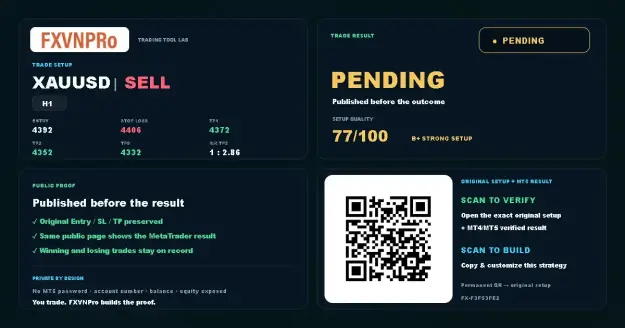 1 · SETUP
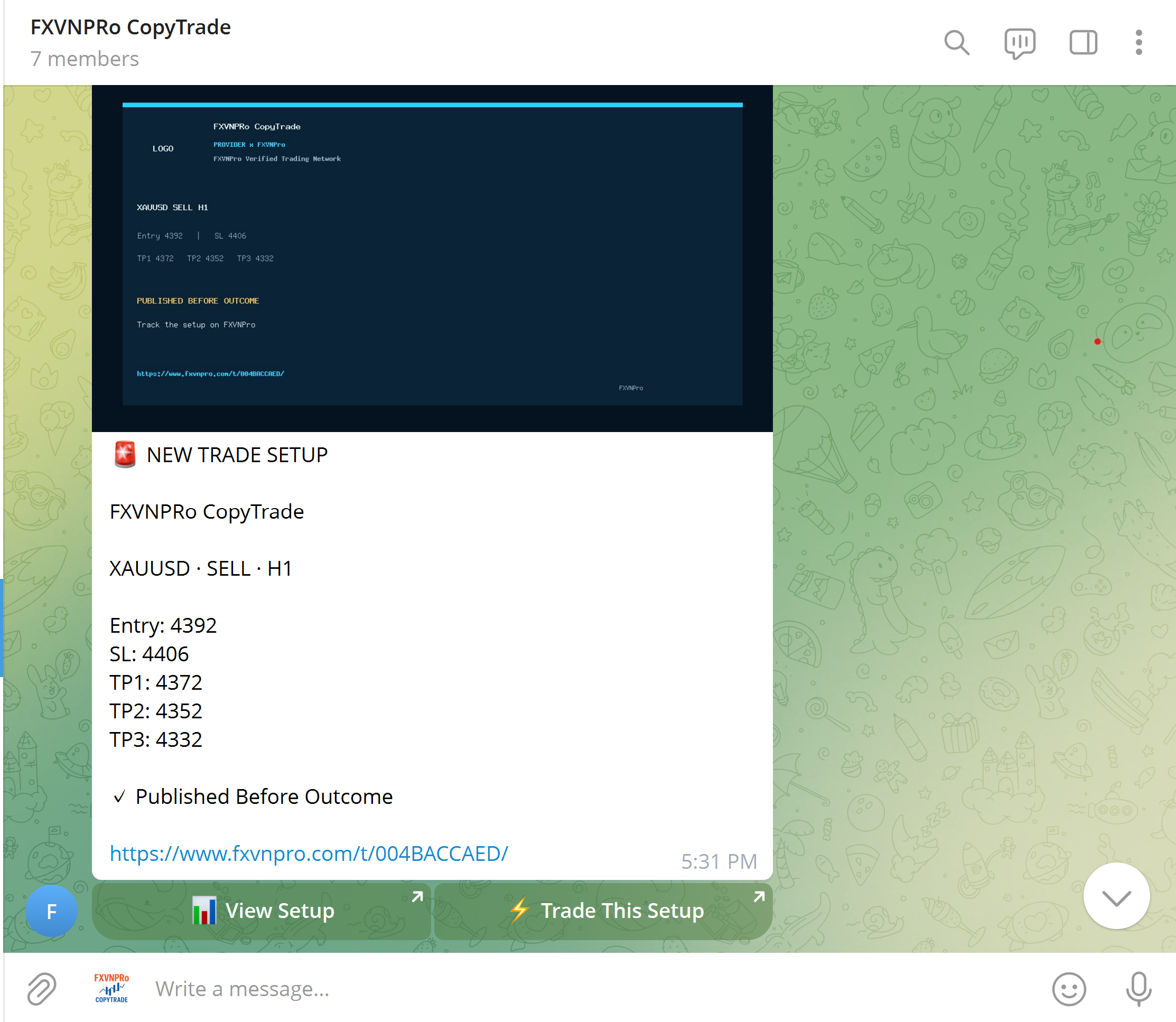 2 · TELEGRAM
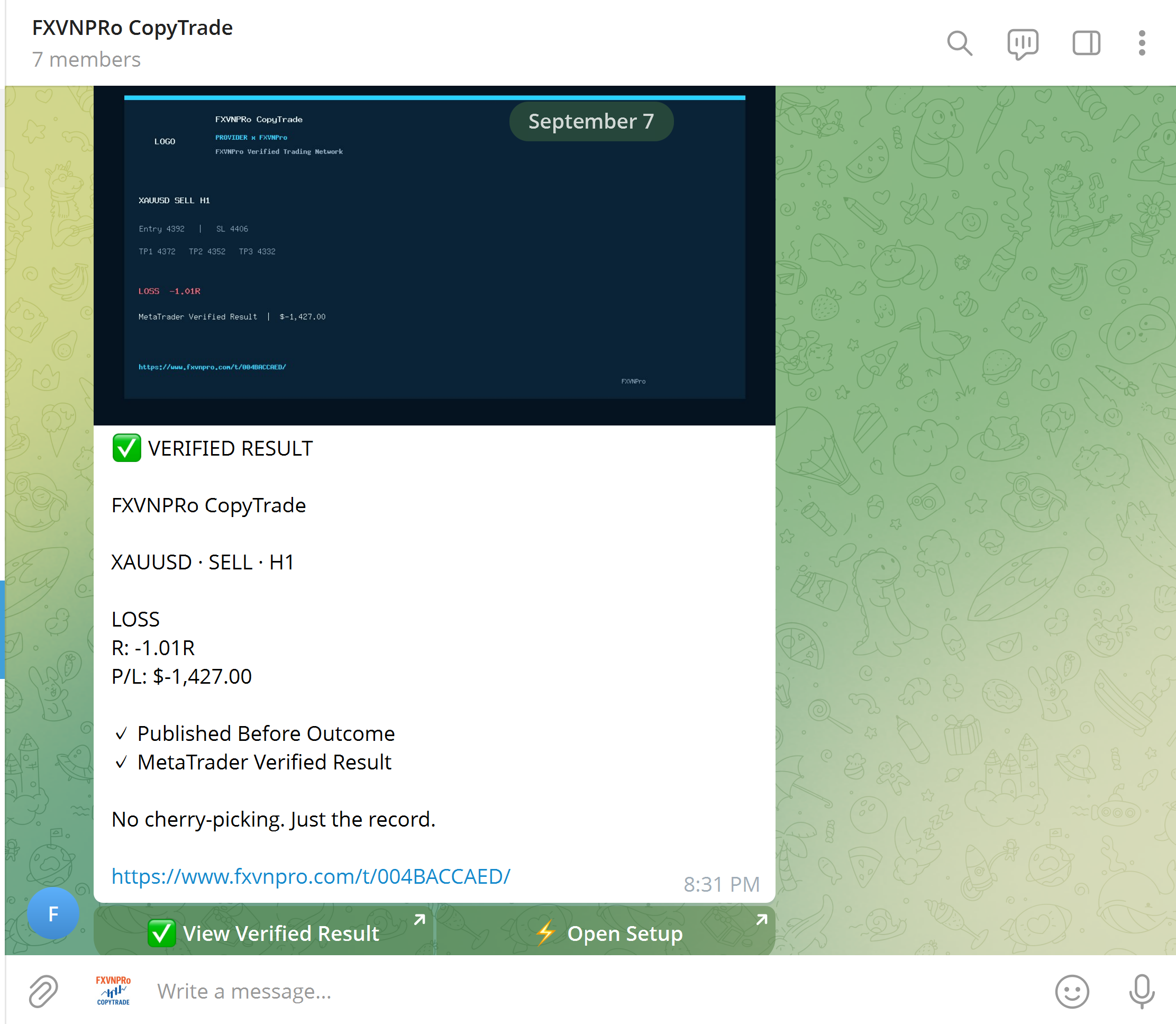 3 · VERIFIED
FXVNPro connects trade plans, Telegram trading communities and verified CopyTrade activity in one practical MT4/MT5 ecosystem.
Turn Entry, Stop Loss and Targets into a trade plan. Publish it before the outcome, then track and verify the result.
Turn Telegram signals into actionable MT4/MT5 setups. Signal Admins create the strategy while Members stay in control of risk.
Discover TRADERs, inspect verified trading history and performance, then decide who you want to follow across MT4 & MT5.
Build your strategy, distribute it to a community, or follow trading activity across MT4 & MT5.
Create Entry, Stop Loss and Targets before the outcome, then build a verified trading record.
Turn Telegram signals into an actionable workflow while followers keep control of their own risk.
Connect Chrome to MT4 or MT5 and open, modify or close trades from your browser.
Explore Masters and copy trading activity to your own MT4 or MT5 terminal with independent risk rules.