

HFM
FVP Score
6.8/10
HFM
- Minimum Deposit$5
- RegulationFCA, DFSA, FSA
- PlatformsMT4, MT5
- SpreadFrom 0.1 pips
Start with your goal. You do not have to learn the FXVNPro architecture before using the tools.
Build an idea, use Telegram signals, trade from Chrome or follow a trader while technical setup stays in the background.
Technical connection details remain available inside each product when needed.
Compare HFM and OCTA by rating, regulation, minimum deposit, platforms, spreads, and overall trading conditions.
Use the FXVNPro Broker Checker Chrome extension to quickly review broker trust signals, ratings, and safety information while browsing broker websites.

| Feature | HFM | OCTA |
|---|---|---|
| Rating | 6.8 | 6.6 |
| Minimum Deposit | $5 | $25 |
| Regulation | FCA, DFSA, FSA | FSC, FSCA, CySEC, MISA |
| Platforms | MT4, MT5 | MT4, MT5 |
| Spread | From 0.1 pips | From 0.1 pips |
Below is a detailed breakdown of fees, spreads, regulation, platforms, and real trading suitability to help you decide which broker fits your trading style better.
There’s a moment every trader eventually hits: you’re in the trade, price is moving, and you’re suddenly thinking about spreads, execution, and whether your broker is going to “help” or just go silent while you bleed. That’s why “which broker is better” isn’t a theoretical question. It’s about what happens on a normal Tuesday morning when liquidity thins, news hits, and your strategy is forced to perform.
In this HFM vs OCTA comparison, I’m going to look past the marketing and focus on the stuff that actually hits your account: spreads and trading costs, how regulators shape oversight, platform usability, and the friction you’ll feel when depositing and withdrawing. Both brokers offer MT4 and MT5 and advertise spreads from 0.1 pips, but the trading experience isn’t identical—especially once you factor in minimum deposit requirements and the kind of trader you are.
Quick summary? If you’re cost-sensitive and want a lower barrier to start, HFM tends to fit more traders. OCTA’s setup can appeal to certain regions due to its regulatory footprint, but the higher minimum deposit may slow down beginners. The real deciding factors are your trading style (scalping vs swing), your tolerance for execution quirks, and how much you care about day-to-day costs.
Who should care most? Anyone actively trading FX, anyone using MT4/MT5 with an EA, and especially traders who’ve already felt the sting of a “low spread” claim that didn’t hold up during volatile sessions.
Let’s talk spreads and trading costs, because this is where most comparisons get messy. On paper, both HFM and OCTA advertise spreads from 0.1 pips. That’s a useful benchmark, but in real trading conditions spreads expand—around news, during rollover, or when liquidity drops. What matters is how often you actually see those tight numbers and whether other costs fill the gap.
Here’s the practical way I look at it: assume you trade actively and your strategy relies on tight execution. Even if both brokers sometimes print 0.1 pip spreads, the average spread over a month becomes your true “silent fee.” If one broker routinely runs slightly wider during your trading windows, you’ll notice it in performance metrics like net profit factor, not just in “spread statistics.”
Minimum deposit also indirectly affects fees. With HFM’s $5 minimum, you can test execution and market conditions without tying up more capital than you can afford. OCTA’s $25 minimum is still reasonable, but it’s a step up if you’re experimenting with position sizing or building confidence in your EA settings.
Now, about hidden fees: you’ll typically see things like financing/rollover charges, possible inactivity or withdrawal-related costs depending on the method, and the classic “spread vs commission” confusion (some brokers rely on spreads only; others bake costs into pricing). You didn’t list commissions, so I can’t claim either broker has commission-free execution in every case. But you should still check contract specs for your instruments and account type because the total cost is what matters.
For a real-world example: if you scalp EUR/USD 50 times a week, a consistent extra 0.2–0.4 pip in average spread can erase edge fast. In that scenario, “from 0.1 pips” is less important than the average spreads you experience in your sessions.
Regulation isn’t just a stamp on a webpage. It affects how a broker is supervised, how client money is handled, what reporting standards exist, and what happens when things go wrong. For many traders, “safety” is really about reducing the odds of operational failure—not about expecting everything to be perfect.
HFM is regulated by FCA, DFSA, and FSA. FCA oversight is often seen as one of the tougher regimes, with strict requirements around governance and conduct. DFSA adds another layer of scrutiny depending on the entity and jurisdiction. Having multiple regulators can be a positive sign because it generally means the broker has to comply with different rulebooks.
OCTA is regulated by FSC, FSCA, CySEC, and MISA. CySEC is a widely recognized EU regulator, and FSCA is South Africa’s financial sector regulator. The presence of multiple regulators can also be a good indicator of operational maturity. Still, the real question for a trader is: which entity do you actually have your account under, and what protections apply to your jurisdiction?
This matters because enforcement and compensation schemes vary by regulator and local rules. Even when a broker is regulated, the details of client fund segregation, negative balance protection terms, and dispute processes can differ. Verification matters too—make sure the trading account is linked to the regulated entity you think it is, not just to the brand name.
In real trading, you don’t think about regulation until you need it. When withdrawals get delayed, or you have a dispute about execution, the regulatory framework becomes the “adult supervision.” Based on the regulators listed, both brokers look established. But HFM’s FCA presence usually carries extra weight for traders who prioritize strict conduct standards.
Both HFM and OCTA offer MT4 and MT5. That’s important because it keeps your trading workflow consistent—especially if you already use EAs, copy trading tools, or custom indicators. But platform choice is only part of the story. Execution behavior, order handling, and how smoothly you can manage risk are what separate a “usable” platform from a “problem” platform when things get hectic.
In real trading sessions, MT4/MT5 can feel similar across brokers until you test a few scenarios: placing limit orders during fast moves, managing partial closes, trailing stops that trigger repeatedly, or relying on hedging behavior. In those moments, broker-specific execution and server responsiveness matter more than the platform brand.
Execution speed and slippage are the quiet performance killers for scalpers and news traders. When you’re executing on short timeframes, slippage isn’t a one-off annoyance—it’s a recurring cost. Even if spreads show “from 0.1 pips,” slippage can still eat the edge during high volatility.
On usability, both platforms are familiar for experienced traders, but beginners often struggle with order types and position management. MT5 usually offers more features (like a richer market depth view and additional order types), but the learning curve can be steeper. If you’re new, you want a broker whose account setup and demo experience don’t complicate basics like lot sizing, leverage selection, and stop-loss placement.
Personally, I’d consider how the broker handles trade confirmations, stop levels, and any restrictions on order modifications. Those details determine whether you can implement your strategy exactly as designed—or whether you’ll spend your time fighting the platform.
Deposits and withdrawals sound boring until you’re mid-strategy and you need funds quickly—or you want to test a hypothesis by adding capital. In forex, that “friction” can affect your momentum. The longer it takes to fund and the more steps required, the more likely you’ll delay trades and miss your planned market window.
Here’s what we know from your data: HFM has a $5 minimum deposit, while OCTA’s minimum is $25. That difference is meaningful for traders who are cautious with sizing. With a smaller minimum, you can start smaller, learn platform behavior, and validate how spreads and execution look during your typical trading hours without committing much.
But minimum deposit is only one piece. Withdrawal methods, processing times, and any fees (including intermediary bank charges) can also change the real experience. Two brokers can both say “fast withdrawals,” but the actual time depends on verification checks, method selection, and local processing. If you’ve ever had to wait while your documents get reviewed, you know what I mean.
Verification requirements matter too. Most reputable brokers require identity and address verification at some point, and delays can happen when paperwork doesn’t match or when address proofs are outdated. For active traders, that means you want the verification process to be straightforward from day one—not something that surprises you after you’ve already built a position.
In a practical scenario: imagine you’re running a month-long backtest-to-live plan. You want to deposit, trade, then withdraw after week four to evaluate results. The broker with lower minimum deposit may let you iterate faster, but the broker with simpler withdrawal processing could win on reliability.
If you’re new, the biggest risk isn’t just market volatility—it’s decision fatigue. You’re learning leverage, order types, stop-loss logic, and platform navigation all at once. In that context, broker differences that seem small become big quickly.
HFM’s $5 minimum deposit stands out here. It lowers the barrier to entry, so you can practice with smaller position sizes while you learn. That matters because beginners often overestimate how much capital they need to “feel” the market. With a low minimum, you can build skill without building stress.
OCTA’s $25 minimum is still accessible, but it’s a higher commitment if you’re just starting and want to test your basic setup: charting, order placement, and whether spreads behave consistently during your chosen sessions. For beginners, the “spread from 0.1 pips” headline doesn’t teach you anything unless you also see how it looks when you place trades in real time.
Also consider regulation and account protections—new traders should care about oversight because it reduces the risk of operational issues. Both brokers list multiple regulators, which is a positive. Still, as a beginner, you should read the account terms: negative balance protection, margin call behavior, and any constraints on leverage.
So which broker is easier to start with? If you’re purely optimizing for low friction and learning with minimal capital, HFM is the better fit. OCTA can still work for beginners, especially if you’re in a jurisdiction where its regulatory entity aligns with your account, but the higher minimum deposit makes “practice trading” a bit more expensive.
Active traders don’t tolerate marketing. You care about execution speed, slippage, spreads during your specific trading hours, and how reliably the platform handles rapid order placement. This is where HFM vs OCTA can separate in performance even if both advertise similar “from 0.1 pips” spreads.
Scalpers and day traders typically trade around tight windows: London open, overlap hours, and sometimes major news releases. In those conditions, spreads may widen and execution can become less predictable. If one broker’s average spread during those sessions is even slightly worse, your strategy’s edge can thin out quickly.
EA users add another layer: order handling and trade context reliability. When EAs send multiple orders and modify stops frequently, the broker’s execution environment matters. You want low rejection rates, consistent stop execution, and predictable behavior with hedging or netting modes depending on your account setup.
For high-volume traders, the “minimum deposit” point is less about learning and more about account scaling. But it can still influence how quickly you can set up multiple strategies or diversify across instruments. HFM’s lower minimum allows smaller initial staging. OCTA’s higher minimum might push you to commit more before you can confidently run side-by-side tests.
So, which broker suits active trading better? Based strictly on what’s provided, I’d lean slightly toward HFM for active traders who want flexibility to scale testing and who are cost-sensitive. But if your account is tied to a specific regulated entity under OCTA that aligns better with your location, OCTA can be a solid option—provided your real trading costs (average spreads + slippage) match your backtest assumptions.
Notice how none of this is about “best broker for everyone.” Trading isn’t like buying a phone. It’s about whether the broker’s execution and costs line up with your strategy’s math.
If you’re asking “HFM vs OCTA, which broker is better,” my answer depends on your trading reality.
Choose HFM if: you want the lowest barrier to start (minimum deposit $5), you care about being able to test and scale without tying up capital, and you’re focused on spreads and overall trading costs for real execution. For many traders, especially those building a strategy from scratch or migrating from demo to live, the flexibility of a smaller deposit can be the difference between learning and rushing.
Choose OCTA if: your priority is aligning with the regulatory entity that fits your jurisdiction best (given the regulators listed: FSC, FSCA, CySEC, MISA), and you’re comfortable with the $25 minimum deposit. It can still work well for MT4/MT5 traders, including active users, but you should validate your real spreads and slippage during your common trading sessions—don’t rely on the “from 0.1 pips” headline.
My clear lean for most readers is HFM. The combination of lower minimum deposit and a strong regulatory presence (including FCA) makes it easier to start, test execution, and manage risk without overcommitting. OCTA is not automatically worse—it’s simply less forgiving for beginners due to the higher minimum and requires a bit more diligence to confirm that live costs match what you expect.
If you want the most practical next step, open demo accounts with both, trade your usual Connects around the times you actually trade, and compare your average spreads and execution quality. That’s the only “which broker is better” test that really matters.
One real XAUUSD trade: created before the outcome, sent to Telegram, TRADEd in MT5 and returned as a verified result.
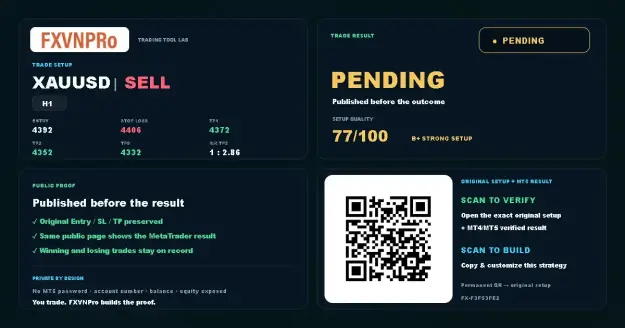 1 · SETUP
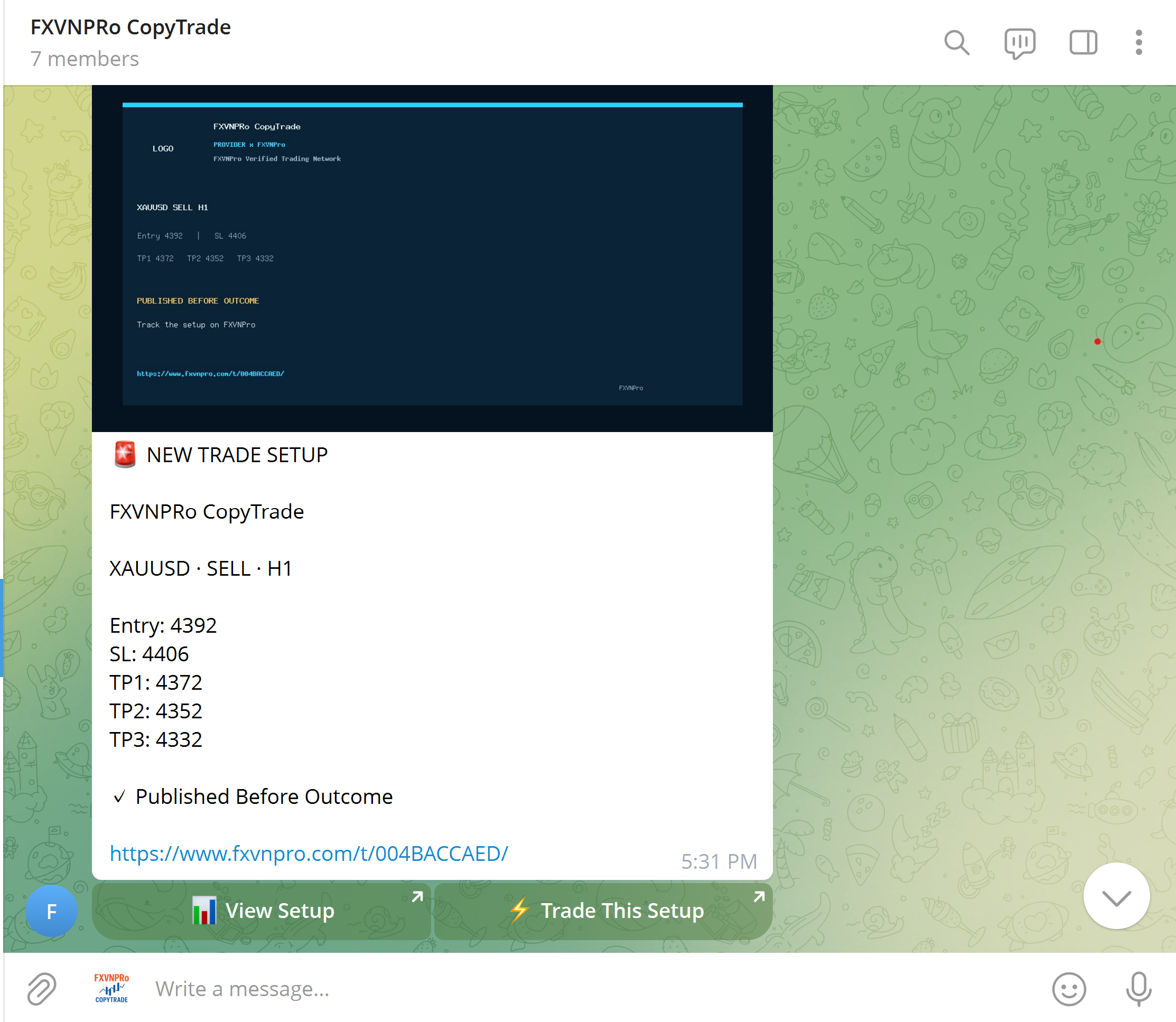 2 · TELEGRAM
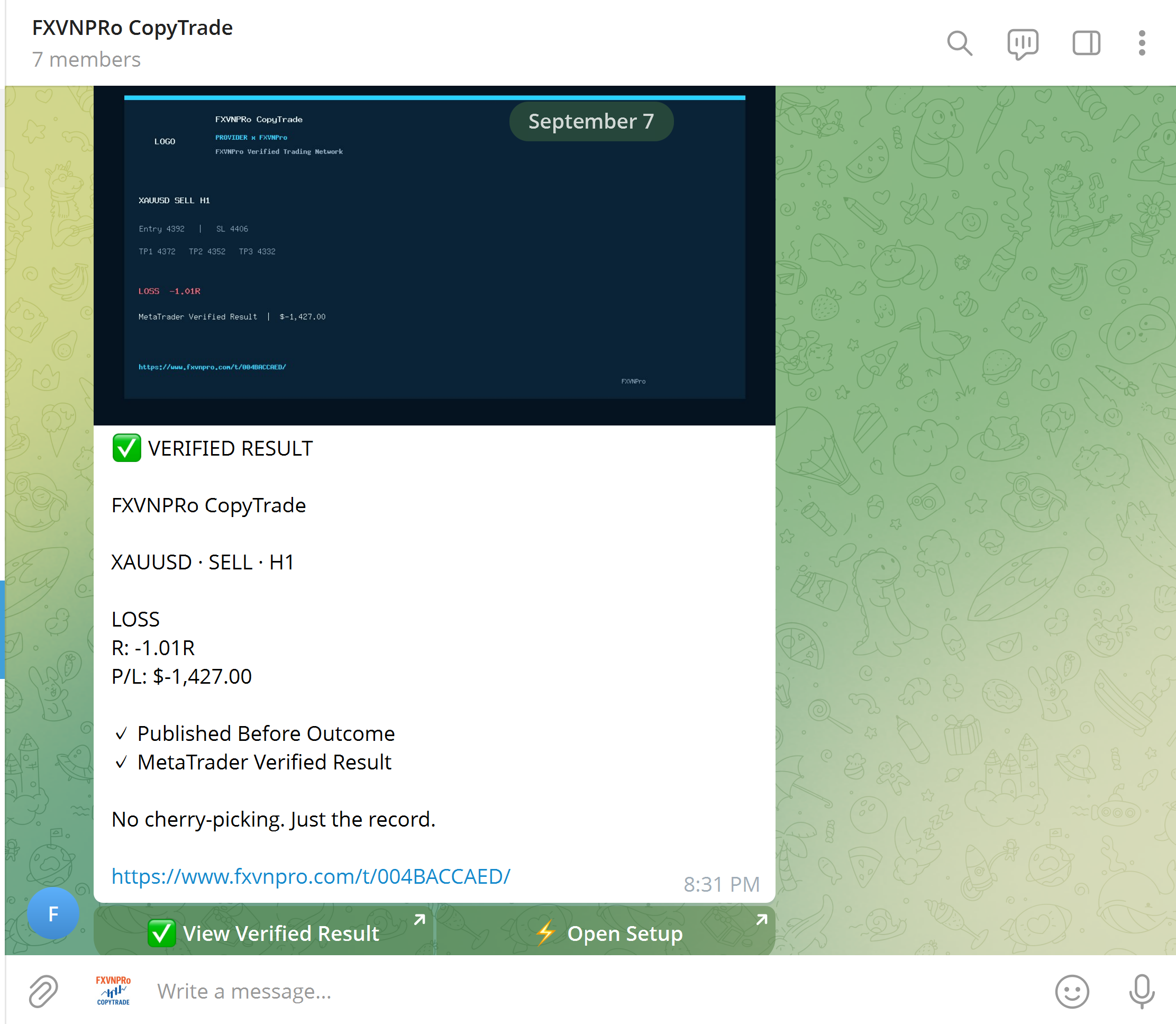 3 · VERIFIED
FXVNPro connects trade plans, Telegram trading communities and verified CopyTrade activity in one practical MT4/MT5 ecosystem.
Turn Entry, Stop Loss and Targets into a trade plan. Publish it before the outcome, then track and verify the result.
Turn Telegram signals into actionable MT4/MT5 setups. Signal Admins create the strategy while Members stay in control of risk.
Discover TRADERs, inspect verified trading history and performance, then decide who you want to follow across MT4 & MT5.
Build your strategy, distribute it to a community, or follow trading activity across MT4 & MT5.
Create Entry, Stop Loss and Targets before the outcome, then build a verified trading record.
Turn Telegram signals into an actionable workflow while followers keep control of their own risk.
Connect Chrome to MT4 or MT5 and open, modify or close trades from your browser.
Explore Masters and copy trading activity to your own MT4 or MT5 terminal with independent risk rules.