

IC Markets
FVP Score
7/10
IC Markets
- Minimum Deposit$1
- RegulationASIC, CySEC
- PlatformsMT4, MT5
- SpreadFrom 0.0 pips
Start with your goal. You do not have to learn the FXVNPro architecture before using the tools.
Build an idea, use Telegram signals, trade from Chrome or follow a trader while technical setup stays in the background.
Technical connection details remain available inside each product when needed.
Compare IC Markets and Vantage Markets by rating, regulation, minimum deposit, platforms, spreads, and overall trading conditions.
Use the FXVNPro Broker Checker Chrome extension to quickly review broker trust signals, ratings, and safety information while browsing broker websites.

| Feature | IC Markets | Vantage Markets |
|---|---|---|
| Rating | 7 | 6.5 |
| Minimum Deposit | $1 | $50 |
| Regulation | ASIC, CySEC | ASIC, FSCA, VFSC |
| Platforms | MT4, MT5 | MT4, MT5,cTrader,TradingView |
| Spread | From 0.0 pips | From 1.0 pips |
Below is a detailed breakdown of fees, spreads, regulation, platforms, and real trading suitability to help you decide which broker fits your trading style better.
If you’ve traded long enough, you know the “best broker” question rarely comes down to a logo or platform screenshots. It comes down to the stuff that quietly hits your P&L every day: spreads, execution quality, commissions, and whether withdrawals feel painless or annoying. That’s why this IC Markets vs Vantage Markets comparison matters. Not because it’s theoretical—because it shows how trading costs and trading conditions stack up in real life.
Who should care? Honestly, anyone who’s moving from demo to live, or anyone who’s already trading but feels like their results don’t match their strategy. If your edge is tight (scalping, news trading, fast mean-reversion), trading costs become part of the strategy—whether you like it or not.
Quick summary of key differences: IC Markets has a lower minimum deposit ($1), tighter starting spreads (from 0.0 pips), and only MT4/MT5. Vantage Markets asks for $50 minimum, has spreads from 1.0 pips, and offers MT4, MT5, cTrader, and TradingView. Both are regulated (IC Markets: ASIC, CySEC; Vantage Markets: ASIC, FSCA, VFSC), but the “feel” of trading can differ depending on your style and platform preferences.
So which broker is better for you? Keep reading—especially the fees comparison and spreads and trading costs section, because that’s where most traders accidentally bleed money.
Let’s talk costs in a way that actually reflects trading. Spreads are the most visible cost, but they aren’t the only one. What matters is your average “all-in” cost per trade: spread + commission (if applicable) + any slippage that comes from execution speed and market conditions.
IC Markets advertises spreads from 0.0 pips. That sounds great on paper, and in practice it’s usually what you want if you’re trading lower timeframes or entering frequently. But here’s the real-world nuance: “from 0.0 pips” often means the tightest conditions show up during liquid hours, and widening can happen around rollovers, news, or thin liquidity. Still, even when spreads widen to something like 0.8–1.5 pips during normal conditions, having the potential for near-zero entry can reduce the drag on scalping systems.
Vantage Markets lists spreads from 1.0 pips. That doesn’t automatically make it expensive—1.0 pips can be perfectly acceptable for swing trading—but it can be a noticeable handicap if your strategy depends on frequent entries or small targets. In real trading conditions, a “small” extra pip cost on every trade adds up fast. If you run 50 trades a week, the difference isn’t just a number—it’s the difference between staying consistent and gradually losing your edge.
Example scenario: suppose you trade EUR/USD with average target 10–15 pips and stop 20–25 pips. If your spread routinely costs you an extra pip or two, your win rate requirement goes up. Over hundreds of trades, that’s not minor—it changes how you size risk.
Bottom line for fees comparison: IC Markets tends to be cheaper in the “spread drag” sense, especially for active strategies. Vantage may still work, but you’re likely paying more per entry on average if you compare apples to apples on spreads and trading costs.
Regulation is one of those topics traders either obsess over or ignore completely—usually based on what they’ve experienced. Here’s a practical way to think about it: regulators don’t stop market losses, but they can reduce operational risk. That includes broker insolvency risk, complaint handling, and enforcement around conduct.
IC Markets is regulated by ASIC and CySEC. ASIC is generally considered strict and highly reputable, especially around financial services requirements and oversight. CySEC is also a major European regulator, and the combination suggests the broker is operating under multiple compliance regimes. For traders, that typically translates into a more mature compliance environment—important when you’re dealing with live accounts, leverage, and the boring but crucial mechanics behind order handling and client money processes.
Vantage Markets is regulated by ASIC, FSCA, and VFSC. Having ASIC again is a good sign, and FSCA is South Africa’s regulator. VFSC (Vanuatu Financial Services Commission) is smaller and less influential than the big European and Australian regulators, but it still indicates the broker is at least operating with a regulatory framework. The real question is not “do they have regulation?” but “how reliably do they follow it across jurisdictions,” especially during stressful periods.
In real trading conditions—fast markets, withdrawal requests, platform issues—this matters. If something goes wrong, regulators influence the process and your ability to escalate. So verification matters: you want to be sure you’re actually trading under the regulated entity that matches your client location and account setup.
Clear takeaway: both brokers are regulated with mainstream oversight involved (ASIC for both). IC Markets’ ASIC + CySEC mix feels a bit more straightforward for many traders. Vantage’s multi-regulator setup is credible, but the VFSC presence makes it slightly more complex to evaluate depending on where you live and which entity your account falls under.
Platforms aren’t just about what looks nicer. They affect how you place orders, manage risk, monitor fills, and even how quickly you can adapt when price moves faster than your brain. Let’s compare IC Markets vs Vantage Markets here.
IC Markets offers MT4 and MT5. For many traders, that’s a comfort zone. MT4 is still the “classic” for indicators, EA communities, and straightforward execution. MT5 adds more features and market depth options for some users. If you use EAs, you probably already know the MT4/MT5 ecosystem is huge. Also, a broker offering only MT4/MT5 can sometimes mean resources are focused—less fragmentation across platform types.
Vantage Markets includes MT4, MT5, cTrader, and TradingView. This is a meaningful difference if you care about charting workflow or prefer cTrader’s interface and order management. TradingView integration can also speed up the process of finding setups, especially if you’re used to building ideas there first. But remember: tool variety doesn’t automatically equal better execution. Execution quality depends on the broker’s infrastructure and how each platform connects to it.
In real terms, traders notice execution speed and slippage most during volatile sessions. If you’re placing stop entries during news releases or managing trades in a fast trend, you’ll care about fill quality and how consistently orders behave. That’s where “platform choice” and “execution performance” overlap.
So which broker is better for trading experience? If you live in MetaTrader land (EAs, custom indicators), IC Markets may feel simpler. If you want options—especially cTrader and TradingView—Vantage can fit your workflow better.
Deposits and withdrawals are where “broker research” turns into “life admin.” And small differences can become big headaches when you’re trying to fund quickly, test performance, or just withdraw profits without drama.
IC Markets has a minimum deposit of $1. That’s unusually low. In practice, it helps beginners start with less commitment, and it also helps experienced traders who want to test a strategy on a new environment without tying up serious capital. Of course, with very small deposits, traders still need to consider leverage, margin, and whether their lot sizing will be realistic relative to account size—but the low minimum removes the first psychological barrier.
Vantage Markets has a $50 minimum deposit. That’s not high in absolute terms, but it can change who starts. If you’re a beginner, $50 is still accessible, but it’s more “serious money” than $1. For traders funding multiple accounts or experimenting, $50 can feel like friction—especially if you’re comparing brokers or testing several strategies.
Withdrawals are where you learn whether a broker is smooth or messy. Speed and fees depend heavily on your payment method and the broker’s processing rules. While we can’t assume specifics without your payment rails, the general reality is: the broker that offers a cleaner onboarding and clearer withdrawal process tends to reduce the stress around profit-taking.
Example scenario: you run a small live trial, hit a decent move, and want to pull funds the same week. If you’re using a broker with a low minimum deposit, you’re more likely to try it quickly. But if your withdrawal experience becomes slow or confusing, you’ll stop experimenting regardless of the platform.
Decision point: if minimizing friction matters, IC Markets clearly wins on minimum deposit. If you already know you’ll fund $50+ anyway, the deposit difference matters less than the actual withdrawal experience, which you should verify based on your region and account entity.
Beginner suitability isn’t just about having MT4/MT5. It’s about reducing mistakes. New traders often get hit with costs, platform confusion, and fear-driven overtrading. So the broker that helps you start smoothly can improve outcomes indirectly—because you make fewer impulsive decisions.
IC Markets, with a $1 minimum deposit, is naturally friendlier for new traders who want to learn without immediately risking much. You can practice execution, understand spreads, and learn how order types behave. Starting small also makes it easier to build discipline: you can focus on process (risk per trade, journaling, and consistency) rather than obsessing over whether you “have to” make money fast.
Vantage Markets asks for $50, which is still manageable but slightly more commitment. The platform variety—MT4, MT5, cTrader, and TradingView—can also be a plus for beginners who rely heavily on charts. TradingView users often feel at home quickly because the charting workflow is familiar.
But here’s the subtle part beginners miss: spreads and trading costs. If you’re using a tiny target while learning, the spread becomes a larger percentage of your profits. IC Markets, with spreads from 0.0 pips, generally offers an easier environment for experimenting because the cost of each attempt can be lower.
In real beginner trading conditions, most people don’t trade 1–2 times a week. They enter, exit, re-enter—sometimes repeatedly. That behavior magnifies trading costs. So the broker with tighter spreads and a low minimum deposit usually supports learning better.
Which broker is easier to start with? For most beginners, IC Markets edges it due to the low minimum deposit and typically better spreads and trading costs. If you strongly prefer cTrader or TradingView, Vantage may feel more comfortable—but you’ll likely pay a bit more per entry because spreads start wider.
Now we’re in the territory where brokers stop being “nice to have” and start being “make or break.” Active traders care about three things more than anything: spreads, execution speed, and how often the broker’s environment prevents or amplifies slippage. Your strategy might be good. But if fills consistently arrive at worse prices, the edge disappears.
IC Markets: spreads from 0.0 pips. For scalpers and day traders, that’s the big headline. Tight spreads reduce the minimum take-profit requirement and improve the math on frequent entries. If you’re trading during liquid sessions, you’re more likely to see close-to-tight conditions, which is exactly what you want when you’re targeting small moves. With MT4/MT5, you also have a mature toolkit for automation and fast execution workflows.
Vantage Markets: spreads from 1.0 pips, but it offers cTrader and TradingView alongside MT4/MT5. If your activity style benefits from cTrader’s order management or charting workflow, that can be a real advantage. Still, the cost baseline is higher on entry compared to a broker that can display 0.0 pip spreads. For high-volume traders, that difference compounds.
Consider a realistic day trading scenario: you’re placing 30–80 trades across major Connects, often with stops close to market. Even a 1 pip spread difference can shift your profitability. And when volatility spikes, your exposure to slippage increases—so execution consistency becomes critical.
Which broker is better for active trading? If your strategy depends on low spreads to work, IC Markets is the more obvious choice. If you’re more workflow-driven (cTrader, TradingView integration) and your strategy can tolerate wider spreads, Vantage may still fit, but you’ll need to be honest about the fees comparison impact on your average trade.
That’s the trade-off in a nutshell. The question “which broker is better” depends on whether you value lower trading costs and flexibility to start small (IC Markets) or a wider platform ecosystem (Vantage Markets).
If you want a clear decision, here it is.
IC Markets is the better pick for active traders who care about spreads and trading costs. Scalpers, day traders, and anyone running higher trade counts will typically feel the benefit of spreads starting from 0.0 pips. Add the very low minimum deposit ($1), and it’s also easier to test strategies without committing too much capital upfront. For most traders focused on execution efficiency and minimizing spread drag, IC Markets vs Vantage Markets leans toward IC Markets.
Vantage Markets is a stronger choice for traders who want platform flexibility and a chart-first workflow. If you prefer cTrader’s feel or you build setups in TradingView, Vantage can match your process better. It’s also worth considering if your strategy is more swing-based and doesn’t depend on squeezing every fraction out of spreads. Yes, spreads start from 1.0 pips, so you should model that into your fees comparison and expected edge—but it doesn’t automatically make Vantage “bad.” It just changes what you need to be profitable.
So, which broker is better? For most practical trading styles—especially if you’re serious about scalping, day trading, or high-volume execution—IC Markets is the clearer winner. For traders who prioritize TradingView/cTrader workflow and place fewer trades, Vantage Markets can be the better fit.
If you’re still unsure, do one thing before committing emotionally: open both brokers’ demo accounts, test execution around different sessions, and measure your average spread and fill behavior for the Connects you actually trade. That will tell you more than any rating ever could.
One real XAUUSD trade: created before the outcome, sent to Telegram, TRADEd in MT5 and returned as a verified result.
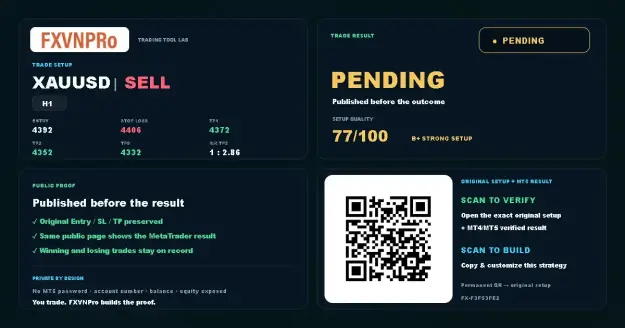 1 · SETUP
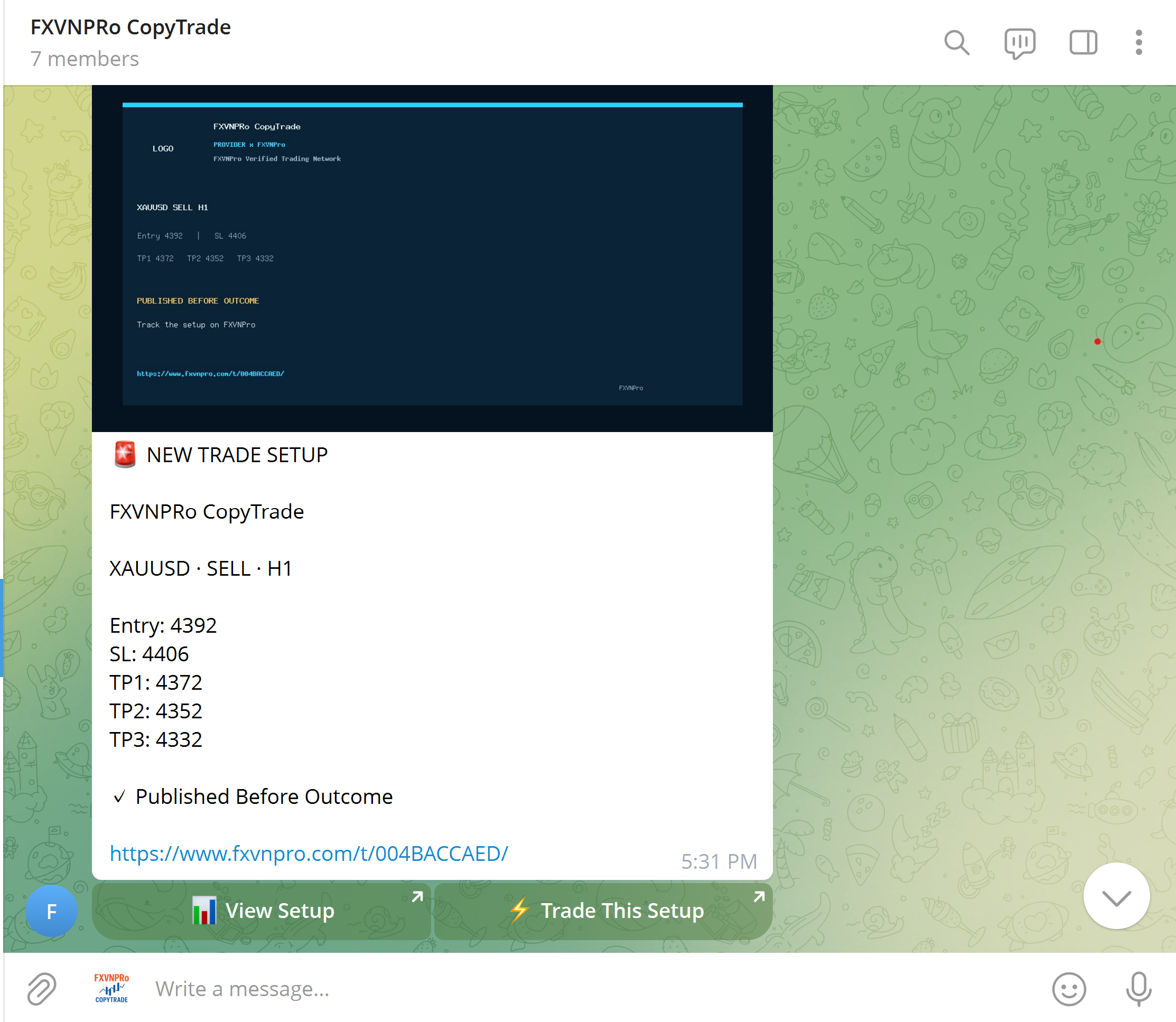 2 · TELEGRAM
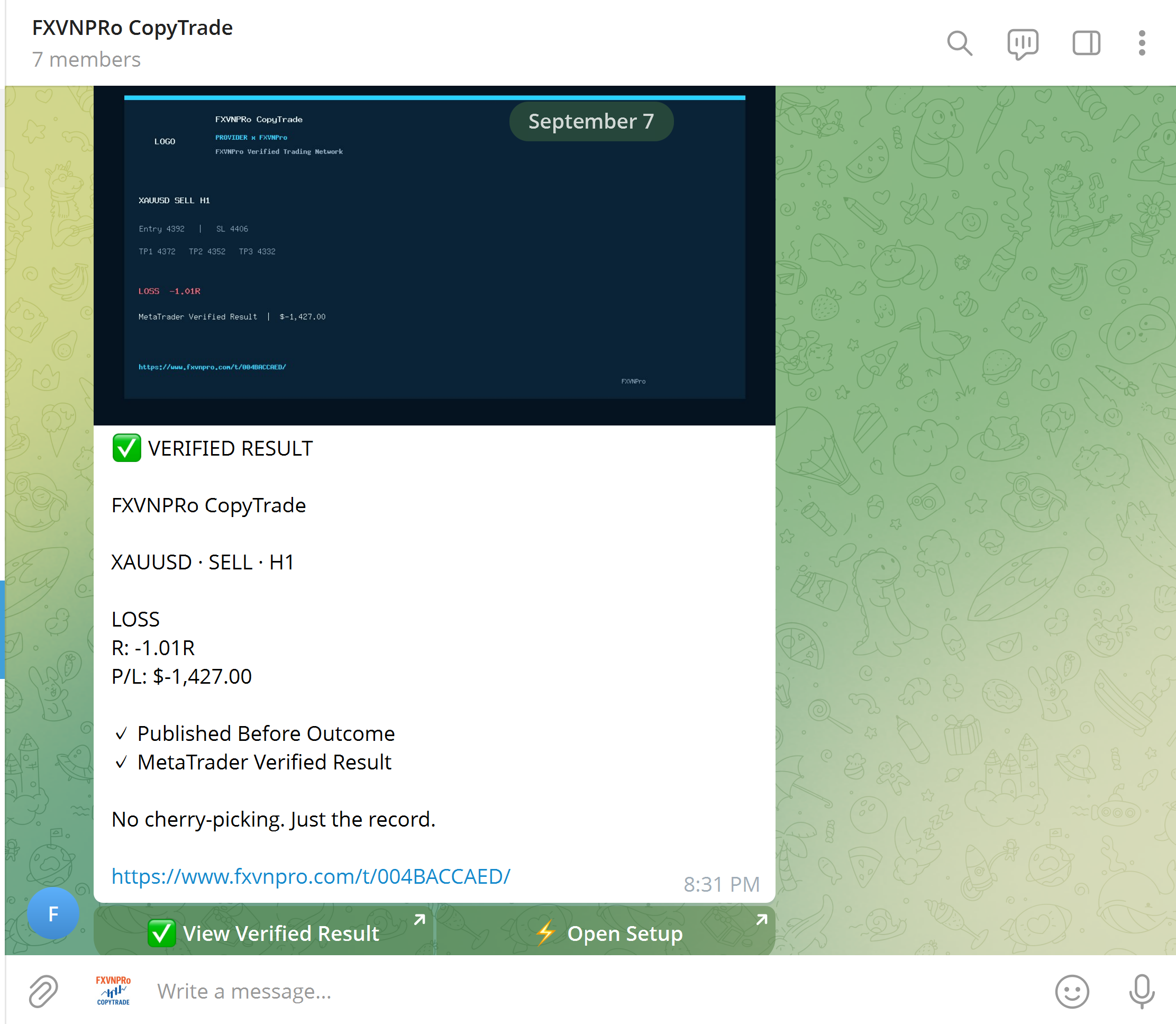 3 · VERIFIED
FXVNPro connects trade plans, Telegram trading communities and verified CopyTrade activity in one practical MT4/MT5 ecosystem.
Turn Entry, Stop Loss and Targets into a trade plan. Publish it before the outcome, then track and verify the result.
Turn Telegram signals into actionable MT4/MT5 setups. Signal Admins create the strategy while Members stay in control of risk.
Discover TRADERs, inspect verified trading history and performance, then decide who you want to follow across MT4 & MT5.
Build your strategy, distribute it to a community, or follow trading activity across MT4 & MT5.
Create Entry, Stop Loss and Targets before the outcome, then build a verified trading record.
Turn Telegram signals into an actionable workflow while followers keep control of their own risk.
Connect Chrome to MT4 or MT5 and open, modify or close trades from your browser.
Explore Masters and copy trading activity to your own MT4 or MT5 terminal with independent risk rules.