Plan a Trade
Build a structured setup and use practical trading tools before you act.
Trade IdeasRisk ToolsCalculators
BUILD A TRADE IDEA →
Plan trades, connect MT4 & MT5, review verified execution, explore traders and research brokers — without learning the whole platform first.
Build a structured setup and use practical trading tools before you act.
Use Browser Trading or turn supported Telegram signals into a structured trading workflow.
Explore CopyTrade Masters, review their records and choose your own risk settings.
Compare IC Markets and Titan FX by rating, regulation, minimum deposit, platforms, spreads, and overall trading conditions.
Use the FXVNPro Broker Checker Chrome extension to quickly review broker trust signals, ratings, and safety information while browsing broker websites.


| Feature | IC Markets | Titan FX |
|---|---|---|
| Rating | 7 | 6.3 |
| Minimum Deposit | $1 | $50 |
| Regulation | ASIC, CySEC | VFSC, FSA, FSC |
| Platforms | MT4, MT5 | MT4, MT5 |
| Spread | From 0.0 pips | From 0.1 pips |
Below is a detailed breakdown of fees, spreads, regulation, platforms, and real trading suitability to help you decide which broker fits your trading style better.
If you’ve ever watched a “tight spread” briefly look amazing in a demo, then widen just when price moves fast, you already know the annoying truth: forex broker quality shows up in costs and execution under pressure. That’s why this IC Markets vs Titan FX comparison matters. It’s not just about which platform you can log into—it’s about how much you pay (spreads, commissions if applicable, and friction) and how consistently your orders get filled.
IC Markets (ASIC, CySEC; MT4/MT5; minimum deposit $1; spreads from 0.0 pips) and Titan FX (VFSC, FSA, FSC; MT4/MT5; minimum deposit $50; spreads from 0.1 pips) look similar on paper. But traders don’t trade “on paper,” do they? They trade during news releases, rollover, and the messy middle of a live session when liquidity thins.
So who should care? If you’re building a strategy around low spreads, scalping, or high-frequency entries, the trading costs and execution consistency will decide whether your edge survives. If you’re a newer trader, the minimum deposit and onboarding friction can matter just as much as the headline spread.
Quick summary of key differences: IC Markets typically has the stronger “starting point” for small accounts and can be more cost-efficient in tight-spread conditions. Titan FX may appeal to traders who prefer the specific regulatory footprint it offers, but its higher minimum deposit and slightly higher “from” spread means you’ll feel the cost difference sooner if you trade frequently.
Let’s talk about the part that quietly compounds: fees and spreads and how they hit every single entry. You’ll often see brokers advertise “spreads from X pips,” but what matters is the spread behavior during real trading conditions—especially volatile moves. In practice, the “from” number is the best-case scenario, not the average. Still, it’s a useful clue.
IC Markets lists spreads from 0.0 pips. Titan FX lists spreads from 0.1 pips. That sounds tiny, but if your strategy takes 50–200 trades a month, you’re not paying in theory—you’re paying in pips. Suppose you’re trading a mean reversion system that targets 8–12 pips per trade. A recurring extra 0.1 pip is not life-changing on one position, but it becomes noticeable when you’re grinding for consistent results.
Now add the “hidden” costs traders forget: commissions (if your account type requires them), swaps/rollover, and execution slippage. Spread isn’t the only cost, but it’s the easiest one to observe. During news, spreads can widen for both brokers. The question is: who widens less and who keeps executions cleaner?
For example, imagine you’re scalping EUR/USD around London open. If IC Markets delivers more frequently near its tight spread range, your average entry cost drops. Titan FX may still be competitive, but if the baseline is 0.1 pips higher more often than you expect, your edge gets smaller before you even account for slippage.
So which broker is cheaper in real scenarios? Based on the available “spreads from” data alone, IC Markets has the advantage for traders who care about spreads and trading costs. The only way Titan FX beats it is if your specific account setup (commissions vs spread structure) meaningfully offsets that difference—and you’d need to verify your live account costs, not the marketing line.
Regulation is one of those topics traders either obsess over or ignore until something goes wrong. For a serious comparison, you have to think beyond logos and ask: how meaningful is the regulator’s oversight in day-to-day risk?
IC Markets is regulated by ASIC and CySEC. ASIC is known for relatively strict financial conduct expectations. CySEC is also a major EU regulator with established oversight. In real trading terms, stronger regulatory frameworks often correlate with more robust internal processes: segregation expectations, risk controls, and clearer conduct rules. It doesn’t eliminate risk (nothing does), but it changes the quality of the environment you’re operating in.
Titan FX is regulated by VFSC, FSA, and FSC. These are regulators in different jurisdictions, and the overall “trust level” can vary depending on enforcement style and investor protections. The practical takeaway for most traders: don’t treat “multiple regulators” as automatically equal to “best protection.” You should check what those regulators cover—client fund handling, complaint mechanisms, and how disputes are resolved.
Verification matters because traders are often too focused on deposit methods and platform availability. But what happens if you need to withdraw during market stress? How quickly can your withdrawal be processed? Is there a clear audit trail? Regulation influences those operational realities.
In real trading conditions—especially during drawdowns—your biggest risk isn’t just losing on a trade. It’s operational risk: delays, freezes, or account issues when you least want them. If your priority is a more widely recognized regulatory environment, IC Markets has the cleaner positioning with ASIC and CySEC.
If you’re deciding which broker is better for safety, IC Markets is the more straightforward choice from a trader’s risk management perspective. Titan FX can still be workable, but you should do extra due diligence on withdrawal processes and how its regulatory structure translates into consumer protection.
Both IC Markets and Titan FX offer MT4 and MT5. That’s good news because it keeps life simpler: indicators, EAs, and charting workflows are familiar. But traders don’t choose a broker just for the platform icon—they choose for execution quality, speed, and how reliably the broker supports your style.
Execution speed and slippage are where the “same platform” comparison breaks down. In real trading, two brokers can both run MT4 and still produce different results when you place market orders during fast moves. If you trade with tight stops or use pending orders around key levels, even small differences in fill quality can shift your outcomes.
Usability also matters. MT4/MT5 are customizable, but some brokers make it easier to manage costs, view account metrics, or run reports that you can actually trust. For example, if you’re backtesting an EA and then running it live, you want the live environment to match your assumptions. That includes spread consistency and whether your execution behaves similarly to your backtest conditions.
Tools matter too—economic calendar access, VPS compatibility, and how smoothly your environment runs when you’re automating. A trader running an MT5 strategy with frequent entries will care about stability and order handling. A discretionary trader will care about chart responsiveness and whether order placement feels “instant” rather than laggy.
Both brokers have the platform basics covered. Where IC Markets tends to stand out for active traders is the combination of tight spreads (from 0.0 pips) and a long-standing reputation among traders who use MT4/MT5 seriously. Titan FX can still work well, but if you’re trading execution-sensitive strategies, you should focus on live testing and verifying your average spread and slippage.
Minimum deposit is only half the story. The other half is friction: how quickly you can fund, how many steps you have to complete, and how smooth withdrawals are when you actually want your money back.
IC Markets has a minimum deposit of $1. That’s a big deal for trial runs. When you’re trying a new strategy or testing execution quality, being able to deposit a small amount changes your risk. You can stress test your workflow—platform connection, order placement, and withdrawal process—without tying up a meaningful chunk of capital.
Titan FX’s minimum deposit is $50. That’s not massive, but it’s enough to feel like “real money” for beginners. If you’re not sure whether you’ll stick with trading, that higher starting point can make you postpone testing. And postponing testing is how traders end up deploying an EA or a scalping plan without confirming how costs really behave.
Withdrawals are where the real-world experience matters. In regulated environments, you typically have steps like verification (KYC), and withdrawals can require matching the original deposit method. The key is speed and clarity. Does the broker communicate status updates? Does it request documents quickly and consistently? Are there common delays during volatile periods?
Here’s a practical scenario: you fund, trade a week, and then withdraw to confirm everything works. If you’re with IC Markets, you’re more likely to have flexibility in how you size that test. With Titan FX, you might need to commit more upfront before you feel confident enough to run a full “deposit-trade-withdraw” cycle.
Based on minimum deposit alone, IC Markets is the less friction-heavy entry. But always check withdrawal processing times and any fee schedules in your region, because that’s the part that varies and can surprise traders.
For beginners, the best broker isn’t just the one with the lowest spread. It’s the one that reduces preventable mistakes. And yes, that includes costs, because beginners tend to trade more often while learning. Every extra pip matters when you’re still figuring out position sizing and dealing with emotional entries.
IC Markets has a minimum deposit of $1 and spreads from 0.0 pips. That combination is beginner-friendly because it lets you experiment with smaller risk while you learn. You can focus on execution, spreads, and how orders behave across sessions without needing a $50 starting buffer.
Titan FX’s $50 minimum deposit is still accessible, but it can slow down the learning curve. If you’re trying to understand whether your strategy works in live conditions, you want to run multiple small tests, not one big commit. Higher minimums can make traders rush, and rushing usually leads to worse habits.
Regulation also plays into beginner safety. IC Markets’ ASIC and CySEC presence can feel more comforting to new traders who don’t yet know how to vet brokers beyond “it’s legit.” Titan FX’s regulators may be valid, but beginners often find it harder to assess what protection looks like in practice.
Execution simplicity matters too. MT4/MT5 are learning-friendly because they’re familiar and widely used. Both brokers provide them. The real difference for beginners becomes cost transparency and the ability to practice with minimal financial stress.
So which broker is better for beginners? IC Markets is the clearer choice. The smaller minimum deposit and tight-spread positioning make it easier to learn through live experimentation. If you’re going Titan FX, you’d want to be extra sure you understand your live account costs before committing.
Active traders don’t care about “potential.” They care about repeatability. Can you enter and exit without getting punished by wider spreads, inconsistent fills, or slippage that destroys your stop placement?
IC Markets’ spreads from 0.0 pips are a strong starting point for scalpers and day traders. If your system relies on capturing small moves—say 5–10 pips—costs and execution consistency become the entire game. In real sessions, spreads often hover tight during normal liquidity and widen during news or thin periods. The trader’s job is to avoid the worst moments, but the broker’s job is to keep performance stable when markets get noisy.
Titan FX lists spreads from 0.1 pips. That might sound negligible, but high-frequency traders feel every fraction of a pip. If you trade multiple pairs or run a strategy that fires frequently, you’ll notice even small differences in average spread.
Execution speed and slippage are the real differentiators for active accounts. Both brokers use MT4/MT5, but the actual order handling can still vary. A scalper placing market orders around fast breakouts needs predictable execution. A day trader using stop orders around support/resistance needs consistent fill behavior.
Let’s paint a scenario: you run a breakout strategy on GBP/USD and only take trades when spread is within your threshold. If IC Markets offers tighter spreads more often, your qualifying trades may increase. More trades aren’t automatically better, but better cost efficiency can raise your expectancy. Titan FX may still work if your thresholds filter out bad conditions—but you’re starting with a slightly higher baseline.
For active trader suitability, IC Markets is the more compelling pick. Titan FX may still suit discretionary day traders who don’t rely on micro-margins, but if you’re scalping or running high-volume execution, IC Markets’ cost profile is more aligned with that reality.
If you’re trying to decide which broker is better, the “pros” above translate into one thing: IC Markets better fits traders who want to run many trades, many tests, or strategies that live and die by spreads and execution quality.
Here’s the clean recommendation, based on the data you provided and the way real trading costs behave.
IC Markets is the better choice overall. It’s especially strong for traders who care about fees comparison, spreads and trading costs, and execution sensitivity. If you’re scalping, day trading, or simply trading frequently while you refine your edge, the “spreads from 0.0 pips” positioning and $1 minimum deposit make IC Markets the more practical option. Add ASIC/CySEC oversight and you get a broker profile that tends to feel more straightforward for both new and experienced traders.
Titan FX is a reasonable alternative if you’re comfortable with the higher entry point and want its specific regulatory setup. For discretionary traders who place fewer trades and don’t rely on micro-margins, Titan FX can still be workable. But if you’re asking “which broker is cheaper in real scenarios,” IC Markets has the advantage on headline spreads and the barrier to testing is lower.
If you want the best decision, don’t just pick based on this comparison—do a quick live test. Run both brokers for a week on the same strategy parameters, track your actual spreads, and note any slippage patterns during your usual trading hours. Then you’ll know, personally, which one supports your trading experience rather than just matching it in theory.
In the contest of IC Markets vs Titan FX, the trader’s answer is usually the same: IC Markets is the safer bet for cost-sensitive trading and easier onboarding. Titan FX may suit a specific preference, but for “which broker is better” in day-to-day execution and spread-related performance, IC Markets comes out ahead.
One real XAUUSD trade: created before the outcome, sent to Telegram, executed in MT5 and returned as a verified result.
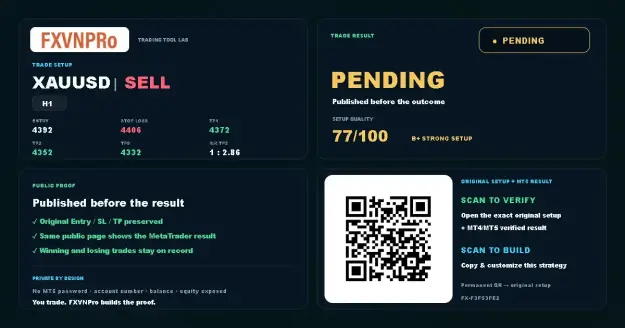 1 · SETUP
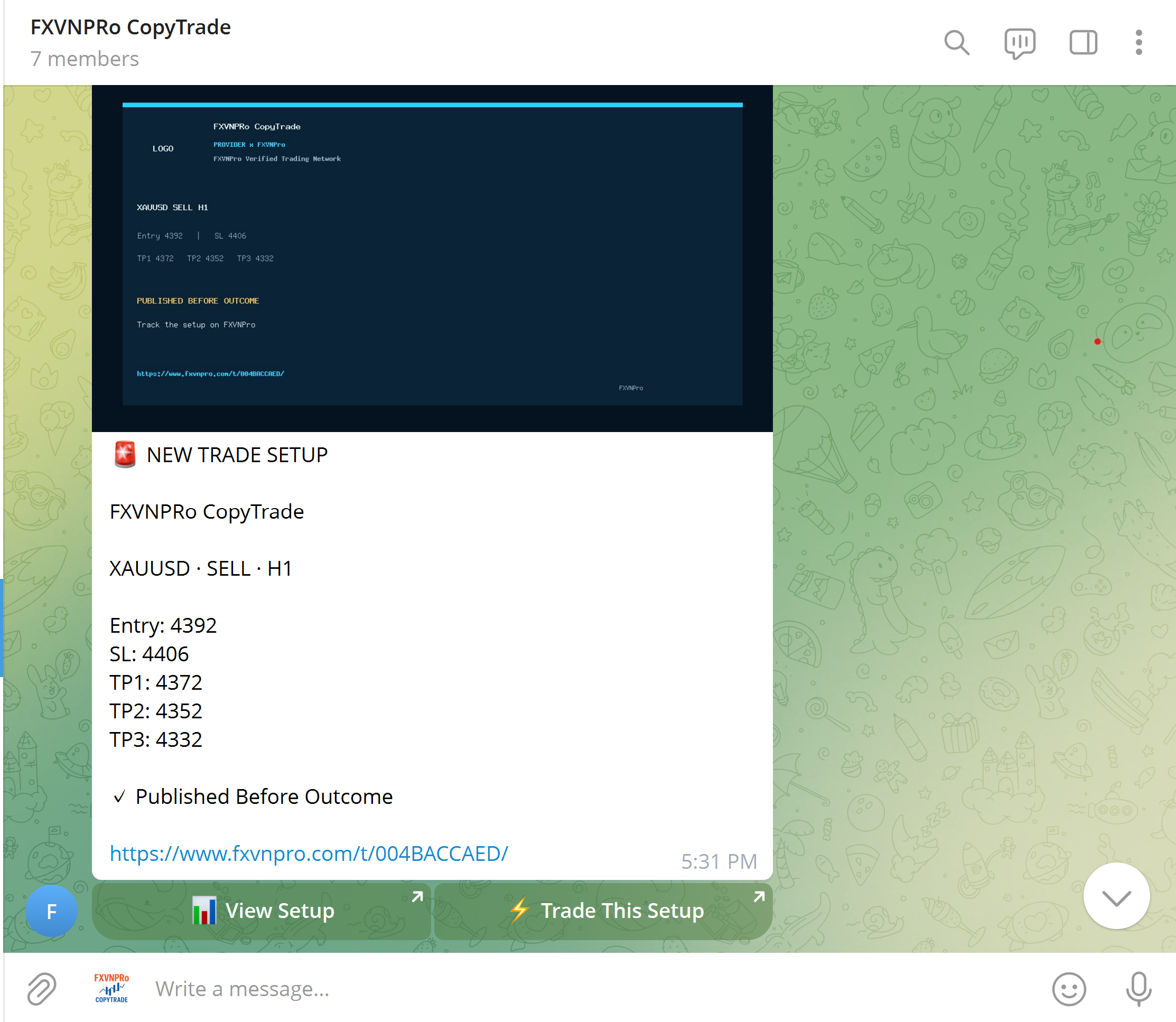 2 · TELEGRAM
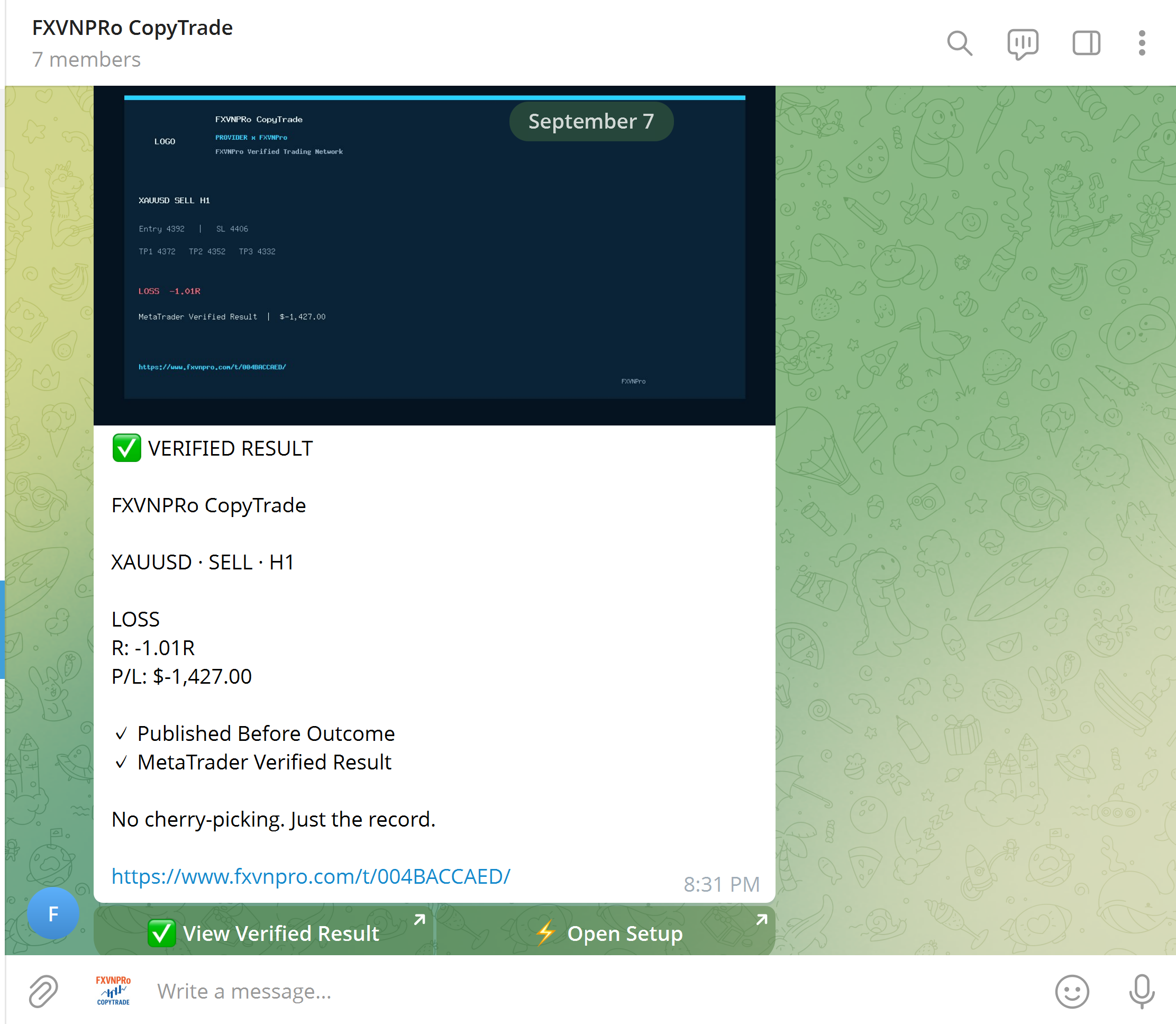 3 · VERIFIED
Build your strategy, distribute it to a community, or follow trading activity across MT4 & MT5.
Create Entry, Stop Loss and Targets before the outcome, then build a verified trading record.
Turn Telegram signals into an actionable workflow while followers keep control of their own risk.
Connect Chrome to MT4 or MT5 and open, modify or close trades from your browser.
Explore Masters and copy trading activity to your own MT4 or MT5 terminal with independent risk rules.